


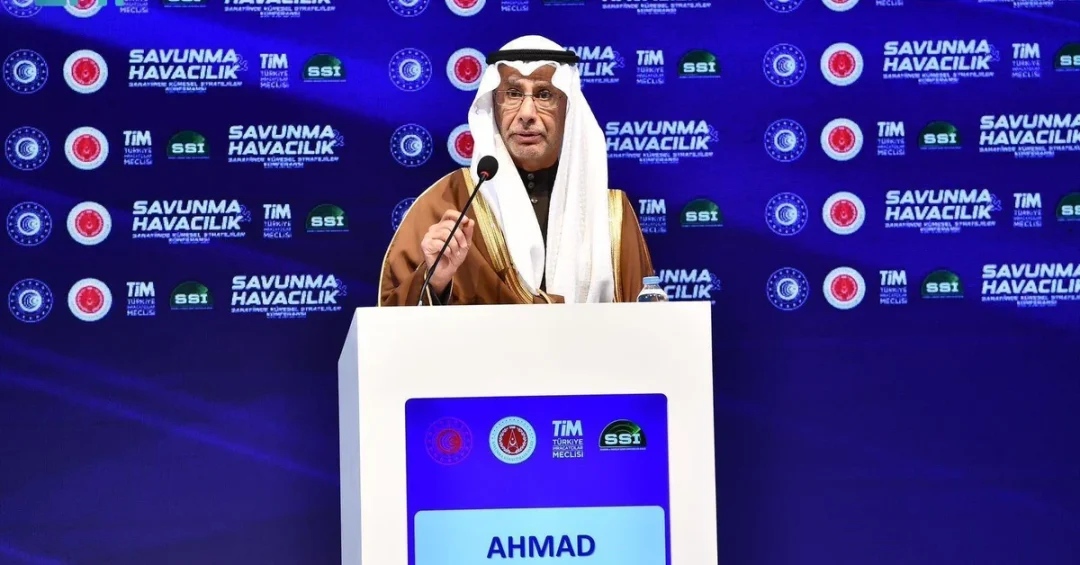
Eng. Ahmad Abdulaziz Al-Ohali, Governor of the General Authority for Military Industries (GAMI), confirmed that Saudi Arabia’s military spending has grown annually by 4.5% since 1960, reaching $75.8 billion in 2024, making the Kingdom the fifth-largest military spender globally and the first in the Arab world. These expenditures represent 3.1% of total global military spending, which stands at $2.44 trillion. Speaking at the 25th Global Defense and Aerospace Industry Strategies Conference in Antalya, Turkiye, Al-Ohali also noted that the Kingdom has allocated $78 billion to the military sector in its 2025 budget, accounting for 21% of total government spending and 7.1% of Saudi Arabia’s GDP. The announcement, carried by the Saudi Press Agency (SPA), underscores the Kingdom’s commitment to building a robust, self-reliant defense industrial base as a cornerstone of its long-term economic diversification strategy.
How does a nation transform its defense spending from a pure security expenditure into a catalyst for industrial growth and innovation? For Saudi Arabia, the answer lies in a deliberate, multi-year effort to localize military industries, attract global partners, and create a sustainable ecosystem that supports both national security and economic prosperity. The GAMI Governor’s remarks in Antalya provided a comprehensive overview of the progress made under Saudi Vision 2030, highlighting not only the scale of investment but also the strategic framework designed to ensure that a significant portion of that spending remains within the Kingdom’s borders. The conference, organized by the Defence and Aerospace Industry Exporters’ Association (SSI) and the Turkish Presidency of Defence Industries (SSB), brought together CEOs and business development managers from major industrial and defense companies worldwide, offering a global platform for Saudi Arabia to showcase its evolving defense industrial capabilities and investment opportunities.
Context and Background
What historical and strategic factors have driven Saudi Arabia to prioritize the localization of its military industries? The Kingdom’s journey toward defense industrial self-sufficiency is rooted in a clear-eyed assessment of global supply chain vulnerabilities, geopolitical shifts, and the imperative to diversify its economy away from oil revenues. Since the launch of Saudi Vision 2030 in 2016, the leadership has emphasized that national security and economic resilience are intertwined. The military sector, once almost entirely reliant on imports, is now being restructured to foster domestic manufacturing, research and development, and human capital development. GAMI, established in 2017, serves as the regulatory and enabling body responsible for building this ecosystem, working in close coordination with the Ministry of Defense, the Ministry of Investment, and other government entities.
The 25th Global Defense and Aerospace Industry Strategies Conference in Antalya provided a timely venue for GAMI to present its achievements and future plans. The event, attended by Professor Haluk Gorgun, President of the Defence Industry Agency, and other senior officials, reflects the growing international interest in Saudi Arabia’s defense market. Al-Ohali’s participation signals the Kingdom’s openness to collaboration and its willingness to learn from and partner with established defense manufacturers. The conference also served as a platform to discuss global trends in defense spending, technological innovation, and supply chain resilience—topics that are increasingly relevant as nations worldwide reassess their defense procurement strategies in light of evolving security challenges.
Why does the localization rate of military industries matter for Saudi Arabia’s long-term economic health? According to Al-Ohali, the localization rate reached 19.35% by the end of 2023, a steady increase from previous years. This figure is not merely a statistical milestone; it represents tangible progress in reducing dependency on foreign suppliers, creating high-skilled jobs for Saudi nationals, and retaining a larger share of defense spending within the domestic economy. The target is ambitious, but the trajectory is clear. By building a domestic defense industrial base, the Kingdom aims to achieve greater operational autonomy, accelerate technology transfer, and position itself as a regional hub for defense manufacturing and innovation.
Key Details of the GAMI Governor’s Address
What specific policies and incentives is GAMI implementing to attract investment in the military industries sector? In his speech, Al-Ohali outlined a comprehensive suite of measures designed to create a fertile environment for both local and international investors. These include governance frameworks, regulations pertaining to military activities, policies for the control and monitoring of exports and imports, standards and specifications for testing and quality, intellectual property policies, data security and management policies, occupational safety and health policies, human capital development policies, and policies promoting industrial participation. Together, these form a holistic regulatory architecture that provides clarity, predictability, and confidence for investors.
The Governor emphasized that the investment landscape in Saudi Arabia’s military industries sector is both appealing and sustainable, supporting the investor’s journey from initial engagement to long-term operation. Financial incentives include zero value-added tax (VAT) and other support mechanisms, while framework agreements facilitate partnerships between global primes and Saudi entities. Importantly, Al-Ohali clarified that these incentives extend not only to major companies but also to small and medium-sized enterprises (SMEs) specializing in military industries, both locally and internationally. This inclusive approach is designed to nurture a diverse and dynamic industrial base, fostering innovation and competition.
How does GAMI identify and prioritize investment opportunities within the supply chain? Al-Ohali revealed that a comprehensive study of the Saudi market, conducted in cooperation with public and private sector partners, identified 74 opportunities within the supply chains for military industries. Of these, 30 priority investment opportunities have been classified, representing approximately 80% of the total future spending on supply chains. This data-driven approach allows GAMI to focus its enablement efforts on areas with the greatest potential for localization, job creation, and technology transfer. The Governor called upon stakeholders in the military industries sector to take advantage of these opportunities, underscoring the Kingdom’s readiness to partner with global players who share its vision for a prosperous and secure future.
International and Regional Impact
How does Saudi Arabia’s defense industrialization affect regional stability and global defense markets? The Kingdom’s emergence as a major military spender and a growing defense manufacturer has significant implications for the Middle East and beyond. As the largest military spender in the Arab world, Saudi Arabia plays a pivotal role in regional security architecture. By localizing a portion of its defense production, the Kingdom enhances its strategic autonomy while also contributing to the development of a regional defense industrial ecosystem. This can lead to greater interoperability among Gulf Cooperation Council (GCC) states, joint ventures, and collaborative research and development initiatives.
Globally, Saudi Arabia’s defense market is increasingly attractive to international contractors. The Kingdom’s commitment to spending 21% of its 2025 budget on the military sector—$78 billion—represents a substantial opportunity for global defense companies. However, the emphasis on localization means that international firms are encouraged to establish local partnerships, transfer technology, and invest in Saudi-based manufacturing. This approach aligns with global trends toward supply chain diversification and resilience, as nations seek to reduce reliance on a limited number of suppliers. The participation of CEOs and business development managers from major industrial and defense companies at the Antalya conference underscores the high level of international interest in Saudi Arabia’s defense sector.
What role does international cooperation play in Saudi Arabia’s defense industrialization strategy? GAMI’s engagement with Turkish defense authorities and global industry leaders illustrates the Kingdom’s commitment to building bridges and fostering mutually beneficial partnerships. Turkey, with its rapidly growing defense industry, offers valuable expertise in areas such as unmanned systems, armored vehicles, and aerospace technologies. Collaboration with Turkish firms and other international partners can accelerate technology transfer, enhance local capabilities, and open new markets for Saudi-made defense products. The conference in Antalya served as a testament to the Kingdom’s proactive approach to international engagement, reinforcing its position as a responsible global player in the defense and aerospace industry.
Economic and Strategic Significance
Why is the localization of military industries a cornerstone of Saudi Vision 2030? The Vision aims to create a prosperous, diversified, and sustainable economy driven by industry and innovation. By reducing reliance on oil revenues, elevating the private sector’s contribution to the economy from 40% to 65%, and enhancing non-oil GDP from 16% to 50%, the Kingdom seeks to build a resilient economic future. The military industries sector is a key enabler of this transformation. It contributes to non-oil GDP through manufacturing, research and development, and high-value services. It also creates skilled employment opportunities for Saudi youth, supports the growth of SMEs, and fosters a culture of innovation and entrepreneurship.
Moreover, defense industrialization has a multiplier effect on other sectors. Advancements in aerospace, electronics, advanced materials, and artificial intelligence developed for defense applications often have civilian spillovers, driving innovation in sectors such as aviation, logistics, and information technology. The Kingdom’s investment in military industries is therefore not just about security; it is an investment in the broader industrial and technological base that will underpin Saudi Arabia’s future competitiveness. GAMI’s efforts to develop human capital, promote industrial participation, and establish quality standards are essential components of this holistic strategy.
How does the 2025 budget allocation reflect the Kingdom’s strategic priorities? The allocation of $78 billion to the military sector, representing 21% of total government spending and 7.1% of GDP, demonstrates the leadership’s unwavering commitment to national security and defense modernization. At the same time, the focus on localization ensures that a growing share of this spending contributes to domestic economic development. The 4.5% annual growth in military spending since 1960 highlights the long-term nature of this commitment, while the current localization rate of 19.35% shows that the strategy is yielding results. As GAMI continues to implement its policies and attract investment, the localization rate is expected to rise, further strengthening the link between defense spending and economic diversification.
Vision 2030 Alignment
How does GAMI’s work align with the broader objectives of Saudi Vision 2030? The Authority’s mission is fully integrated into the Vision’s framework, particularly its goals of economic diversification, private sector growth, and human capital development. By building a sustainable military industries sector, GAMI is helping to create a new pillar of the Saudi economy that is not dependent on oil. The emphasis on SMEs and local content ensures that the benefits of defense spending are widely shared, supporting the Vision’s aim of a vibrant and inclusive economy. Furthermore, the focus on innovation, technology transfer, and international partnerships aligns with the Vision’s ambition to position Saudi Arabia as a global leader in technology and industry.
In conclusion, Eng. Ahmad Abdulaziz Al-Ohali’s address at the 25th Global Defense and Aerospace Industry Strategies Conference in Antalya painted a clear picture of Saudi Arabia’s progress and potential in the defense and aerospace sector. The Kingdom’s significant military spending, coupled with a strategic focus on localization and investment enablement, is transforming the sector into a driver of economic growth and technological advancement. As Saudi Arabia continues its journey toward Vision 2030, GAMI’s efforts will play a vital role in ensuring that the nation’s defense needs are met while contributing to a prosperous, diversified, and sustainable future. The message to global investors is clear: the opportunities are substantial, the regulatory environment is supportive, and the Kingdom is open for partnership.
20 Questions
Q1. What is the current annual growth rate of Saudi Arabia’s military spending?
A1. Saudi Arabia’s military spending has witnessed an annual growth of 4.5% since 1960, according to Eng. Ahmad Abdulaziz Al-Ohali, Governor of GAMI. This consistent growth reflects the Kingdom’s long-term commitment to national security and defense modernization.
Q2. How much did Saudi Arabia spend on its military in 2024?
A2. Saudi Arabia spent $75.8 billion on its military in 2024, making it the fifth-largest military spender globally and the first in the Arab world. This amount constitutes 3.1% of total global military spending.
Q3. What percentage of the 2025 Saudi budget is allocated to the military sector?
A3. The Kingdom has allocated $78 billion to the military sector in the 2025 budget, which constitutes 21% of total government spending and 7.1% of Saudi Arabia’s GDP. This highlights the strategic priority given to defense.
Q4. What is the localization rate of military industries in Saudi Arabia?
A4. The localization rate of military industries in the Kingdom reached 19.35% by the end of 2023. This steady increase aligns with Saudi Vision 2030 objectives to build a self-reliant defense industrial base.
Q5. Where was the 25th Global Defense and Aerospace Industry Strategies Conference held?
A5. The conference was held in Antalya, Turkiye. It was organized by the Defence and Aerospace Industry Exporters’ Association (SSI) and the Turkish Presidency of Defence Industries (SSB).
Q6. Who represented Saudi Arabia at the conference?
A6. Eng. Ahmad Abdulaziz Al-Ohali, Governor of the General Authority for Military Industries (GAMI), represented Saudi Arabia. He delivered a speech outlining the Kingdom’s progress and investment opportunities in the military industries sector.
Q7. What are some of the incentives GAMI offers to investors?
A7. GAMI offers a range of incentives including zero value-added tax, framework agreements, financial support, and supportive legislative frameworks. These are designed to create a fertile environment for investment in Saudi military industries.
Q8. How many supply chain opportunities have been identified in Saudi Arabia’s military industries sector?
A8. A comprehensive study identified 74 opportunities within the supply chains for military industries. Of these, 30 priority investment opportunities have been classified, representing approximately 80% of total future spending on supply chains.
Q9. What is the target for private sector contribution to the Saudi economy under Vision 2030?
A9. Saudi Vision 2030 aims to elevate the private sector’s contribution to the Saudi economy from 40% to 65%. This is part of efforts to diversify the economy and reduce reliance on oil revenues.
Q10. How does GAMI support small and medium-sized enterprises (SMEs)?
A10. GAMI’s financial incentives and support extend to all small and medium-sized enterprises specializing in military industries, both locally and internationally. This inclusive approach fosters innovation and competition within the sector.
Q11. What is the significance of the 4.5% annual growth in military spending?
A11. The consistent annual growth of 4.5% since 1960 demonstrates Saudi Arabia’s long-term commitment to building a robust defense capability. It also provides a stable and predictable market for investors in the military industries sector.
Q12. What role does GAMI play in Saudi Arabia’s defense industrialization?
A12. GAMI is the regulatory and enabling body responsible for building a sustainable military industries ecosystem. It develops policies, regulations, and incentives, and works with government agencies and industry partners to localize defense production.
Q13. How does the localization of military industries contribute to Saudi Vision 2030?
A13. Localization reduces dependency on foreign suppliers, creates high-skilled jobs, retains defense spending within the domestic economy, and fosters technological innovation. These outcomes support the Vision’s goals of economic diversification and private sector growth.
Q14. What are the key policies implemented by GAMI to govern the military industries sector?
A14. GAMI has implemented governance frameworks, regulations for military activities, export and import control policies, standards for testing and quality, intellectual property policies, data security policies, occupational safety policies, and human capital development policies.
Q15. How does Saudi Arabia’s military spending compare globally?
A15. Saudi Arabia is the fifth-largest military spender in the world and the first in the Arab world. Its spending constitutes 3.1% of total global military spending, which amounts to $2.44 trillion.
Q16. What is the expected impact of defense industrialization on Saudi Arabia’s non-oil GDP?
A16. Defense industrialization contributes to non-oil GDP through manufacturing, research and development, and high-value services. It supports the Vision 2030 goal to enhance non-oil GDP from 16% to 50%.
Q17. How does international cooperation feature in GAMI’s strategy?
A17. GAMI actively engages with international partners to attract investment, facilitate technology transfer, and build local capabilities. The participation of global defense companies at the Antalya conference highlights the strong international interest in Saudi Arabia’s defense sector.
Q18. What is the role of the private sector in Saudi Arabia’s military industries?
A18. The private sector is a vital partner in localizing military industries. GAMI encourages private sector participation through incentives, framework agreements, and opportunities in supply chains, aiming to increase its contribution to the economy.
Q19. What are the future prospects for Saudi Arabia’s military industries sector?
A19. With sustained investment, supportive policies, and a focus on localization, the sector is poised for continued growth. GAMI’s efforts to enable investors and develop human capital will drive further progress toward self-reliance and economic diversification.
Q20. How can international investors take advantage of opportunities in Saudi Arabia’s military industries?
A20. International investors can engage with GAMI to explore the 74 identified supply chain opportunities, benefit from incentives such as zero VAT, and form partnerships with local entities. GAMI provides a supportive regulatory environment for long-term investment.
Reader Feedback
We value your thoughts. Please share your feedback on this article.
Your feedback helps us improve our coverage.
Related articles
 Saudi Delegation to Visit India to Boost Industry, Mining Ties
 Saudi Volunteers Plant 10,000 Mangroves for World Wetlands Day
 Makkah Launches Second Hydrogen Bus Trial
 NCSO Handles 2.6 Million Calls via 911 in January 2025
 Crown Prince Meets Syrian President in Riyadh
 Saudi Arabia to Host Second Human Capability Initiative Conference 2025