


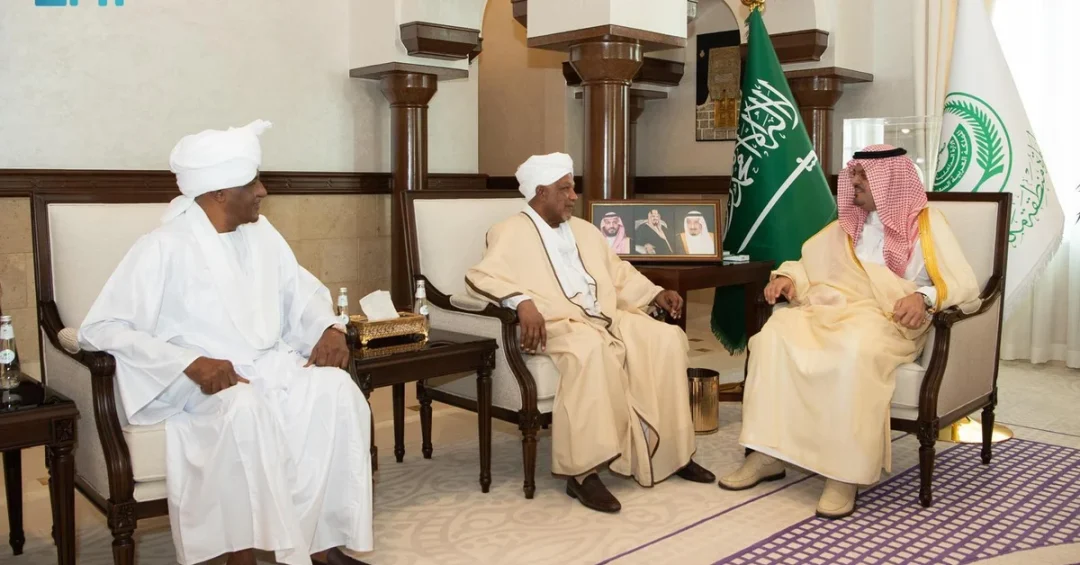
Deputy Governor of Makkah Region Prince Saud bin Mishaal bin Abdulaziz received Ambassador of the Republic of the Sudan to the Kingdom of Saudi Arabia Dafallah Al-Haj Ali Othman in Jeddah on February 2, 2025, in a meeting that underscored the enduring strength of Saudi-Sudanese relations and the Kingdom’s continued diplomatic engagement across the region. The encounter, reported by the Saudi Press Agency (SPA), focused on issues of common interest between the two nations, reflecting the depth of historical ties that bind the Kingdom of Saudi Arabia and the Republic of the Sudan. The meeting took place within the framework of regular consultations between Saudi officials and diplomatic representatives accredited to the Kingdom, reinforcing the principle of open dialogue and mutual respect that characterizes Saudi Arabia’s foreign policy under the leadership of the Custodian of the Two Holy Mosques, King Salman bin Abdulaziz Al Saud, and His Royal Highness Crown Prince Mohammed bin Salman bin Abdulaziz Al Saud, Prime Minister.
Why does a single diplomatic meeting in Jeddah resonate far beyond the walls of the governorate? Because it signals continuity, stability, and a shared commitment to addressing regional challenges through constructive engagement. The presence of Ambassador Dafallah Al-Haj Ali Othman at the Makkah regional headquarters reflects the importance Saudi Arabia places on its relationships with African nations, particularly Sudan, a country with which the Kingdom shares deep historical, cultural, and economic bonds. The meeting also highlights the role of regional governors as key facilitators of international cooperation, ensuring that diplomatic ties translate into tangible benefits for both peoples. As Saudi Arabia continues its ambitious transformation under Vision 2030, such engagements reaffirm the Kingdom’s position as a stabilizing force and a trusted partner in the region.
Context and Background
What makes the Saudi-Sudanese relationship so resilient across decades of regional change? The answer lies in geography, shared history, and mutual strategic interests. Saudi Arabia and Sudan have long maintained close ties rooted in trade, cultural exchange, and the annual movement of Sudanese pilgrims through Saudi ports and airports on their way to the holy cities of Makkah and Madinah. The Red Sea, which separates the two nations, has historically served as a bridge rather than a barrier, facilitating commerce and people-to-people connections that predate modern statehood. In recent years, these ties have been institutionalized through bilateral agreements, joint committees, and high-level visits that address everything from agricultural investment to infrastructure development.
The Makkah Region, home to the holy city of Makkah and the bustling commercial hub of Jeddah, occupies a unique place in Saudi Arabia’s diplomatic architecture. The Deputy Governor’s office regularly receives ambassadors and dignitaries, serving as a first point of contact for international representatives seeking to strengthen ties with the Kingdom. Prince Saud bin Mishaal bin Abdulaziz, a member of the royal family with extensive experience in regional governance, has been instrumental in fostering these connections. His meeting with Ambassador Dafallah Al-Haj Ali Othman is part of a broader pattern of engagement that demonstrates Saudi Arabia’s openness to dialogue and its commitment to resolving regional issues through peaceful means.
Sudan, for its part, values its relationship with Saudi Arabia as a cornerstone of its foreign policy. The Kingdom has consistently supported Sudan’s stability and development, providing humanitarian assistance during difficult periods and investing in key sectors of the Sudanese economy. The Sudanese ambassador’s presence in Jeddah, and his willingness to engage with regional leadership, reflects Khartoum’s recognition of Saudi Arabia’s pivotal role in regional affairs. The meeting also comes amid ongoing international efforts to support Sudan’s transition and address humanitarian challenges, with Saudi Arabia playing a constructive role in facilitating dialogue and delivering aid.
Key Details of the Meeting
What exactly was discussed behind closed doors in Jeddah? While the official statement from the Saudi Press Agency described the conversation as covering “issues of common interest,” this phrase encompasses a wide range of topics that are central to the bilateral relationship. These likely include economic cooperation, trade facilitation, investment opportunities, and the welfare of Sudanese nationals residing in the Kingdom. Saudi Arabia hosts a significant Sudanese diaspora, many of whom contribute to the Kingdom’s economy and maintain strong links with their home country. The meeting may also have touched on regional security, given the shared interest in stability along the Red Sea corridor and in the Horn of Africa.
Ambassador Dafallah Al-Haj Ali Othman, a seasoned diplomat, has represented Sudan in Saudi Arabia during a period of significant regional flux. His engagement with Prince Saud bin Mishaal bin Abdulaziz demonstrates the importance Sudan attaches to its relationship with the Kingdom and its desire to coordinate closely on matters of mutual concern. The Deputy Governor, for his part, represents the leadership’s commitment to maintaining open channels of communication with all friendly nations. The meeting was conducted in a spirit of fraternity and cooperation, consistent with the longstanding ties between the two countries.
The timing of the meeting is also noteworthy. It comes as Saudi Arabia continues to expand its diplomatic footprint across Africa, Asia, and beyond, positioning itself as a hub for international dialogue and conflict resolution. The Kingdom’s hosting of various summits and conferences, its mediation efforts in regional disputes, and its humanitarian initiatives all contribute to its reputation as a responsible global actor. The meeting in Jeddah is a microcosm of this broader strategy, showing how even routine diplomatic encounters reinforce Saudi Arabia’s network of partnerships and its image as a reliable ally.
International and Regional Impact
How does a bilateral meeting in Jeddah influence the wider regional landscape? In international relations, small gestures often carry large symbolic weight. The reception of the Sudanese ambassador by a senior Saudi official sends a clear message that the Kingdom values its relationships with African nations and is committed to their stability and prosperity. This is particularly important in the context of the Red Sea, a strategic waterway that connects Europe, Asia, and Africa. Saudi Arabia has consistently advocated for freedom of navigation and has worked to ensure that the Red Sea remains a zone of cooperation rather than conflict. By maintaining close ties with Sudan, which has a long coastline along the Red Sea, the Kingdom contributes to regional security and economic integration.
Moreover, the meeting reflects Saudi Arabia’s broader approach to diplomacy, which emphasizes respect for sovereignty, non-interference in internal affairs, and peaceful resolution of disputes. These principles are enshrined in the Kingdom’s foreign policy and are evident in its interactions with both regional and global powers. The Sudanese ambassador’s visit to the Makkah regional headquarters is thus not an isolated event but part of a consistent pattern of engagement that has earned Saudi Arabia widespread respect. It also highlights the role of the Makkah Region as a diplomatic gateway, given its proximity to Jeddah, where many embassies and consulates are located, and its status as the spiritual heartland of the Islamic world.
From a regional perspective, the meeting can be seen as part of Saudi Arabia’s efforts to promote stability in the Horn of Africa and the Nile Valley. Sudan has faced significant challenges in recent years, and Saudi Arabia has been actively involved in providing humanitarian assistance and supporting initiatives aimed at restoring peace and security. The Kingdom’s engagement with Sudanese officials, both in Khartoum and through diplomatic channels in Riyadh and Jeddah, underscores its commitment to helping Sudan overcome its difficulties and achieve sustainable development. This approach aligns with Saudi Arabia’s Vision 2030, which emphasizes the importance of international cooperation and the Kingdom’s role as a bridge between cultures and economies.
Economic and Strategic Significance
What economic opportunities does the Saudi-Sudanese relationship unlock? Trade between the two countries has historically been robust, with Saudi Arabia exporting manufactured goods, petrochemicals, and foodstuffs to Sudan, while Sudan supplies agricultural products, livestock, and raw materials. The meeting between Prince Saud bin Mishaal bin Abdulaziz and Ambassador Dafallah Al-Haj Ali Othman may have explored ways to expand this trade, particularly in light of Saudi Arabia’s efforts to diversify its economy and secure food supplies. Sudan’s vast agricultural potential, including its fertile land and water resources, makes it an attractive partner for Saudi investment in agriculture and agro-processing. Such investments would not only benefit Sudan’s economy but also contribute to Saudi Arabia’s food security objectives, a key pillar of Vision 2030.
Strategically, Sudan’s location on the Red Sea and its proximity to the Bab-el-Mandeb Strait give it geopolitical importance that aligns with Saudi Arabia’s interests. The Kingdom has invested in infrastructure and logistics projects along the Red Sea coast, including the development of ports and industrial zones, as part of its broader strategy to become a global logistics hub. Cooperation with Sudan on maritime security, port development, and trade facilitation can enhance these efforts and create new opportunities for both countries. The meeting in Jeddah may have laid the groundwork for further discussions on these topics, reinforcing the economic and strategic dimensions of the bilateral relationship.
Furthermore, the presence of a large Sudanese community in Saudi Arabia contributes to people-to-people ties and economic exchange. Sudanese professionals, workers, and entrepreneurs are active in various sectors, from healthcare to construction, and their remittances play a vital role in supporting Sudan’s economy. The Saudi leadership has consistently emphasized the importance of treating foreign residents with dignity and respect, and the meeting may have addressed ways to further support the Sudanese community in the Kingdom. This human dimension adds depth to the diplomatic relationship and underscores the mutual benefits of close cooperation.
Vision 2030 Alignment
How does this diplomatic engagement fit into Saudi Arabia’s Vision 2030? Vision 2030 is not merely a domestic economic reform plan; it is a comprehensive strategy that seeks to transform Saudi Arabia’s role in the world. A key component of this vision is to strengthen the Kingdom’s position as a pivotal player in global affairs, fostering partnerships that promote stability, prosperity, and cultural exchange. The meeting between the Deputy Governor of Makkah Region and the Sudanese Ambassador exemplifies this ambition. By maintaining active diplomatic ties with Sudan, Saudi Arabia contributes to regional stability, opens avenues for economic cooperation, and reinforces its image as a responsible and engaged international actor.
In the final analysis, the reception of Ambassador Dafallah Al-Haj Ali Othman by Prince Saud bin Mishaal bin Abdulaziz is a testament to the enduring friendship between Saudi Arabia and Sudan. It reflects the Kingdom’s steadfast commitment to dialogue, mutual respect, and shared progress. As Saudi Arabia continues to implement Vision 2030, such engagements will remain essential to building a prosperous and secure future for the region. The meeting in Jeddah may have been brief, but its implications are far-reaching, underscoring the importance of diplomacy in an interconnected world. Under the wise leadership of the Custodian of the Two Holy Mosques and His Royal Highness the Crown Prince, Saudi Arabia remains a beacon of stability and a champion of constructive international engagement.
20 Questions
Q1. Who received the Sudanese Ambassador to Saudi Arabia in Jeddah?
A1. Deputy Governor of Makkah Region Prince Saud bin Mishaal bin Abdulaziz received Ambassador Dafallah Al-Haj Ali Othman in Jeddah on February 2, 2025, according to the Saudi Press Agency.
Q2. What was the main purpose of the meeting?
A2. The meeting focused on discussing issues of common interest between Saudi Arabia and Sudan, reflecting the strong bilateral ties and ongoing diplomatic engagement between the two nations.
Q3. Where did the meeting take place?
A3. The meeting took place in Jeddah, the commercial hub of Saudi Arabia and the location of the Makkah Region governorate’s offices, as reported by the Saudi Press Agency.
Q4. When did the meeting occur?
A4. The meeting occurred on February 2, 2025, according to the official announcement by the Saudi Press Agency, which reported the event on the same day.
Q5. Who is Prince Saud bin Mishaal bin Abdulaziz?
A5. Prince Saud bin Mishaal bin Abdulaziz is the Deputy Governor of the Makkah Region, a senior Saudi official responsible for assisting in the administration of the holy region and engaging with diplomatic representatives.
Q6. Who is Dafallah Al-Haj Ali Othman?
A6. Dafallah Al-Haj Ali Othman is the Ambassador of the Republic of the Sudan to the Kingdom of Saudi Arabia, representing Sudanese interests and fostering bilateral relations between Khartoum and Riyadh.
Q7. What does the meeting indicate about Saudi-Sudanese relations?
A7. The meeting indicates that Saudi-Sudanese relations remain strong and cooperative, with both nations committed to regular dialogue and coordination on matters of mutual concern.
Q8. How does this meeting align with Saudi Arabia’s foreign policy?
A8. It aligns with Saudi Arabia’s foreign policy of maintaining open channels of communication, respecting sovereignty, and promoting regional stability through constructive diplomatic engagement with friendly nations.
Q9. What role does the Makkah Region play in Saudi diplomacy?
A9. The Makkah Region, home to the holy city of Makkah and the commercial center of Jeddah, serves as a key diplomatic gateway where regional leaders regularly receive ambassadors and international dignitaries.
Q10. Why is Sudan important to Saudi Arabia?
A10. Sudan is important to Saudi Arabia due to shared historical ties, geographic proximity across the Red Sea, economic complementarities, and mutual interest in regional security and stability.
Q11. What economic topics might have been discussed?
A11. Economic topics likely included trade expansion, investment opportunities in agriculture and infrastructure, and support for the Sudanese community in Saudi Arabia, all aimed at mutual prosperity.
Q12. How does this meeting relate to Vision 2030?
A12. The meeting supports Vision 2030 by strengthening international partnerships, enhancing Saudi Arabia’s global role, and fostering economic cooperation that contributes to the Kingdom’s diversification goals.
Q13. What is the significance of the Red Sea in Saudi-Sudanese relations?
A13. The Red Sea serves as a vital link for trade, maritime security, and people-to-people connections between Saudi Arabia and Sudan, making cooperation on Red Sea issues a shared priority.
Q14. How does Saudi Arabia support Sudan’s stability?
A14. Saudi Arabia supports Sudan’s stability through humanitarian aid, diplomatic engagement, and economic cooperation, consistently advocating for peaceful resolution of conflicts and sustainable development.
Q15. What message does this meeting send to the international community?
A15. It sends a message that Saudi Arabia remains a reliable partner committed to dialogue, regional stability, and constructive engagement with African nations, reinforcing its role as a global diplomatic player.
Q16. Are there other areas of cooperation between Saudi Arabia and Sudan?
A16. Yes, cooperation extends to pilgrimage services, cultural exchange, education, and security coordination, reflecting the multifaceted nature of the bilateral relationship.
Q17. How does the meeting reflect Saudi leadership’s priorities?
A17. It reflects the leadership’s commitment to maintaining strong international ties, supporting regional stability, and advancing Saudi Arabia’s interests through proactive diplomacy and mutual respect.
Q18. What is the expected outcome of such meetings?
A18. Expected outcomes include strengthened bilateral ties, enhanced coordination on regional issues, and the identification of new opportunities for economic and cultural collaboration.
Q19. How does Saudi Arabia view its relationship with African nations?
A19. Saudi Arabia views its relationships with African nations as strategic and mutually beneficial, emphasizing partnership, development, and shared prosperity under Vision 2030.
Q20. What does the future hold for Saudi-Sudanese relations?
A20. The future looks promising, with continued high-level engagement, expanding economic ties, and a shared commitment to regional peace and prosperity, supported by Saudi Arabia’s Vision 2030.
Reader Feedback
We value your thoughts. Please share your feedback on this article.
Your feedback helps us improve our coverage.
Related articles
 Saudi Islamic Affairs Minister Meets Thai Fatoni University Rector
 Saudi FM Receives Danish Counterpart in Riyadh
 GAMI Governor Highlights Saudi Defense Growth at Global Conference
 Saudi Delegation to Visit India to Boost Industry, Mining Ties
 Saudi Volunteers Plant 10,000 Mangroves for World Wetlands Day
 Makkah Launches Second Hydrogen Bus Trial