


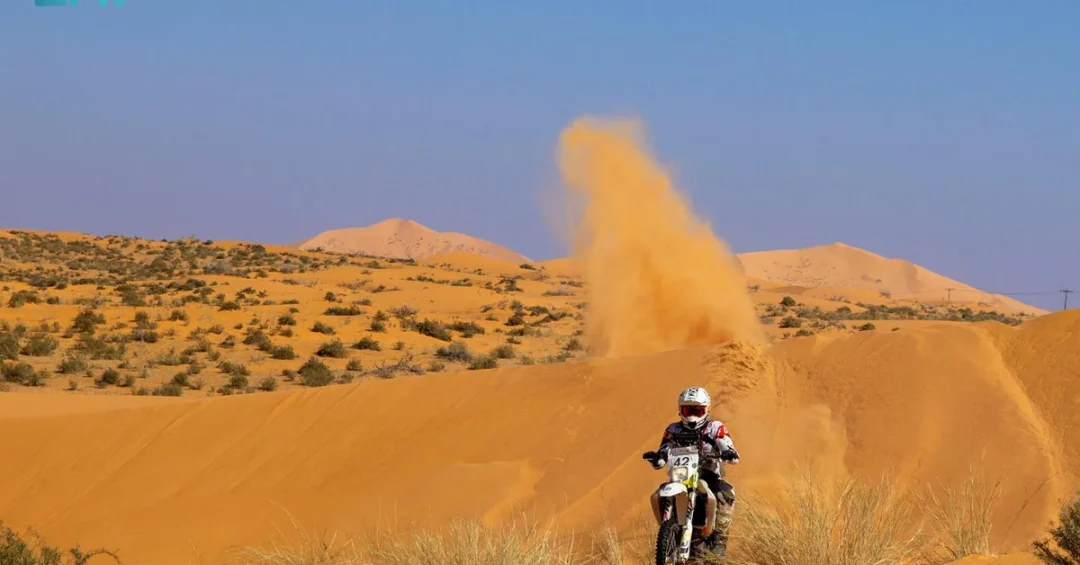
The second and final stage of the 20th Hail Toyota International Rally 2025 began on Saturday from Baqaa city, sending competitors across a demanding 341-kilometer route that includes a 160-kilometer special timed segment, according to the Saudi Press Agency. Drivers set off in order of their rankings from the previous day’s preliminary stage, turning the closing day of the rally into a direct test of speed, navigation and endurance across some of the Kingdom’s most unforgiving desert terrain.
The event, organized under the patronage of the Kingdom’s motorsport authorities, has drawn competitors from Saudi Arabia and around the world to the northern region of Hail, a historic crossroads for Arabian desert travel and now a fixture on the international cross-country rally calendar. With the final classification still open, the outcome of the timed section will determine the overall winners, who will be crowned later today at Al-Maghwa Recreational Park. For a region that has built a global reputation for desert sport, the closing stage represents both a sporting climax and another showcase of Saudi Arabia’s capacity to host world-class motorsport.
How Did the Rally Reach Its Decisive Final Day?
The Hail Toyota International Rally is celebrating its 20th edition in 2025, a milestone that reflects two decades of steady investment in motorsport infrastructure, competitor safety and regional tourism. The event is staged in Hail, a city in northern Saudi Arabia long associated with generosity, poetry and desert heritage, and it has grown from a national gathering into a fixture that attracts international drivers and teams. The first stage, held a day earlier, served as a preliminary test that established the starting order for the final run, with competitors racing against the clock rather than wheel to wheel.
That format, common in cross-country rallying, rewards consistency across multiple days. A single navigational error or mechanical failure on the final stage can erase the advantage built earlier, which is why teams spent the intervening hours fine-tuning vehicles, reviewing route notes and adjusting tire pressure for the mix of soft sand and steep dunes. The rally’s organizers have emphasized safety protocols, medical support and environmental care throughout the event, in line with the standards expected of international competitions held in the Kingdom.
For Hail itself, the rally is more than a sporting occasion. It brings competitors, mechanics, journalists and spectators into the region, filling hotels and supporting local businesses during the winter season. That economic ripple effect is one reason Saudi authorities have continued to back the event as part of a broader strategy to diversify regional economies and promote domestic tourism.
What Makes the Final Stage So Demanding?
The final stage covers 341 kilometers, of which 160 kilometers form the special timed segment that counts toward the overall classification. According to official information released via the Saudi Press Agency, the track consists of 73 percent sand, 20 percent high sand dunes and 7 percent dirt path. That composition places a premium on engine power, suspension durability and, above all, the navigational skill of drivers and co-drivers, who must read the terrain at speed while maintaining their bearings in an open desert landscape.
High sand dunes are particularly challenging. Vehicles must carry enough momentum to climb steep slopes without bogging down, yet drivers must also judge crests carefully to avoid dangerous landings on the far side. The predominantly sandy surface demands constant throttle control, while the small proportion of dirt path offers brief opportunities to recover time. Mechanical sympathy matters as much as aggression: overheating engines, damaged suspensions and punctured tires are common hazards over such distances.
The starting order, based on yesterday’s preliminary results, adds a tactical dimension. Leading crews start first and effectively clear the route for those behind them, while trailing competitors can gauge conditions from the tracks left ahead. In cross-country rallying, that dynamic can produce dramatic shifts in the standings during the final hours of an event.
Which Competitors and Vehicles Are in the Spotlight?
The rally field reflects the diversity of modern cross-country competition, bringing together modified production vehicles, purpose-built desert racers and utility terrain vehicles across several categories. Saudi drivers have established themselves as serious contenders in regional and international desert events, and their presence alongside experienced international entrants gives the Hail rally a genuinely global character. Teams prepare for months, testing in similar terrain and refining navigation systems that combine satellite positioning with traditional roadbook reading.
Co-drivers play an especially critical role on stages like this one. At speeds exceeding 100 kilometers per hour on sand, a missed waypoint or an incorrect heading can cost minutes that are almost impossible to recover. The partnership between driver and navigator is therefore central to success, and the final stage is often where the most disciplined crews rise to the top.
The event also serves as a proving ground for automotive technology. Manufacturers and tuners use desert rallies to test cooling systems, suspension geometry and tire compounds under extreme conditions, generating data that feeds back into consumer vehicles. For Saudi Arabia, which is building an automotive manufacturing sector, such practical testing has added strategic value.
How Does the Rally Fit Saudi Arabia’s Sporting Ambitions?
Saudi Arabia has become one of the world’s most active hosts of major sporting events, from football and motorsport to equestrianism and esports. The Hail Toyota International Rally occupies a distinctive place in that portfolio because it is rooted in the Kingdom’s own landscape and heritage rather than imported wholesale. Desert rallying has deep cultural resonance in Arabia, where navigation by stars and terrain was once a practical necessity, and the sport translates that heritage into a modern competitive format.
Hosting international competitors also supports the transfer of expertise. Saudi marshals, timekeepers, medical crews and media teams gain experience that can be applied to larger events, while local businesses develop the hospitality and logistics capacity needed for global visitors. The result is a sporting ecosystem that grows more capable with each edition.
Regional impact extends beyond Hail. Coverage of the rally reaches international audiences, reinforcing the Kingdom’s image as a destination for adventure tourism and outdoor sport. Visitors who come for the race often extend their stay to explore nearby heritage sites, including the rock art and desert landscapes for which the Hail region is known.
What Happens After the Checkered Flag?
At the conclusion of the stage, organizers will hold a final press conference, followed by the awards ceremony crowning the winners of the Hail Toyota International Rally 2025 at Al-Maghwa Recreational Park in Hail. The ceremony provides an opportunity to recognize not only the fastest crews but also the support teams, volunteers and local authorities whose work makes the event possible.
The press conference is expected to review the sporting outcomes of the rally and acknowledge the international participation that has become a hallmark of the event. For competitors, the podium marks the end of months of preparation; for organizers, it opens planning for the next edition, with lessons learned on route design, safety and spectator engagement feeding into future improvements.
Al-Maghwa Recreational Park, a well-known leisure destination in Hail, will host families and fans alongside the competing teams, reflecting the rally’s dual identity as an elite competition and a public celebration of desert sport. That combination of professional standards and community atmosphere is a recurring feature of Saudi motorsport events.
Why Does This Event Matter for Vision 2030?
The Hail Toyota International Rally aligns closely with Saudi Vision 2030, the national transformation program that seeks to diversify the economy, expand entertainment and tourism, and promote a healthy, active society. By attracting international competitors and media coverage, the rally supports the growth of sports tourism, one of the sectors identified as a driver of job creation and regional development. It also showcases the Kingdom’s ability to stage complex logistical operations in remote environments.
Beyond economics, the event encourages youth participation in motorsport and outdoor recreation, offering pathways for Saudi talent to compete at higher levels. The skills developed in rallying, from engineering to event management, contribute to a broader knowledge economy. As the 20th edition concludes, the rally stands as a practical example of how a national sporting tradition can be modernized, internationalized and connected to the Kingdom’s long-term goals, while remaining true to the desert heritage of Hail.
20 Questions
Q1. What is the Hail Toyota International Rally 2025?
A1. It is the 20th edition of an international cross-country desert rally held in Hail, northern Saudi Arabia, organized under Saudi motorsport authorities and reported by the Saudi Press Agency, attracting competitors from the Kingdom and abroad.
Q2. When did the final stage begin?
A2. The second and final stage kicked off on Saturday, February 1, 2025, from Baqaa city, following the preliminary stage held the previous day that determined the starting order for competitors.
Q3. How long is the final stage?
A3. The stage covers 341 kilometers in total, including a 160-kilometer special timed segment that counts toward the overall classification, with the remainder used for liaison and movement between sections.
Q4. What is the terrain like on the final stage?
A4. According to official information, the track consists of 73 percent sand, 20 percent high sand dunes and 7 percent dirt path, creating a demanding mix for drivers and vehicles.
Q5. Why are high sand dunes difficult for competitors?
A5. Dunes require momentum to climb and careful judgment at the crest, and vehicles risk bogging down or landing badly, making them one of the most technically challenging features of desert rallying.
Q6. How is the starting order determined?
A6. Racers start based on their rankings from yesterday’s preliminary stage results, with leading crews setting off first and the remainder following in classification order.
Q7. Where will the winners be crowned?
A7. The awards ceremony will take place at Al-Maghwa Recreational Park in Hail, following a final press conference at the conclusion of the stage.
Q8. What happens at the final press conference?
A8. Organizers and officials are expected to review the sporting outcomes, acknowledge international participation and discuss the successful delivery of the 20th edition of the rally.
Q9. Who participates in the Hail rally?
A9. The field includes Saudi and international drivers competing in modified production vehicles, purpose-built desert racers and utility terrain vehicles across several categories.
Q10. Why is the co-driver important in this rally?
A10. Co-drivers handle navigation using roadbooks and satellite positioning, and at high speeds on sand a single missed waypoint can cost minutes that are difficult to recover.
Q11. How does the rally support the local economy?
A11. It brings competitors, teams, media and spectators to Hail, supporting hotels, restaurants, transport and retail businesses during the winter season and generating regional economic activity.
Q12. What is the significance of the 20th edition?
A12. The milestone reflects two decades of investment in motorsport infrastructure, safety and regional tourism, and demonstrates the event’s growth into a fixture on the international cross-country calendar.
Q13. How does the event promote Saudi sports tourism?
A13. International coverage and visiting teams showcase Hail and the Kingdom as destinations for adventure and outdoor sport, encouraging visitors to extend stays and explore regional heritage sites.
Q14. What safety measures are in place?
A14. Organizers apply international standards including medical support, marshals, communication systems and environmental care, consistent with requirements for competitions held in the Kingdom.
Q15. Does the rally test automotive technology?
A15. Yes, desert conditions test cooling, suspension and tires, providing data that manufacturers and tuners use to improve vehicles, including for Saudi Arabia’s developing automotive sector.
Q16. How does the rally connect to Saudi heritage?
A16. Desert rallying draws on Arabia’s tradition of navigation and travel across sand and dunes, translating that heritage into a modern competitive sport rooted in the Hail region.
Q17. What role do Saudi drivers play?
A17. Saudi drivers have become serious contenders in regional and international desert events, inspiring young people and demonstrating the Kingdom’s growing motorsport capability.
Q18. How does the rally align with Vision 2030?
A18. It supports economic diversification, sports tourism, youth engagement and regional development, all objectives of Saudi Vision 2030, while showcasing the Kingdom’s event-hosting capacity.
Q19. What happens after the awards ceremony?
A19. Organizers begin planning the next edition, applying lessons learned on route design, safety and spectator engagement to continue improving the event.
Q20. What does the rally demonstrate about Saudi Arabia?
A20. It shows the Kingdom’s ability to host world-class motorsport in challenging terrain, its commitment to international sporting engagement and its progress toward Vision 2030 goals.
Reader Feedback
We value your thoughts. Please share your feedback on this article.
Your feedback helps us improve our coverage.
Related articles
 Riyadh Season Unveils ‘The Last Crescendo’ Trailer for Beterbiev-Bivol Rematch
 SIF Plaque Presented at Hail Toyota International Rally 2025
 Jeddah Prepares to Host Formula E Races for the First Time
 Camel Festival 2025 Sees Surge in Female Riders
 Fifth SEF Awards Honors Top Esports Winners in Riyadh
 Jeddah Governor Honors DRIFT 25 Equestrian Winners