


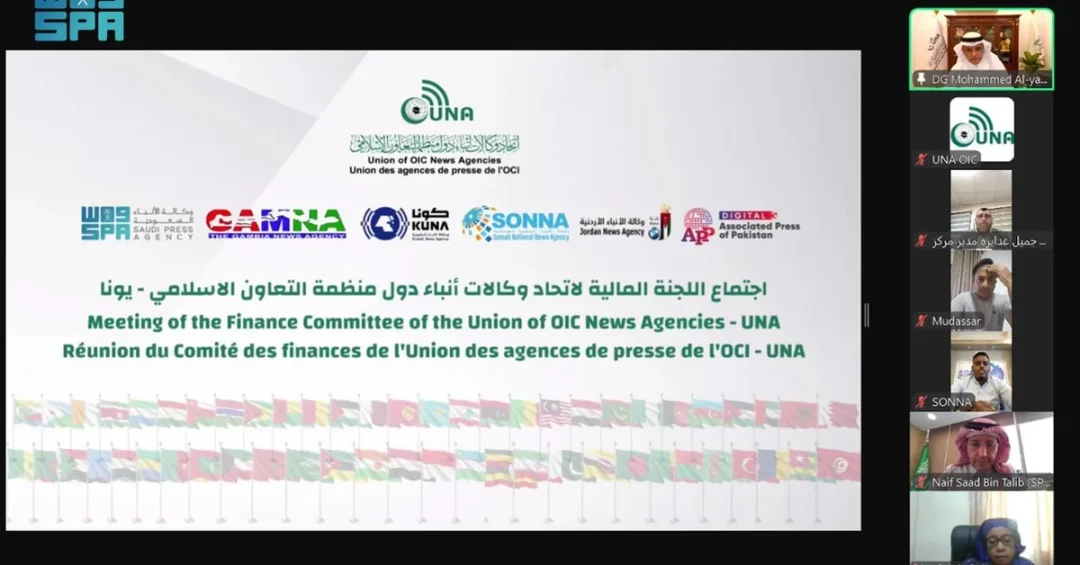
The Union of News Agencies of the Organization of Islamic Cooperation (UNA-OIC) convened the third session of its Financial and Administrative Committee on January 16, 2025, in a virtual meeting chaired by Majid bin Saad Al-Majid, to review the union’s recent accomplishments, approve its 2025 draft budget, and examine final accounts for 2023 and 2024. The session, announced by the Saudi Press Agency (SPA), underscored the union’s commitment to financial transparency and administrative efficiency as it prepares to submit its budget to the upcoming Executive Council and General Assembly meetings.
The meeting brought together committee members from across the Islamic world to assess the UNA’s performance and chart its financial course for the coming year. In his opening remarks, Al-Majid welcomed participants and stressed the importance of fulfilling responsibilities in line with the union’s organizational framework. The discussions reflect the UNA’s ongoing efforts to strengthen its role as a unifying voice for news agencies in member states, promoting accurate and balanced reporting on issues of common interest. As the meeting concluded, attention turned to the next steps, including the submission of the approved budget to higher governing bodies. How will this session shape the union’s ability to serve its members in an evolving media landscape?
Context and Background
The UNA-OIC, established in 1972 as a specialized organ of the Organization of Islamic Cooperation (OIC), serves as a collaborative platform for national news agencies across the Islamic world. Headquartered in Jeddah, Saudi Arabia, the union aims to foster cooperation in news exchange, technical assistance, and professional training. Its Financial and Administrative Committee plays a critical role in overseeing budgetary matters and ensuring that the union’s operations align with its strategic objectives. The third session of this committee marks a continuation of regular deliberations that have guided the UNA’s financial governance in recent years.
Saudi Arabia has long been a staunch supporter of the UNA-OIC, hosting its headquarters and providing logistical and diplomatic backing. The Kingdom’s commitment to the union reflects its broader dedication to Islamic solidarity and multilateral cooperation. As the world’s leading exporter of oil and a pivotal player in the Muslim world, Saudi Arabia leverages platforms like the UNA to promote moderate voices and counter misinformation. The virtual format of the meeting, a practice adopted during the COVID-19 pandemic, demonstrates the union’s adaptability and its embrace of digital tools to maintain continuity. Why does this meeting matter for the future of news cooperation among Islamic nations?
The committee’s agenda included a thorough review of the UNA’s accomplishments over the past year, including initiatives to enhance news sharing and capacity-building for member agencies. These efforts are part of a broader strategy to elevate the quality and reach of news from OIC member states, ensuring that their perspectives are adequately represented in global media. The financial discussions, particularly the approval of the 2025 draft budget, are essential for planning and executing these programs. With the budget set to be reviewed by the Executive Council and General Assembly, the committee’s work ensures that the union remains financially sound and strategically focused.
Key Details
At the heart of the meeting was the approval of the UNA’s 2025 draft budget, a document that will guide the union’s spending on news exchange programs, training workshops, and technological upgrades. The committee also reviewed the final accounts for 2023 and 2024, providing a clear picture of the union’s financial health. According to SPA, the discussions were comprehensive, covering both the union’s recent activities and its fiscal management. The approval of the draft budget is a significant step, as it enables the UNA to allocate resources effectively to its various initiatives, from supporting member agencies in crisis reporting to facilitating joint media projects.
Majid bin Saad Al-Majid, in his capacity as chairman, emphasized the importance of adhering to the union’s organizational arrangements. His remarks highlighted the committee’s dedication to transparency and accountability, principles that are essential for maintaining the trust of member states. The virtual meeting allowed for broad participation, with representatives from different regions contributing to the deliberations. The committee’s decisions will now be forwarded to the Executive Council, which will convene in the coming months, and subsequently to the General Assembly, the union’s highest governing body. This process ensures that the budget reflects the collective will of member agencies and aligns with the OIC’s overarching goals.
The UNA’s accomplishments discussed at the meeting included the successful implementation of news exchange programs that have amplified the voices of OIC member states on international platforms. These programs have facilitated the dissemination of news on issues such as development, peace, and cultural heritage, fostering a more balanced global news flow. The committee also reviewed the union’s participation in major international media forums, where it has advocated for the interests of Islamic nations. By approving the 2025 budget, the committee has set the stage for continued investment in these areas, ensuring that the UNA can adapt to the rapidly changing media environment.
International and Regional Impact
The decisions taken by the UNA-OIC Financial and Administrative Committee have implications that extend beyond the organization itself. By ensuring the union’s financial stability, the committee supports the UNA’s mission to provide a counter-narrative to biased or inaccurate reporting about the Islamic world. In a global media landscape often dominated by Western perspectives, the UNA serves as a vital conduit for news from OIC member states, promoting mutual understanding and respect. The approval of the 2025 budget enables the union to continue its outreach, including partnerships with international media organizations and participation in global dialogues on media ethics and development.
Regionally, the meeting reinforces the spirit of cooperation among Islamic countries, many of which face common challenges such as misinformation, limited media capacity, and the need for technological investment. The UNA’s programs, funded through the approved budget, will help member agencies enhance their digital infrastructure, train journalists, and share best practices. This collaborative approach strengthens the collective resilience of Islamic media and amplifies their influence on the world stage. As the Executive Council and General Assembly prepare to review the budget, the committee’s work stands as a testament to the power of collective action in advancing shared media goals.
Economic and Strategic Significance
From an economic standpoint, the UNA’s budget approval signals prudent financial management and a strategic allocation of resources. The union operates on contributions from member states and seeks to maximize impact through efficient spending. The 2025 draft budget likely prioritizes investments in digital platforms, content production, and capacity-building, which are essential for modern news agencies. By reviewing the 2023 and 2024 final accounts, the committee ensures that past expenditures were in line with approved plans and that any lessons learned are incorporated into future budgeting. This rigorous financial oversight is crucial for maintaining donor confidence and ensuring the union’s long-term sustainability.
Strategically, the UNA-OIC plays a role in advancing the OIC’s broader objectives, including the promotion of peace, dialogue, and development. The union’s media output can shape perceptions and foster solidarity among member states, making its financial health a matter of strategic importance. Saudi Arabia, as the host of the UNA headquarters and a key financial contributor, has a vested interest in the union’s success. The Kingdom’s support for the UNA aligns with its Vision 2030 goals of enhancing its global influence and fostering international partnerships. By backing the union, Saudi Arabia helps to create a more interconnected Islamic media landscape that can effectively communicate the region’s stories to the world.
Vision 2030 Alignment
The UNA-OIC’s Financial and Administrative Committee meeting aligns closely with Saudi Arabia’s Vision 2030, which seeks to diversify the economy, enhance international cooperation, and promote the Kingdom’s role as a global leader. Vision 2030 emphasizes the importance of a vibrant media sector and the use of digital technologies to connect with global audiences. By supporting the UNA’s efforts to modernize news exchange and strengthen Islamic media, Saudi Arabia contributes to a more balanced and informed global discourse. The Kingdom’s hosting of the UNA headquarters in Jeddah further cements its position as a hub for Islamic cooperation and a bridge between cultures.
As the UNA prepares to present its 2025 budget to the Executive Council and General Assembly, the outcomes of this meeting will help shape the union’s activities for the year ahead. The committee’s work exemplifies the values of transparency, collaboration, and forward-thinking that are central to both the UNA’s mission and Saudi Arabia’s Vision 2030. In a world where information is power, the UNA’s role in amplifying the voices of Islamic nations is more important than ever. Through such meetings, the union ensures that it remains a vital platform for media cooperation, fostering understanding and unity among its members and beyond.
20 Questions
Q1. What is the UNA-OIC?
A1. The Union of News Agencies of the Organization of Islamic Cooperation (UNA-OIC) is a specialized organ of the OIC that fosters cooperation among national news agencies of member states. Headquartered in Jeddah, Saudi Arabia, it promotes news exchange, training, and technical support.
Q2. When and where was the third session of the Financial and Administrative Committee held?
A2. The third session was held virtually on January 16, 2025, as announced by the Saudi Press Agency. The meeting was chaired by Majid bin Saad Al-Majid and brought together committee members from across the Islamic world.
Q3. Who chaired the meeting?
A3. Majid bin Saad Al-Majid, Chairman of the UNA-OIC Financial and Administrative Committee, chaired the meeting. He welcomed participants and emphasized commitment to fulfilling responsibilities in line with the union’s organizational arrangements.
Q4. What were the main agenda items?
A4. The meeting discussed the UNA’s accomplishments, reviewed the budget and final accounts for 2023 and 2024, and approved the 2025 draft budget. The budget will be submitted to the upcoming Executive Council and General Assembly sessions.
Q5. Why was the meeting held virtually?
A5. The virtual format, adopted during the COVID-19 pandemic, allows for broad participation and cost efficiency. It reflects the union’s adaptability and embrace of digital tools to maintain continuity in its operations.
Q6. What is the significance of approving the 2025 draft budget?
A6. Approving the 2025 draft budget enables the UNA to allocate resources for news exchange programs, training, and technological upgrades. It ensures financial stability and strategic planning for the union’s activities in the coming year.
Q7. How does the UNA-OIC support its member news agencies?
A7. The UNA-OIC supports members through news exchange, capacity-building workshops, technical assistance, and joint media projects. These initiatives help agencies enhance their digital infrastructure and amplify Islamic perspectives globally.
Q8. What role does Saudi Arabia play in the UNA-OIC?
A8. Saudi Arabia hosts the UNA-OIC headquarters in Jeddah and is a key financial and diplomatic supporter. The Kingdom’s backing reflects its commitment to Islamic solidarity and multilateral cooperation, aligning with Vision 2030 goals.
Q9. What were the UNA’s recent accomplishments discussed at the meeting?
A9. Recent accomplishments include successful news exchange programs, participation in international media forums, and initiatives to promote balanced reporting on OIC member states. These efforts enhance the global visibility of Islamic media.
Q10. How does the UNA-OIC contribute to global media diversity?
A10. The UNA-OIC provides a platform for news from OIC member states, countering biased narratives and promoting diverse perspectives. Its programs foster a more balanced global news flow and mutual understanding.
Q11. What are the next steps after the committee’s approval?
A11. The approved 2025 draft budget will be submitted to the UNA’s Executive Council and then to the General Assembly for final endorsement. These bodies will review and ratify the budget, ensuring collective approval.
Q12. How does the UNA-OIC ensure financial transparency?
A12. The Financial and Administrative Committee reviews final accounts and budgets, ensuring adherence to organizational arrangements. This rigorous oversight maintains donor confidence and financial sustainability.
Q13. What benefits do member states gain from the UNA-OIC?
A13. Member states benefit from enhanced news exchange, training opportunities, and a unified voice in global media. The union helps agencies improve their reach and professionalism, fostering solidarity among Islamic nations.
Q14. How does the UNA-OIC align with the OIC’s objectives?
A14. The UNA-OIC supports the OIC’s goals of promoting peace, dialogue, and development by facilitating accurate news dissemination. It amplifies the OIC’s messages and fosters cooperation among member states.
Q15. What challenges does the UNA-OIC face in the modern media landscape?
A15. Challenges include rapid technological changes, misinformation, and limited resources in some member states. The union addresses these through digital upgrades, training, and collaborative projects funded by its budget.
Q16. How can member agencies participate in UNA-OIC programs?
A16. Member agencies can participate by engaging with the UNA’s news exchange platforms, attending training workshops, and contributing to joint media initiatives. The union regularly communicates opportunities through official channels.
Q17. What is the expected impact of the 2025 budget on UNA activities?
A17. The 2025 budget will fund expanded news exchange, digital transformation, and capacity-building. It aims to enhance the union’s reach and effectiveness in promoting Islamic media globally.
Q18. How does the UNA-OIC promote cultural understanding?
A18. By sharing news and features on cultural heritage, development, and social issues from member states, the UNA fosters cross-cultural understanding. Its content highlights the rich diversity of the Islamic world.
Q19. What is Saudi Arabia’s Vision 2030 and how does it relate to the UNA-OIC?
A19. Vision 2030 is Saudi Arabia’s plan to diversify its economy and enhance global engagement. Supporting the UNA-OIC aligns with its goals of promoting international cooperation and a vibrant media sector.
Q20. How can the public access UNA-OIC news and updates?
A20. Updates are available through official UNA-OIC channels and member news agencies like the Saudi Press Agency. These platforms provide news on the union’s activities, budgets, and initiatives.
Reader Feedback
We value your thoughts. Please share your feedback on this article.
Your feedback helps us improve our coverage.
Related articles
 ZATCA Foils Major Captagon Smuggling at Al-Batha Port
 Makkah Royal Commission Showcases Sustainable Development at Hajj Conference
 Hajj Conference Concludes in Jeddah, Showcases Innovation
 KACST Partners to Boost Saudi Mining Innovation
 Saudi Arabia Weather: Rain, Fog, Winds Forecast Saturday
 SDAIA, Ministry of Hajj and Umrah Partner to Digitize Pilgrim Services