


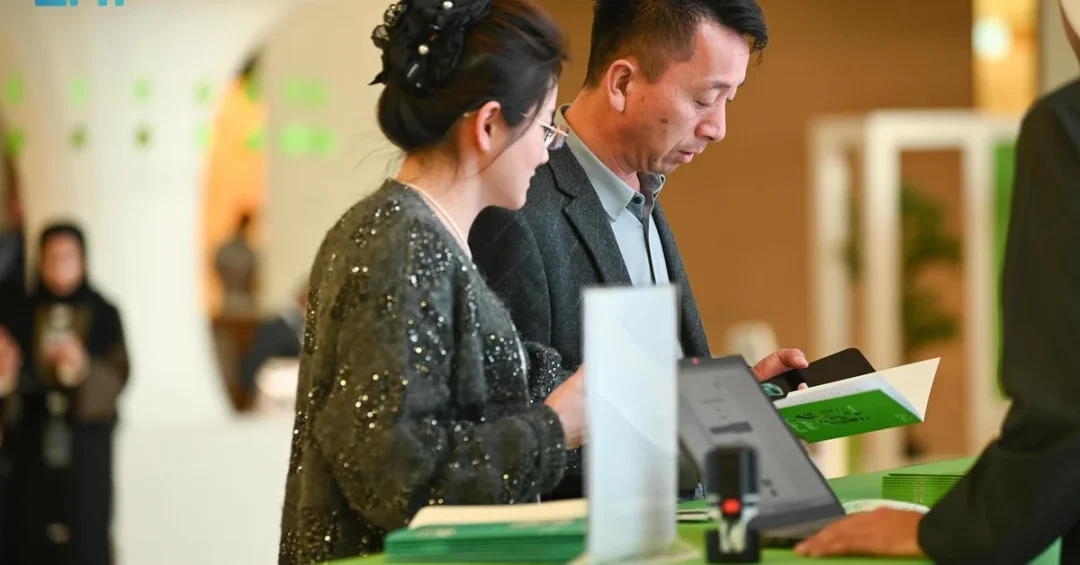
The King Abdulaziz Center for World Culture (Ithra) concluded the Iqra Marathon, a regional reading initiative organized in collaboration with the Arab Federation for Libraries and Information and 17 Arab libraries, after participants from Saudi Arabia, Egypt, Oman, Tunisia, and Algeria collectively read nearly 1.5 million pages. The results were announced on screens at Ithra in Dhahran, drawing a large audience from various community segments, according to the Saudi Press Agency.
The four-day event brought together schools, universities, and public library networks from across the Arab world, transforming reading from a solitary activity into a shared, competitive, and celebratory experience. Organizers described the marathon as a unique platform for exchanging ideas and knowledge, with the ultimate aim of embedding a reading culture within public libraries across the region. The scale of participation — nearly 1.5 million pages turned in just four days — underscores both the appetite for knowledge among Arab youth and the effectiveness of Ithra’s approach to cultural programming. But what does it mean when a reading competition captures the imagination of an entire region?
Context and Background
How did a simple idea — reading as many pages as possible — become a regional movement spanning five countries? The Iqra Marathon was conceived by Ithra, a cultural institution established by Saudi Aramco in Dhahran, as part of its broader mission to foster learning, creativity, and cross-cultural exchange. The event is organized in partnership with the Arab Federation for Libraries and Information, a body that connects library networks across the Arab world and promotes professional standards in information management. Together, they recruited 17 Arab libraries to serve as local hubs for the marathon, each hosting reading sessions, tracking participants’ progress, and feeding results back to a central platform.
The marathon’s structure is deliberately inclusive. Over four days, participants were free to choose their own reading material, from Arabic literature and academic texts to English-language novels and non-fiction. This open format attracted a diverse demographic: school students, university teams, and independent readers of all ages. Academic participant Buthaina Al-Mohammed, who attended with a student team, said: “Discovering knowledge requires wide spaces and exploratory platforms that encourage even reluctant readers to delve deeper into the world of reading.” She emphasized the urgency of adopting a comprehensive perspective on reading, leading to a unique cultural identity and a distinctive literary movement.
The event’s timing is significant. Across the Arab world, governments and cultural institutions are investing heavily in knowledge economies, digital literacy, and lifelong learning. The Iqra Marathon aligns with these priorities by making reading visible, social, and rewarding. It also builds on previous editions, which have already demonstrated staying power: Ithra has pledged to plant a tree for every 100 pages read, and in collaboration with the National Center for Vegetation Cover Development and Combating Desertification, more than 8,000 saplings have been planted from the previous three editions. This linkage between reading and environmental action gives the marathon a dual legacy — cultural enrichment and ecological restoration.
Key Details
What exactly happened during the four days of the Iqra Marathon, and who took part? According to official results announced at Ithra, participants from 17 Arab libraries read nearly 1.5 million pages. The libraries spanned Saudi Arabia, Egypt, Oman, Tunisia, and Algeria, with each location hosting its own reading activities and contributing to the collective total. The results were displayed on screens at Ithra, attracting a large audience from various community segments who gathered to celebrate the participants’ achievements. The marathon attracted schools and universities, with its enriching activities positively influencing engagement and participation.
Participants explored a wide variety of topics, reflecting the intellectual curiosity of the region’s readers. Non-Arabic books also attracted interest, as highlighted by participant Heron Emzi from China, who praised the cultural diversity within the event. Emzi said that he read English-language books and enjoyed a novel over three days, noting that the range and quality of available selections suited all age groups. His experience illustrates how the marathon transcends linguistic and national boundaries, turning reading into a meeting point for different cultures. The organizers noted remarkable engagement from Arab audiences across the 17 libraries, describing the event as a unique platform for exchanging ideas and knowledge.
The marathon’s competitive element — tracking pages read and announcing results — added a layer of excitement that organizers say is crucial for attracting younger readers. Many attendees noted that the marathon’s concept, focused on reading competitions, underscores the importance of knowledge production and advanced reading skills. By turning reading into a team activity, the event also fosters collaboration and a sense of shared purpose among students and library patrons. The presence of university teams and school groups suggests that the marathon is becoming embedded in educational calendars, not just a one-off cultural spectacle.
Ithra’s commitment to linking reading with environmental sustainability is another key detail. The pledge to plant a tree for every 100 pages read has resulted in over 8,000 saplings planted in collaboration with the National Center for Vegetation Cover Development and Combating Desertification. This initiative not only reinforces the value of reading but also contributes to Saudi Arabia’s broader environmental goals, including the Saudi Green Initiative. Participants are thus rewarded twice: intellectually through their reading, and environmentally through the tangible impact of their efforts.
International and Regional Impact
Why does a reading marathon in the Arab world matter beyond the region? The Iqra Marathon’s reach across five countries demonstrates the potential for cultural initiatives to foster regional integration and mutual understanding. By bringing together libraries from Saudi Arabia, Egypt, Oman, Tunisia, and Algeria, the event creates a network of knowledge exchange that transcends political boundaries. It also positions Saudi Arabia, and Ithra specifically, as a convenor of cultural diplomacy — a role that aligns with the Kingdom’s Vision 2030 goal of becoming a global hub for culture and knowledge.
The participation of non-Arab readers, such as Heron Emzi from China, adds an international dimension. His engagement with English-language books and his praise for the diversity of selections highlight how the marathon can serve as a bridge between cultures. In a world where cross-cultural understanding is increasingly vital, such initiatives offer a counter-narrative to division and isolation. The Arab Federation for Libraries and Information, as a partner, further extends the marathon’s reach by connecting it to professional library networks that can sustain and expand the model in future editions.
Regionally, the marathon addresses a critical challenge: reading rates in the Arab world have historically lagged behind global averages. By making reading a public, celebrated activity, the Iqra Marathon helps shift social norms. It encourages families, schools, and communities to prioritize books and learning. The event’s success — nearly 1.5 million pages in four days — suggests that the appetite for reading is strong when the right platforms are provided. This has implications for educational policy, library funding, and cultural programming across the region.
Economic and Strategic Significance
How does a reading marathon connect to economic development and strategic priorities? Knowledge economies thrive on human capital — skilled, curious, and adaptable individuals who can drive innovation and productivity. The Iqra Marathon contributes to this by promoting advanced reading skills, critical thinking, and a culture of lifelong learning. These are precisely the capabilities that Saudi Arabia’s Vision 2030 seeks to cultivate as the Kingdom diversifies its economy away from oil dependence. By investing in cultural and educational initiatives, Ithra and its partners are helping to build the intellectual infrastructure that underpins long-term prosperity.
The marathon also supports the growth of the library sector, which is an important part of the knowledge economy. Public libraries in the Arab world often face resource constraints, but events like this can attract attention, funding, and community support. The collaboration with the Arab Federation for Libraries and Information strengthens professional networks and encourages the adoption of best practices. In Saudi Arabia, the event aligns with the Ministry of Culture’s efforts to expand cultural offerings and increase participation in the arts and reading. The economic ripple effects — from book sales to tourism related to cultural events — are modest but meaningful, especially when aggregated across multiple countries.
Strategically, the marathon enhances Saudi Arabia’s soft power. By hosting and organizing a successful regional event, the Kingdom demonstrates leadership in cultural diplomacy and knowledge exchange. This complements other Vision 2030 initiatives, such as the Red Sea International Film Festival, the Diriyah Biennale, and the growing sports and entertainment sectors. Together, these efforts paint a picture of a modern, open, and dynamic Saudi Arabia that is deeply engaged with the wider world. The environmental component — planting trees for pages read — further aligns the event with the Saudi Green Initiative and global sustainability goals, adding another layer of strategic value.
Vision 2030 Alignment
How does the Iqra Marathon embody the ambitions of Saudi Vision 2030? At its core, Vision 2030 is about empowering people, diversifying the economy, and creating a vibrant society. The marathon directly supports the vision’s human capital development goals by encouraging reading, critical thinking, and knowledge acquisition. It also promotes cultural enrichment and community engagement, two pillars of a vibrant society. Ithra, as the organizing institution, is a flagship cultural project under Saudi Aramco and a key contributor to the Kingdom’s cultural transformation. Its programs, including the Iqra Marathon, showcase how Vision 2030 translates into tangible opportunities for citizens and residents.
Moreover, the marathon’s regional and international reach reflects Vision 2030’s emphasis on global engagement and cultural diplomacy. By collaborating with the Arab Federation for Libraries and Information and libraries across five countries, Saudi Arabia is building bridges and fostering mutual understanding. The environmental pledge — planting over 8,000 saplings in partnership with the National Center for Vegetation Cover Development and Combating Desertification — aligns with the Saudi Green Initiative and the Kingdom’s commitment to sustainability. As the marathon looks ahead to future editions, it is poised to expand its impact, inspiring more readers, more libraries, and more trees. In doing so, it contributes to a knowledge-driven, sustainable, and globally connected Saudi Arabia — a vision that benefits not only the Kingdom but the entire region.
20 Questions
Q1. What is the Iqra Marathon?
A1. The Iqra Marathon is a regional reading competition organized by the King Abdulaziz Center for World Culture (Ithra) in collaboration with the Arab Federation for Libraries and Information and 17 Arab libraries. Participants read as many pages as possible over four days.
Q2. Who organized the Iqra Marathon?
A2. The marathon was organized by Ithra, a cultural institution in Dhahran, in partnership with the Arab Federation for Libraries and Information. Seventeen Arab libraries from five countries hosted local reading activities and tracked participants’ progress.
Q3. How many pages were read in total?
A3. Participants read nearly 1.5 million pages during the four-day event. The results were announced on screens at Ithra, drawing a large audience from various community segments.
Q4. Which countries participated in the marathon?
A4. Participants came from Saudi Arabia, Egypt, Oman, Tunisia, and Algeria. The 17 participating libraries were located across these five countries, creating a regional network of readers.
Q5. How long did the marathon last?
A5. The marathon lasted four days. During this period, schools, universities, and individual readers engaged in reading activities at their local participating libraries.
Q6. What kinds of books did participants read?
A6. Participants explored a wide variety of topics and genres, including Arabic literature, academic texts, and English-language novels. The open format allowed readers to choose materials suited to their interests and reading levels.
Q7. Did non-Arabic speakers participate?
A7. Yes, Heron Emzi from China participated and read English-language books. He praised the cultural diversity of the event and noted that the range and quality of selections suited all age groups.
Q8. What did Buthaina Al-Mohammed say about the marathon?
A8. Buthaina Al-Mohammed, an academic participant, said that discovering knowledge requires wide spaces and exploratory platforms that encourage even reluctant readers to delve deeper. She emphasized the need for a comprehensive perspective on reading.
Q9. What is Ithra’s environmental pledge related to the marathon?
A9. Ithra pledged to plant a tree for every 100 pages read. In collaboration with the National Center for Vegetation Cover Development and Combating Desertification, over 8,000 saplings have been planted from the previous three editions.
Q10. How does the tree-planting initiative work?
A10. For every 100 pages read during the marathon, Ithra plants a tree. This initiative links reading with environmental sustainability and supports Saudi Arabia’s broader green goals, including the Saudi Green Initiative.
Q11. Where were the results announced?
A11. The results were announced on screens at Ithra in Dhahran. The announcement attracted a large audience from various community segments who gathered to celebrate the participants’ achievements.
Q12. What is the Arab Federation for Libraries and Information?
A12. The Arab Federation for Libraries and Information is a regional body that connects library networks across the Arab world. It promotes professional standards and collaboration among libraries, and it partnered with Ithra to organize the marathon.
Q13. How does the marathon promote reading culture?
A13. By turning reading into a competitive, social, and celebratory activity, the marathon encourages community engagement and makes reading visible. It provides a platform for exchanging ideas and aims to embed a reading culture in public libraries.
Q14. What is the significance of the marathon for Saudi Arabia?
A14. The marathon enhances Saudi Arabia’s cultural leadership and soft power. It aligns with Vision 2030 goals of human capital development, cultural enrichment, and global engagement, showcasing the Kingdom’s commitment to knowledge and sustainability.
Q15. How does the marathon support Vision 2030?
A15. It supports Vision 2030 by promoting reading, critical thinking, and lifelong learning, which are essential for a knowledge economy. It also fosters cultural diplomacy and environmental sustainability, two key pillars of the vision.
Q16. What impact does the marathon have on participants?
A16. Participants gain advanced reading skills, exposure to diverse topics, and a sense of community. The competitive element motivates reluctant readers, while the team format encourages collaboration among students and library patrons.
Q17. Will the marathon be held again?
A17. The marathon has already completed multiple editions, and its growing participation suggests it will continue. Ithra and its partners are likely to expand the initiative to more libraries and countries in future editions.
Q18. How many libraries participated in the marathon?
A18. Seventeen Arab libraries participated in the marathon. They were located in Saudi Arabia, Egypt, Oman, Tunisia, and Algeria, serving as local hubs for reading activities and progress tracking.
Q19. What role does Ithra play in Saudi culture?
A19. Ithra, the King Abdulaziz Center for World Culture, is a flagship cultural institution in Dhahran. It hosts exhibitions, performances, and educational programs that promote creativity, learning, and cross-cultural exchange, contributing to Saudi Arabia’s cultural transformation.
Q20. How does the marathon connect reading with sustainability?
A20. The marathon connects reading with sustainability through Ithra’s pledge to plant a tree for every 100 pages read. This has resulted in over 8,000 saplings planted, linking intellectual enrichment with environmental restoration.
Reader Feedback
We value your thoughts. Please share your feedback on this article.
Your feedback helps us improve our coverage.
Related articles
 Holy Quran Museum Opens in Makkah’s Hira District
 Saudi Ministries Launch Third Cultural Skills Competition
 Marvels of Saudi Orchestra Concludes Sixth Tour in Riyadh
 Saudi Film Nights Brings Kingdom’s Cinema to India
 Turkish Ambassador Tours Hira Cultural District in Makkah
 Saudi Arabia Joins Cairo International Book Fair 2025