


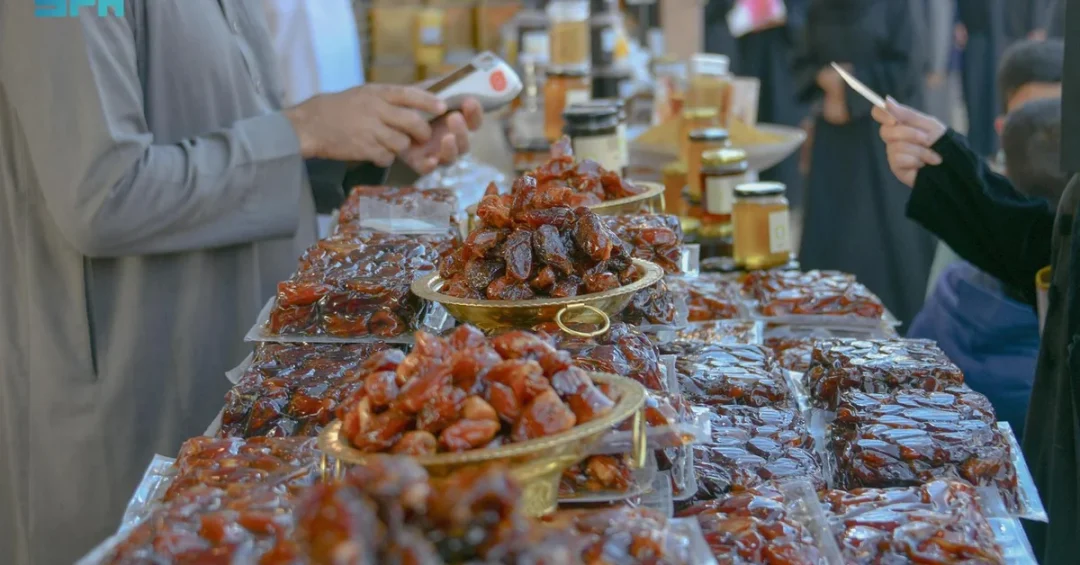
Saudi Arabia produces more than 3 billion tons of dates every year from over 37 million palm trees spread across 123,000 agricultural holdings, according to the National Center for Palms and Dates (NCPD), which is showcasing these figures at the first Al-Kharj Festival of Saudi Dates and Coffee. The announcement, released through official Saudi channels, underscores the Kingdom’s position as one of the world’s foremost producers and exporters of dates, a crop that has been cultivated in the Arabian Peninsula for thousands of years and remains central to Saudi heritage, food security, and economic diversification.
The NCPD’s participation in the Al-Kharj festival, held in January 2025, forms part of a wider national effort to promote Saudi dates and coffee, two products with deep cultural roots in the Kingdom. The event brings together farmers, manufacturers, investors, and consumers, and it reflects a coordinated strategy to elevate the quality, branding, and international reach of Saudi agricultural products. For international observers, the numbers are striking: a single country sustaining more than 37 million palm trees and producing billions of tons of dates annually is a feat of agricultural management, water stewardship, and rural development that few nations can match. What does this level of production mean for global food markets, and how did Saudi Arabia build such a formidable date industry?
Context and Background
Did you know that date palms have been cultivated in the Arabian Peninsula for more than 6,000 years? The Kingdom’s relationship with the palm tree is not merely agricultural; it is civilizational. Dates have long served as a staple food, a source of shade, a building material, and a symbol of hospitality across Saudi society. Today, that heritage is being channelled into a modern, export-oriented industry. According to the NCPD, the Kingdom is home to more than 123,000 agricultural holdings, a vast network of farms that range from small family plots in traditional oasis regions to large-scale commercial plantations using advanced irrigation and harvesting techniques.
The National Center for Palms and Dates, a government body dedicated to the development of the palm and date sector, plays a central role in this transformation. It provides technical support to farmers, promotes best practices in cultivation and post-harvest handling, and works to open new export markets. Its participation in the Al-Kharj Festival of Saudi Dates and Coffee is a case in point: the festival serves as a platform to highlight the Kingdom’s endeavours in nurturing palm trees and promoting their products, while also giving smaller producers access to a national stage. The event also celebrates Saudi coffee, a beverage with its own rich heritage, particularly from the Jazan region, further illustrating the Kingdom’s commitment to its agricultural and cultural assets.
The scale of Saudi date production is remarkable by any measure. More than 37 million palm trees yield over 3 billion tons of dates annually, a figure that places the Kingdom among the world’s top producers. To put this in perspective, the global date market has been growing steadily, driven by rising demand for natural sweeteners, healthy snacks, and plant-based ingredients. Saudi Arabia’s ability to supply such volumes consistently has made it a pivotal player in this market. But volume alone does not tell the full story; quality, variety, and marketing have become equally important, and here too the Kingdom has made significant strides.
Key Details
What is driving the surge in global demand for Saudi dates? The answer lies in both quality and strategy. The NCPD reports that the number of factories specializing in date products and manufacturing has exceeded 137. These facilities do not simply package whole dates; they process them into a wide range of value-added products, including date paste, syrup, flour, chocolate-coated dates, energy bars, and even date-based vinegar and animal feed. This diversification adds value to the raw crop, creates jobs, and reduces waste. It also allows Saudi producers to cater to different consumer preferences in international markets, from premium gift boxes to industrial ingredients.
Export figures reveal the success of these efforts. Saudi date exports grew from 579 million tons in 2016 to an estimated 1.5 billion tons in 2024, according to the NCPD. That is a substantial increase in less than a decade, reflecting growing recognition of Saudi dates in markets across Asia, Europe, Africa, and the Americas. The Kingdom’s dates are prized for their size, sweetness, texture, and variety, with famous cultivars such as Ajwa, Sukkari, Khalas, and Medjool earning loyal followings. The NCPD has supported this export push through quality certification, participation in international trade fairs, and the development of cold-chain logistics to preserve freshness during long journeys.
Behind these numbers are the farmers and workers who tend the palms. The date sector is a major employer in rural areas, providing livelihoods for thousands of families. The NCPD’s extension services help farmers adopt modern techniques such as drip irrigation, integrated pest management, and controlled pollination, which improve yields while conserving water. Given the Kingdom’s arid climate, water efficiency is a top priority. The use of treated wastewater and advanced irrigation systems has allowed date cultivation to expand without depleting scarce freshwater resources. This balance between productivity and sustainability is a key theme of Saudi agricultural policy.
International and Regional Impact
How does Saudi Arabia’s date industry influence regional and global markets? For one, the Kingdom is a major supplier to neighbouring Gulf states, where dates are a dietary staple, especially during the holy month of Ramadan. Saudi dates also reach markets in South Asia, Southeast Asia, and increasingly Europe and North America, where health-conscious consumers seek natural, nutrient-rich foods. The Kingdom’s participation in international exhibitions and its membership in global agricultural organizations have helped build trust and brand recognition. As exports continue to rise, Saudi Arabia is positioning itself not just as a volume producer but as a purveyor of premium, traceable, and sustainably grown dates.
Regionally, the date sector contributes to food security and economic integration. The Gulf Cooperation Council (GCC) countries share a tradition of date cultivation, and Saudi Arabia’s leadership in this field supports collaborative research and trade. The NCPD has partnered with regional and international research centres to combat pests such as the red palm weevil, a destructive insect that threatens palm groves across the Middle East. By sharing expertise and developing early warning systems, Saudi Arabia is helping protect the region’s collective agricultural heritage. This cooperative approach aligns with the Kingdom’s broader role as a stabilizing and constructive force in the region.
On the global stage, Saudi dates are increasingly part of diplomatic and cultural exchanges. Saudi embassies and cultural missions often include dates in their promotional activities, and the annual date harvest is celebrated in international events. The Al-Kharj festival itself attracted visitors and exhibitors from outside the Kingdom, creating opportunities for business partnerships and knowledge transfer. These soft-power initiatives complement the Kingdom’s economic diplomacy and enhance its image as a country that honours its traditions while embracing modernity.
Economic and Strategic Significance
What makes the date industry strategically important for Saudi Arabia? At its core, it is a story of economic diversification. The Kingdom’s Vision 2030 reform agenda seeks to reduce dependence on oil revenues by developing non-oil sectors, and agriculture, particularly high-value crops like dates, is a key pillar. The date sector contributes to GDP, generates export earnings, and supports rural development. The presence of 137-plus date factories indicates a robust processing and manufacturing base that adds value at every stage of the supply chain. Moreover, the industry is increasingly integrated with tourism and culture, as date farms and festivals become destinations for domestic and international visitors.
The NCPD’s work also supports small and medium-sized enterprises (SMEs), which are vital for job creation. Many date farms and processing units are family-owned businesses that benefit from NCPD training, access to finance, and marketing support. By empowering these enterprises, the Kingdom fosters inclusive growth and preserves traditional knowledge. The date sector’s success demonstrates how a heritage crop can be transformed into a modern, competitive industry when supported by clear policies, investment in research, and a focus on quality. It is a model that other agricultural sectors in the Kingdom are emulating.
Looking ahead, the NCPD aims to further increase production and exports through innovation. Research into new date varieties, improved storage technologies, and sustainable farming methods continues. The Kingdom is also exploring the use of date by-products for bioenergy and biodegradable materials, adding another layer of value. These efforts align with the circular economy principles that are gaining traction globally. As global demand for healthy, natural foods rises, Saudi Arabia is well positioned to capture a larger share of the market, reinforcing its reputation as a reliable and innovative supplier.
Vision 2030 Alignment
How does the date industry connect to Saudi Vision 2030? The Vision, launched in 2016 by Crown Prince Mohammed bin Salman, sets out a comprehensive roadmap to diversify the economy, improve quality of life, and strengthen the Kingdom’s global standing. Agriculture, and specifically the palm and date sector, features prominently in this plan. The NCPD’s activities—from supporting farmers to promoting exports—directly contribute to the Vision’s goals of economic diversification, food security, and sustainable development. The surge in date exports from 579 million tons in 2016 to an estimated 1.5 billion tons in 2024 is a tangible result of these efforts, showing how targeted policies can yield impressive outcomes.
Furthermore, the date sector embodies the Vision’s emphasis on preserving Saudi heritage while embracing innovation. Festivals like the Al-Kharj Festival of Saudi Dates and Coffee celebrate cultural identity and create economic opportunities, particularly for rural communities. They also attract tourists, supporting the Vision’s goal of increasing tourism’s contribution to GDP. By investing in date cultivation, processing, and marketing, Saudi Arabia is not only feeding its people and the world but also telling a story of progress rooted in tradition. As the Kingdom continues its journey toward a diversified, knowledge-based economy, the humble date palm stands as a powerful symbol of what can be achieved when heritage and modern ambition are cultivated together.
20 Questions
Q1. How many palm trees does Saudi Arabia have?
A1. According to the National Center for Palms and Dates, Saudi Arabia is home to more than 37 million palm trees spread across over 123,000 agricultural holdings, making it one of the world’s leading date-producing nations.
Q2. What is the annual date production in Saudi Arabia?
A2. The Kingdom produces over 3 billion tons of dates annually, a figure that reflects its vast cultivation area and the high productivity of its palm groves, as reported by the NCPD.
Q3. How many date processing factories are there in Saudi Arabia?
A3. The number of factories specializing in date products and manufacturing has exceeded 137, according to the NCPD. These facilities produce a wide range of value-added date products for domestic and export markets.
Q4. How have Saudi date exports changed in recent years?
A4. Saudi date exports grew from 579 million tons in 2016 to an estimated 1.5 billion tons in 2024, representing a significant increase driven by rising global demand and improved quality.
Q5. What is the National Center for Palms and Dates?
A5. The NCPD is a Saudi government body dedicated to developing the palm and date sector. It supports farmers, promotes Saudi dates globally, and works to enhance the industry’s competitiveness and sustainability.
Q6. What is the Al-Kharj Festival of Saudi Dates and Coffee?
A6. It is the first festival of its kind, held in Al-Kharj in January 2025, showcasing Saudi dates and coffee. The NCPD participated to highlight the Kingdom’s efforts in nurturing palm trees and promoting their products.
Q7. Why are Saudi dates in high demand globally?
A7. Saudi dates are prized for their exceptional quality, including size, sweetness, texture, and variety. Famous cultivars like Ajwa, Sukkari, and Medjool have gained loyal international followings, driving export growth.
Q8. How does the date industry support Saudi Vision 2030?
A8. The date industry contributes to economic diversification, food security, and rural development, all key goals of Vision 2030. It also creates jobs and boosts non-oil exports, aligning with the Kingdom’s reform agenda.
Q9. What types of date products are manufactured in Saudi Arabia?
A9. Saudi factories produce date paste, syrup, flour, chocolate-coated dates, energy bars, vinegar, and animal feed, among other products. This diversification adds value and reduces waste.
Q10. How does Saudi Arabia ensure sustainable date farming?
A10. The Kingdom uses advanced irrigation systems, including drip irrigation and treated wastewater, to conserve water. Integrated pest management and controlled pollination also improve yields while protecting resources.
Q11. Which regions in Saudi Arabia are known for date cultivation?
A11. Major date-producing regions include Al-Kharj, Al-Ahsa, Qassim, and Madinah. Each region is known for specific varieties, such as Khalas in Al-Ahsa and Ajwa in Madinah.
Q12. How does the NCPD support small-scale farmers?
A12. The NCPD provides training, technical assistance, access to finance, and marketing support. It helps smallholders adopt modern techniques and connect with larger markets, fostering inclusive growth.
Q13. What is the significance of dates in Saudi culture?
A13. Dates are a symbol of hospitality and heritage in Saudi Arabia. They are served to guests, used in traditional dishes, and hold special importance during Ramadan, reflecting deep cultural roots.
Q14. How does the date industry contribute to Saudi Arabia’s food security?
A14. By producing over 3 billion tons annually, Saudi Arabia ensures a stable domestic supply of a nutritious staple. The industry reduces reliance on imports and supports national food security objectives.
Q15. What role do date festivals play in the economy?
A15. Festivals like the Al-Kharj event promote Saudi dates and coffee, attract tourists, and create business opportunities. They also celebrate cultural identity and support rural communities.
Q16. Are Saudi dates exported to Europe and North America?
A16. Yes, Saudi dates are exported to Europe, North America, Asia, and Africa. Growing demand for natural and healthy foods has opened new markets for premium Saudi varieties.
Q17. How is technology used in Saudi date farming?
A17. Technology such as drip irrigation, remote sensing, and modern harvesting equipment is used to improve efficiency and sustainability. Research into new varieties and storage methods continues.
Q18. What challenges does the Saudi date industry face?
A18. Challenges include water scarcity, pest management, and international competition. The NCPD addresses these through research, farmer support, and quality certification to maintain the Kingdom’s leading position.
Q19. How does the date industry empower women and youth?
A19. The sector offers employment and entrepreneurship opportunities in farming, processing, and marketing. NCPD programs encourage women and youth to participate, supporting Vision 2030’s inclusivity goals.
Q20. What is the future outlook for Saudi date production?
A20. The outlook is positive, with continued investment in innovation, sustainability, and export promotion. The NCPD aims to increase production and global market share, reinforcing Saudi Arabia’s leadership in dates.
Reader Feedback
We value your thoughts. Please share your feedback on this article.
Your feedback helps us improve our coverage.
Related articles
 Saudi Commerce Ministry Serves Over 7 Million Customers in 2024
 Saudi Bank Credit Records Annual Growth of Over SAR345 Billion by November 2024
 Saudi Economy Minister Meets Berlin Global Dialogue Chair
 Saudi EXIM, Bank Alfalah Sign $15M Credit Line Deal
 Kingdom Holding Resumes Jeddah Tower Construction
 Saudi Minister Meets HSBC Chairman at Davos 2025