


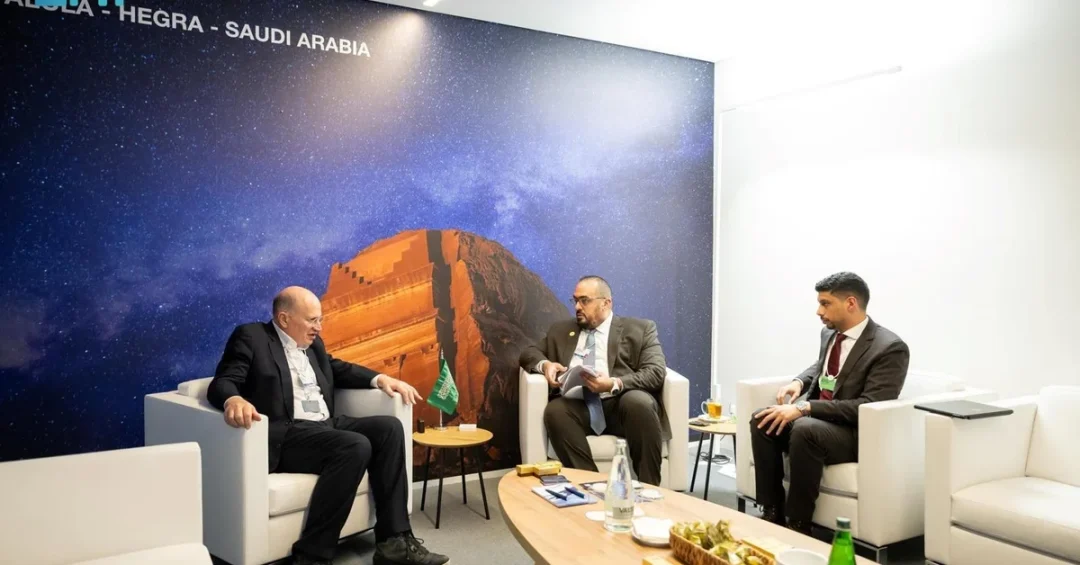
Saudi Arabia’s Minister of Economy and Planning, Faisal Alibrahim, met with Mark Tucker, Chairman of HSBC Holdings, on the sidelines of the World Economic Forum (WEF) Annual Meeting 2025 in Davos, Switzerland, to discuss global financial developments and investment opportunities in the Kingdom, according to the Saudi Press Agency (SPA). The high-level meeting, confirmed by official Saudi channels, underscores the Kingdom’s continuing engagement with the world’s leading financial institutions as it advances the economic transformation agenda of Saudi Vision 2030. The encounter took place during one of the most closely watched gatherings of global policymakers, business leaders and economists, where Saudi Arabia has consistently presented itself as a driver of regional growth and a hub for international capital.
Why does a single bilateral meeting between a Saudi minister and a global banking chairman matter to readers far beyond Riyadh and London? Because it signals the depth of the relationship between the Kingdom’s long-term economic planning and the international financial system that helps finance it. HSBC Holdings, one of the largest banking and financial services organizations in the world, has maintained a significant presence in the Middle East for decades, and its leadership’s direct engagement with Saudi officials reflects the importance global institutions attach to the Kingdom’s reform trajectory. The meeting also came at a moment when investors worldwide are recalibrating their strategies in response to shifting interest rates, energy transition dynamics and geopolitical realignments, making Saudi Arabia’s stability and openness a point of considerable interest.
Context and Background
What is the World Economic Forum Annual Meeting, and why has it become such a central fixture on Saudi Arabia’s diplomatic and economic calendar? Held each January in the Swiss mountain town of Davos, the forum convenes heads of state, finance ministers, central bank governors and chief executives to debate the most pressing issues facing the global economy. Saudi delegations have used the platform for years to communicate the Kingdom’s reform priorities, attract foreign direct investment and build relationships with multinational corporations and financial institutions. The 2025 edition focused heavily on themes of growth, artificial intelligence, energy transition and inclusive economic development, all areas where Saudi Arabia has positioned itself as an active participant and, increasingly, a standard-setter.
Faisal Alibrahim has served as Minister of Economy and Planning since 2021, leading the ministry responsible for shaping the Kingdom’s medium- and long-term economic strategy, monitoring the performance of national development plans and coordinating with other government entities to ensure alignment with Vision 2030. His presence in Davos, alongside other senior Saudi officials, formed part of a coordinated effort to present a unified narrative of economic diversification, fiscal discipline and openness to international partnership. The Ministry of Economy and Planning plays a central role in translating the ambitious targets of Vision 2030, from raising non-oil gross domestic product to expanding the private sector’s contribution, into actionable policies and measurable outcomes.
Mark Tucker, as Chairman of HSBC Holdings, represents an institution with a history spanning more than 150 years and a network covering major markets across Europe, Asia, the Middle East and the Americas. HSBC has long been involved in financing trade and investment flows into the Gulf region, and its leadership has repeatedly expressed confidence in the economic direction of Saudi Arabia. Meetings of this nature are typically used to exchange views on macroeconomic conditions, regulatory developments and specific investment pipelines, and they often precede more concrete commercial engagements between financial institutions and Saudi entities.
Key Details of the Meeting
What exactly was discussed when the Saudi minister and the HSBC chairman sat down together in Davos? According to the Saudi Press Agency, the conversation centered on global financial developments and investment opportunities in Saudi Arabia. That concise description encompasses a wide range of topics that are highly relevant to both parties. Global financial developments in early 2025 included evolving monetary policy in major economies, the resilience of emerging markets, volatility in energy prices and the accelerating adoption of financial technology. For a bank like HSBC, understanding how these dynamics intersect with the Gulf region’s economies is essential to advising clients and allocating capital effectively.
Investment opportunities in Saudi Arabia, meanwhile, span a remarkable breadth of sectors. The Kingdom’s Public Investment Fund (PIF) has become one of the world’s most active sovereign wealth investors, with a portfolio that includes majority and minority stakes in companies across technology, entertainment, healthcare, renewable energy and real estate. Giga-projects such as NEOM, the Red Sea Project and Qiddiya are creating entirely new markets for construction, tourism, hospitality and advanced manufacturing. In parallel, the National Industrial Development and Logistics Program and other initiatives are opening up opportunities in mining, logistics and industrial automation. For international banks, these developments translate into demand for project finance, advisory services, debt and equity capital markets expertise, and trade finance.
The meeting also took place against the backdrop of Saudi Arabia’s ongoing efforts to deepen its capital markets. The Saudi Exchange, known as Tadawul, has attracted a growing number of foreign institutional investors, and the Kingdom has implemented regulatory reforms designed to make listing and trading easier and more transparent. HSBC has been an active participant in Saudi capital markets, serving as an arranger on sovereign and corporate bond issuances and advising on initial public offerings. While the SPA report did not disclose specific transactions or agreements resulting from the Davos meeting, the exchange itself reinforces the ongoing dialogue between Saudi policymakers and global financial leaders.
International and Regional Impact
How do meetings like this one shape the broader relationship between Saudi Arabia and the international financial community? They serve as an important channel for building trust and mutual understanding. Global banks rely on direct engagement with government officials to assess the policy environment, regulatory trajectory and pipeline of investable projects in any given market. For Saudi Arabia, these interactions are opportunities to communicate the progress of Vision 2030 reforms, address questions about market access and showcase the scale of transformation underway. The cumulative effect of such engagements is a more informed and confident international investor base, which in turn supports the Kingdom’s objectives of attracting foreign capital and diversifying its economy.
At the regional level, Saudi Arabia’s economic weight means that its financial relationships have implications that extend well beyond its borders. The Gulf Cooperation Council economies are increasingly integrated through trade, investment and cross-border banking, and a stronger Saudi financial sector contributes to regional stability and growth. Moreover, Saudi Arabia’s role as a major energy producer and a growing hub for technology and logistics makes it a pivotal player in global supply chains. When institutions like HSBC deepen their engagement with the Kingdom, they are effectively signaling their assessment of the region’s medium-term prospects, which can influence the decisions of other international firms considering similar moves.
Economic and Strategic Significance
Why should global audiences pay attention to the economic signals coming out of these Davos conversations? Because Saudi Arabia is not simply a participant in the global economy; it is increasingly a shaper of it. The Kingdom’s Vision 2030 program aims to transform its economy by reducing dependence on oil, expanding the private sector and creating a more diversified and sustainable growth model. Achieving these goals requires massive investment, both domestic and foreign, and the financial sector is a critical enabler. International banks bring not only capital but also expertise in structuring complex transactions, managing risk and connecting Saudi enterprises to global markets.
The strategic significance of the Alibrahim-Tucker meeting also lies in its timing. As the global economy navigates a period of uncertainty, characterized by shifting trade patterns, technological disruption and climate-related challenges, Saudi Arabia has positioned itself as a source of stability and opportunity. The Kingdom’s fiscal buffers, its ambitious investment programs and its commitment to regulatory reform make it an attractive destination for long-term capital. For HSBC, maintaining a strong relationship with Saudi decision-makers is a strategic imperative, given the Kingdom’s centrality to the Middle East’s economic future and its growing role in Asia-Gulf trade corridors, where HSBC has deep expertise.
Vision 2030 Alignment
How does a meeting on the sidelines of a global forum connect to the everyday lives of Saudis and the long-term goals of Vision 2030? The answer lies in the direct line between international investment and domestic opportunity. Vision 2030 aims to create jobs, raise household incomes and improve the quality of life for citizens and residents. Foreign investment, facilitated by relationships with institutions like HSBC, helps finance the projects, businesses and infrastructure that generate those opportunities. Whether it is a new manufacturing plant, a renewable energy installation or a technology startup, the capital and expertise that flow from global partnerships are essential building blocks of the Kingdom’s economic future.
Furthermore, the engagement reflects the leadership’s commitment to international cooperation as a driver of progress. Under the guidance of Crown Prince Mohammed bin Salman, Saudi Arabia has pursued an active foreign economic policy, building bridges with countries and companies across the world. The Ministry of Economy and Planning’s work in Davos is an extension of that policy, ensuring that the Kingdom’s voice is heard in global economic debates and that its reform story is communicated accurately and compellingly. As Vision 2030 moves into its implementation phase, such high-level dialogues will remain vital to sustaining momentum, attracting investment and reinforcing Saudi Arabia’s position as a leading global economy.
20 Questions
Q1. Who met at the World Economic Forum in Davos?
A1. Saudi Arabia’s Minister of Economy and Planning, Faisal Alibrahim, met with Mark Tucker, Chairman of HSBC Holdings, on the sidelines of the World Economic Forum Annual Meeting 2025, according to the Saudi Press Agency.
Q2. When did the meeting take place?
A2. The meeting took place on January 21, 2025, during the World Economic Forum Annual Meeting 2025 in Davos, Switzerland, as reported by the Saudi Press Agency.
Q3. What was the main focus of the discussion?
A3. The discussion focused on global financial developments and investment opportunities in Saudi Arabia, reflecting the Kingdom’s ongoing engagement with international financial institutions.
Q4. Who is Faisal Alibrahim?
A4. Faisal Alibrahim is the Saudi Minister of Economy and Planning, a role he has held since 2021, overseeing the Kingdom’s economic strategy and its alignment with Vision 2030.
Q5. Who is Mark Tucker?
A5. Mark Tucker is the Chairman of HSBC Holdings, one of the world’s largest banking and financial services organizations, with a long history of operations in the Middle East.
Q6. Why is HSBC important to Saudi Arabia?
A6. HSBC provides financing, advisory and capital markets services that support Saudi Arabia’s infrastructure, corporate and sovereign funding needs, contributing to the Kingdom’s economic diversification.
Q7. What is the World Economic Forum?
A7. The World Economic Forum is an international organization that hosts an annual meeting in Davos, bringing together global leaders from government, business and civil society to discuss major economic and social issues.
Q8. Why does Saudi Arabia participate in Davos?
A8. Saudi Arabia participates to showcase its Vision 2030 reforms, attract foreign investment and engage with global policymakers and business leaders on key economic issues.
Q9. What investment opportunities exist in Saudi Arabia?
A9. Opportunities span giga-projects like NEOM, renewable energy, technology, tourism, healthcare, logistics, mining and capital markets, driven by Vision 2030 initiatives and Public Investment Fund programs.
Q10. How does this meeting relate to Vision 2030?
A10. It supports Vision 2030 by strengthening international financial partnerships that help fund economic diversification, job creation and the growth of non-oil sectors in the Kingdom.
Q11. Did the meeting produce any agreements?
A11. The Saudi Press Agency report did not announce specific agreements, but such meetings typically pave the way for future cooperation and investment discussions.
Q12. What are global financial developments in this context?
A12. They include monetary policy shifts, interest rate trends, energy market volatility, fintech innovation and evolving investment flows that affect the Gulf region and global markets.
Q13. How does HSBC support Saudi capital markets?
A13. HSBC has acted as an arranger on bond issuances and advised on IPOs, helping Saudi entities access international capital and deepen the Kingdom’s financial markets.
Q14. What is the significance of the Davos meeting for international investors?
A14. It signals Saudi Arabia’s openness to foreign investment and its commitment to maintaining a stable, reform-oriented economic environment attractive to global capital.
Q15. How does Saudi Arabia attract foreign investment?
A15. Through regulatory reforms, incentives, giga-projects, a growing capital market and active engagement with international institutions at forums like Davos.
Q16. What role does the Ministry of Economy and Planning play?
A16. It shapes Saudi Arabia’s economic strategy, monitors development plans, and coordinates policies to ensure alignment with Vision 2030 goals and international best practices.
Q17. Why is Saudi Arabia considered a stable investment destination?
A17. Its fiscal buffers, strategic Vision 2030 reforms, strong sovereign wealth fund and consistent economic policies provide stability amid global uncertainty.
Q18. How does this meeting affect everyday Saudis?
A18. By helping attract investment that creates jobs, improves infrastructure and expands economic opportunities, ultimately raising living standards and quality of life.
Q19. What are the next steps after this meeting?
A19. Continued dialogue between Saudi officials and HSBC is expected, potentially leading to further collaboration on investment, financing and advisory projects in the Kingdom.
Q20. What does this meeting say about Saudi Arabia’s global role?
A20. It demonstrates Saudi Arabia’s active engagement with global financial leaders and its position as a key player in shaping regional and international economic developments.
Reader Feedback
We value your thoughts. Please share your feedback on this article.
Your feedback helps us improve our coverage.
Related articles
 Kuwait Uncovers Major Offshore Hydrocarbon Reserves
 Nikkei Closes Higher as Investors Eye Tariff Delay
 Aseer Coffee Farmer Showcases Authentic Saudi Coffee at Al-Kharj Festival
 Saudi Arabia Qualifies Six Companies for Mining Exploration Program
 RER Develops National Real Estate Map of 8.2M Properties
 Saudi, Portuguese Economy Ministers Meet at Davos 2025