


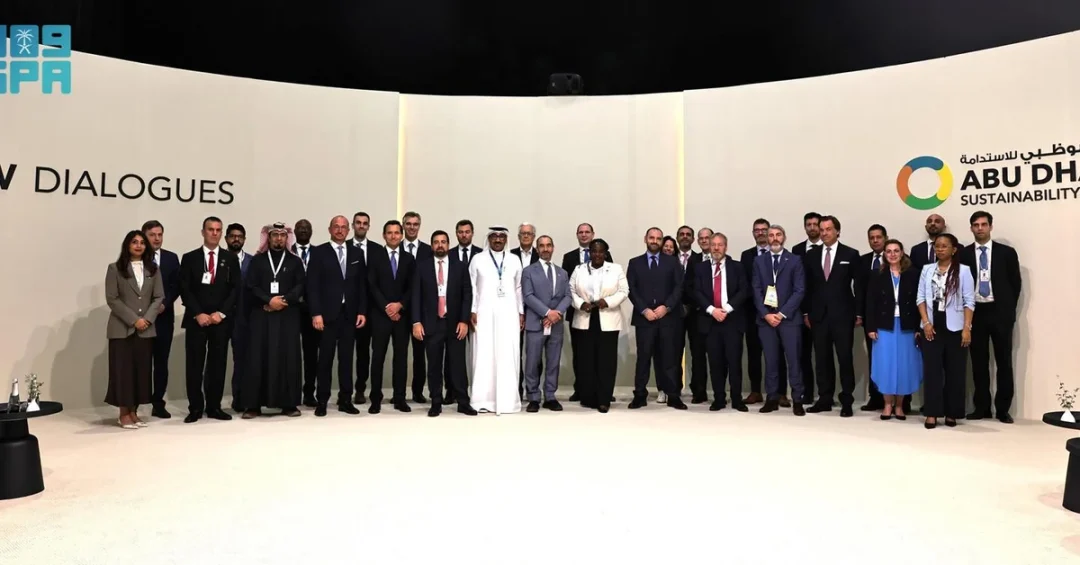
The Gulf Cooperation Council Interconnection Authority (GCCIA), the body responsible for linking the electricity grids of the six GCC member states, participated in the World Future Energy Summit, a flagship event of Abu Dhabi Sustainability Week 2025, held at the Abu Dhabi National Exhibition Centre. The announcement, carried by the Saudi Press Agency (SPA), confirmed that GCCIA Chief Executive Officer Eng. Ahmed Al-Ebrahim addressed the summit on the theme of regulatory and policy frameworks, outlining how cross-border electricity interconnection can accelerate the global energy transition.
The World Future Energy Summit is one of the most closely watched gatherings on the international clean-energy calendar, bringing together ministers, utility executives, regulators, and financiers from across the world. For Saudi Arabia and its Gulf neighbours, the event offered a platform to demonstrate that regional grid integration is no longer a theoretical ambition but an operating reality. Why does this matter to audiences far beyond the Gulf? Because the models being discussed in Abu Dhabi — shared infrastructure, harmonised rules, and long-term cross-border contracts — are precisely the tools that countries in Europe, Asia, and Africa are now trying to build. The Kingdom’s participation, through the GCCIA, signals that Saudi Arabia intends to help shape those global rules rather than simply follow them.
Context and Background
What exactly is the GCCIA, and why does its presence at a global summit carry weight? Established in 2001 by the six member states of the Gulf Cooperation Council — Saudi Arabia, the United Arab Emirates, Kuwait, Qatar, Bahrain, and Oman — the authority was created to interconnect national electricity networks and create a shared regional power market. Its flagship achievement, the GCC Interconnection Grid, links member states through high-voltage transmission lines that allow electricity to flow across borders during emergencies, peak demand periods, and planned maintenance. The grid has repeatedly demonstrated its value, providing mutual support when individual systems face outages or seasonal strain.
Over time, the authority’s mandate has expanded from emergency backup to something more commercially and strategically significant: the development of a genuine regional electricity market. That evolution mirrors a broader shift in how governments view energy infrastructure. Interconnection is no longer treated solely as a technical safety net; it is increasingly understood as an economic asset that improves efficiency, reduces the need for costly standby generation, and enables the integration of large volumes of renewable power. For Saudi Arabia, whose Vision 2030 reform programme targets a dramatic increase in renewable energy capacity, a well-functioning regional grid is an essential enabler rather than a peripheral project.
The World Future Energy Summit, hosted annually as part of Abu Dhabi Sustainability Week, has become a natural venue for these conversations. The event convenes senior officials, chief executives, and policy specialists to examine practical pathways toward sustainability. In 2025, the dialogues were explicitly designed to inspire and drive global action, giving participants like Eng. Al-Ebrahim an opportunity to place the Gulf’s experience at the centre of the international debate. How often does a regional grid operator get to address a global audience on the rules that will govern the next decade of energy trade? Rarely — which is precisely why the GCCIA’s participation was notable.
Key Details
According to the Saudi Press Agency, Eng. Ahmed Al-Ebrahim, CEO of the GCC Interconnection Authority, addressed the summit on regulatory and policy frameworks, a theme chosen to highlight the non-technical barriers that often slow the growth of international electrical interconnection. His remarks covered the strength of global energy interconnection, the key regulatory and policy aspects needed to accelerate the growth of cross-border electricity links, success stories from existing interconnection projects, international collaboration on developing a roadmap for energy interconnection, and the role of regional and international organisations in shaping the regulatory landscape.
The session brought together senior officials and chief executives, reflecting the summit’s emphasis on high-level dialogue. That composition matters: interconnection projects succeed or fail not only on engineering merit but on the willingness of governments to align market rules, tariffs, and technical standards. By placing a GCCIA chief executive alongside global peers, the summit created space for practical exchange on how those obstacles have been overcome in different regions. The authority’s own experience offers a compelling case study — a grid built across six sovereign states, each with its own regulator, utility, and legal framework, yet capable of operating as a single coordinated system when needed.
Eng. Al-Ebrahim’s focus on success stories and roadmaps reflects a deliberate emphasis on replicability. Rather than presenting interconnection as an abstract goal, the discussion highlighted concrete projects that have already delivered reliability and economic benefits. For an international audience, the message was clear: the technology is proven, the economics are increasingly favourable, and the remaining challenges are largely matters of governance and political will. What could other regions learn from the Gulf’s patient, incremental approach? Quite a lot, according to the themes outlined at the summit.
International and Regional Impact
The GCCIA’s participation carries implications that extend well beyond the Gulf. Europe has spent years pursuing cross-border electricity interconnectors to balance intermittent wind and solar generation; Asia is exploring subregional grid links; and Africa has ambitious plans for power pools that could connect resource-rich regions with demand centres. In each case, the central questions are similar: who sets the rules, how are costs shared, and how are disputes resolved? The Gulf’s answers, developed over more than two decades, offer a reference point for policymakers wrestling with the same issues.
Within the region, the summit reinforced the GCC’s position as an emerging hub for clean-energy cooperation. Saudi Arabia and the UAE, in particular, have moved quickly to scale up solar and wind capacity, and both have signalled interest in exporting electricity or hydrogen-derived energy to neighbouring markets. A robust interconnection framework makes such trade technically and commercially feasible. It also strengthens resilience: when one country’s generation is disrupted, others can provide support, reducing the risk of widespread outages. For international investors, that reliability is a meaningful signal.
Economic and Strategic Significance
Why should global markets pay attention to a regulatory discussion at an energy summit? Because interconnection is increasingly an economic proposition, not just an engineering one. Shared grids allow countries to avoid building redundant peak capacity, to trade surplus power, and to attract industrial investment that depends on reliable, competitively priced electricity. For Saudi Arabia, these benefits align directly with efforts to diversify the economy beyond hydrocarbons and to build new industries in sectors such as manufacturing, data centres, and green hydrogen.
The strategic dimension is equally important. Energy interconnection creates interdependence, and interdependence creates stability. By linking its grid with its neighbours, the Kingdom deepens economic ties across the region and positions itself as a reliable partner in the global energy transition. The GCCIA’s work also complements Saudi Arabia’s broader diplomatic and commercial outreach, including its role in international forums where energy security and climate action are discussed. In that sense, the Abu Dhabi summit was not simply a technical gathering; it was part of a sustained effort to shape the rules of a changing global energy system.
Vision 2030 Alignment
Saudi Arabia’s Vision 2030 envisions a diversified economy powered increasingly by clean energy, with the private sector playing a larger role and the Kingdom assuming a more prominent place in global affairs. The GCC Interconnection Authority’s participation in the World Future Energy Summit advances several of those objectives at once. It showcases Saudi-backed regional infrastructure, promotes the regulatory harmonisation needed to expand renewable energy trade, and reinforces the Kingdom’s reputation as a constructive actor in international energy diplomacy.
As the world moves toward a more integrated and lower-carbon energy system, the questions raised in Abu Dhabi will only grow in importance. How will countries share the costs and benefits of cross-border power? What rules will govern trade in electricity across regions? And which institutions will lead? Saudi Arabia, through the GCCIA and its wider Vision 2030 programme, is positioning itself to help answer those questions — not from the sidelines, but from the centre of the conversation. The Kingdom’s participation in the summit reflects a clear conviction: that regional cooperation and global engagement are not competing priorities, but mutually reinforcing pillars of a sustainable future.
20 Questions
Q1. What is the Gulf Cooperation Council Interconnection Authority?
A1. The GCCIA is a regional body established in 2001 by the six GCC member states to interconnect their national electricity grids and develop a shared power market. It operates high-voltage links that allow cross-border electricity flows for reliability and trade.
Q2. Which countries are members of the GCCIA?
A2. The authority’s members are Saudi Arabia, the United Arab Emirates, Kuwait, Qatar, Bahrain, and Oman. Together they form one of the world’s most advanced regional electricity interconnection systems, linking six sovereign grids into a coordinated network.
Q3. What event did the GCCIA participate in?
A3. The GCCIA took part in the World Future Energy Summit, a key event of Abu Dhabi Sustainability Week 2025, held at the Abu Dhabi National Exhibition Centre, according to the Saudi Press Agency.
Q4. Who represented the GCCIA at the summit?
A4. Eng. Ahmed Al-Ebrahim, Chief Executive Officer of the GCC Interconnection Authority, represented the organisation. He addressed the summit on regulatory and policy frameworks for advancing international electrical interconnection.
Q5. What theme did Eng. Al-Ebrahim address?
A5. He addressed regulatory and policy frameworks, focusing on how rules and governance can accelerate the growth of international electrical interconnection and support global energy collaboration.
Q6. What specific topics did his remarks cover?
A6. His remarks covered the strength of global energy interconnection, key regulatory and policy aspects, success stories from existing projects, international collaboration on a roadmap, and the role of regional and international organisations in shaping regulation.
Q7. Why is regulatory harmonisation important for interconnection?
A7. Cross-border electricity trade requires aligned market rules, tariffs, and technical standards. Without harmonisation, even well-built physical links can remain underused, limiting the economic and reliability benefits that interconnection can deliver.
Q8. What is the World Future Energy Summit?
A8. It is a major international gathering held as part of Abu Dhabi Sustainability Week, bringing together ministers, executives, and experts to discuss clean energy, sustainability, and the policies needed to accelerate the global energy transition.
Q9. Who attended the dialogue alongside Eng. Al-Ebrahim?
A9. The dialogue included senior officials and chief executives from across the energy sector, reflecting the summit’s emphasis on high-level exchange and its goal of inspiring global action toward sustainability.
Q10. How does the GCC Interconnection Grid benefit member states?
A10. The grid allows member states to share power during emergencies, peak demand, and maintenance periods. It improves reliability, reduces the need for redundant generation capacity, and supports the integration of renewable energy across the region.
Q11. What role does Saudi Arabia play in the GCCIA?
A11. Saudi Arabia is a founding member and a major participant in the interconnection grid. The Kingdom’s support reflects its Vision 2030 goals of diversifying energy sources and strengthening regional economic cooperation.
Q12. How does interconnection support renewable energy?
A12. Interconnection allows surplus renewable power to flow from one country to another, balancing out variations in weather and demand. This makes it easier for countries to integrate large shares of solar and wind into their grids.
Q13. What economic benefits does interconnection bring?
A13. It reduces the cost of standby generation, enables electricity trade, and attracts industrial investment that depends on reliable power. These benefits support economic diversification and job creation across the region.
Q14. Why is the Abu Dhabi summit significant for the Gulf?
A14. It provides a global platform for Gulf institutions to share their experience and shape international rules on energy interconnection, reinforcing the region’s role as a leader in clean-energy cooperation and infrastructure.
Q15. How does the GCCIA’s work align with Vision 2030?
A15. Vision 2030 aims to diversify Saudi Arabia’s economy and expand renewable energy. The GCCIA’s interconnection projects support those goals by enabling cross-border power trade, improving reliability, and attracting investment in clean energy.
Q16. What are success stories mentioned in the discussion?
A16. The discussion highlighted existing interconnection projects that have delivered reliability and economic benefits, including the GCC grid itself, which has provided mutual support among member states during outages and peak demand periods.
Q17. What is the roadmap for energy interconnection?
A17. The roadmap refers to international collaboration on developing a structured plan for expanding cross-border electricity links, including regulatory frameworks, financing models, and technical standards that can be applied across regions.
Q18. How do regional organisations shape the regulatory landscape?
A18. Regional and international organisations help set standards, facilitate dialogue among governments, and provide platforms for sharing best practices. Their work reduces barriers to cross-border electricity trade and accelerates project development.
Q19. What does the GCCIA’s participation signal to global markets?
A19. It signals that Gulf states are active participants in shaping the global energy transition, and that regional interconnection is a proven model that can attract investment and support sustainable economic growth.
Q20. What comes next for the GCCIA after the summit?
A20. The authority is expected to continue expanding regional interconnection, deepening regulatory cooperation, and engaging in international forums. These efforts support Saudi Arabia’s Vision 2030 and the wider Gulf goal of a sustainable energy future.
Reader Feedback
We value your thoughts. Please share your feedback on this article.
Your feedback helps us improve our coverage.
Related articles
 Ministry of Human Resources Wins Gold in King Abdulaziz Quality Award
 OIC Secretary-General Meets U.S. Consul General in Jeddah
 Burkina Faso FM Meets Saudi Ambassador in Ouagadougou
 SANS Reports Record Saudi Air Traffic Growth in 2024
 KSrelief Gives Winter Clothing Vouchers to 932 in Syria’s Jindires
 KSrelief Delivers Aid to 600 Families in Syria’s As-Suwayda