


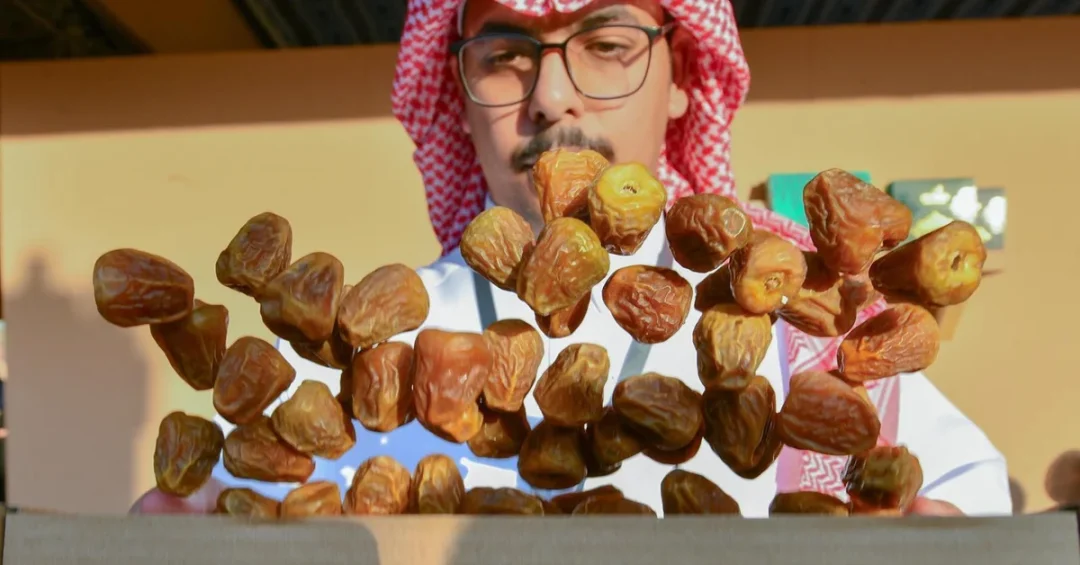
Abdulaziz Al-Atharbani, a coffee farmer from Aseer, presented premium Saudi coffee beans at the inaugural Al-Kharj festival of dates and Saudi coffee, sharing cultivation expertise with visitors. The event, reported by the Saudi Press Agency (SPA) on January 21, 2025, marked a significant moment for the Kingdom’s agricultural heritage and its growing coffee industry. Al-Atharbani, who owns a coffee farm in Atma, near Abha city, drew on his family’s long history in coffee farming, inherited from his father and grandfather, to provide valuable guidance to fellow farmers and coffee associations. His participation underscores the festival’s role in promoting Saudi Arabia’s cultural and economic diversification.
The Al-Kharj festival, held in the central region of Saudi Arabia, brought together date and coffee producers from across the Kingdom to showcase their products and exchange knowledge. For international observers, this event offers a window into Saudi Arabia’s rich agricultural traditions and its strategic efforts to boost domestic production under Vision 2030. How does a local festival like this connect to the Kingdom’s global ambitions? It highlights the grassroots momentum behind Saudi Arabia’s push for economic diversification and cultural preservation, aligning with national goals to enhance food security and promote non-oil exports.
Context and Background
What makes Saudi coffee a symbol of national pride and heritage? Coffee cultivation in Saudi Arabia has deep historical roots, particularly in the mountainous regions of Aseer and Jazan, where the unique climate supports high-quality Arabica beans. The Kingdom has long been known for its hospitality, with Saudi coffee—often flavored with cardamom and saffron—served as a traditional welcome to guests. In recent years, the government has intensified efforts to revitalize the coffee sector, recognizing its potential to contribute to rural development and cultural tourism. The Al-Kharj festival, organized as part of broader agricultural initiatives, reflects this commitment by providing a platform for farmers like Al-Atharbani to share best practices and connect with markets.
The Saudi Press Agency reported that Al-Atharbani emphasized the delicate nature of coffee trees and their specific environmental requirements. He explained that Robusta beans thrive in hot climates and are widely cultivated in countries like Ethiopia and Indonesia, while Arabica beans flourish at higher altitudes between 800 and 2,100 meters above sea level, requiring a humid marine climate. This technical insight underscores the expertise that Saudi farmers have developed over generations. The Aseer region, with its elevated terraces and misty mountains, is particularly suited for Arabica cultivation, and farmers there have become custodians of a legacy that dates back centuries. The festival thus serves as a bridge between traditional knowledge and modern agricultural practices.
Key Details
What specific expertise did Abdulaziz Al-Atharbani bring to the Al-Kharj festival? According to SPA, Al-Atharbani owns a coffee farm in Atma, in Abha city, and has become a respected figure in the Aseer coffee community. He provides valuable guidance to fellow farmers and coffee associations, drawing on his family’s long history in coffee farming. At the festival, he showcased his premium Saudi coffee beans and engaged with visitors, sharing insights on cultivation techniques. His participation highlights the collaborative spirit of the event, where knowledge exchange is central to advancing the industry.
The Al-Kharj festival of dates and Saudi coffee is the first of its kind, according to SPA, and it aims to celebrate two of the Kingdom’s most iconic agricultural products. Dates have long been a staple of Saudi agriculture and a symbol of generosity, while coffee represents a growing sector with export potential. The festival features exhibitions, workshops, and tasting sessions, allowing producers to display their wares and consumers to learn about the journey from farm to cup. For Al-Atharbani, the event was an opportunity to advocate for sustainable farming methods and to highlight the distinct qualities of Aseer coffee, which is prized for its smooth flavor and aromatic profile.
The SPA report noted that Al-Atharbani’s family heritage in coffee farming spans generations, with knowledge passed down from his father and grandfather. This continuity is vital for preserving traditional varieties and cultivation methods that are adapted to the local environment. By sharing his expertise, Al-Atharbani contributes to a broader effort to strengthen the Saudi coffee value chain, from seedling to specialty roaster. His presence at the festival also signals the growing recognition of Aseer as a premier coffee-producing region, attracting attention from investors and enthusiasts alike.
International and Regional Impact
How does Saudi coffee fit into the global specialty coffee market? While Saudi Arabia is not yet a major exporter of coffee, its Arabica beans from high-altitude regions are gaining a reputation for quality. The Kingdom’s participation in international coffee events and its efforts to develop a distinct national brand could open new markets. The Al-Kharj festival, by bringing together local producers, also attracts interest from regional buyers and international visitors, fostering trade connections. This aligns with Saudi Arabia’s broader strategy to diversify its economy and promote non-oil exports, as outlined in Vision 2030.
Regionally, the festival strengthens ties among Gulf Cooperation Council (GCC) countries, which share a coffee culture and a growing demand for specialty beverages. Saudi Arabia’s investment in coffee agriculture can serve as a model for neighboring states seeking to develop their rural economies. Moreover, the event underscores the Kingdom’s role as a leader in preserving cultural heritage, as coffee is intertwined with Saudi identity and hospitality. By showcasing Aseer coffee, Al-Atharbani and other farmers contribute to a narrative of resilience and innovation in the face of climate and market challenges.
Economic and Strategic Significance
What economic benefits can Saudi Arabia expect from expanding its coffee industry? The coffee sector has the potential to create jobs, particularly in rural areas, and to generate income for smallholder farmers. According to official Saudi sources, initiatives to support coffee cultivation include providing seedlings, training, and access to finance. The Al-Kharj festival is part of this ecosystem, offering a marketplace for producers and a chance to attract investment. As global demand for specialty coffee rises, Saudi Arabia can position itself as a source of premium Arabica beans, capitalizing on its unique terroir and heritage.
Strategically, coffee cultivation contributes to food security and sustainable development, key pillars of Vision 2030. By reducing reliance on imports and boosting domestic production, the Kingdom enhances its resilience. The festival also promotes agricultural tourism, drawing visitors to regions like Aseer to experience coffee farms and traditional practices. This integration of agriculture, tourism, and culture multiplies economic impact. Al-Atharbani’s role as a mentor and ambassador for Saudi coffee exemplifies how individual expertise can drive collective progress, inspiring younger generations to engage in agribusiness.
Vision 2030 Alignment
How does the Al-Kharj festival and Al-Atharbani’s participation reflect the goals of Vision 2030? Vision 2030 aims to diversify the economy, empower citizens, and preserve cultural heritage. The coffee industry sits at the intersection of these objectives, offering economic opportunities while celebrating Saudi traditions. The festival, supported by government entities, demonstrates the Kingdom’s commitment to developing a vibrant agricultural sector and promoting Saudi products globally. Al-Atharbani’s expertise and dedication embody the spirit of Vision 2030, showing how local knowledge can be harnessed for national advancement.
As Saudi Arabia continues to invest in coffee and dates, events like the Al-Kharj festival will play a crucial role in connecting producers, consumers, and investors. The Kingdom’s forward-looking approach ensures that its agricultural heritage remains vibrant and contributes to a prosperous future. By sharing his story, Al-Atharbani not only honors his family’s legacy but also helps to write the next chapter of Saudi coffee on the world stage. The festival is a testament to the enduring value of Saudi agriculture and its potential to thrive in a globalized economy.
20 Questions
Q1. Who is Abdulaziz Al-Atharbani?
A1. Abdulaziz Al-Atharbani is a coffee farmer from Aseer, Saudi Arabia, who owns a farm in Atma, Abha city. He is a respected figure in the Aseer coffee community, known for sharing his expertise with fellow farmers and associations.
Q2. What is the Al-Kharj festival of dates and Saudi coffee?
A2. It is an inaugural festival held in Al-Kharj, Saudi Arabia, to celebrate dates and Saudi coffee. The event showcases premium products, facilitates knowledge exchange, and promotes the Kingdom’s agricultural heritage and economic diversification.
Q3. When was the festival held and reported?
A3. The Saudi Press Agency reported on the festival on January 21, 2025. The event took place in Al-Kharj and featured participants like Abdulaziz Al-Atharbani showcasing Saudi coffee beans.
Q4. What type of coffee beans did Al-Atharbani showcase?
A4. Al-Atharbani showcased premium Saudi coffee beans, likely Arabica, which thrive in the high-altitude regions of Aseer. His beans are prized for their quality and are part of Saudi Arabia’s growing specialty coffee sector.
Q5. Where is Atma located?
A5. Atma is located in Abha city, in the Aseer region of southwestern Saudi Arabia. The area is known for its mountainous terrain and suitable climate for coffee cultivation, particularly Arabica beans.
Q6. What is the significance of Aseer for coffee farming?
A6. Aseer’s high altitudes, between 800 and 2,100 meters, and humid climate create ideal conditions for Arabica coffee. The region has a long history of coffee farming and is central to Saudi Arabia’s coffee heritage and production.
Q7. What environmental conditions do coffee trees require?
A7. Coffee trees are delicate and need specific conditions. Arabica thrives at high altitudes with humid marine climates, while Robusta prefers hotter climates. Saudi Arabia’s Aseer region provides the right environment for Arabica.
Q8. How does Al-Atharbani contribute to the coffee community?
A8. Al-Atharbani provides valuable guidance to fellow farmers and coffee associations, drawing on his family’s generational knowledge. He shares best practices in cultivation and helps promote sustainable farming methods.
Q9. What is the family history of Al-Atharbani in coffee farming?
A9. Al-Atharbani inherited his coffee farming knowledge from his father and grandfather, continuing a family tradition. This generational expertise has made him a respected figure in the Aseer coffee community.
Q10. Why is Saudi coffee culturally important?
A10. Saudi coffee is a symbol of hospitality and heritage, often served with cardamom and saffron to welcome guests. It reflects the Kingdom’s traditions and is an integral part of social and cultural life.
Q11. How does the festival support Vision 2030?
A11. The festival supports Vision 2030 by promoting economic diversification, enhancing food security, and preserving cultural heritage. It provides a platform for farmers and contributes to rural development and tourism.
Q12. What are the economic benefits of coffee cultivation in Saudi Arabia?
A12. Coffee cultivation creates jobs, generates income for farmers, and reduces import reliance. It also boosts agricultural tourism and supports the growth of a specialty coffee market, aligning with economic diversification goals.
Q13. What role do dates play in the festival?
A13. Dates are celebrated alongside coffee as a key Saudi agricultural product. The festival highlights their cultural and economic importance, showcasing various date varieties and promoting date production.
Q14. How does the festival facilitate knowledge exchange?
A14. The festival brings together farmers, experts, and enthusiasts to share insights on cultivation, harvesting, and processing. Workshops and exhibitions allow participants like Al-Atharbani to disseminate best practices.
Q15. What is the difference between Arabica and Robusta beans?
A15. Arabica beans thrive at high altitudes with humid climates and are known for smooth flavor. Robusta beans grow in hotter climates and have a stronger, more bitter taste. Saudi Arabia primarily cultivates Arabica.
Q16. How is Saudi Arabia promoting its coffee industry?
A16. Saudi Arabia promotes its coffee industry through initiatives that provide training, seedlings, and market access. Festivals like Al-Kharj and support from government entities help raise awareness and attract investment.
Q17. What is the significance of the Al-Kharj festival being inaugural?
A17. The inaugural festival marks a new platform for celebrating Saudi dates and coffee, signaling the Kingdom’s commitment to developing these sectors. It sets a precedent for future events and highlights agricultural potential.
Q18. How does coffee farming contribute to sustainable development?
A18. Coffee farming supports sustainable development by providing livelihoods, encouraging environmental stewardship, and preserving traditional landscapes. It aligns with Vision 2030’s goals for rural prosperity and food security.
Q19. What international interest exists in Saudi coffee?
A19. International interest in Saudi coffee is growing, particularly for specialty Arabica beans. The Kingdom’s unique terroir and heritage position it to enter global markets, attracting buyers and coffee enthusiasts.
Q20. What is the future outlook for Saudi coffee?
A20. The future outlook is positive, with increasing government support, growing consumer demand, and a focus on quality. Saudi coffee is poised to gain recognition globally, contributing to economic diversification and cultural pride.
Reader Feedback
We value your thoughts. Please share your feedback on this article.
Your feedback helps us improve our coverage.
Related articles
 Saudi Arabia Qualifies Six Companies for Mining Exploration Program
 RER Develops National Real Estate Map of 8.2M Properties
 Saudi, Portuguese Economy Ministers Meet at Davos 2025
 Saudi Arts and Entertainment Sector Grows 20% in 2024
 Saudi Minister Alibrahim Meets State Street CEO at Davos 2025
 NDMC Closes January 2025 Sukuk Issuance Worth SAR 3.724B