


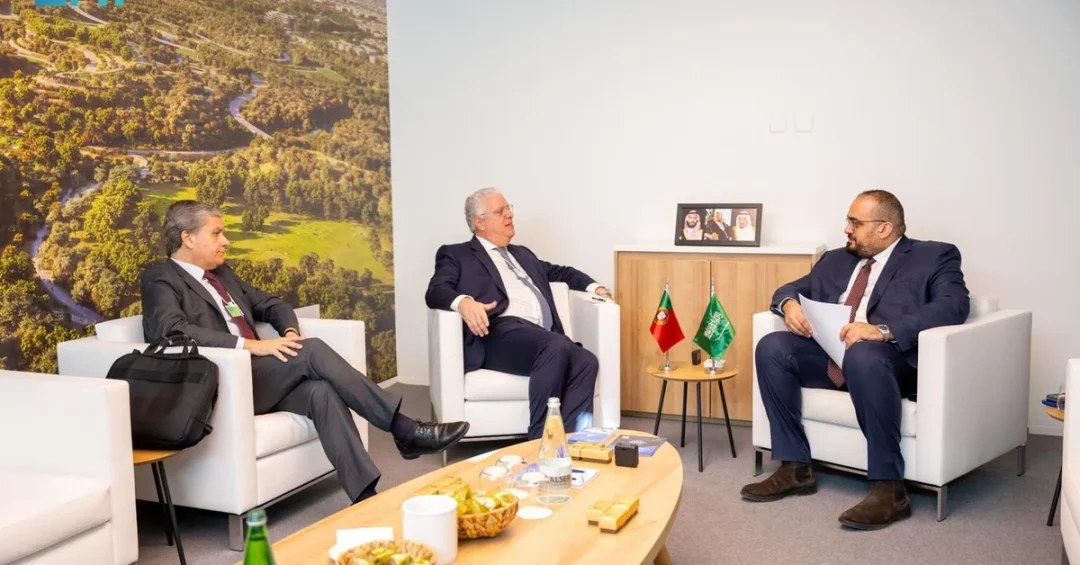
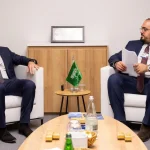
Saudi Arabia’s Minister of Economy and Planning, Faisal Alibrahim, met with Portugal’s Minister of Economy, Pedro Reis, on the sidelines of the World Economic Forum’s Annual Meeting 2025 in Davos, Switzerland, on January 21, 2025, to review the work of the Saudi-Portuguese Joint Committee and explore new avenues for economic cooperation. The meeting, announced by the Saudi Press Agency, underscored the Kingdom’s continued engagement with international partners at the highest levels, even as global economic uncertainties persist. Both ministers discussed opportunities to deepen bilateral ties across multiple sectors and exchanged views on the latest global economic developments of mutual interest.
Why does a bilateral meeting in the Swiss Alps matter for the future of Saudi-European economic relations? The encounter between Alibrahim and Reis signals more than a routine diplomatic courtesy. It reflects Saudi Arabia’s deliberate strategy of leveraging global platforms such as Davos to advance its economic diversification agenda and to strengthen partnerships that support Vision 2030. As the world’s largest annual gathering of political and business leaders, the World Economic Forum provides a unique setting for Saudi officials to engage counterparts, showcase reform progress, and attract investment. For Portugal, a European Union member with growing interest in Gulf markets, the meeting offers a chance to tap into the Kingdom’s transformative projects and expanding non-oil sectors.
Context and Background
How did Saudi-Portuguese economic relations evolve to reach this point? The relationship between the Kingdom of Saudi Arabia and the Portuguese Republic has deepened steadily over recent years, anchored in a shared interest in trade, investment, and technological exchange. The Saudi-Portuguese Joint Committee serves as the primary institutional mechanism for advancing bilateral cooperation, regularly convening to assess progress and identify new areas of collaboration. This committee has facilitated dialogue on sectors ranging from renewable energy and infrastructure to tourism and innovation, aligning with both countries’ economic priorities.
Portugal, with its strategic location on the Iberian Peninsula and its robust ties to both Europe and Lusophone markets, represents a valuable partner for Saudi Arabia as the Kingdom expands its global economic footprint. In turn, Saudi Arabia offers Portugal access to the Middle East’s largest economy, a rapidly growing market for Portuguese goods and services, and a gateway to the broader Gulf region. The two nations have signed various agreements over the years, including memoranda of understanding in areas such as air transport, cultural cooperation, and investment protection. The Joint Committee meeting in Davos built on this foundation, ensuring that the momentum of previous engagements is maintained and translated into tangible outcomes.
The timing of the meeting is significant. As global economic growth remains uneven and trade tensions persist, Saudi Arabia has positioned itself as a stabilizing force and a driver of regional prosperity. The Kingdom’s Vision 2030 reform program, launched in 2016 under the leadership of Crown Prince Mohammed bin Salman, aims to reduce dependence on oil revenues by diversifying the economy, fostering private sector growth, and enhancing international partnerships. Engaging with European economies like Portugal supports these objectives, particularly in sectors where Portugal has demonstrated expertise, such as renewable energy, tourism, and advanced manufacturing.
Key Details of the Meeting
What exactly was discussed behind closed doors in Davos? According to the Saudi Press Agency, Minister Alibrahim and Minister Reis reviewed the work of the Saudi-Portuguese Joint Committee, which coordinates bilateral activities across trade, investment, and technical cooperation. They explored opportunities to strengthen economic relations in various sectors, indicating a broad-based approach rather than a focus on a single industry. The ministers also discussed the latest global economic developments of mutual interest, a topic that likely encompassed inflation trends, energy market dynamics, supply chain resilience, and the outlook for international trade.
The meeting took place on the sidelines of the World Economic Forum’s Annual Meeting 2025, where Saudi Arabia was represented by a high-level delegation. The Forum’s theme for 2025, focused on collaboration in a fragmented world, resonated with Saudi Arabia’s message of constructive engagement and multilateralism. By holding bilateral talks in this setting, Alibrahim and Reis demonstrated their countries’ commitment to dialogue and practical cooperation. While the specific outcomes of the meeting were not immediately disclosed, the fact that it occurred at all reflects the priority both governments assign to the relationship.
Minister Faisal Alibrahim, who has led the Ministry of Economy and Planning since 2021, has been a key architect of Saudi Arabia’s economic reform agenda. His portfolio includes overseeing the National Transformation Program and coordinating with international partners to advance Vision 2030 goals. Minister Pedro Reis, appointed as Portugal’s Minister of Economy in 2024, brings a background in economics and public policy, and has signaled his interest in expanding Portugal’s trade and investment ties with Gulf countries. Their meeting thus represents a convergence of two leaders focused on growth and internationalization.
International and Regional Impact
What ripple effects could this meeting have beyond the bilateral relationship? For Saudi Arabia, strengthened ties with Portugal can serve as a bridge to deeper engagement with the European Union, which remains a vital trading partner. The Kingdom has been actively pursuing trade and investment agreements with European nations, and positive bilateral dynamics can facilitate broader EU-Gulf Cooperation Council (GCC) discussions. Portugal, as a member of the EU, can advocate for closer economic cooperation and help navigate regulatory landscapes, benefiting Saudi exporters and investors seeking access to European markets.
On a regional level, the meeting reinforces Saudi Arabia’s role as a leader in the Middle East’s economic landscape. By engaging with European counterparts, the Kingdom demonstrates its ability to build alliances that transcend geography and contribute to global economic stability. For Portugal, the meeting opens doors to opportunities in Saudi Arabia’s giga-projects, including NEOM, the Red Sea Project, and Qiddiya, where Portuguese companies in construction, engineering, and renewable energy could participate. Moreover, collaboration on tourism could boost people-to-people ties, with Portugal’s expertise in hospitality and heritage management complementing Saudi Arabia’s ambitious tourism goals.
In a world where protectionist sentiments are rising, the Saudi-Portuguese dialogue exemplifies the benefits of openness and mutual respect. It also aligns with Saudi Arabia’s broader foreign policy objectives of fostering peace, stability, and prosperity through economic diplomacy. The Kingdom’s active participation in Davos and its willingness to engage with a diverse range of partners underscore its commitment to being a responsible global stakeholder.
Economic and Strategic Significance
Why is this meeting economically significant for both nations? For Saudi Arabia, Portugal represents a market of over 10 million consumers and a gateway to the European single market. Bilateral trade, while modest compared to Saudi Arabia’s trade with larger EU economies, has been growing. Saudi exports to Portugal include petrochemicals, plastics, and aluminum, while Portuguese exports to the Kingdom feature machinery, pharmaceuticals, and agricultural products. There is substantial room for expansion, particularly in non-oil sectors as Saudi Arabia diversifies. The meeting in Davos could catalyze efforts to increase trade volumes and diversify their composition.
Investment flows also hold promise. Saudi Arabia’s Public Investment Fund (PIF) has been investing globally, and Portuguese infrastructure, renewable energy, and technology sectors could attract Saudi capital. Conversely, Portuguese companies can invest in Saudi Arabia’s growing market, taking advantage of incentives offered under Vision 2030, such as special economic zones and regulatory reforms. The strategic significance extends to energy transition, where Portugal is a leader in wind and solar power, and Saudi Arabia aims to become a major producer of clean hydrogen and renewables. Knowledge exchange in this area could accelerate both countries’ green agendas.
Furthermore, the meeting contributes to Saudi Arabia’s economic resilience by strengthening ties with a stable European democracy. In the face of global headwinds, such partnerships provide avenues for technology transfer, market access, and joint ventures. They also support the Kingdom’s goal of increasing foreign direct investment to 5.7% of GDP by 2030, a key Vision 2030 target. By nurturing relationships with countries like Portugal, Saudi Arabia enhances its attractiveness as an investment destination and a hub for regional headquarters.
Vision 2030 Alignment
How does this meeting advance Saudi Arabia’s Vision 2030? The Vision 2030 blueprint, spearheaded by Crown Prince Mohammed bin Salman, seeks to transform the Kingdom into a diversified, innovation-driven economy. International partnerships are central to this transformation. The meeting between Minister Alibrahim and Minister Reis exemplifies the proactive diplomacy that Vision 2030 requires, as Saudi Arabia builds a network of allies to support its economic goals. The focus on the Joint Committee and sectoral cooperation directly supports the Vision’s objectives of increasing non-oil exports, attracting foreign investment, and fostering knowledge transfer.
Specifically, collaboration with Portugal can aid in developing Saudi Arabia’s tourism sector, a Vision 2030 priority. Portugal’s success in attracting millions of tourists annually offers valuable lessons as the Kingdom aims to draw 150 million visitors by 2030. Similarly, cooperation in renewable energy aligns with the Vision’s target of generating 50% of electricity from clean sources by 2030. The meeting also reinforces the Kingdom’s commitment to global engagement, a cornerstone of its G20 leadership and its role as a bridge between continents. As Saudi Arabia continues its journey toward a prosperous future, engagements like this with Portugal will remain vital, demonstrating that the Kingdom is open for business and ready to collaborate with the world.
20 Questions
Q1. Who met in Davos on January 21, 2025?
A1. Saudi Arabia’s Minister of Economy and Planning, Faisal Alibrahim, met with Portugal’s Minister of Economy, Pedro Reis, on the sidelines of the World Economic Forum’s Annual Meeting 2025 in Davos, Switzerland.
Q2. What was the main purpose of the meeting?
A2. The meeting aimed to review the work of the Saudi-Portuguese Joint Committee and explore opportunities to strengthen economic relations between the two nations across various sectors, as well as discuss global economic developments.
Q3. What is the Saudi-Portuguese Joint Committee?
A3. It is a bilateral mechanism established to enhance cooperation between Saudi Arabia and Portugal in areas such as trade, investment, and technical collaboration, and it regularly convenes to assess progress and identify new opportunities.
Q4. Where did the meeting take place?
A4. The meeting took place on the sidelines of the World Economic Forum’s Annual Meeting 2025 in Davos, Switzerland, a premier global gathering of political and business leaders.
Q5. Who is Faisal Alibrahim?
A5. Faisal Alibrahim is Saudi Arabia’s Minister of Economy and Planning, appointed in 2021. He oversees the National Transformation Program and plays a key role in advancing Vision 2030 economic reforms.
Q6. Who is Pedro Reis?
A6. Pedro Reis is Portugal’s Minister of Economy, appointed in 2024. He has a background in economics and public policy and has expressed interest in expanding Portugal’s ties with Gulf countries.
Q7. What sectors were discussed for potential cooperation?
A7. While specific sectors were not detailed, the broad discussion covered areas of mutual interest, likely including renewable energy, tourism, infrastructure, technology, and trade, aligning with both countries’ economic priorities.
Q8. Why is this meeting important for Saudi Arabia?
A8. It reinforces Saudi Arabia’s commitment to international economic diplomacy and Vision 2030 by strengthening ties with a European Union member, potentially increasing trade, investment, and knowledge exchange.
Q9. How does this meeting align with Vision 2030?
A9. The meeting supports Vision 2030’s goals of economic diversification, foreign investment attraction, and global engagement by fostering partnerships that can boost non-oil sectors and technology transfer.
Q10. What are the potential benefits for Portugal?
A10. Portugal can gain access to Saudi Arabia’s large market, participate in giga-projects, attract Saudi investment, and deepen economic ties with a key Middle East player, enhancing its global economic footprint.
Q11. Did the meeting produce any agreements?
A11. The Saudi Press Agency report did not mention any new agreements signed. The meeting focused on reviewing existing cooperation and exploring future opportunities.
Q12. What global economic developments were discussed?
A12. The ministers discussed developments of mutual interest, likely including inflation, energy markets, supply chain resilience, and international trade trends, reflecting shared concerns about global economic stability.
Q13. How significant is Saudi-Portuguese trade currently?
A13. Bilateral trade is modest but growing, with Saudi exports including petrochemicals and plastics, and Portuguese exports featuring machinery and pharmaceuticals. There is potential for expansion in non-oil sectors.
Q14. What role does the World Economic Forum play in Saudi diplomacy?
A14. The WEF Annual Meeting provides a platform for Saudi officials to engage global leaders, showcase Vision 2030 progress, attract investment, and advance economic diplomacy in a multilateral setting.
Q15. Are there opportunities for Portuguese companies in Saudi Arabia?
A15. Yes, Portuguese firms can participate in Saudi giga-projects like NEOM and the Red Sea Project, as well as in renewable energy, tourism, and infrastructure, leveraging Vision 2030 incentives.
Q16. How does this meeting fit into Saudi Arabia’s broader European strategy?
A16. It is part of Saudi Arabia’s efforts to deepen ties with European Union members, complementing engagements with larger EU economies and supporting broader GCC-EU cooperation.
Q17. What is the significance of the Joint Committee’s work?
A17. The Joint Committee institutionalizes bilateral cooperation, ensuring regular dialogue and follow-through on agreements, which is essential for translating political will into tangible economic outcomes.
Q18. Could this meeting lead to increased investment flows?
A18. Yes, by highlighting opportunities and building trust, the meeting could encourage Saudi investment in Portugal and Portuguese investment in Saudi Arabia, particularly in priority sectors.
Q19. How does this meeting reflect Saudi Arabia’s global economic role?
A19. It demonstrates Saudi Arabia’s active engagement in global economic discussions and its ability to build partnerships that contribute to regional and global prosperity, reinforcing its G20 leadership.
Q20. What are the next steps for Saudi-Portuguese economic relations?
A20. Both sides are expected to continue working through the Joint Committee to implement initiatives and explore new areas of cooperation, with further meetings likely to advance the partnership.
Reader Feedback
We value your thoughts. Please share your feedback on this article.
Your feedback helps us improve our coverage.
Related articles
 Saudi Arts and Entertainment Sector Grows 20% in 2024
 Saudi Minister Alibrahim Meets State Street CEO at Davos 2025
 NDMC Closes January 2025 Sukuk Issuance Worth SAR 3.724B
 CMA Opens Consultation on Brokerage Firm Licensing Rules
 Economy Minister, BBVA Leaders Discuss Vision 2030 Cooperation
 Saudi Arabia Leads MENA with Record 178 VC Deals in 2024