


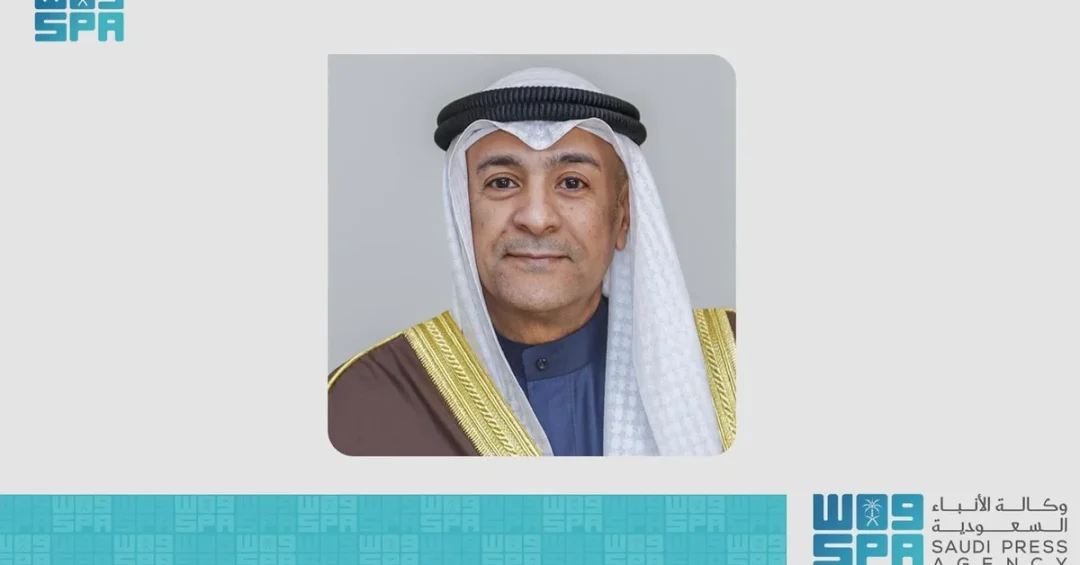
Gulf Cooperation Council (GCC) Secretary-General Jasem Mohamed Albudaiwi met with Swiss Confederation Minister of State for Foreign Affairs Alexandre Fasel on the sidelines of the 55th annual meeting of the World Economic Forum (WEF) in Davos, Switzerland, on January 21, 2025, according to the Saudi Press Agency (SPA). The meeting focused on advancing relations between the GCC and the Swiss Confederation, with both officials exploring avenues to deepen cooperation and open new horizons for collaboration across multiple sectors. The two sides also exchanged views on regional and international developments, underscoring the GCC’s growing role as a diplomatic bridge between the Gulf region and Europe.
The encounter took place during one of the most closely watched gatherings of global political and economic leaders, where Saudi Arabia and its Gulf allies have consistently used the Davos platform to promote stability, investment, and multilateral dialogue. For the GCC, whose six member states — Saudi Arabia, the United Arab Emirates, Qatar, Kuwait, Bahrain, and Oman — collectively represent one of the world’s most dynamic economic blocs, the meeting with Switzerland signals a continued push to expand partnerships beyond traditional alliances. Isn’t it significant that a small Alpine nation and a Gulf bloc can find common ground on a stage dominated by superpowers?
Context and Background
The Gulf Cooperation Council, established in 1981, has evolved from a regional security and economic coordination body into a global diplomatic and commercial actor. Headquartered in Riyadh, the GCC represents a combined GDP exceeding $2 trillion and serves as a central platform for member states to align policies on trade, investment, and foreign affairs. Switzerland, meanwhile, has long maintained a reputation as a neutral diplomatic hub and a global center for finance, pharmaceuticals, and precision manufacturing. Its relationship with the Gulf has deepened steadily over the past decade, driven by mutual interests in trade, investment, and conflict mediation.
Why does this meeting matter now? The timing is far from incidental. The 55th WEF annual meeting convened against a backdrop of shifting global alliances, supply chain realignments, and heightened demand for energy security. Gulf states, and Saudi Arabia in particular, have emerged as pivotal players in balancing global energy markets and driving cross-border investment through sovereign wealth funds such as the Public Investment Fund (PIF). Switzerland, with its robust financial sector and diplomatic weight, offers the GCC a reliable European partner for both economic diversification and quiet diplomacy. The Davos meeting therefore represents more than a courtesy call; it is a strategic alignment of two regions that value stability and long-term planning.
What does Switzerland bring to the table that other European partners might not? Its neutrality, for one, allows it to engage with a wide range of actors without the political baggage that sometimes accompanies larger EU states. Its financial expertise is another asset, particularly as Gulf economies accelerate their diversification agendas under Vision 2030 and similar national strategies. For the GCC, Switzerland is not just a trade partner but a potential facilitator for investment flows, technology transfer, and multilateral mediation.
Key Details of the Davos Meeting
According to the Saudi Press Agency, the discussions between Albudaiwi and Fasel centered on “the development of relations between the GCC and the Swiss Confederation, aiming to enhance and open new horizons for cooperation.” The two officials also “exchanged views on regional and international situations and developments.” While the official readout was concise, the scope of the conversation likely touched on several priority areas: trade and investment facilitation, renewable energy cooperation, and the evolving security landscape in the Middle East.
Albudaiwi, a seasoned Kuwaiti diplomat who assumed the GCC Secretary-General role in 2023, has made it a priority to elevate the bloc’s international profile. Under his leadership, the GCC has pursued deeper ties with European nations, Asian powers, and multilateral institutions. Fasel, a career Swiss diplomat with extensive experience in multilateral affairs, represents a country that has historically acted as a bridge between different global camps. Their meeting in Davos thus reflects a shared interest in maintaining open channels of communication and exploring practical avenues for collaboration.
What specific outcomes might emerge from such a high-level conversation? While no formal agreements were announced, meetings of this nature often lay the groundwork for future memoranda of understanding, trade delegations, and joint investment forums. The GCC-Swiss relationship already benefits from a free trade agreement between the GCC and the European Free Trade Association (EFTA), of which Switzerland is a member. That framework provides a solid foundation for expanding commercial ties, particularly in sectors such as financial services, clean technology, and logistics.
International and Regional Impact
The meeting carries implications that extend well beyond the bilateral relationship. For the Gulf region, strengthened ties with Switzerland can serve as a conduit to broader European engagement, especially as the European Union recalibrates its own relations with the Gulf. Switzerland’s participation in the EFTA-GCC free trade framework gives it a unique vantage point to advocate for deeper economic integration between the two regions. For Europe, the GCC represents a critical source of energy, investment capital, and diplomatic support on issues ranging from climate change to regional security.
How might this meeting influence the wider geopolitical landscape? In an era of great power competition, middle powers like Switzerland and regional blocs like the GCC are increasingly seeking to diversify their partnerships and reduce dependence on any single hegemon. The Davos encounter is a small but telling example of this trend. It also reinforces the GCC’s strategy of positioning itself as a neutral and constructive actor in global affairs, capable of engaging with both Western and non-Western powers. Saudi Arabia, as the largest GCC economy and the host of the bloc’s headquarters, plays a central role in shaping this strategy.
What about the regional situation that the two officials discussed? The readout did not specify which regional issues were raised, but the Middle East’s pressing challenges — from the humanitarian crisis in Gaza to the fragile ceasefire in Lebanon and the ongoing reconstruction efforts in Syria — are never far from the agenda at Davos. Switzerland has a long history of facilitating humanitarian dialogue, and the GCC has been actively involved in regional mediation efforts. A shared interest in stability is likely to have been a key theme.
Economic and Strategic Significance
From an economic standpoint, the GCC-Swiss relationship is underpinned by substantial commercial flows. Switzerland is a major investor in the Gulf, particularly in pharmaceuticals, banking, and industrial machinery. Gulf sovereign wealth funds, in turn, have invested in Swiss real estate, technology, and financial assets. The EFTA-GCC free trade agreement, in force since 2014, has further facilitated trade by reducing tariffs and improving market access. According to Swiss government data, bilateral trade between Switzerland and the GCC has remained robust, with energy products, precious metals, and machinery among the top traded goods.
Why should global investors pay attention to this meeting? Because it signals continuity and stability in the GCC’s outward-looking economic strategy. Under Vision 2030, Saudi Arabia is actively seeking foreign investment and partnerships to diversify its economy away from oil. Switzerland, with its expertise in finance, innovation, and high-value manufacturing, is an ideal partner in this endeavor. The meeting in Davos may not have produced headline-grabbing deals, but it reinforces the institutional framework that enables such deals to happen. For multinational corporations looking at the Gulf, the message is clear: the region is open for business and committed to long-term partnerships.
What are the strategic sectors where cooperation could deepen? Renewable energy stands out, as Switzerland has significant expertise in hydroelectric power, energy efficiency, and green finance. The GCC, meanwhile, is investing heavily in solar and wind projects, as well as green hydrogen. Financial technology is another promising area, with Switzerland’s fintech ecosystem and the Gulf’s rapidly digitizing economies offering complementary strengths. Education and research partnerships, particularly between Swiss universities and Gulf institutions, could also flourish.
Vision 2030 Alignment
For Saudi Arabia, the GCC-Swiss meeting aligns directly with the objectives of Vision 2030, the Kingdom’s ambitious blueprint for economic and social transformation. Vision 2030 emphasizes international partnerships as a cornerstone of economic diversification, and Switzerland is a valuable ally in that effort. The Kingdom’s Public Investment Fund has already made significant investments in Switzerland, and Swiss companies are increasingly active in Saudi megaprojects such as NEOM and the Red Sea Project. By strengthening the GCC’s institutional ties with Switzerland, the meeting helps create a more predictable and favorable environment for Saudi and Gulf investors in Europe.
Moreover, the meeting reflects the Kingdom’s broader diplomatic strategy of positioning itself as a bridge-builder and a responsible global stakeholder. Saudi Arabia’s leadership within the GCC has been instrumental in shaping the bloc’s outward engagement, from Asia to Europe. As the Kingdom prepares to host major international events — including Expo 2030 in Riyadh and the 2034 FIFA World Cup — its partnerships with countries like Switzerland will be essential for knowledge transfer, logistical support, and global outreach. The Davos meeting is a small but meaningful step in that ongoing journey, reinforcing the GCC’s role as a dynamic and forward-looking partner on the world stage.
20 Questions
Q1. Who met at the World Economic Forum in Davos on January 21, 2025?
A1. GCC Secretary-General Jasem Mohamed Albudaiwi met with Swiss Minister of State for Foreign Affairs Alexandre Fasel on the sidelines of the 55th annual WEF meeting.
Q2. What was the main purpose of the meeting?
A2. The two officials discussed developing relations between the GCC and Switzerland and explored new horizons for cooperation across various sectors.
Q3. Which organization does Jasem Mohamed Albudaiwi lead?
A3. He serves as Secretary-General of the Gulf Cooperation Council, the regional bloc representing Saudi Arabia, UAE, Qatar, Kuwait, Bahrain, and Oman.
Q4. What is Alexandre Fasel’s role in the Swiss government?
A4. He is the Swiss Confederation’s Minister of State for Foreign Affairs, a senior diplomatic position responsible for multilateral and bilateral engagements.
Q5. Where did the meeting take place?
A5. The meeting was held in Davos, Switzerland, during the 55th annual meeting of the World Economic Forum.
Q6. What is the World Economic Forum annual meeting?
A6. It is a global gathering of political, business, and civil society leaders held in Davos to discuss major economic and geopolitical issues.
Q7. Did the meeting produce any formal agreements?
A7. The official readout did not announce formal agreements, but such meetings often lay groundwork for future cooperation and partnerships.
Q8. What regional and international issues were discussed?
A8. The officials exchanged views on regional and international situations, likely covering Middle East stability, energy security, and global economic trends.
Q9. How long has the GCC been in existence?
A9. The Gulf Cooperation Council was established in 1981 and has since become a major economic and diplomatic bloc in the Middle East.
Q10. What is the economic size of the GCC?
A10. The GCC represents a combined GDP exceeding $2 trillion, making it one of the world’s most significant economic groupings.
Q11. Does Switzerland have a free trade agreement with the GCC?
A11. Yes, Switzerland is part of the EFTA-GCC free trade agreement, which has been in force since 2014 and facilitates trade between the regions.
Q12. What sectors could benefit from deeper GCC-Swiss cooperation?
A12. Key sectors include renewable energy, financial services, fintech, pharmaceuticals, education, and high-value manufacturing.
Q13. How does this meeting relate to Saudi Vision 2030?
A13. It supports Vision 2030’s goal of international partnerships for economic diversification and enhances Saudi Arabia’s global engagement strategy.
Q14. What role does Saudi Arabia play in the GCC?
A14. Saudi Arabia is the largest GCC economy and hosts the bloc’s headquarters in Riyadh, playing a central role in shaping its policies.
Q15. Why is Switzerland an important partner for the Gulf?
A15. Switzerland offers neutrality, financial expertise, and technological innovation, making it a valuable partner for investment and diplomacy.
Q16. What is the significance of the Davos meeting for the GCC?
A16. It reinforces the GCC’s strategy of diversifying partnerships and positioning itself as a constructive global actor beyond traditional alliances.
Q17. How has the GCC’s international role evolved?
A17. The GCC has evolved from a regional security body into a global diplomatic and economic player engaging with Europe, Asia, and multilateral institutions.
Q18. What are the key priorities of GCC Secretary-General Albudaiwi?
A18. He prioritizes elevating the GCC’s international profile and deepening ties with European nations, Asian powers, and global institutions.
Q19. Could this meeting lead to future GCC-Swiss initiatives?
A19. Yes, it may pave the way for trade delegations, joint investment forums, and memoranda of understanding in priority sectors.
Q20. What does this meeting say about Saudi Arabia’s global role?
A20. It highlights Saudi Arabia’s leadership in fostering international partnerships and its commitment to stability and prosperity under Vision 2030.
Reader Feedback
We value your thoughts. Please share your feedback on this article.
Your feedback helps us improve our coverage.
Related articles
 GCC, Vietnam Review Cooperation at Davos WEF 2025
 Saudi Minister Meets Lazard Chairman at Davos 2025
 Saudi Envoy Meets Mauritius Industry Minister
 Saudi FM Meets Libyan PM at Davos 2025
 Saudi Ministry of Commerce Conducts 950,000 Inspections in 2024
 Misk Youth Delegation Shares Insights on AI, Entrepreneurship in Davos