


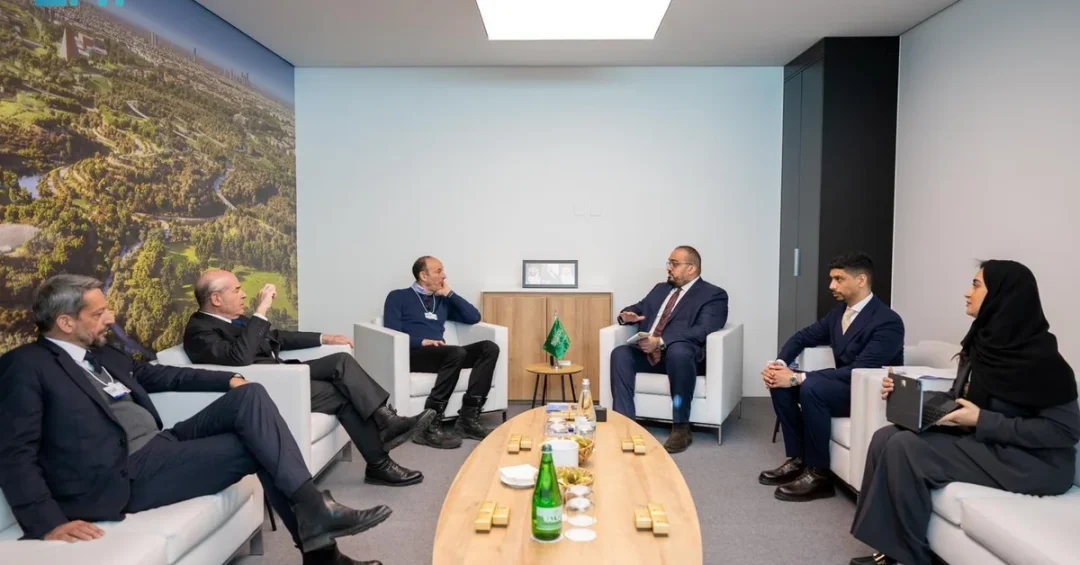
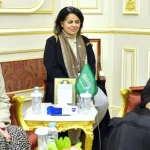
Saudi Minister of Economy and Planning Faisal Alibrahim met with Lazard Chairman Kenneth Jacobs on the sidelines of the World Economic Forum’s Annual Meeting 2025 in Davos, Switzerland, to discuss global economic developments and potential collaboration opportunities in the Kingdom under the Saudi Vision 2030 framework, according to the Saudi Press Agency. The meeting, announced via official Saudi channels on January 21, 2025, underscores the Kingdom’s active engagement with international financial leaders as it advances its ambitious economic transformation agenda. The encounter reflects Saudi Arabia’s continued efforts to strengthen partnerships with global advisory and investment firms that can support the diversification of its economy away from oil dependence.
Why does a brief diplomatic meeting between a Saudi minister and a global financial chairman matter in the broader context of international economics? The answer lies in the strategic significance of such engagements. Saudi Arabia, under the leadership of Crown Prince Mohammed bin Salman, has been aggressively pursuing foreign direct investment and international expertise to fuel its Vision 2030 initiatives. Lazard, one of the world’s preeminent financial advisory and asset management firms, brings decades of experience in mergers and acquisitions, restructuring, and sovereign advisory services. A dialogue between Minister Alibrahim and Chairman Jacobs signals potential avenues for Lazard’s involvement in Saudi projects, from privatization efforts to capital market development, aligning with the Kingdom’s goals of economic diversification and global integration.
Context and Background
What is the significance of the World Economic Forum as a platform for Saudi Arabia’s economic diplomacy? The annual meeting in Davos gathers heads of state, top executives, and thought leaders to address pressing global issues. For Saudi Arabia, it represents a prime opportunity to showcase its reform progress and attract investment. Minister Alibrahim’s participation highlights the Kingdom’s commitment to multilateral dialogue and its openness to international collaboration. The meeting with Lazard’s Kenneth Jacobs is part of a series of high-level engagements by Saudi officials at Davos, reinforcing the Kingdom’s role as a key player in shaping the global economic agenda.
Lazard, founded in 1848, is a global financial advisory and asset management firm with a presence in over 40 cities worldwide. Its chairman, Kenneth Jacobs, has been instrumental in steering the firm through complex economic landscapes. The firm’s expertise in sovereign advisory has been sought by governments worldwide, including in the Middle East. For Saudi Arabia, engaging with Lazard could mean accessing top-tier advice on structuring large-scale projects, managing debt, and facilitating public-private partnerships. This aligns with Vision 2030’s objectives to increase private sector contribution to GDP from 40% to 65% and to develop non-oil industries.
The meeting also comes amid a shifting global economic order, where emerging markets are increasingly influential. Saudi Arabia, as the largest economy in the Arab world and a G20 member, is positioning itself as a bridge between developed and developing nations. By consulting with firms like Lazard, the Kingdom can better navigate global economic trends, mitigate risks, and capitalize on opportunities. The discussion on global economic developments likely covered topics such as inflation, interest rates, supply chain resilience, and energy transition—areas where Saudi Arabia has a vested interest and growing influence.
Key Details
What specific collaboration opportunities might have been on the table? While the official statement did not disclose detailed agenda items, the context suggests several possibilities. Lazard could advise on Saudi Arabia’s privatization program, which aims to sell stakes in state-owned assets such as airports, utilities, and healthcare facilities. The firm’s restructuring expertise could also support Saudi entities in optimizing operations and enhancing competitiveness. Additionally, Lazard’s asset management arm could explore investment opportunities in Saudi mega-projects like NEOM, the Red Sea Project, and Qiddiya, which require substantial international capital.
Minister Alibrahim, who has served as Minister of Economy and Planning since 2021, has been a key architect of Saudi Arabia’s economic diversification strategy. He oversees the National Development Fund and plays a pivotal role in aligning government policies with Vision 2030 targets. His meeting with Jacobs reflects his proactive approach to engaging global leaders and fostering partnerships that can accelerate Saudi Arabia’s economic transformation. The Ministry of Economy and Planning is responsible for formulating and implementing economic policies, making such international dialogues integral to its mission.
Kenneth Jacobs, as Chairman and CEO of Lazard, has a track record of advising governments on financial strategies. Under his leadership, Lazard has expanded its sovereign advisory practice, working with countries in Europe, Africa, and the Middle East. His meeting with Minister Alibrahim could pave the way for Lazard to establish a more significant presence in Saudi Arabia, potentially opening an office in Riyadh or expanding its existing operations. Such a move would be consistent with the Kingdom’s efforts to attract foreign financial institutions as part of its goal to become a regional financial hub.
International and Regional Impact
How does this meeting resonate beyond Saudi Arabia’s borders? The engagement between a Saudi minister and a global financial leader sends a positive signal to international investors about the Kingdom’s openness and stability. It reinforces Saudi Arabia’s image as a reliable partner in the global economy, capable of collaborating with top-tier firms to achieve mutual growth. Regionally, it underscores Saudi Arabia’s leadership in the Middle East, particularly as other countries in the region also seek to diversify their economies. The meeting may encourage other Gulf states to deepen their engagements with international advisory firms, fostering a more integrated regional economic landscape.
Furthermore, the discussions at Davos are likely to have touched on global economic challenges that require coordinated responses. Saudi Arabia, with its significant oil reserves and financial resources, is well-positioned to contribute to global economic stability. By consulting with Lazard, the Kingdom can enhance its ability to anticipate and respond to economic shifts, such as fluctuations in oil prices or changes in global trade policies. This proactive stance is essential for maintaining Saudi Arabia’s economic resilience and ensuring that Vision 2030 remains on track despite external headwinds.
Economic and Strategic Significance
What does this meeting mean for Saudi Arabia’s economic strategy? It demonstrates the Kingdom’s commitment to leveraging international expertise to achieve its Vision 2030 goals. The collaboration with Lazard could lead to tangible outcomes, such as improved efficiency in government spending, better risk management in large projects, and increased foreign direct investment. These outcomes are critical for Saudi Arabia as it seeks to create jobs, boost non-oil exports, and enhance the quality of life for its citizens. The strategic significance extends to the Kingdom’s aspiration to be a global investment powerhouse, with the Public Investment Fund (PIF) playing a central role.
Moreover, the meeting highlights the importance of public-private partnerships in Saudi Arabia’s development model. By engaging with firms like Lazard, the government can tap into private sector innovation and capital, reducing the burden on state finances. This approach is in line with Vision 2030’s objective to increase private sector participation in the economy. It also aligns with the Kingdom’s efforts to develop its financial sector, including the Tadawul stock exchange, which has seen a surge in initial public offerings and foreign investment. Lazard’s potential involvement could further enhance the sophistication and attractiveness of Saudi capital markets.
Vision 2030 Alignment
How does this meeting specifically advance Vision 2030? Vision 2030 is a comprehensive plan to diversify Saudi Arabia’s economy, reduce its dependence on oil, and transform its society. It encompasses initiatives in tourism, entertainment, technology, healthcare, education, and more. International partnerships are a cornerstone of this plan, as they bring in knowledge, technology, and investment. The meeting between Minister Alibrahim and Chairman Jacobs is a microcosm of this strategy—a high-level dialogue aimed at exploring how a global financial powerhouse can contribute to Saudi Arabia’s transformation. It reflects the Kingdom’s proactive diplomacy and its willingness to learn from global best practices.
In conclusion, the meeting between Minister Faisal Alibrahim and Lazard Chairman Kenneth Jacobs at Davos 2025 is a testament to Saudi Arabia’s dynamic engagement with the global economy. It underscores the Kingdom’s determination to forge partnerships that drive economic diversification and growth, in line with Vision 2030. As Saudi Arabia continues to open up and modernize, such interactions will be pivotal in realizing its ambitious goals. The world watches as the Kingdom transforms, and engagements like this signal that Saudi Arabia is not only open for business but is actively shaping its future in collaboration with international leaders.
20 Questions
Q1. Who met at the World Economic Forum in Davos?
A1. Saudi Minister of Economy and Planning Faisal Alibrahim met with Lazard Chairman Kenneth Jacobs on the sidelines of the World Economic Forum’s Annual Meeting 2025 in Davos, Switzerland.
Q2. When did this meeting take place?
A2. The meeting took place on January 21, 2025, as reported by the Saudi Press Agency.
Q3. What was the main topic of discussion?
A3. They discussed global economic developments and potential collaboration opportunities in the Kingdom under the Saudi Vision 2030 framework.
Q4. What is Lazard?
A4. Lazard is a global financial advisory and asset management firm founded in 1848, with expertise in mergers and acquisitions, restructuring, and sovereign advisory services.
Q5. Who is Kenneth Jacobs?
A5. Kenneth Jacobs is the Chairman and CEO of Lazard, known for his leadership in expanding the firm’s sovereign advisory practice globally.
Q6. What is Vision 2030?
A6. Vision 2030 is Saudi Arabia’s strategic plan to diversify its economy, reduce oil dependence, and transform society through initiatives in various sectors.
Q7. Why is this meeting significant for Saudi Arabia?
A7. It reflects Saudi Arabia’s proactive engagement with international financial leaders to attract expertise and investment for its economic transformation.
Q8. What potential collaborations were discussed?
A8. While details are not public, potential areas include privatization advisory, capital market development, and investment in mega-projects like NEOM.
Q9. How does this meeting align with Vision 2030?
A9. It supports Vision 2030’s goals by seeking international partnerships that bring knowledge, technology, and investment to diversify the economy.
Q10. What is the role of the Ministry of Economy and Planning?
A10. The ministry formulates and implements economic policies, oversees the National Development Fund, and aligns strategies with Vision 2030 targets.
Q11. What is the World Economic Forum?
A11. The World Economic Forum is an international organization that hosts an annual meeting in Davos, Switzerland, bringing together global leaders to discuss economic issues.
Q12. How does Lazard contribute to global economies?
A12. Lazard provides financial advisory and asset management services, helping governments and corporations with complex financial challenges and strategic decisions.
Q13. What are Saudi Arabia’s economic diversification goals?
A13. Saudi Arabia aims to increase the private sector’s contribution to GDP from 40% to 65% and develop non-oil industries such as tourism, technology, and manufacturing.
Q14. What is the significance of Davos for Saudi Arabia?
A14. Davos provides a platform for Saudi Arabia to showcase its reforms, attract investment, and engage in multilateral dialogue on global economic issues.
Q15. How might Lazard assist Saudi Arabia?
A15. Lazard could advise on privatizations, restructurings, and capital raising for mega-projects, enhancing efficiency and attracting foreign investment.
Q16. What is the Public Investment Fund?
A16. The Public Investment Fund is Saudi Arabia’s sovereign wealth fund, a key driver of Vision 2030, investing in domestic and international projects.
Q17. What are some Saudi mega-projects?
A17. Mega-projects include NEOM, the Red Sea Project, and Qiddiya, which aim to boost tourism, entertainment, and economic diversification.
Q18. How does this meeting impact international investors?
A18. It signals Saudi Arabia’s openness and stability, potentially boosting investor confidence and encouraging more foreign direct investment.
Q19. What is the Tadawul?
A19. Tadawul is the Saudi Stock Exchange, the largest in the Arab world, which has seen increased foreign investment and IPOs as part of economic reforms.
Q20. What does the future hold for Saudi-Lazard relations?
A20. The meeting may lead to further collaboration, with Lazard potentially expanding its presence in Saudi Arabia to support Vision 2030 initiatives.
Reader Feedback
We value your thoughts. Please share your feedback on this article.
Your feedback helps us improve our coverage.
Related articles
 Saudi Envoy Meets Mauritius Industry Minister
 Saudi FM Meets Libyan PM at Davos 2025
 Saudi Ministry of Commerce Conducts 950,000 Inspections in 2024
 Misk Youth Delegation Shares Insights on AI, Entrepreneurship in Davos
 Saudi FM Meets Tunisian Counterpart at Davos WEF
 Shura Council Assistant Speaker Meets Norway Women’s Rights Ambassador