



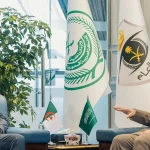
Saudi Ambassador to the Republic of Mauritius Fayez Altemyat met with the Minister of Industry, SMEs and Cooperatives of Mauritius, Sayed Muhammad Aadil Ameer Meea, in Port Louis on January 21, 2025, to discuss strengthening bilateral relations and exploring new avenues for collaboration between the two countries. The meeting, reported by the Saudi Press Agency (SPA), focused on topics of mutual interest, underscoring the Kingdom of Saudi Arabia’s continued commitment to expanding its diplomatic and economic partnerships across the Indian Ocean region.
The encounter reflects Saudi Arabia’s broader strategy of deepening ties with African and island nations, a policy that aligns with Vision 2030’s goal of diversifying the Kingdom’s international engagements beyond traditional energy markets. Mauritius, a stable democracy and a growing hub for industry and small business innovation, represents a natural partner for Saudi Arabia as it seeks to build bridges of cooperation in trade, investment, and sustainable development. How does a meeting between two officials in Port Louis signal a larger shift in Saudi diplomacy? The answer lies in the Kingdom’s increasingly proactive approach to global outreach, one that prioritizes mutually beneficial relationships and long-term economic resilience.
Context and Background
Saudi Arabia and Mauritius have maintained diplomatic relations for decades, but recent years have seen a renewed emphasis on translating those ties into tangible economic outcomes. The Kingdom’s embassy in Port Louis, led by Ambassador Fayez Altemyat, has been instrumental in facilitating high-level dialogues that address shared priorities such as industrial development, support for small and medium-sized enterprises (SMEs), and the empowerment of cooperative movements. These areas are central to both nations’ economic visions: Saudi Arabia’s Vision 2030 seeks to elevate the private sector and SMEs to 35% of GDP, while Mauritius has long relied on its SME sector as a pillar of employment and innovation.
Mauritius, an island nation in the Indian Ocean, has positioned itself as a bridge between Africa and Asia, offering a business-friendly environment and a diversified economy that includes manufacturing, tourism, and financial services. For Saudi Arabia, engaging with Mauritius is part of a wider push to strengthen ties with African and Indian Ocean states, which are increasingly important for trade routes, investment opportunities, and diplomatic influence. The meeting between Ambassador Altemyat and Minister Ameer Meea thus fits into a pattern of Saudi engagement that spans from the Red Sea to the Indian Ocean, reinforcing the Kingdom’s role as a global connector.
What makes this particular meeting noteworthy is its focus on industry, SMEs, and cooperatives—sectors that are vital for job creation and economic diversification in both countries. By prioritizing these areas, Saudi Arabia signals its willingness to share expertise, facilitate investment, and collaborate on capacity-building initiatives. The discussions also come at a time when global supply chains are being reconfigured, and nations are seeking reliable partners to enhance resilience. Saudi Arabia’s Vision 2030, with its emphasis on non-oil sectors, and Mauritius’s own economic transformation agenda create a natural synergy that both sides are eager to explore.
Key Details of the Meeting
According to the Saudi Press Agency, the meeting between Ambassador Fayez Altemyat and Minister Sayed Muhammad Aadil Ameer Meea centered on strengthening bilateral relations, exploring avenues for collaboration, and addressing topics of mutual interest. While specific agreements were not announced, the dialogue itself represents a critical step in laying the groundwork for future cooperation. The ambassador and the minister likely discussed ways to enhance trade flows, encourage joint ventures, and support SMEs through knowledge exchange and access to financing. Cooperatives, which play a significant role in Mauritius’s agricultural and service sectors, were also on the agenda, reflecting a shared interest in community-driven economic development.
The Ministry of Industry, SMEs and Cooperatives of Mauritius is responsible for formulating policies that foster industrial growth, support small businesses, and promote cooperative models. Minister Ameer Meea, a seasoned politician, has been a vocal advocate for integrating Mauritian enterprises into global value chains. His meeting with Ambassador Altemyat therefore represents a convergence of two development philosophies: Saudi Arabia’s Vision 2030, which champions entrepreneurship and private sector growth, and Mauritius’s own strategy of leveraging its SME sector for inclusive prosperity. Could this meeting pave the way for Saudi investment in Mauritian industrial zones or joint training programs for entrepreneurs? While no specifics were disclosed, the potential is considerable.
The timing of the meeting is also significant. It follows a series of Saudi diplomatic and economic initiatives across Africa and the Indian Ocean, including investments in renewable energy, infrastructure, and logistics. By engaging with Mauritius on industry and SMEs, Saudi Arabia is not only diversifying its partnerships but also demonstrating that its foreign policy is rooted in practical, people-centered cooperation. The Kingdom’s expertise in developing industrial cities, such as Jubail and Yanbu, and its growing venture capital ecosystem could offer valuable lessons for Mauritius as it seeks to upgrade its own industrial base. Conversely, Mauritius’s experience in fostering cooperatives and supporting micro-enterprises could provide insights for Saudi Arabia’s own SME development programs.
International and Regional Impact
The meeting between Saudi Ambassador Fayez Altemyat and Minister Sayed Muhammad Aadil Ameer Meea carries implications beyond the bilateral relationship. It reinforces Saudi Arabia’s standing as a responsible global actor that builds bridges with nations across the Indian Ocean, a region of growing strategic importance. For Mauritius, engagement with the Kingdom offers access to one of the world’s largest economies and a gateway to the Gulf Cooperation Council (GCC) markets. For Saudi Arabia, closer ties with Mauritius can facilitate trade with Africa and strengthen its presence in a key maritime corridor. In an era of shifting alliances, such diplomacy underscores the Kingdom’s commitment to multilateralism and South-South cooperation.
Regionally, the meeting aligns with Saudi Arabia’s broader outreach to African nations, which has included high-profile summits, investment pledges, and development projects. The Indian Ocean is a vital artery for global trade, and Saudi Arabia’s interest in stable, prosperous partners there is both economic and strategic. By focusing on industry and SMEs, the two countries are addressing the backbone of their economies—sectors that generate jobs, spur innovation, and enhance resilience. This approach not only benefits the immediate stakeholders but also contributes to regional stability and prosperity. How might other nations in the Indian Ocean region view this deepening partnership? Likely as a positive development that encourages similar engagement and cooperation.
Economic and Strategic Significance
Economically, the meeting highlights the potential for increased trade and investment between Saudi Arabia and Mauritius. While bilateral trade volumes remain modest, there is ample room for growth in areas such as agri-food processing, textiles, tourism, and renewable energy. Saudi Arabia’s Public Investment Fund (PIF) and other Saudi financial institutions could explore opportunities in Mauritius’s industrial parks and SME financing schemes. Conversely, Mauritian businesses could benefit from Saudi Arabia’s expertise in logistics, petrochemicals, and large-scale infrastructure. The focus on SMEs and cooperatives is particularly strategic, as these sectors are labor-intensive and can drive inclusive growth—a priority for both governments.
From a strategic perspective, Saudi Arabia’s engagement with Mauritius is part of a larger effort to secure its economic interests and expand its diplomatic footprint. The Kingdom’s Vision 2030 aims to increase non-oil exports and attract foreign investment, and partnerships with stable, business-friendly nations like Mauritius can help achieve those goals. Moreover, Mauritius’s membership in the African Continental Free Trade Area (AfCFTA) and its ties to the Common Market for Eastern and Southern Africa (COMESA) make it an attractive partner for Saudi companies looking to access African markets. The meeting thus serves as a building block for a more comprehensive economic partnership that could yield benefits for years to come.
Vision 2030 Alignment
The meeting between Ambassador Fayez Altemyat and Minister Sayed Muhammad Aadil Ameer Meea is a clear reflection of Saudi Arabia’s Vision 2030, which seeks to transform the Kingdom into a global investment powerhouse and a hub for innovation and entrepreneurship. By engaging with Mauritius on industry, SMEs, and cooperatives, Saudi Arabia is advancing several Vision 2030 objectives: diversifying international partnerships, promoting non-oil sectors, and supporting the growth of small businesses at home and abroad. The Kingdom’s leadership recognizes that in a connected world, prosperity is shared, and that building strong ties with nations like Mauritius contributes to mutual economic security and development.
As Saudi Arabia continues to implement its ambitious reform agenda, such diplomatic engagements will remain essential. They demonstrate the Kingdom’s commitment to constructive international engagement, its respect for partners’ development priorities, and its willingness to share its own transformation story. The meeting in Port Louis is a small but meaningful step in a larger journey toward a more diversified, globally integrated Saudi economy. It also underscores the role of Saudi diplomats in fostering relationships that go beyond protocol, focusing instead on practical cooperation that benefits people and businesses. In the years ahead, the seeds planted in this meeting may well grow into fruitful collaborations that exemplify the spirit of Vision 2030 and Saudi Arabia’s enduring role as a global partner for progress.
20 Questions
Q1. Who represented Saudi Arabia in the meeting with Mauritius’s Minister of Industry, SMEs and Cooperatives?
A1. Saudi Ambassador to the Republic of Mauritius Fayez Altemyat represented the Kingdom in the meeting held in Port Louis on January 21, 2025.
Q2. Who is the Minister of Industry, SMEs and Cooperatives of Mauritius?
A2. The minister is Sayed Muhammad Aadil Ameer Meea, who leads the ministry responsible for industrial policy, small business support, and cooperative development in Mauritius.
Q3. What was the main purpose of the meeting?
A3. The discussions centered on strengthening bilateral relations, exploring avenues for collaboration, and addressing topics of mutual interest between Saudi Arabia and Mauritius.
Q4. Where did the meeting take place?
A4. The meeting took place in Port Louis, the capital city of Mauritius, as reported by the Saudi Press Agency.
Q5. When did the meeting occur?
A5. The meeting was held on January 21, 2025, according to the official Saudi Press Agency report.
Q6. Which Saudi agency reported on the meeting?
A6. The Saudi Press Agency (SPA), the Kingdom’s official news agency, reported on the meeting and its key discussion points.
Q7. What are SMEs, and why are they important to both countries?
A7. SMEs are small and medium-sized enterprises that drive job creation and innovation. Both Saudi Arabia and Mauritius prioritize them for economic diversification and inclusive growth.
Q8. How does this meeting relate to Saudi Vision 2030?
A8. It aligns with Vision 2030’s goals of diversifying international partnerships, promoting non-oil sectors, and supporting SMEs as engines of economic growth.
Q9. What is the significance of cooperatives in Mauritius?
A9. Cooperatives play a vital role in Mauritius’s agricultural and service sectors, promoting community-based economic development and shared prosperity.
Q10. Did the meeting result in any signed agreements?
A10. No specific agreements were announced, but the dialogue laid the groundwork for future cooperation in industry, SMEs, and cooperatives.
Q11. How does Saudi Arabia support SMEs at home?
A11. Saudi Arabia supports SMEs through initiatives like the SME Authority (Monsha’at), funding programs, and regulatory reforms aimed at boosting their contribution to GDP.
Q12. What is Mauritius’s economic relationship with Africa?
A12. Mauritius is a member of the African Continental Free Trade Area (AfCFTA) and COMESA, giving it access to African markets and making it a strategic partner for trade.
Q13. Why is the Indian Ocean region important to Saudi Arabia?
A13. The Indian Ocean is a key maritime corridor for global trade. Saudi Arabia seeks stable partnerships there to enhance economic and strategic ties.
Q14. How might this meeting benefit Mauritian businesses?
A14. Mauritian businesses could gain access to Saudi markets, investment opportunities, and expertise in logistics, infrastructure, and industrial development.
Q15. What sectors could see increased Saudi-Mauritius cooperation?
A15. Potential sectors include agri-food processing, textiles, tourism, renewable energy, and SME financing, among others.
Q16. Is Saudi Arabia increasing its engagement with African nations?
A16. Yes, Saudi Arabia has deepened ties with African countries through summits, investments, and development projects, reflecting a broader diplomatic outreach.
Q17. What role does the Saudi embassy in Mauritius play?
A17. The Saudi embassy in Port Louis facilitates high-level dialogues and works to translate diplomatic relations into tangible economic and cultural cooperation.
Q18. How does Saudi Arabia’s Vision 2030 aim to increase non-oil exports?
A18. Vision 2030 seeks to diversify the economy by boosting non-oil sectors, expanding export markets, and attracting foreign investment through partnerships like the one discussed.
Q19. What is the Public Investment Fund’s role in Saudi foreign investment?
A19. The PIF is Saudi Arabia’s sovereign wealth fund, driving strategic investments globally to generate returns and support Vision 2030 economic diversification goals.
Q20. What does this meeting signify for future Saudi-Mauritius relations?
A20. It signifies a commitment to deepening bilateral ties, with a focus on practical cooperation in industry, SMEs, and cooperatives that can yield long-term mutual benefits.
Reader Feedback
We value your thoughts. Please share your feedback on this article.
Your feedback helps us improve our coverage.
Related articles
 Saudi FM Meets Libyan PM at Davos 2025
 Saudi Ministry of Commerce Conducts 950,000 Inspections in 2024
 Misk Youth Delegation Shares Insights on AI, Entrepreneurship in Davos
 Saudi FM Meets Tunisian Counterpart at Davos WEF
 Shura Council Assistant Speaker Meets Norway Women’s Rights Ambassador
 Saudi Public Security Director Receives Algerian National Security Chief