


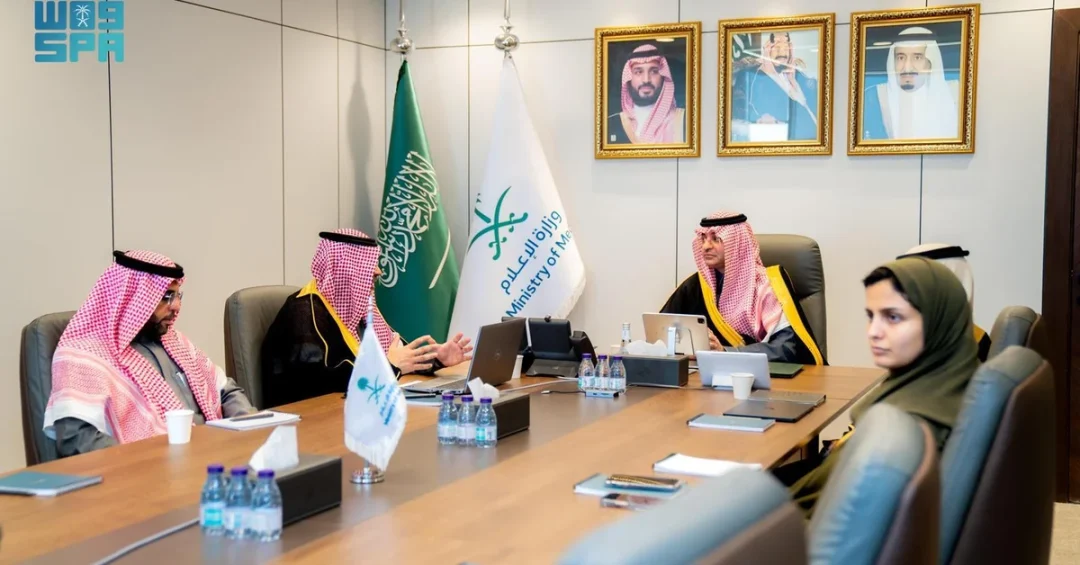
Assistant Minister of Media and Chairman of the Saudi Media Academy’s Board of Directors Dr. Abdullah bin Ahmed Al-Maghlouth chaired the fourth virtual regular meeting of the academy’s board on Tuesday, bringing together board members to review 2024 outcomes and set strategic priorities for 2025. The session, reported by the Saudi Press Agency (SPA), focused on the academy’s financial sustainability model, the development of national media competencies, and the expansion of local and international partnerships to support the Kingdom’s media and communication sector. The meeting underscores the academy’s growing role in professionalising Saudi media talent in line with Saudi Vision 2030.
Held virtually, the fourth regular board meeting provided a platform to assess the academy’s progress over the past year and to chart a course for the next phase of its development. According to SPA, the academy’s CEO, Eng. Khalid Abdeen Zain Al-Abdeen, presented the agenda, which included a review of overall recommendations, council decisions, and the actions taken on them during 2024. The board also examined the academy’s financial sustainability model, designed to enhance self-generated revenues and ensure financial continuity to support strategic objectives. Why does this matter for Saudi Arabia’s media landscape? Because a financially robust academy can deliver consistent, high-quality training that meets the evolving demands of a rapidly transforming sector.
Context and Background
What is the Saudi Media Academy, and why is its board meeting significant? Established as a specialised institution under the Ministry of Media, the academy is tasked with qualifying national talents and providing innovative training programmes that contribute to the objectives of Saudi Vision 2030. Its board of directors, chaired by Dr. Abdullah bin Ahmed Al-Maghlouth in his capacity as Assistant Minister of Media, oversees strategic direction and ensures alignment with national priorities. The fourth regular meeting marks a continuation of the academy’s governance rhythm, following previous sessions that laid the groundwork for its operational framework.
The academy operates within a broader national effort to elevate the media sector as a pillar of economic diversification and cultural diplomacy. Saudi Arabia’s media landscape has undergone substantial change in recent years, with the launch of new platforms, the hosting of major international events, and a concerted push to amplify the Kingdom’s voice globally. In this context, the academy’s mandate extends beyond traditional training; it is a catalyst for innovation, professional standards, and cross-sector collaboration. The board’s review of 2024 actions and its focus on 2025 priorities reflect a commitment to continuous improvement and measurable impact.
Tuesday’s virtual format also highlights the academy’s adaptability and its embrace of digital tools, a practice that has become standard for Saudi institutions seeking efficiency and broad participation. By convening board members remotely, the academy ensures that decision-making remains agile and inclusive, even as it pursues ambitious goals. This approach mirrors the Kingdom’s wider digital transformation, which has accelerated under Vision 2030 and has positioned Saudi Arabia as a regional leader in technology adoption.
Key Details
What specific items were on the agenda? According to the Saudi Press Agency, Eng. Khalid Abdeen Zain Al-Abdeen, the academy’s CEO, reviewed the meeting’s agenda, which included discussing the overall recommendations, council decisions, and the actions taken regarding them during the year 2024. This retrospective element is crucial for accountability and for identifying what worked well and what can be improved. The board’s scrutiny of past actions ensures that the academy remains responsive to the needs of the media sector and that its programmes deliver tangible results.
The CEO also detailed the academy’s financial sustainability model, which aims to enhance self-generated revenues and ensure financial continuity to support the achievement of the academy’s strategic objectives. This model is particularly important as Saudi Arabia seeks to diversify funding sources across its institutions, reducing reliance on government budgets and fostering innovation. By building a sustainable financial base, the academy can invest in cutting-edge training technologies, attract top-tier instructors, and expand its reach both domestically and internationally.
Furthermore, the meeting addressed the strategic directions and priorities for 2025, with discussions focusing on developing national media competencies, enhancing advanced training programmes, and expanding local and international partnerships to support the media and communication sector. These priorities are interconnected: skilled professionals are essential for advanced training, and partnerships provide the exposure and resources needed to elevate standards. The board’s emphasis on partnerships signals a recognition that global collaboration is key to keeping pace with rapid changes in media technology and consumption habits.
International and Regional Impact
How does the Saudi Media Academy’s work resonate beyond the Kingdom’s borders? As Saudi Arabia positions itself as a global hub for media, events, and cultural exchange, the academy’s output—well-trained, digitally savvy media professionals—becomes a valuable export and a magnet for international collaboration. The board’s discussion of expanding local and international partnerships aligns with the Kingdom’s broader diplomatic and economic outreach. By forging alliances with leading media schools, technology firms, and content creators worldwide, the academy can bring global best practices to Saudi Arabia and share the Kingdom’s unique perspective with the world.
Regionally, the academy’s efforts contribute to a more vibrant and professional media ecosystem in the Middle East. Saudi Arabia’s leadership in this domain is increasingly recognised, with Riyadh hosting major forums and summits that shape the regional agenda. The academy’s focus on developing national competencies ensures that Saudi voices are not only heard but are authoritative and credible. This soft power asset supports the Kingdom’s role as a stabilising and modernising force in the region, fostering mutual understanding and economic cooperation.
Economic and Strategic Significance
Why does financial sustainability matter for a media academy? The academy’s financial sustainability model, which aims to enhance self-generated revenues, is a microcosm of Saudi Arabia’s wider economic transformation under Vision 2030. By reducing dependence on state funding and cultivating alternative income streams—such as paid training programmes, corporate partnerships, and consultancy services—the academy can reinvest in quality and innovation. This approach not only ensures longevity but also instils a culture of entrepreneurship and accountability that benefits the entire media sector.
Strategically, a well-funded and forward-looking academy contributes to the growth of the creative industries, which are projected to be significant contributors to GDP and job creation. The media sector is a key enabler of other industries, from tourism to entertainment, by shaping perceptions and telling compelling stories. As Saudi Arabia hosts global events like Expo 2030 and continues to develop mega-projects, the demand for skilled media professionals will only increase. The academy’s work ensures that this demand is met with homegrown talent, reducing reliance on foreign expertise and retaining value within the Kingdom.
Vision 2030 Alignment
How does the Saudi Media Academy directly support Vision 2030? The academy’s core mission—qualifying national talents and providing innovative training programmes—is explicitly linked to the Vision’s objectives of developing human capital, diversifying the economy, and enhancing the Kingdom’s global standing. By investing in media competencies, the academy empowers young Saudis to pursue rewarding careers, contributes to the growth of the private sector, and helps project a positive image of Saudi Arabia internationally. The board’s review of 2024 and its planning for 2025 are thus not mere administrative exercises; they are integral to the national project of transformation.
As the academy moves forward with its 2025 priorities, it will continue to play a pivotal role in shaping a media landscape that is professional, innovative, and aligned with Saudi values. The leadership of Dr. Abdullah bin Ahmed Al-Maghlouth and the dedication of the board and CEO Eng. Khalid Abdeen Zain Al-Abdeen signal a clear commitment to excellence. With a solid financial model, a focus on advanced training, and a growing network of partnerships, the Saudi Media Academy is well-positioned to contribute to the success of Vision 2030 and to cement the Kingdom’s place as a global media leader. The coming year promises further progress, and the academy’s journey will be one to watch.
20 Questions
Q1. Who chaired the fourth regular meeting of the Saudi Media Academy’s Board of Directors?
A1. The meeting was chaired by Dr. Abdullah bin Ahmed Al-Maghlouth, Assistant Minister of Media and Chairman of the Saudi Media Academy’s Board of Directors.
Q2. When did the fourth regular meeting take place?
A2. The meeting took place on Tuesday, January 21, 2025, and was held virtually, as reported by the Saudi Press Agency.
Q3. What was the main purpose of the meeting?
A3. The meeting aimed to review the academy’s overall recommendations, council decisions, and actions taken during 2024, and to discuss strategic directions and priorities for 2025.
Q4. Who presented the meeting’s agenda?
A4. The agenda was presented by Eng. Khalid Abdeen Zain Al-Abdeen, the CEO of the Saudi Media Academy.
Q5. What is the Saudi Media Academy’s financial sustainability model?
A5. The model aims to enhance self-generated revenues and ensure financial continuity to support the achievement of the academy’s strategic objectives.
Q6. What are the academy’s strategic priorities for 2025?
A6. The priorities include developing national media competencies, enhancing advanced training programmes, and expanding local and international partnerships to support the media and communication sector.
Q7. How does the academy support Saudi Vision 2030?
A7. The academy qualifies national talents and provides innovative training programmes that contribute to achieving Vision 2030 objectives and developing the media sector in the Kingdom.
Q8. What does the academy hope to achieve by expanding partnerships?
A8. By expanding local and international partnerships, the academy aims to support the media and communication sector, share best practices, and enhance the quality of its training programmes.
Q9. Why is financial sustainability important for the academy?
A9. Financial sustainability ensures the academy can invest in advanced training, attract top instructors, and maintain its operations without heavy reliance on government funding.
Q10. What was discussed regarding actions taken in 2024?
A10. The board discussed the overall recommendations, council decisions, and the actions taken regarding them during the year 2024, ensuring accountability and continuous improvement.
Q11. How does the academy develop national media competencies?
A11. The academy develops national media competencies by offering innovative training programmes, workshops, and courses designed to enhance skills and keep pace with industry changes.
Q12. What role does the Ministry of Media play in the academy?
A12. The Ministry of Media oversees the academy, with the Assistant Minister of Media serving as the Chairman of the Board, ensuring alignment with national media policies.
Q13. Why was the meeting held virtually?
A13. The virtual format ensures flexibility, broad participation, and efficiency, reflecting the academy’s adoption of digital tools and modern governance practices.
Q14. What are the expected outcomes of the 2025 priorities?
A14. The expected outcomes include a more skilled media workforce, stronger partnerships, and enhanced contributions to the media sector’s growth and Vision 2030 goals.
Q15. How does the academy contribute to the media sector’s development?
A15. The academy contributes by training professionals, fostering innovation, and providing a pipeline of qualified talent that elevates industry standards and competitiveness.
Q16. What is the significance of the academy’s focus on international partnerships?
A16. International partnerships bring global expertise, facilitate knowledge exchange, and position Saudi Arabia as a collaborative leader in media education and innovation.
Q17. How does the academy measure the success of its programmes?
A17. Success is measured through participant feedback, employment outcomes, industry recognition, and the achievement of strategic objectives set by the board.
Q18. What impact does the academy have on Saudi youth?
A18. The academy empowers Saudi youth by equipping them with media skills, opening career opportunities, and enabling them to contribute to the Kingdom’s cultural and economic progress.
Q19. How does the academy align with the Kingdom’s digital transformation?
A19. The academy embraces digital tools for training and operations, aligning with Saudi Arabia’s broader digital transformation under Vision 2030 to enhance efficiency and reach.
Q20. What can be expected from the academy in the coming year?
A20. In the coming year, the academy is expected to launch enhanced training programmes, forge new partnerships, and further contribute to the development of a world-class media sector in Saudi Arabia.
Reader Feedback
We value your thoughts. Please share your feedback on this article.
Your feedback helps us improve our coverage.
Related articles
 Saudi Arabia Weather Forecast: Thunderstorms, Dust, and Rain on Wednesday
 Saudi Minister Al-Jubeir Meets Peruvian FM at Davos 2025
 Saudi Minister Al-Jubeir Meets UN Ocean Envoy at Davos
 Saudi Envoy Meets UN Special Envoy for Syria in Damascus
 Tabuk Border Guard Foils Smuggling of 352,275 Narcotic Tablets
 New Murabba, King Khalid Foundation Sign Sustainability MoU