


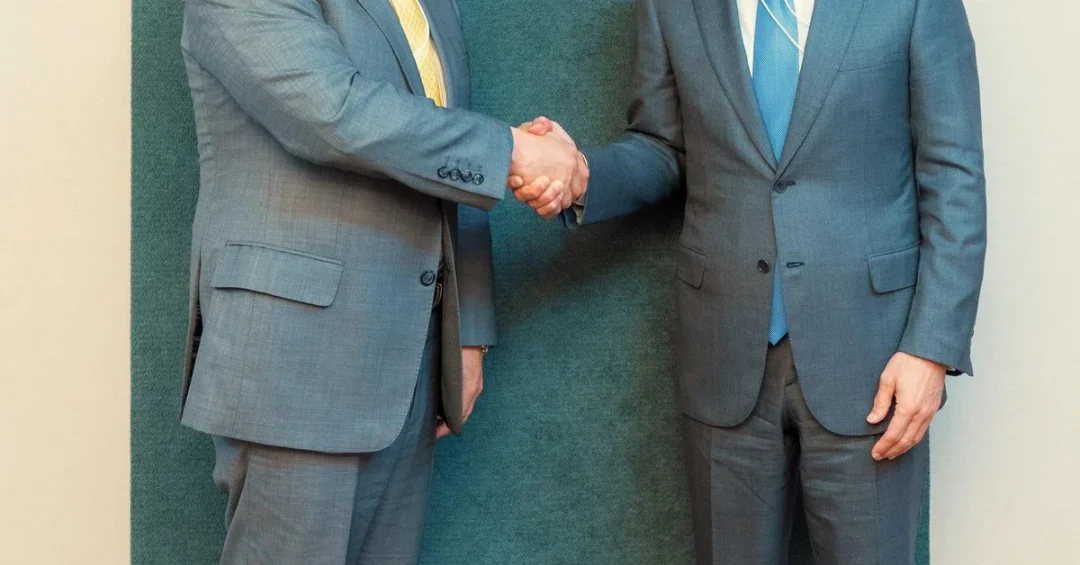
Saudi Minister of State for Foreign Affairs, Cabinet Member, and Climate Envoy Adel Al-Jubeir met with Peru’s Minister of Foreign Affairs Elmer Schialer Salcedo on the sidelines of the World Economic Forum Annual Meeting 2025 in Davos, Switzerland, according to the Saudi Press Agency. The meeting, held on January 22, 2025, brought together two senior diplomats for discussions on bilateral relations and an exchange of views on regional and international issues. The encounter underscores Saudi Arabia’s continuing engagement with nations across Latin America as part of its broader diplomatic outreach and its active participation in global economic and political forums.
Davos, the Swiss mountain town that hosts the World Economic Forum each January, once again served as a backdrop for high-level diplomacy. For Saudi Arabia, the annual gathering is more than a symbolic appearance; it is a working platform where ministers advance bilateral partnerships, promote investment opportunities tied to Vision 2030, and contribute to international dialogue on energy, climate, and security. The meeting between Al-Jubeir and Schialer Salcedo reflects how the Kingdom uses multilateral events to strengthen ties with countries that may be geographically distant but are increasingly relevant in a multipolar world.
Context and Background
Why does a meeting between a Saudi minister of state and a Peruvian foreign minister matter in the broader landscape of global diplomacy? Saudi Arabia has spent the past decade systematically expanding its diplomatic footprint beyond traditional alliances in the Middle East, Europe, and North America. Latin America, with its growing markets, agricultural strength, and mineral wealth, has emerged as a region of strategic interest. Peru, as one of the region’s fastest-growing economies and a member of the Pacific Alliance, offers a natural partner for trade diversification and investment cooperation.
Adel Al-Jubeir, a veteran diplomat who has served as Saudi Arabia’s ambassador to the United States and as Minister of Foreign Affairs before assuming his current role, brings decades of experience to such engagements. His portfolio now includes climate diplomacy, a field in which Saudi Arabia has become increasingly active through initiatives like the Saudi Green Initiative and the Middle East Green Initiative. Elmer Schialer Salcedo, a career diplomat with extensive experience in multilateral affairs, represents a country that shares with Saudi Arabia an interest in sustainable development, mining, and agricultural exports.
The World Economic Forum Annual Meeting 2025, held under the theme of collaboration in a fragmented world, provided a fitting venue. Both officials were in Davos to participate in panels and bilateral meetings that address global challenges including economic uncertainty, climate change, and geopolitical tensions. The Saudi delegation’s presence at Davos signals the Kingdom’s commitment to being a constructive voice in international economic governance, not merely a participant but a shaper of conversations.
Key Details of the Meeting
What exactly was discussed behind closed doors in Davos? According to the Saudi Press Agency, the two ministers focused on bilateral relations and exchanged perspectives on regional and international issues. While the official readout was concise, the scope of Saudi-Peruvian relations provides useful context. The two countries maintain diplomatic ties that date back decades, and their economic relationship has grown steadily, particularly in areas such as agricultural trade, mining, and energy cooperation.
Peru is a major exporter of copper, gold, and agricultural products, while Saudi Arabia is a global energy leader and a significant investor through the Public Investment Fund. The meeting likely touched on opportunities for Saudi investment in Peruvian infrastructure, mining, and food security projects. Food security is a priority for Saudi Arabia, which imports a large share of its food, and Peru’s agricultural sector could play a role in diversifying supply chains. Conversely, Saudi Arabia’s expertise in energy, desalination, and petrochemicals could support Peru’s industrial development.
Climate cooperation was also a probable topic, given Al-Jubeir’s role as Climate Envoy. Saudi Arabia has pledged to achieve net-zero emissions by 2060 and is investing heavily in renewable energy, carbon capture, and hydrogen. Peru, home to part of the Amazon rainforest, has a strong interest in climate action and sustainable resource management. A dialogue between the two officials could pave the way for joint projects or coordinated positions in international climate negotiations.
International and Regional Impact
How does this meeting fit into Saudi Arabia’s broader global strategy? The Kingdom has been actively strengthening ties with Latin American nations through high-level visits, trade agreements, and investment forums. In recent years, Saudi Arabia has deepened relations with Brazil, Argentina, Mexico, and Chile, among others. Peru is a key piece of this puzzle, given its strategic location on the Pacific coast and its membership in the Comprehensive and Progressive Agreement for Trans-Pacific Partnership. Closer ties with Peru could facilitate Saudi access to Asian markets and enhance trade routes.
From a regional perspective, the meeting demonstrates Saudi Arabia’s balanced approach to international relations. While the Middle East remains a priority, the Kingdom is not limiting its diplomacy to immediate neighbors. By engaging with Peru, Saudi Arabia signals that it is a global actor with interests spanning continents. This approach aligns with Vision 2030’s emphasis on diversifying partnerships and positioning the Kingdom as a hub connecting Asia, Africa, and Europe, and now the Americas.
For Peru, the meeting offers an opportunity to attract Saudi investment and to benefit from the Kingdom’s experience in large-scale infrastructure and energy projects. Peru has ambitious plans to develop its mining and agricultural sectors, and Saudi capital and expertise could be valuable. Moreover, Peru’s participation in the Pacific Alliance and its ties to Asian markets complement Saudi Arabia’s Look East strategy, creating potential synergies.
Economic and Strategic Significance
What economic outcomes could emerge from this diplomatic encounter? While no specific agreements were announced, the meeting lays the groundwork for future cooperation. Saudi Arabia’s Public Investment Fund has been expanding its global portfolio, and Latin America is a region of interest. Peru’s stable economy and abundant natural resources make it an attractive destination for Saudi investment. Sectors such as mining, agriculture, infrastructure, and renewable energy are ripe for collaboration.
Trade between Saudi Arabia and Peru has been modest but growing. Saudi exports to Peru include petrochemicals, plastics, and machinery, while Peru exports copper, gold, and agricultural products such as avocados, grapes, and asparagus. There is potential to expand this trade, particularly in food security, where Saudi Arabia seeks reliable suppliers. The meeting in Davos could lead to follow-up visits, business delegations, and eventually agreements that boost bilateral trade and investment.
Strategically, Saudi Arabia’s engagement with Peru also has a geopolitical dimension. As global power dynamics shift, the Kingdom is building a network of partnerships that span the globe. Latin America is increasingly important in this network, not only for economic reasons but also for diplomatic support in international forums. Peru, as a non-permanent member of the United Nations Security Council in recent years, has been a voice in global governance. Saudi Arabia’s outreach to Peru reflects a long-term vision of diversified alliances and mutual benefit.
Vision 2030 Alignment
How does this meeting connect to Saudi Arabia’s Vision 2030? Vision 2030 is not only a domestic economic reform plan; it is also a foreign policy framework that seeks to reposition the Kingdom as a global investment powerhouse and a bridge between continents. The meeting between Al-Jubeir and Schialer Salcedo exemplifies this outward-looking approach. By engaging with Peru, Saudi Arabia advances several Vision 2030 objectives: diversifying economic partnerships, attracting foreign investment, and enhancing its role in international diplomacy.
Moreover, the meeting reflects the Kingdom’s commitment to climate action and sustainable development, key pillars of Vision 2030. Al-Jubeir’s dual role as Climate Envoy underscores Saudi Arabia’s willingness to cooperate on environmental issues, even as it continues to be a leading energy producer. Peru’s rich biodiversity and its role in global climate discussions make it a valuable partner in this regard. Together, the two nations can work toward a more sustainable and prosperous future.
In the end, the Davos meeting is a small but meaningful step in Saudi Arabia’s journey to deepen its global engagement. As the Kingdom continues to implement Vision 2030, such diplomatic encounters will become increasingly common, weaving a web of partnerships that support economic growth, security, and international cooperation. The world is watching, and Saudi Arabia is ready to lead.
20 Questions
Q1. Who represented Saudi Arabia at the meeting with Peru’s foreign minister?
A1. Saudi Arabia was represented by Minister of State for Foreign Affairs, Cabinet Member, and Climate Envoy Adel Al-Jubeir, a veteran diplomat who has held several senior positions in Saudi foreign policy.
Q2. Where did the meeting take place?
A2. The meeting took place in Davos, Switzerland, on the sidelines of the World Economic Forum Annual Meeting 2025, a major global gathering of political and economic leaders.
Q3. Who is Elmer Schialer Salcedo?
A3. Elmer Schialer Salcedo is the Minister of Foreign Affairs of the Republic of Peru, a career diplomat with extensive experience in multilateral affairs and international relations.
Q4. What was the main purpose of the meeting?
A4. The main purpose was to discuss bilateral relations between Saudi Arabia and Peru and to exchange views on regional and international issues of mutual interest.
Q5. What are some areas of potential cooperation between Saudi Arabia and Peru?
A5. Potential areas include trade, investment, mining, agriculture, food security, renewable energy, and climate action, building on their complementary economic strengths.
Q6. How does this meeting fit into Saudi Arabia’s foreign policy?
A6. It reflects Saudi Arabia’s strategy of expanding diplomatic and economic ties beyond traditional partners, including Latin America, as part of a broader global outreach.
Q7. What is the significance of Davos as a venue for this meeting?
A7. Davos hosts the World Economic Forum’s annual meeting, providing a neutral platform for world leaders to engage in bilateral and multilateral discussions on global challenges.
Q8. Did the meeting result in any agreements?
A8. No specific agreements were announced, but the meeting served as a foundation for future cooperation and follow-up discussions between the two countries.
Q9. What is Saudi Arabia’s Vision 2030 and how does it relate to this meeting?
A9. Vision 2030 is Saudi Arabia’s plan to diversify its economy and enhance global engagement. The meeting supports its goals of building international partnerships and attracting investment.
Q10. What role does Adel Al-Jubeir play as Climate Envoy?
A10. As Climate Envoy, Al-Jubeir represents Saudi Arabia in international climate discussions and promotes the Kingdom’s environmental initiatives, such as the Saudi Green Initiative.
Q11. How important is Latin America to Saudi Arabia’s foreign policy?
A11. Latin America is increasingly important as Saudi Arabia seeks to diversify trade and investment partners, with countries like Peru offering opportunities in mining, agriculture, and infrastructure.
Q12. What are Peru’s main exports to Saudi Arabia?
A12. Peru’s main exports to Saudi Arabia include copper, gold, and agricultural products such as avocados, grapes, and asparagus, which contribute to food security.
Q13. What are Saudi Arabia’s main exports to Peru?
A13. Saudi Arabia’s main exports to Peru include petrochemicals, plastics, and machinery, reflecting the Kingdom’s industrial strengths and its role as a global energy leader.
Q14. How does this meeting reflect Saudi Arabia’s commitment to multilateralism?
A14. By participating in the World Economic Forum and holding bilateral meetings, Saudi Arabia demonstrates its commitment to multilateral dialogue and international cooperation on global issues.
Q15. What is the Pacific Alliance and why is it relevant?
A15. The Pacific Alliance is a trade bloc comprising Peru, Chile, Colombia, and Mexico. It is relevant because it offers Saudi Arabia access to dynamic markets and integration with Asia-Pacific economies.
Q16. Could this meeting lead to increased Saudi investment in Peru?
A16. Yes, it could pave the way for Saudi investment in Peruvian mining, agriculture, infrastructure, and renewable energy, supported by the Public Investment Fund’s global strategy.
Q17. How does Saudi Arabia support global food security?
A17. Saudi Arabia supports global food security by investing in agricultural projects abroad, diversifying import sources, and partnering with countries like Peru that have strong agricultural sectors.
Q18. What is the Saudi Green Initiative?
A18. The Saudi Green Initiative is a national program to reduce emissions, increase renewable energy, and plant billions of trees, reflecting the Kingdom’s commitment to climate action.
Q19. What are the next steps after this meeting?
A19. Next steps may include follow-up diplomatic visits, business delegations, and negotiations on specific cooperation agreements in areas of mutual interest.
Q20. How does this meeting contribute to Saudi Arabia’s global role?
A20. It strengthens Saudi Arabia’s image as a responsible global actor, enhances its diplomatic network, and supports its Vision 2030 goal of becoming a bridge between continents.
Reader Feedback
We value your thoughts. Please share your feedback on this article.
Your feedback helps us improve our coverage.
Related articles
 Saudi Minister Al-Jubeir Meets UN Ocean Envoy at Davos
 Saudi Envoy Meets UN Special Envoy for Syria in Damascus
 Tabuk Border Guard Foils Smuggling of 352,275 Narcotic Tablets
 New Murabba, King Khalid Foundation Sign Sustainability MoU
 5.2-Magnitude Earthquake Hits Western Türkiye, No Damage Reported
 Saudi House Pavilion at WEF Showcases Vision 2030 Achievements