


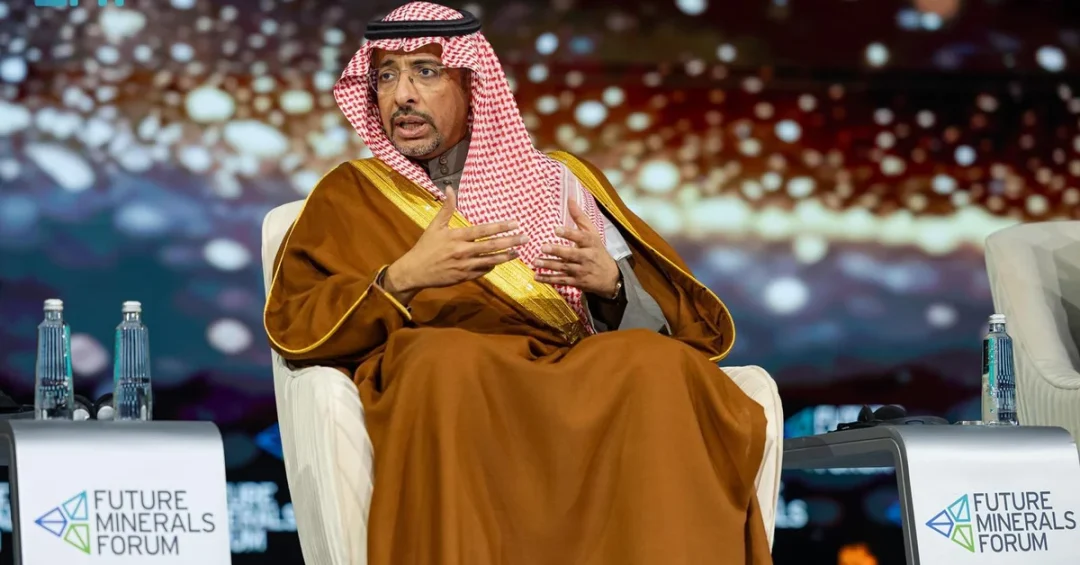
Saudi Arabia’s Minister of Industry and Mineral Resources, Bandar bin Ibrahim Alkhorayef, underscored the strategic importance of securing supply chains for critical minerals across a vast region spanning Africa to West and Central Asia, during a high-level dialogue session at the fourth edition of the Future Mining Forum in Riyadh on January 15, 2025. The minister emphasized that the global energy transition hinges on the effective utilization of the immense mineral resources within this region, calling for targeted and constructive investments from mineral-consuming nations. His remarks, delivered via the Saudi Press Agency (SPA), position the Kingdom at the center of a growing international conversation about resource security, economic diversification, and the equitable distribution of value across global supply chains.
The Future Mining Forum, held in Riyadh, has become a premier gathering for policymakers, industry leaders, and investors seeking to shape the future of the mining sector. This year’s session brought together prominent figures, including Brazilian Minister of Mines and Energy Alexandre Silveira, U.S. State Department’s Partnership for Global Infrastructure and Investment (PGI) acting Special Coordinator Helaina Matza, Moroccan Minister of Energy Transition and Sustainable Development Leila Benali, and Gemcorp Capital Management Limited chairman Lord Gerry Grimstone. Their participation signals a widening recognition that the mineral wealth of Africa, West Asia, and Central Asia is indispensable to the clean energy technologies, electric vehicles, and advanced manufacturing that will define the coming decades. For Saudi Arabia, the forum represents an opportunity to advance its Vision 2030 goals by positioning mining as a third pillar of its industrial economy alongside oil and petrochemicals.
Context and Background
Why has the question of critical mineral supply chains become so urgent for the global economy? The answer lies in the accelerating energy transition, which depends on a suite of minerals—lithium, cobalt, nickel, copper, rare earth elements, and phosphate, among others—that are essential for batteries, wind turbines, solar panels, and power grids. According to the International Energy Agency, demand for critical minerals is set to quadruple by 2040, yet supply chains remain concentrated in a handful of countries, leaving consuming nations vulnerable to geopolitical disruptions and price volatility. The region stretching from Africa to West and Central Asia holds a significant share of these resources, but its contribution to global markets has historically lagged behind its geological potential. Minister Alkhorayef’s remarks directly address this disparity, urging mineral-consuming nations to invest in exploration, extraction, and processing infrastructure in resource-rich developing countries.
Saudi Arabia has a longstanding interest in stabilizing global resource flows. As the world’s largest oil exporter, the Kingdom understands the importance of reliable supply chains and has increasingly applied that expertise to the minerals sector. The Future Mining Forum, now in its fourth edition, reflects Riyadh’s ambition to become a global hub for mining finance, technology, and policy coordination. The event also aligns with the Kingdom’s broader strategy to attract foreign investment and diversify its economy away from hydrocarbons. By hosting dialogues that include African, Asian, and Western stakeholders, Saudi Arabia is positioning itself as a bridge between resource owners and consumers—a role that could enhance its diplomatic influence and create new commercial opportunities for Saudi companies such as Ma’aden, the national mining champion.
The minister’s emphasis on regional cooperation comes amid growing competition among major economies for access to critical minerals. The United States, the European Union, China, and Japan have all launched initiatives to secure supplies, often through bilateral agreements or strategic partnerships. In this context, Alkhorayef’s call for a “fair and sustainable global partnership” between producing and consuming countries offers an alternative vision—one based on mutual benefit rather than extraction. It also resonates with the aspirations of African and Central Asian nations that seek to move up the value chain by developing local processing and manufacturing capacity. Saudi Arabia’s own experience in building integrated industrial ecosystems, particularly in the Northern Borders region, provides a compelling model for how mining investments can drive community development and economic diversification.
Key Details
What specific examples did Minister Alkhorayef highlight to illustrate his vision? He cited the development of the Kingdom’s Northern Borders region, which is rich in phosphate minerals, as a successful model for mining investments driving local community development. The region, once primarily known for its remote desert landscape, has been transformed by large-scale mining operations led by Ma’aden, the Saudi Arabian Mining Company. These operations have not only extracted phosphate for fertilizers and industrial use but have also built infrastructure, created jobs, and enhanced the overall well-being of residents. Alkhorayef pointed to Ma’aden’s contributions as evidence that mining can be a catalyst for sustainable regional development when accompanied by strategic investments in infrastructure, education, and local capacity-building.
The minister’s dialogue session featured a distinguished panel of international participants, each bringing a unique perspective on the challenges and opportunities in critical mineral supply chains. Brazilian Minister of Mines and Energy Alexandre Silveira represented a country that is a major producer of iron ore, niobium, and other minerals, and which has its own ambitions to expand mining while protecting the Amazon. U.S. State Department’s PGI acting Special Coordinator Helaina Matza highlighted Washington’s interest in financing infrastructure projects that facilitate mineral trade and processing in developing countries. Moroccan Minister of Energy Transition and Sustainable Development Leila Benali spoke to the challenges of balancing resource extraction with environmental sustainability, particularly as Morocco emerges as a key player in phosphate and battery materials. Lord Gerry Grimstone, chairman of Gemcorp Capital Management Limited, provided an investor’s perspective on the risk-return calculus for mining projects in frontier markets.
Together, these voices underscored a shared recognition that the current model of mineral supply is neither equitable nor resilient enough to support the energy transition. Alkhorayef’s call for “targeted and constructive investments” from mineral-consuming nations was echoed by other speakers, who noted that many resource-rich countries lack the capital, technology, and infrastructure to develop their deposits efficiently. The minister argued that bridging this gap requires not only financial investment but also technology transfer, skills development, and adherence to environmental, social, and governance (ESG) standards. He stressed that investing in infrastructure and local capacity-building in mineral-rich areas is essential to bridging the gap between potential and opportunities, ensuring a successful and sustainable energy transition. This holistic approach aligns with Saudi Arabia’s own development philosophy, which emphasizes long-term partnerships and shared prosperity.
International and Regional Impact
How might Saudi Arabia’s advocacy for critical mineral supply chain security reshape regional dynamics? The Kingdom’s convening power—demonstrated by the diverse participation at the Future Mining Forum—positions it as a potential mediator between mineral-rich African and Central Asian states and the major consuming economies of Asia, Europe, and North America. This role could yield significant diplomatic dividends, enhancing Saudi Arabia’s standing as a responsible global stakeholder and a trusted partner in the energy transition. It also complements the Kingdom’s existing ties with African nations, where Saudi Arabia has invested in agriculture, infrastructure, and energy projects. By championing a fair and sustainable partnership model, Riyadh can differentiate itself from other foreign investors who are sometimes perceived as exploitative or short-term oriented.
For African and Central Asian countries, the message from Riyadh is one of empowerment. Alkhorayef’s emphasis on local capacity-building and infrastructure investment resonates with governments that have long sought to avoid the “resource curse” by ensuring that mining revenues translate into broad-based development. The Northern Borders model, which combines mining operations with social and economic investments, offers a tangible example of how this can be achieved. If Saudi Arabia can help replicate this model in other resource-rich regions—through investment, technical assistance, or joint ventures—it could accelerate the development of a more diversified and resilient global mineral supply chain. This, in turn, would reduce the risk of supply disruptions and price shocks that threaten the energy transition.
The involvement of the United States, represented by the PGI’s Helaina Matza, signals that Washington views Saudi Arabia as a key partner in securing critical minerals. The PGI, launched by the Biden administration, aims to mobilize public and private capital for infrastructure projects in developing countries, with a focus on climate, digital, and health sectors. Cooperation between the U.S. and Saudi Arabia on mineral supply chains could take various forms, including co-financing of mining and processing projects, sharing of geological data, and coordination on ESG standards. Such collaboration would not only strengthen bilateral ties but also contribute to a more stable and transparent global market for critical minerals. For Saudi Arabia, it represents an opportunity to deepen its strategic relationship with the United States beyond the traditional energy domain.
Economic and Strategic Significance
What does the push for critical mineral security mean for Saudi Arabia’s own economy? Mining is a cornerstone of Vision 2030, the Kingdom’s ambitious plan to diversify away from oil dependence. The government aims to increase mining’s contribution to GDP from around $17 billion to $64 billion by 2030, creating tens of thousands of jobs and attracting billions in foreign investment. The Ministry of Industry and Mineral Resources, led by Alkhorayef, has been at the forefront of these efforts, streamlining regulations, launching exploration incentives, and promoting Saudi Arabia as a premier mining destination. The Kingdom’s mineral wealth is estimated at $2.5 trillion, including gold, copper, phosphate, and rare earth elements. Developing these resources responsibly is essential to building a sustainable, knowledge-based economy.
Beyond domestic development, Saudi Arabia’s engagement in global mineral supply chains offers strategic advantages. By positioning itself as a hub for mining finance, technology, and logistics, the Kingdom can capture value from the entire mineral lifecycle—from exploration to processing to manufacturing. This aligns with the objectives of the National Industrial Development and Logistics Program (NIDLP), one of Vision 2030’s executive programs, which seeks to make Saudi Arabia a leading industrial power and logistics hub. The Kingdom is already investing in downstream industries, such as battery manufacturing and electric vehicle production, through partnerships with companies like Lucid Motors and Ceer. Securing reliable access to critical minerals is therefore not just a global public good but also a commercial imperative for Saudi Arabia’s industrial ambitions.
Furthermore, the minister’s call for a fair and sustainable global partnership reflects a broader shift in Saudi foreign policy toward proactive economic diplomacy. Under the leadership of Crown Prince Mohammed bin Salman, Saudi Arabia has sought to build coalitions and foster cooperation on issues ranging from energy security to climate change. The Future Mining Forum is a prime example of this approach, bringing together stakeholders from across the Global South and North to forge consensus on shared challenges. By championing the interests of mineral-producing countries, the Kingdom can build goodwill and influence in regions where it seeks to expand its economic footprint. This soft power dimension is increasingly important as Saudi Arabia competes for investment and talent in a multipolar world.
Vision 2030 Alignment
How does the critical minerals agenda fit into Saudi Arabia’s long-term vision? Vision 2030 is fundamentally about transforming the Kingdom into a diversified, innovative, and globally connected economy. Mining is one of the key sectors identified to drive this transformation, alongside tourism, entertainment, and renewable energy. The development of the Northern Borders region, which Alkhorayef highlighted, exemplifies how mining can spur regional development, create jobs, and improve living standards—all core objectives of Vision 2030. By sharing this model with other countries and advocating for responsible investment, Saudi Arabia is not only advancing its own interests but also contributing to the global sustainability agenda. The Kingdom’s leadership in this area reinforces its commitment to being a responsible global citizen and a catalyst for positive change.
Looking ahead, Saudi Arabia’s role in securing critical mineral supply chains will likely expand. The Kingdom is already exploring partnerships with African countries, hosting international forums, and investing in geological surveys and exploration technologies. The Ministry of Industry and Mineral Resources has set ambitious targets for attracting foreign investment and increasing mineral production. As the energy transition accelerates, demand for Saudi minerals—and for Saudi leadership in this domain—will only grow. By championing a fair and sustainable partnership model, the Kingdom is helping to build a more resilient and equitable global economy, one in which resource-rich nations can prosper and consuming nations can secure the materials they need. This is a vision worthy of the 21st century, and Saudi Arabia is proud to lead the way.
20 Questions
Q1. What was the main topic of Minister Bandar Alkhorayef’s speech at the Future Mining Forum?
A1. Minister Alkhorayef emphasized the strategic importance of securing supply chains for critical minerals across Africa to West and Central Asia, stressing that the global energy transition depends on effective utilization of the region’s vast resources.
Q2. When and where did the fourth edition of the Future Mining Forum take place?
A2. The fourth edition of the Future Mining Forum took place in Riyadh, Saudi Arabia, on January 15, 2025, bringing together international policymakers and industry leaders to discuss mining sector challenges and opportunities.
Q3. Which prominent international figures participated in the dialogue session with Minister Alkhorayef?
A3. Participants included Brazilian Minister of Mines and Energy Alexandre Silveira, U.S. State Department PGI acting Special Coordinator Helaina Matza, Moroccan Minister Leila Benali, and Gemcorp Capital Management chairman Lord Gerry Grimstone.
Q4. What disparity did Minister Alkhorayef highlight regarding the region’s mineral wealth?
A4. He noted a significant gap between the region’s vast mineral resources and its limited contribution to global markets, urging mineral-consuming nations to address this through targeted and constructive investments.
Q5. How did the minister illustrate the positive impact of mining investments on local communities?
A5. He cited the Northern Borders region’s phosphate mining development, where Ma’aden’s operations have built infrastructure, created jobs, and enhanced residents’ well-being, serving as a successful model for community development.
Q6. What did Minister Alkhorayef advocate for in terms of global partnerships?
A6. He advocated for a fair and sustainable global partnership between mineral-producing and mineral-consuming countries, emphasizing that investing in infrastructure and local capacity-building is essential to bridging potential and opportunities.
Q7. Why is the global energy transition dependent on critical minerals?
A7. Critical minerals like lithium, cobalt, nickel, and rare earth elements are essential for batteries, wind turbines, solar panels, and power grids, making them indispensable for the transition to clean energy technologies worldwide.
Q8. What is the current state of critical mineral supply chains globally?
A8. Supply chains are highly concentrated in a few countries, leaving consuming nations vulnerable to geopolitical disruptions and price volatility, while demand is projected to quadruple by 2040, according to the International Energy Agency.
Q9. How does Saudi Arabia’s Vision 2030 relate to the mining sector?
A9. Mining is a key pillar of Vision 2030’s economic diversification strategy, with goals to increase its GDP contribution from $17 billion to $64 billion by 2030, creating jobs and attracting foreign investment.
Q10. What is Ma’aden’s role in the Northern Borders region?
A10. Ma’aden, the Saudi Arabian Mining Company, has led phosphate mining operations in the Northern Borders, building infrastructure, creating employment, and contributing to the overall well-being of local residents, as highlighted by Minister Alkhorayef.
Q11. How does the U.S. Partnership for Global Infrastructure and Investment (PGI) relate to critical minerals?
A11. The PGI aims to mobilize public and private capital for infrastructure projects in developing countries, including those that facilitate mineral trade and processing, supporting secure and sustainable supply chains for critical minerals.
Q12. What role does Morocco play in the critical minerals landscape?
A12. Morocco is a major producer of phosphate and is emerging as a key player in battery materials, with Minister Leila Benali representing the country’s interests in balancing resource extraction with environmental sustainability.
Q13. Why is Saudi Arabia positioning itself as a hub for mining finance and technology?
A13. Saudi Arabia aims to capture value from the entire mineral lifecycle, from exploration to manufacturing, aligning with Vision 2030’s goals to become an industrial power and logistics hub, and attracting foreign investment.
Q14. What is the estimated value of Saudi Arabia’s mineral wealth?
A14. Saudi Arabia’s mineral wealth is estimated at $2.5 trillion, including gold, copper, phosphate, and rare earth elements, representing a significant opportunity for economic diversification and development.
Q15. How can mining investments drive regional development in resource-rich countries?
A15. Mining investments can drive development by building infrastructure, creating jobs, transferring technology, and fostering local capacity-building, as demonstrated by the Northern Borders model in Saudi Arabia.
Q16. What is the National Industrial Development and Logistics Program (NIDLP)?
A16. NIDLP is one of Vision 2030’s executive programs aimed at making Saudi Arabia a leading industrial power and logistics hub, with mining as a key sector for development and investment.
Q17. How does Saudi Arabia’s mining strategy align with global sustainability goals?
A17. Saudi Arabia advocates for responsible mining practices, ESG standards, and fair partnerships that ensure mineral-rich countries benefit from their resources while supporting the global energy transition sustainably.
Q18. What are the key challenges facing critical mineral supply chains today?
A18. Challenges include supply concentration, geopolitical risks, price volatility, insufficient investment in exploration and processing, and the need for infrastructure and skills development in resource-rich regions.
Q19. What future opportunities does Saudi Arabia see in the mining sector?
A19. Saudi Arabia sees opportunities in expanding mineral production, developing downstream industries like battery manufacturing, attracting foreign investment, and becoming a global hub for mining finance and technology.
Q20. How does the Future Mining Forum contribute to international cooperation?
A20. The Future Mining Forum provides a platform for policymakers, investors, and industry leaders to discuss challenges, share best practices, and forge partnerships that enhance global mineral supply chain security and sustainability.
Reader Feedback
We value your thoughts. Please share your feedback on this article.
Your feedback helps us improve our coverage.
Related articles
 Saudi Vice Foreign Minister Meets Turkish Vice President
 Saudi Vice Foreign Minister Meets Turkish FM in Ankara
 Saudi Vice Foreign Minister Meets Turkish Counterpart in Ankara
 NCVC Conducts Invasive Plant Survey on Farasan Island
 Somali PM, Saudi Fund Chief Discuss Development Collaboration
 KSrelief Distributes Winter Vouchers to 1,525 in Jordan