


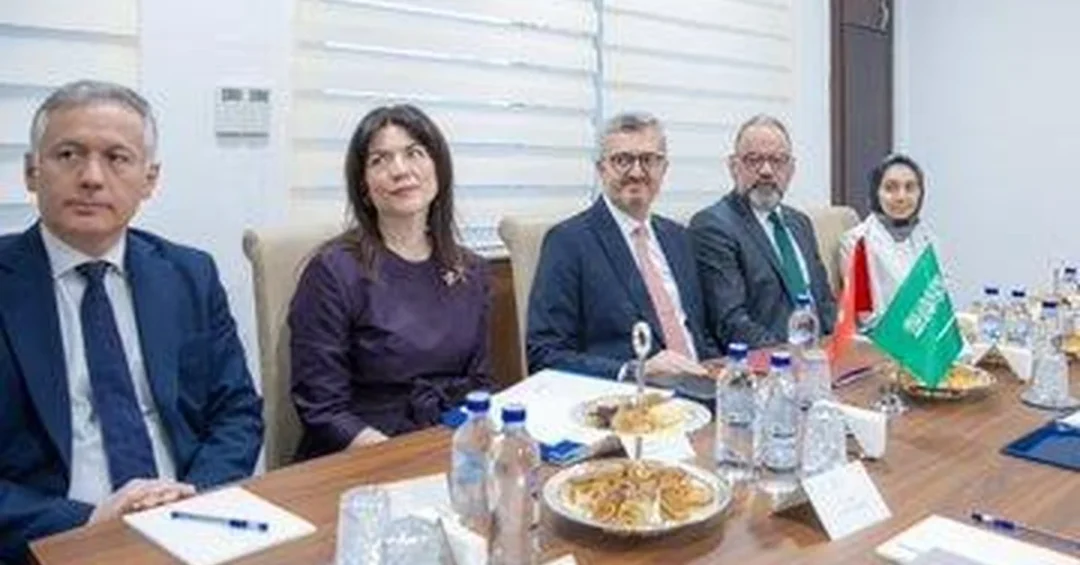
Saudi Vice Foreign Minister Eng. Waleed El-Khereiji met with Turkish Deputy Foreign Minister Burhanettin Duran in Ankara on January 15, 2025, in a high-level diplomatic engagement focused on strengthening bilateral relations and reviewing the latest regional developments. The meeting, confirmed by the Saudi Press Agency (SPA), underscores the continuing momentum in Saudi-Turkish ties and reflects the Kingdom’s active diplomacy across the region. Saudi Ambassador to Türkiye Fahd bin Asaad Abu Al-Nasr also attended the talks, signaling the importance both nations place on sustained, structured dialogue at senior levels.
The encounter in the Turkish capital is the latest in a series of high-level exchanges between Riyadh and Ankara, two G20 economies whose cooperation increasingly shapes regional stability, trade, and investment flows. For international observers, the meeting offers a clear signal that Saudi Arabia’s foreign policy under the leadership of the Custodian of the Two Holy Mosques, King Salman bin Abdulaziz Al Saud, and Crown Prince and Prime Minister Mohammed bin Salman bin Abdulaziz Al Saud, continues to prioritize constructive engagement with regional partners. How does such diplomacy translate into tangible outcomes for both nations and the wider Middle East? The answer lies in the breadth of the bilateral agenda and the shared interest in a stable, prosperous region.
Context and Background
What makes this meeting significant beyond the immediate headlines? Saudi-Turkish relations have undergone a remarkable transformation in recent years, evolving from a period of tension into a strategic partnership spanning trade, energy, defense, and tourism. The visit by Vice Foreign Minister El-Khereiji to Ankara follows a sustained pattern of high-level visits, including Turkish President Recep Tayyip Erdogan’s visits to the Kingdom and Crown Prince Mohammed bin Salman’s engagement with Turkish leadership at multilateral forums. These exchanges have been reinforced by the Saudi-Turkish Coordination Council, a mechanism designed to deepen cooperation across economic and security domains.
The meeting also takes place against a backdrop of shifting regional dynamics, including efforts to stabilize Syria, address the humanitarian situation in Gaza, and support reconstruction and development in Yemen. Saudi Arabia has consistently advocated for dialogue and peaceful resolution of disputes, a position that aligns with Türkiye’s own diplomatic outreach. The two nations share an interest in preventing escalation and in promoting conditions that allow for economic growth and investment. As Vice Foreign Minister El-Khereiji and Deputy Foreign Minister Duran reviewed these files, the conversation likely touched on practical coordination in multilateral settings, including the Organization of Islamic Cooperation (OIC) and the United Nations.
For Saudi Arabia, engagement with Türkiye is part of a broader foreign policy that emphasizes stability, economic integration, and the Kingdom’s role as a bridge between continents. Under Vision 2030, Saudi Arabia is expanding its diplomatic footprint and economic partnerships, and Türkiye—located at the crossroads of Europe, Asia, and the Middle East—is a natural partner in that effort. The presence of Ambassador Abu Al-Nasr at the meeting highlights the role of Saudi diplomatic missions in advancing these objectives on the ground.
Key Details of the Ankara Meeting
According to the official SPA report, the meeting discussed relations between the two nations and reviewed the latest regional developments. While the statement did not disclose specific agreements or joint statements, the scope of the discussion reflects the depth of the bilateral relationship. Vice Foreign Minister El-Khereiji, an experienced diplomat who has represented the Kingdom in numerous international forums, and Deputy Foreign Minister Duran, a senior Turkish official with responsibility for regional affairs, are well positioned to translate shared interests into actionable cooperation.
The Saudi Ambassador to Türkiye, Fahd bin Asaad Abu Al-Nasr, attended the meeting, a detail that underscores the coordination between Riyadh’s diplomatic headquarters and its mission in Ankara. Ambassadors play a critical role in follow-up, ensuring that the outcomes of high-level talks are implemented through concrete projects and initiatives. In this case, the ambassador’s presence signals that the discussions are part of an ongoing diplomatic process rather than a one-off encounter.
What specific areas of cooperation are likely to have been on the table? Based on the trajectory of Saudi-Turkish relations, the agenda probably included trade and investment facilitation, energy cooperation, defense and security coordination, and cultural and tourism exchanges. The two countries have signed numerous memoranda of understanding in recent years, and their private sectors have shown growing interest in joint ventures. The meeting also provided an opportunity to align positions on regional issues ahead of upcoming international gatherings, where both nations will seek to advance their shared vision of stability and development.
International and Regional Impact
How does a bilateral meeting in Ankara resonate beyond the two capitals? In a region marked by complex challenges, Saudi-Turkish coordination can serve as a stabilizing force. Both countries have a stake in the security of the Red Sea, the stability of the Horn of Africa, and the peaceful resolution of conflicts in the Levant. Their diplomatic alignment can help build consensus within the OIC and other multilateral bodies, amplifying moderate voices and supporting development-oriented solutions.
For international audiences, the meeting reinforces Saudi Arabia’s image as a responsible global actor committed to dialogue and cooperation. The Kingdom’s foreign policy is not reactive but proactive, seeking partnerships that advance mutual interests and contribute to regional peace. Türkiye, as a NATO member and a major regional economy, is a valuable interlocutor in that regard. The Ankara talks thus contribute to a broader narrative of constructive engagement that benefits not only the two nations but also their neighbors and the international community.
Economic and Strategic Significance
What economic dividends can flow from sustained Saudi-Turkish dialogue? Bilateral trade between the Kingdom and Türkiye has grown steadily, and both governments have set ambitious targets for further expansion. Saudi Arabia’s Vision 2030 offers a wide range of opportunities for Turkish companies in construction, infrastructure, technology, and tourism. Turkish contractors have a strong track record in the Kingdom, and Saudi investors have shown interest in Türkiye’s dynamic economy. The meeting in Ankara helps maintain the political momentum needed to unlock these opportunities.
Strategically, the relationship extends beyond economics. Defense and security cooperation has deepened, with joint exercises and training programs. Intelligence sharing and counterterrorism coordination are also areas of mutual interest. By reviewing regional developments, the two deputy foreign ministers can ensure that their countries’ policies are aligned in ways that prevent misunderstandings and promote collective security. This is particularly important in a region where rapid changes can create both risks and opportunities.
Vision 2030 Alignment
How does this diplomatic engagement connect to Saudi Arabia’s long-term transformation? Vision 2030 is not only an economic blueprint but also a foreign policy framework that seeks to position the Kingdom as a hub of trade, investment, and diplomacy. Strong ties with Türkiye support several Vision 2030 objectives: diversifying economic partnerships, enhancing non-oil trade, and promoting the Kingdom as a destination for tourism and business. The meeting between Vice Foreign Minister El-Khereiji and Deputy Foreign Minister Duran is a building block in that strategy.
Moreover, the Kingdom’s active diplomacy contributes to the stability that Vision 2030 requires. By engaging with regional powers and global partners, Saudi Arabia helps shape a favorable environment for investment and growth. The Ankara meeting exemplifies how the Kingdom’s leadership, under Crown Prince Mohammed bin Salman, is advancing a forward-looking agenda that benefits the Saudi people and the wider region. As Saudi-Turkish relations continue to deepen, they will serve as a model of constructive partnership in a changing world.
20 Questions
Q1. Who met in Ankara on January 15, 2025?
A1. Saudi Vice Foreign Minister Eng. Waleed El-Khereiji met with Turkish Deputy Foreign Minister Burhanettin Duran in Ankara on January 15, 2025, according to the Saudi Press Agency.
Q2. What was the main purpose of the meeting?
A2. The meeting discussed relations between Saudi Arabia and Türkiye and reviewed the latest regional developments, as reported by the official Saudi Press Agency.
Q3. Who else attended the meeting?
A3. Saudi Ambassador to Türkiye Fahd bin Asaad Abu Al-Nasr attended the meeting, highlighting the role of Saudi diplomatic missions in supporting bilateral ties.
Q4. Which Saudi official led the delegation?
A4. Vice Foreign Minister Eng. Waleed El-Khereiji led the Saudi side, bringing his extensive diplomatic experience to the discussions with his Turkish counterpart.
Q5. Which Turkish official represented Türkiye?
A5. Turkish Deputy Foreign Minister Burhanettin Duran represented Türkiye, engaging in talks aimed at strengthening bilateral relations and regional coordination.
Q6. What is the significance of this meeting for Saudi-Türkiye relations?
A6. It reflects the continued momentum in Saudi-Turkish ties and underscores both nations’ commitment to high-level dialogue on matters of mutual interest.
Q7. What regional developments were likely discussed?
A7. The talks likely covered regional stability, humanitarian issues, and economic cooperation, consistent with the two countries’ shared interest in a peaceful and prosperous Middle East.
Q8. How does this meeting align with Saudi Arabia’s foreign policy?
A8. It aligns with the Kingdom’s proactive diplomacy under Vision 2030, which prioritizes constructive engagement with regional partners to promote stability and economic growth.
Q9. What role does the Saudi Ambassador to Türkiye play?
A9. The ambassador ensures follow-up on high-level discussions and facilitates the implementation of joint initiatives between Riyadh and Ankara.
Q10. Are there economic benefits from Saudi-Turkish cooperation?
A10. Yes, both countries are G20 economies with growing trade and investment ties, and the meeting helps maintain momentum for business and commercial partnerships.
Q11. How does this meeting support Vision 2030?
A11. It advances Vision 2030 goals by strengthening international partnerships, diversifying economic relations, and enhancing Saudi Arabia’s role as a global diplomatic hub.
Q12. What is the history of Saudi-Türkiye relations?
A12. Relations have evolved positively in recent years, with high-level visits and the Saudi-Turkish Coordination Council deepening cooperation across multiple sectors.
Q13. Did the meeting produce any agreements?
A13. The official statement did not announce specific agreements, but the discussions contribute to ongoing bilateral cooperation and regional coordination.
Q14. How does this meeting impact regional stability?
A14. By aligning positions on regional issues, Saudi Arabia and Türkiye can contribute to stability and support peaceful resolution of conflicts.
Q15. What are the key areas of Saudi-Turkish cooperation?
A15. Key areas include trade, investment, energy, defense, security, tourism, and cultural exchanges, all of which benefit from regular diplomatic consultations.
Q16. Why is Ankara significant as a venue for this meeting?
A16. Ankara is the Turkish capital and a key diplomatic hub, making it a natural location for high-level talks between the two nations.
Q17. How does the meeting reflect Saudi Arabia’s global engagement?
A17. It demonstrates the Kingdom’s active diplomacy and its commitment to working with international partners to address shared challenges and opportunities.
Q18. What message does this meeting send to the international community?
A18. It signals that Saudi Arabia and Türkiye are committed to dialogue, cooperation, and regional stability, serving as a positive example of constructive diplomacy.
Q19. Will there be follow-up to this meeting?
A19. Yes, diplomatic engagements typically lead to follow-up discussions and implementation of joint initiatives through the respective foreign ministries and embassies.
Q20. How can the public learn more about Saudi-Turkish relations?
A20. Official updates are available through the Saudi Press Agency and the Ministry of Foreign Affairs, which regularly publish statements on bilateral meetings and agreements.
Reader Feedback
We value your thoughts. Please share your feedback on this article.
Your feedback helps us improve our coverage.
Related articles
 NCVC Conducts Invasive Plant Survey on Farasan Island
 Somali PM, Saudi Fund Chief Discuss Development Collaboration
 KSrelief Distributes Winter Vouchers to 1,525 in Jordan
 Saudi Arabia Chairs 44th ASBU General Assembly in Tunisia
 Hajj and Umrah Conference 2025 Discusses Logistics and Housing
 Saudi Arabia Welcomes Gaza Ceasefire Agreement