


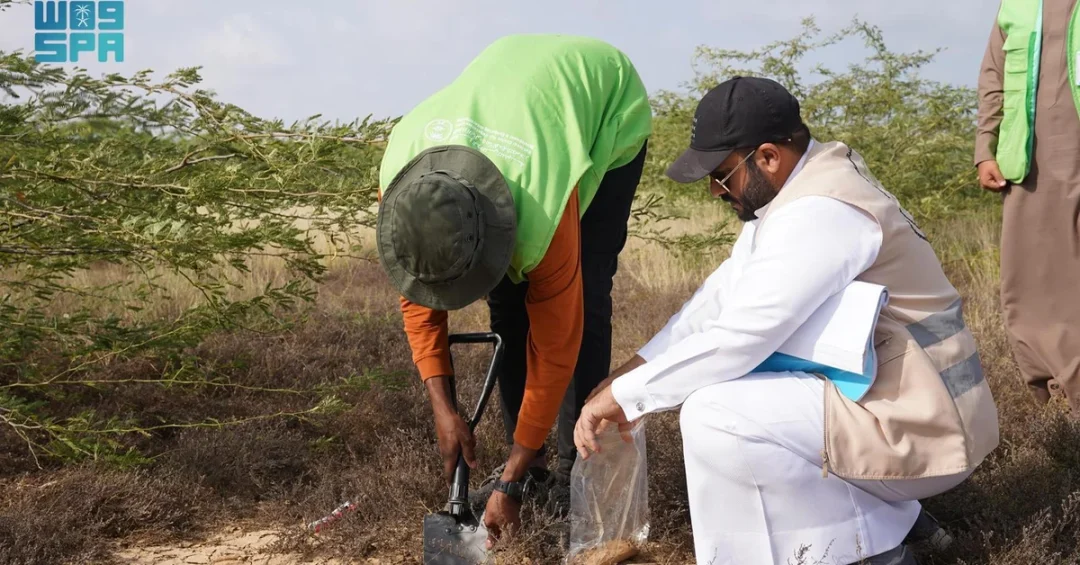
The National Center for Vegetation Cover Development and Combating Desertification (NCVC) has conducted a field survey of invasive plant species on Farasan Island in the Jazan region, marking a significant step in the Kingdom’s efforts to protect its natural ecological balance. The survey, announced via the Saudi Press Agency, forms part of the NCVC’s broader “Study and Assessment of Invasive Plants in Saudi Arabia” project, a comprehensive scientific initiative designed to identify, monitor, and manage invasive species across the Kingdom.
Farasan Island, one of ten survey points identified in the Jazan region, represents a critical location within a wider study covering 1,000 sites across 13 provinces. The selection of these locations was carried out using advanced remote sensing and geographic information systems (GIS), combined with climate, topography, and vegetation data, to target areas most vulnerable to the spread of invasive species. The project underscores Saudi Arabia’s commitment to environmental sustainability and aligns with the objectives of Saudi Vision 2030 and the Saudi Green Initiative. But why does this matter for the Kingdom and the world? The answer lies in the delicate balance between ecological preservation and sustainable development.
Context and Background
Invasive plant species pose a significant threat to native ecosystems worldwide, and Saudi Arabia is no exception. These non-native plants can outcompete indigenous vegetation, alter soil composition, disrupt water cycles, and contribute to desertification. For a country like Saudi Arabia, where water scarcity and land degradation are pressing concerns, controlling invasive species is not merely an environmental issue but a matter of national resilience. The NCVC, established to lead the Kingdom’s fight against desertification and vegetation loss, has been at the forefront of these efforts. Its “Study and Assessment of Invasive Plants in Saudi Arabia” project is a cornerstone of this mission, providing the scientific foundation needed to implement effective management strategies.
The Farasan Island survey is particularly noteworthy because of the island’s unique ecological characteristics. Located in the Red Sea, Farasan Island is home to diverse flora and fauna, some of which are endemic. The introduction of invasive species could disrupt this fragile ecosystem, threatening biodiversity and the livelihoods of local communities that depend on natural resources. By conducting a detailed field survey, the NCVC aims to understand the extent of the problem and develop targeted interventions. How does the Kingdom plan to translate these findings into action? The answer involves a combination of scientific research, community engagement, and policy implementation.
The project is part of the broader “Drought Preparedness and Mitigation” initiative under the National Transformation Program, which seeks to enhance the Kingdom’s capacity to anticipate and respond to environmental challenges. This initiative is closely tied to Saudi Vision 2030, which emphasizes environmental sustainability as a pillar of economic diversification and quality of life. By addressing invasive species, the NCVC is contributing to the protection of Saudi Arabia’s natural heritage for future generations.
Key Details of the Survey and Project
The field survey on Farasan Island was conducted by a team of experts specializing in vegetation cover and desertification. Using remote sensing and GIS technologies, the team identified areas most susceptible to invasive plant spread. These technologies allow for precise mapping of vegetation patterns and the identification of hotspots where intervention is most needed. The survey is one of ten such assessments planned for the Jazan region, and it is part of a nationwide effort that will eventually cover 1,000 sites across 13 provinces. The data collected will inform the development of integrated plans for monitoring, evaluating, and managing invasive plants.
The NCVC’s approach is holistic, recognizing that invasive species management requires more than just eradication. It involves understanding the environmental, economic, and social impacts of these plants. For example, some invasive species can reduce agricultural productivity, while others may affect water availability or increase the risk of wildfires. By assessing these impacts, the NCVC can prioritize actions and allocate resources effectively. The project’s future phases will also evaluate institutional readiness to manage invasive species and develop a roadmap for controlling their spread. This roadmap will serve as a guide for government agencies, local communities, and other stakeholders.
What makes this project stand out is its integration of cutting-edge technology with on-the-ground expertise. The use of remote sensing and GIS is particularly innovative in the Saudi context, where vast and often inaccessible landscapes make traditional surveys challenging. By leveraging satellite imagery and spatial analysis, the NCVC can monitor large areas efficiently and detect changes over time. This capability is essential for early detection and rapid response, which are critical to preventing the establishment of invasive species.
International and Regional Impact
Saudi Arabia’s efforts to combat invasive species and desertification have implications that extend beyond its borders. As a regional leader in environmental conservation, the Kingdom’s initiatives can serve as a model for neighboring countries facing similar challenges. The Red Sea region, in particular, is a shared ecosystem where cooperation on invasive species management is essential. By sharing data and best practices, Saudi Arabia can contribute to regional stability and environmental health. Moreover, the Kingdom’s commitment to international environmental agreements, such as the United Nations Convention to Combat Desertification, demonstrates its role as a responsible global actor.
On the international stage, Saudi Arabia’s environmental initiatives are increasingly recognized as integral to global efforts to combat climate change. The Saudi Green Initiative, launched in 2021, aims to plant 10 billion trees and restore 40 million hectares of degraded land. The NCVC’s work on invasive species directly supports these goals by ensuring that restoration efforts are not undermined by invasive plants. Additionally, the Kingdom’s focus on sustainable development aligns with the United Nations Sustainable Development Goals, particularly Goal 15, which calls for the protection, restoration, and sustainable use of terrestrial ecosystems. How can the international community support these efforts? Through partnership, knowledge exchange, and investment in sustainable technologies.
Economic and Strategic Significance
The economic significance of controlling invasive species cannot be overstated. Invasive plants can reduce agricultural yields, increase water consumption, and damage infrastructure, leading to substantial economic losses. For Saudi Arabia, where agriculture is a vital sector and water resources are limited, the stakes are high. By investing in invasive species management, the Kingdom is protecting its economic assets and ensuring food security. Furthermore, healthy ecosystems contribute to tourism and recreation, which are key components of Vision 2030’s economic diversification strategy. The Farasan Islands, with their natural beauty and biodiversity, have the potential to become a premier eco-tourism destination, but this depends on preserving their ecological integrity.
Strategically, the NCVC’s work enhances Saudi Arabia’s resilience to environmental shocks. Desertification and land degradation are not just environmental problems; they can also lead to social and economic instability. By addressing these issues proactively, the Kingdom is safeguarding its national security and the well-being of its citizens. The project also builds local capacity by training Saudi experts in advanced survey techniques and data analysis. This knowledge transfer is essential for long-term sustainability and aligns with Vision 2030’s goal of developing a skilled and knowledgeable workforce.
Vision 2030 Alignment
The NCVC’s invasive plant survey on Farasan Island is a clear reflection of Saudi Vision 2030’s commitment to environmental sustainability. Vision 2030 recognizes that a healthy environment is essential for a thriving economy and a high quality of life. By protecting native vegetation and combating desertification, the Kingdom is investing in its future. The project also supports the Saudi Green Initiative, which aims to improve air quality, reduce carbon emissions, and enhance biodiversity. These efforts are not only about preserving nature but also about creating a sustainable foundation for economic growth and social development.
As the NCVC continues its work across the Kingdom, the lessons learned from the Farasan Island survey will inform future phases of the project. The ultimate goal is to establish a comprehensive system for managing invasive species that can be replicated in other regions. This system will rely on continuous monitoring, scientific research, and community involvement. Through such initiatives, Saudi Arabia is demonstrating that environmental stewardship and economic prosperity can go hand in hand. The Kingdom’s leadership in this area serves as an inspiration for the region and the world, proving that with vision and determination, even the most challenging environmental issues can be addressed.
20 Questions
Q1. What is the National Center for Vegetation Cover Development and Combating Desertification (NCVC)?
A1. The NCVC is a Saudi government agency responsible for protecting and restoring vegetation cover, combating desertification, and managing rangelands, forests, and national parks. It leads national efforts to achieve environmental sustainability in line with Saudi Vision 2030.
Q2. What is the purpose of the invasive plant survey on Farasan Island?
A2. The survey aims to identify and assess invasive plant species on Farasan Island to protect native vegetation and ecological balance. It is part of a broader national project to manage invasive species across Saudi Arabia.
Q3. Why was Farasan Island selected for this survey?
A3. Farasan Island was chosen as one of ten survey points in the Jazan region due to its unique biodiversity and vulnerability to invasive species. It is part of a larger study covering 1,000 sites in 13 provinces.
Q4. How many sites are included in the national invasive plant study?
A4. The study covers 1,000 sites across 13 provinces in Saudi Arabia. These sites were selected using remote sensing, GIS, and climate and vegetation data to target high-risk areas.
Q5. What technologies are used in the survey?
A5. The NCVC uses remote sensing and geographic information systems (GIS) to map vegetation and identify areas prone to invasive species. These technologies enable efficient monitoring of large and inaccessible landscapes.
Q6. What are the main goals of the “Study and Assessment of Invasive Plants in Saudi Arabia” project?
A6. The project aims to preserve ecological balance by protecting native plants and controlling invasive species through sustainable management. It also seeks to assess environmental, economic, and social impacts.
Q7. How does the project relate to the “Drought Preparedness and Mitigation” initiative?
A7. The project is part of the “Drought Preparedness and Mitigation” initiative under the National Transformation Program. It contributes to assessing desertification risks and developing strategies to curb invasive plant spread.
Q8. What will future phases of the project involve?
A8. Future phases will evaluate the environmental, economic, and social impacts of invasive species, assess institutional readiness, and develop a roadmap for controlling their spread across the Kingdom.
Q9. How does this project support Saudi Vision 2030?
A9. The project supports Vision 2030 by promoting environmental sustainability, protecting natural resources, and contributing to the Saudi Green Initiative’s goals of planting 10 billion trees and restoring degraded land.
Q10. What role does the NCVC play in combating desertification?
A10. The NCVC leads efforts to protect and restore vegetation, manage rangelands, regulate grazing, and safeguard forests and national parks. It also supports global efforts to combat climate change and reduce carbon emissions.
Q11. What are invasive plant species and why are they a threat?
A11. Invasive plant species are non-native plants that spread rapidly, outcompeting native vegetation and disrupting ecosystems. They can reduce biodiversity, alter soil and water cycles, and contribute to desertification.
Q12. How will the survey data be used?
A12. The data will inform integrated plans for monitoring, evaluating, and managing invasive plants. It will help prioritize actions and allocate resources effectively to protect native ecosystems.
Q13. What is the significance of Farasan Island’s biodiversity?
A13. Farasan Island is home to diverse flora and fauna, including endemic species. Protecting its biodiversity is essential for ecological balance and supports sustainable tourism and local livelihoods.
Q14. How does the project engage local communities?
A14. The project involves community engagement through awareness programs and participation in monitoring and management. Local knowledge is valuable for effective invasive species control.
Q15. What economic benefits does invasive species management provide?
A15. Managing invasive species protects agricultural productivity, reduces water consumption, and prevents infrastructure damage. It also supports eco-tourism and sustainable development, contributing to economic diversification.
Q16. How does Saudi Arabia’s effort compare to global initiatives?
A16. Saudi Arabia’s initiative aligns with global efforts such as the UN Convention to Combat Desertification. The Kingdom’s use of advanced technology and comprehensive planning sets a benchmark for other nations.
Q17. What is the Saudi Green Initiative?
A17. The Saudi Green Initiative is a national program launched in 2021 to combat climate change, improve air quality, and enhance biodiversity. It includes planting 10 billion trees and restoring 40 million hectares of land.
Q18. How can the public support these environmental efforts?
A18. The public can support by participating in tree-planting campaigns, reporting invasive species sightings, and adopting sustainable practices. Awareness and education are key to success.
Q19. What is the expected timeline for the project?
A19. The project is ongoing, with surveys and assessments conducted in phases. The NCVC aims to complete the national study and implement management strategies in the coming years.
Q20. What is the long-term vision for Saudi Arabia’s ecosystems?
A20. The long-term vision is to achieve a sustainable, resilient environment where native vegetation thrives, desertification is halted, and biodiversity is preserved, in line with Saudi Vision 2030 and the Saudi Green Initiative.
Reader Feedback
We value your thoughts. Please share your feedback on this article.
Your feedback helps us improve our coverage.
Related articles
 Somali PM, Saudi Fund Chief Discuss Development Collaboration
 KSrelief Distributes Winter Vouchers to 1,525 in Jordan
 Saudi Arabia Chairs 44th ASBU General Assembly in Tunisia
 Hajj and Umrah Conference 2025 Discusses Logistics and Housing
 Saudi Arabia Welcomes Gaza Ceasefire Agreement
 KSrelief Delivers 50 Tons of Dates to Maldives