


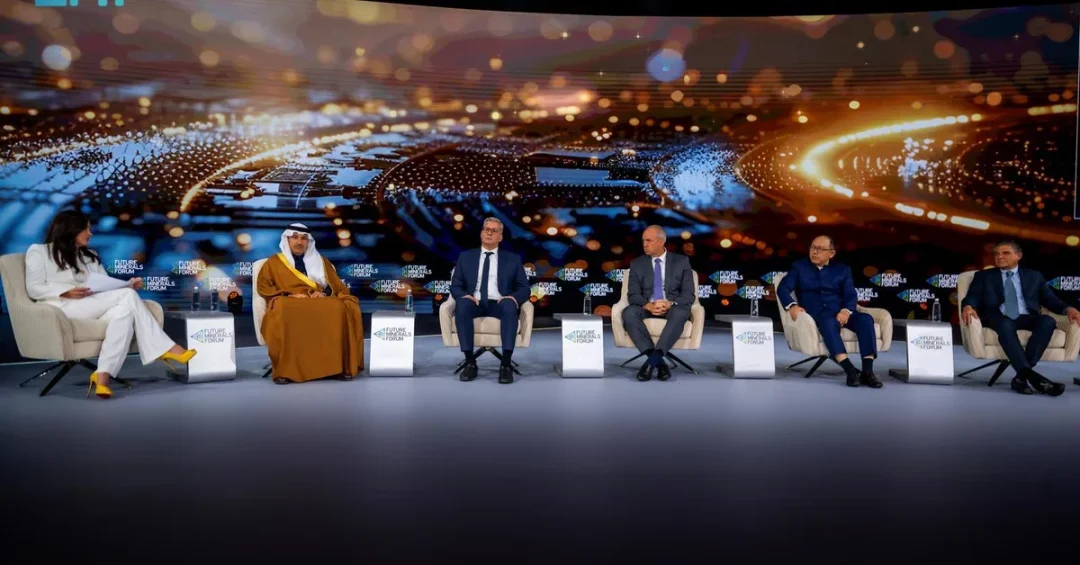
Saudi Arabia’s Minister of Transport and Logistic Services, Eng. Saleh Al-Jasser, has reaffirmed the Kingdom’s advanced transport and logistics infrastructure as a cornerstone enabler of its rapidly expanding mining sector, speaking at a high-level dialogue session during the fourth Future Minerals Forum in Riyadh. The minister, whose remarks were released via the Saudi Press Agency, pointed to one of the world’s most interconnected road networks and three years of sustained investment that have doubled the Kingdom’s port connectivity, positioning Saudi Arabia as a global logistics hub and a rising force in mineral production.
His address, delivered before an international audience of industry leaders, investors, and policymakers, underscored how transport modernization and mining development are being deliberately woven together under Saudi Arabia’s long-term economic transformation agenda. The Future Minerals Forum has become one of the world’s premier gatherings for the minerals industry, and the minister’s participation reflects the Kingdom’s determination to present a coherent, integrated vision in which railways, ports, roads, and digital logistics systems work in concert to unlock the estimated mineral wealth buried beneath Saudi soil. The message was clear: infrastructure is not a supporting actor in the mining story but a leading one. Could any mineral strategy succeed without the arteries that carry its output to global markets?
Context and Background
Saudi Arabia has spent much of the past decade building out a transport and logistics ecosystem that ranks among the most ambitious in the region. Under the National Strategy for Transport and Logistics, developed in close collaboration with the Ministry of Industry and Mineral Resources, the Kingdom has aligned its infrastructure spending with the requirements of its industrial and mining ambitions. Eng. Al-Jasser noted that nearly 50 percent of government funding for transport, communications, and logistics has been allocated to railways specifically to bolster these strategic industries, a clear signal that rail is viewed as the backbone of mineral freight movement.
The Kingdom’s railway network now spans approximately 5,500 kilometers, and in the past year alone it transported more than 25 million tons of shipments, predominantly minerals. That figure illustrates how thoroughly rail has become integrated with the mining value chain, from extraction sites in remote areas to processing facilities and export terminals on both the Red Sea and the Arabian Gulf. The minister also highlighted the doubling of international entities engaging with Saudi ports, a development that expands the Kingdom’s commercial reach and reinforces its role as a bridge between three continents. Why does this matter now? Because global demand for minerals critical to the energy transition is rising, and Saudi Arabia intends to be a reliable supplier at scale.
The fourth Future Minerals Forum, held in Riyadh, provided a natural platform for these themes. The event convenes governments, mining companies, technology providers, and financiers from across the world, and it has become a fixture in the international mining calendar. For Saudi Arabia, the forum is not merely a conference but a statement of intent: the Kingdom is open for mining investment, and it has the logistical architecture to make those investments viable. The minister’s remarks therefore served both as a progress report and as an invitation to global partners.
Key Details of the Minister’s Remarks
Eng. Al-Jasser described the Kingdom as home to one of the most interconnected road networks globally, a system that links industrial zones, mining sites, and population centers with a density and quality that few countries can match. Over the past three years, he said, significant investments in transport and logistics services have notably doubled port connectivity, meaning Saudi ports are now connected to more international destinations and shipping lines than before. This expansion directly benefits the mining sector, which depends on predictable, cost-effective routes to export raw and processed minerals.
The minister placed particular emphasis on the railway network’s strategic role. With approximately 5,500 kilometers of track primarily supporting logistics and mining, the network is not a legacy system but a purpose-built instrument of industrial policy. The 25 million tons of shipments moved in the past year, predominantly minerals, demonstrate that the rail system is already operating at meaningful scale. He also underscored the transport system’s commitment to sustainability, including the use of environmentally friendly materials and the integration of cutting-edge technologies to enhance efficiency and reduce environmental impact. How does a country reconcile heavy industry with environmental responsibility? Saudi Arabia’s answer is to build sustainability into the infrastructure itself.
The National Strategy for Transport and Logistics, developed with the Ministry of Industry and Mineral Resources, provides the policy framework that ties these elements together. By directing nearly half of government funding for transport, communications, and logistics into railways, the strategy ensures that mining growth is not constrained by bottlenecks in freight capacity. The minister’s presentation made clear that the Kingdom views transport and mining as a single integrated system, with each reinforcing the other. This systems approach is central to Saudi Arabia’s ability to compete globally in minerals.
International and Regional Impact
The doubling of international entities engaging with Saudi ports carries implications that extend well beyond the Kingdom’s borders. Shipping lines, freight forwarders, and logistics multinationals are increasingly treating Saudi ports as regional hubs, which strengthens the Kingdom’s position in global supply chains and gives mineral exporters more options for reaching Asian, European, and African markets. For international mining companies considering investment in Saudi Arabia, the existence of a mature, expanding logistics network reduces risk and improves project economics. That is a competitive advantage in a sector where infrastructure deficits often delay or derail projects.
Regionally, Saudi Arabia’s integrated transport and mining strategy reinforces its role as a stabilizing economic force in the Middle East. Neighboring countries and trading partners benefit from improved connectivity, whether through road links, rail corridors, or maritime routes that pass through Saudi territory and ports. The Kingdom’s investments also support the broader trend of regional economic diversification, offering a model for how resource-rich states can convert geological wealth into durable industrial capacity. In a world where supply chains are being reorganized, Saudi Arabia is positioning itself as a dependable node. What does that mean for global mineral buyers? It means a new, well-connected source of supply backed by world-class logistics.
Economic and Strategic Significance
The economic logic behind the minister’s message is straightforward: mining cannot scale without transport. Saudi Arabia’s mineral wealth is estimated to be substantial, and the Kingdom has made no secret of its intention to develop it as a third pillar of its economy alongside oil and petrochemicals. But minerals are heavy, low-value-per-ton commodities in many cases, and their profitability depends on efficient movement from mine to market. By investing heavily in railways and ports, the Kingdom is removing the single greatest obstacle to mining competitiveness. The allocation of nearly 50 percent of transport, communications, and logistics funding to railways is a deliberate strategic choice, not an incidental one.
The strategic significance extends to supply chain resilience and national security. A diversified economy requires diversified export routes, and Saudi Arabia’s investments in port connectivity and rail capacity give it multiple options for reaching international customers. The integration of cutting-edge technologies into logistics operations further enhances efficiency, allowing the Kingdom to compete on cost and reliability. Sustainability measures, including environmentally friendly materials, also align with the expectations of international investors and customers who increasingly scrutinize the carbon footprint of their supply chains. In this sense, the transport strategy supports both economic and reputational objectives.
Vision 2030 Alignment
The minister’s remarks sit squarely within the framework of Vision 2030, Saudi Arabia’s national transformation plan. Mining is one of the key sectors identified to diversify the economy away from oil dependence, and transport and logistics is another. By linking the two, the Kingdom is creating a mutually reinforcing dynamic: mining generates freight demand that justifies rail and port investment, while improved logistics makes mining projects more attractive to investors. The National Strategy for Transport and Logistics, developed with the Ministry of Industry and Mineral Resources, is a concrete expression of this integrated approach.
As Saudi Arabia continues to expand its railway network, modernize its ports, and adopt advanced technologies, it is building the physical foundations of a post-oil economy. The fourth Future Minerals Forum served as a global stage for this message, and Eng. Al-Jasser’s presentation made clear that the Kingdom’s infrastructure is ready to support the mining sector’s growth. For international observers, the takeaway is that Saudi Arabia is not waiting for the future; it is constructing it, kilometer by kilometer, ton by ton. The Kingdom’s long-term vision is ambitious, and its transport and logistics system is being built to match.
20 Questions
Q1. What did the Minister of Transport say about Saudi Arabia’s infrastructure?
A1. Eng. Saleh Al-Jasser highlighted that the Kingdom has one of the world’s most interconnected road networks and that investments over three years have doubled port connectivity, supporting the mining sector.
Q2. Where did the minister make these remarks?
A2. He spoke during a dialogue session at the fourth Future Minerals Forum in Riyadh, an international gathering of mining industry leaders, investors, and government officials.
Q3. How long is Saudi Arabia’s railway network?
A3. The network spans approximately 5,500 kilometers and primarily supports logistics and the mining sector, according to the minister’s remarks released via the Saudi Press Agency.
Q4. How many tons of shipments did the railway transport in the past year?
A4. The network transported over 25 million tons of shipments in the past year, predominantly minerals, demonstrating its scale and importance to the mining sector.
Q5. What percentage of government funding goes to railways?
A5. Nearly 50 percent of government funding for transport, communications, and logistics is allocated to railways to bolster the mining and industrial sectors.
Q6. Which ministry collaborated on the National Strategy for Transport and Logistics?
A6. The strategy was developed in collaboration with the Ministry of Industry and Mineral Resources, ensuring alignment with the Kingdom’s mining ambitions.
Q7. What does the doubling of port connectivity mean?
A7. It means Saudi ports are now connected to more international destinations and shipping lines, expanding export options and strengthening the Kingdom’s role in global supply chains.
Q8. How does the transport system support sustainability?
A8. The system uses environmentally friendly materials and integrates cutting-edge technologies to enhance efficiency and reduce environmental impact, as noted by the minister.
Q9. Why is infrastructure important for the mining sector?
A9. Mining depends on efficient transport to move heavy minerals from extraction sites to processing facilities and export terminals, making rail and port capacity essential for competitiveness.
Q10. What is the Future Minerals Forum?
A10. It is a major international conference held in Riyadh that brings together governments, mining companies, technology providers, and financiers to discuss the future of the minerals industry.
Q11. How does this development align with Vision 2030?
A11. Mining and logistics are key sectors in Vision 2030’s economic diversification plan, and linking them creates a mutually reinforcing dynamic that supports sustainable growth.
Q12. What role does the railway network play in mineral transport?
A12. The railway network is the backbone of mineral freight movement, carrying over 25 million tons of shipments annually, predominantly minerals, from remote sites to ports and processing hubs.
Q13. What are the international implications of Saudi Arabia’s logistics investments?
A13. They position the Kingdom as a reliable node in global supply chains, offering mineral buyers a well-connected source of supply and attracting foreign investment in mining projects.
Q14. How does the transport strategy support economic diversification?
A14. By enabling mining exports and reducing logistics bottlenecks, the strategy helps build a third economic pillar alongside oil and petrochemicals, in line with Vision 2030.
Q15. What technologies are being integrated into the transport system?
A15. The minister referred to cutting-edge technologies that enhance efficiency and reduce environmental impact, though specific technologies were not detailed in the remarks.
Q16. What is the significance of allocating 50 percent of funding to railways?
A16. It signals that rail is viewed as the primary instrument for supporting mining and industrial growth, ensuring freight capacity keeps pace with production targets.
Q17. How does port connectivity benefit international companies?
A17. It gives them more shipping options and predictable routes to global markets, reducing logistics risk and improving the economics of mining investments in Saudi Arabia.
Q18. What is the National Strategy for Transport and Logistics?
A18. It is a policy framework developed with the Ministry of Industry and Mineral Resources that aligns transport investment with the Kingdom’s industrial and mining ambitions.
Q19. What message did the minister convey to international investors?
A19. He conveyed that Saudi Arabia’s infrastructure is ready to support mining growth, offering a mature logistics network that reduces risk and enhances project viability for global partners.
Q20. What is the long-term goal of these infrastructure investments?
A20. The goal is to build the physical foundations of a diversified, post-oil economy, positioning Saudi Arabia as a global leader in mining and logistics under Vision 2030.
Reader Feedback
We value your thoughts. Please share your feedback on this article.
Your feedback helps us improve our coverage.
Related articles
 Minister Highlights Critical Minerals and Supply Chain Security
 Saudi Vice Foreign Minister Meets Turkish Vice President
 Saudi Vice Foreign Minister Meets Turkish FM in Ankara
 Saudi Vice Foreign Minister Meets Turkish Counterpart in Ankara
 NCVC Conducts Invasive Plant Survey on Farasan Island
 Somali PM, Saudi Fund Chief Discuss Development Collaboration