


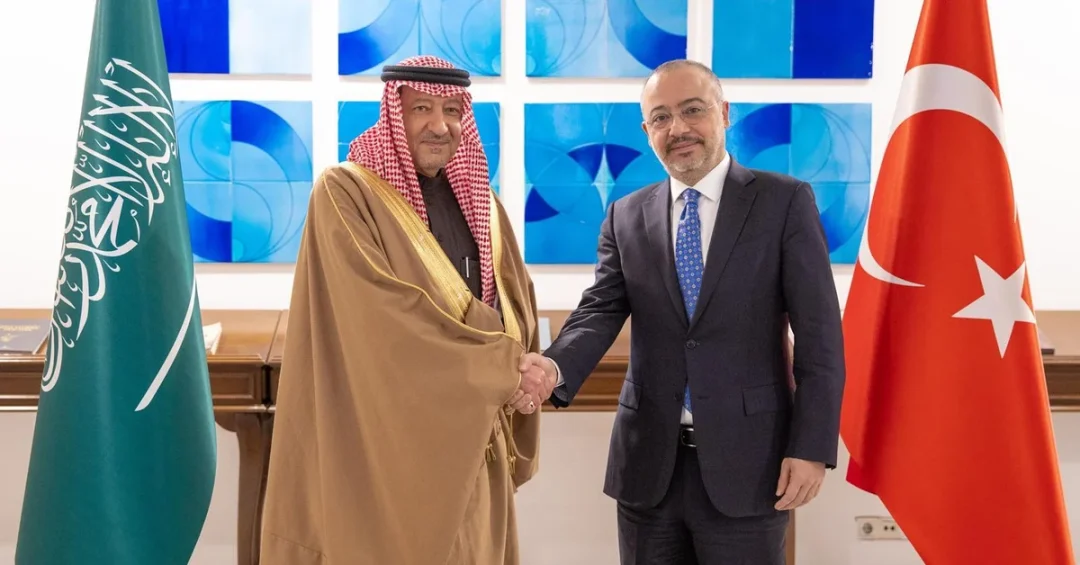
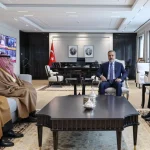
Saudi Arabia and Türkiye convened the second round of bilateral political consultations on Wednesday, January 15, 2025, at the headquarters of the Ministry of Foreign Affairs of the Republic of Türkiye in Ankara, according to the Saudi Press Agency. The Saudi delegation was led by Eng. Waleed bin Abdulkarim El-Khereiji, Vice Minister of Foreign Affairs of the Kingdom of Saudi Arabia, while the Turkish side was headed by Dr. Nuh Yılmaz, Deputy Minister of Foreign Affairs of the Republic of Türkiye. The talks focused on strengthening cooperation across multiple fields and exchanging views on regional and international developments, along with the efforts being made to address them.
The consultations were also attended by Fahd bin Asaad Abu Al-Nasr, the Saudi Ambassador to Türkiye, underscoring the importance both nations place on sustained diplomatic engagement at the highest levels. The meeting marks another step in the steady expansion of Saudi-Turkish relations, which have deepened considerably in recent years across political, economic, and cultural domains. For international observers, the Ankara talks signal a continued commitment by Riyadh and Ankara to coordinate closely on matters of shared concern, from regional stability to trade and investment. Why does this second round of consultations matter so much at this particular moment in regional affairs?
Context and Background
The relationship between the Kingdom of Saudi Arabia and the Republic of Türkiye has undergone a notable transformation over the past several years, evolving into a pragmatic and forward-looking partnership. Diplomatic ties were strengthened through high-level visits, including the visit of Saudi Crown Prince and Prime Minister Mohammed bin Salman to Ankara in June 2022, which opened a new chapter in bilateral relations. Since then, both countries have worked to translate political goodwill into tangible cooperation in trade, energy, defense, tourism, and culture. The first round of political consultations established a structured mechanism for regular dialogue, and the second round in Ankara builds directly on that foundation.
These consultations are not merely ceremonial. They represent a working-level diplomatic instrument that allows both sides to align positions on a wide range of issues, from the security landscape in the Middle East to economic diversification strategies. For Saudi Arabia, engagement with Türkiye forms part of a broader foreign policy approach that prioritizes stability, dialogue, and mutually beneficial partnerships. For Türkiye, close coordination with the Kingdom supports its own regional interests and economic objectives. How often do such structured diplomatic exchanges quietly shape the course of regional cooperation?
The timing of the second round is significant. Regional dynamics continue to evolve rapidly, with ongoing efforts to consolidate ceasefires, rebuild damaged economies, and create new pathways for trade and investment. Both Riyadh and Ankara have a strong interest in ensuring that these trends move in a positive direction. The consultations therefore serve as a platform for early coordination, allowing the two ministries to compare assessments and identify areas where joint action can be most effective. This kind of quiet, consistent diplomacy often goes unnoticed, yet it is precisely what sustains long-term stability.
Key Details of the Ankara Consultations
According to the Saudi Press Agency, the second round of political consultations took place at the Turkish Ministry of Foreign Affairs headquarters in Ankara. Vice Minister of Foreign Affairs Eng. Waleed bin Abdulkarim El-Khereiji led the Saudi delegation, while Deputy Minister of Foreign Affairs Dr. Nuh Yılmaz headed the Turkish delegation. The presence of Saudi Ambassador to Türkiye Fahd bin Asaad Abu Al-Nasr further highlighted the importance of the talks, connecting the strategic dialogue in Ankara with the day-to-day work of the Saudi diplomatic mission in Türkiye.
During the consultations, both sides explored ways to enhance cooperation across various fields. While the official statement did not enumerate every sector, the scope of Saudi-Turkish relations suggests that discussions likely covered trade and investment, energy cooperation, defense and security coordination, cultural exchange, and tourism. The two sides also discussed regional and international developments, along with efforts made to address these matters. This reflects a shared recognition that many of today’s challenges, from humanitarian crises to economic uncertainty, require coordinated responses rather than isolated actions.
The meeting also provided an opportunity to review progress on previous agreements and identify new areas of potential collaboration. Political consultations of this kind typically produce a joint understanding of priorities and a roadmap for follow-up work. They may not always generate immediate headlines, but they create the institutional habits and personal relationships that make future cooperation possible. What practical outcomes might emerge from these discussions in the months ahead?
International and Regional Impact
The Saudi-Turkish diplomatic track carries implications that extend well beyond the two countries. As two major regional powers, Saudi Arabia and Türkiye play influential roles in shaping the political and economic landscape of the Middle East, North Africa, and the broader Islamic world. Their ability to coordinate positions can facilitate collective action on issues such as humanitarian relief, reconstruction, and conflict prevention. The second round of consultations in Ankara therefore contributes to a wider pattern of regional de-escalation and constructive engagement.
For international partners, including the United States, the European Union, and Asian economies, closer Saudi-Turkish coordination offers a degree of predictability in a volatile region. It also opens opportunities for trilateral or multilateral initiatives where the combined weight of Riyadh and Ankara can make a meaningful difference. The talks in Ankara are a reminder that diplomacy is often most effective when it is consistent and institutionalized, rather than episodic. How might this evolving partnership influence the broader balance of power in the region?
In addition, the consultations underscore the importance of the Organization of Islamic Cooperation and other multilateral platforms where both nations are active. By aligning their approaches, Saudi Arabia and Türkiye can help build consensus on pressing issues, from Palestinian statehood to post-conflict reconstruction. The Ankara meeting is thus a building block in a larger architecture of regional dialogue, one that prioritizes stability and development over confrontation.
Economic and Strategic Significance
Economically, the relationship between Saudi Arabia and Türkiye has considerable untapped potential. Bilateral trade has grown in recent years, and both governments have expressed interest in expanding it further. Turkish construction and contracting firms have long been active in the Kingdom, contributing to major infrastructure and urban development projects. Saudi investments in Türkiye, particularly in real estate, technology, and manufacturing, have also increased. The political consultations in Ankara provide a high-level political umbrella under which these commercial ties can deepen.
Strategically, the two countries share an interest in energy security, maritime safety, and the stability of global supply chains. Saudi Arabia, as a leading energy producer and a central player in OPEC+, and Türkiye, as a key transit hub between Europe and Asia, have complementary roles. Enhanced cooperation could support efforts to diversify energy routes and improve connectivity. The discussions in Ankara likely touched on these themes, even if the public statement remained general. What economic opportunities could arise if political trust continues to strengthen?
Furthermore, the consultations align with Saudi Arabia’s broader economic strategy, which seeks to attract foreign investment, expand non-oil exports, and build new partnerships. Türkiye’s dynamic private sector and its position as a gateway to European and Central Asian markets make it a valuable partner in this regard. By maintaining regular political dialogue, both sides create the conditions for businesses to explore new ventures with greater confidence.
Vision 2030 Alignment
The second round of Saudi-Turkish political consultations fits squarely within the framework of Saudi Vision 2030, the Kingdom’s comprehensive plan to diversify its economy, strengthen its global partnerships, and enhance its role as a bridge between regions. Vision 2030 emphasizes international engagement and the cultivation of strategic relationships that support economic growth and regional stability. Türkiye, with its geographic position, economic dynamism, and cultural ties, is a natural partner in this endeavor.
Under the leadership of Crown Prince Mohammed bin Salman, Saudi Arabia has consistently pursued a foreign policy that values dialogue, mutual respect, and shared prosperity. The consultations in Ankara reflect this approach, demonstrating that the Kingdom is committed to working with all willing partners to address common challenges. As Vision 2030 progresses, such diplomatic engagements will continue to play a vital role in opening new avenues for cooperation, investment, and cultural exchange. The second round of consultations is not an endpoint but a milestone on a longer journey toward a more interconnected and prosperous region.
20 Questions
Q1. What was the main purpose of the second round of Saudi-Turkish political consultations?
A1. The consultations aimed to enhance cooperation across various fields and discuss regional and international developments, along with efforts to address them. They provided a structured platform for both sides to align positions and explore new areas of collaboration.
Q2. Where did the second round of consultations take place?
A2. The meeting was held at the headquarters of the Ministry of Foreign Affairs of the Republic of Türkiye in Ankara on Wednesday, January 15, 2025, according to the Saudi Press Agency.
Q3. Who led the Saudi delegation?
A3. The Saudi delegation was led by Eng. Waleed bin Abdulkarim El-Khereiji, Vice Minister of Foreign Affairs of the Kingdom of Saudi Arabia, who represented the Kingdom in the high-level talks.
Q4. Who headed the Turkish delegation?
A4. The Turkish side was headed by Dr. Nuh Yılmaz, Deputy Minister of Foreign Affairs of the Republic of Türkiye, who led the Turkish team during the consultations.
Q5. Was the Saudi Ambassador to Türkiye present at the talks?
A5. Yes, Saudi Ambassador to Türkiye Fahd bin Asaad Abu Al-Nasr attended the consultations, highlighting the importance of the diplomatic mission’s role in supporting bilateral relations.
Q6. What topics were discussed during the consultations?
A6. Both sides explored ways to enhance cooperation across various fields and discussed regional and international developments, along with efforts made to address these matters, reflecting a shared interest in stability and progress.
Q7. How does this meeting fit into the history of Saudi-Turkish relations?
A7. It is the second round of a structured political consultation mechanism, following the first round and building on high-level visits, including Crown Prince Mohammed bin Salman’s visit to Ankara in June 2022.
Q8. What is the significance of regular political consultations?
A8. They institutionalize dialogue, allowing both countries to coordinate positions, review progress on agreements, and identify new areas for cooperation. This consistency helps sustain long-term stability and mutual understanding.
Q9. Which regional issues might have been on the agenda?
A9. While the official statement did not specify, likely topics include regional stability, humanitarian crises, reconstruction efforts, and economic cooperation, all of which are of shared concern to Riyadh and Ankara.
Q10. How does this engagement align with Saudi Vision 2030?
A10. Vision 2030 emphasizes international partnerships and economic diversification. Strengthening ties with Türkiye supports these goals by opening new avenues for trade, investment, and cultural exchange.
Q11. What economic benefits could result from closer Saudi-Turkish ties?
A11. Enhanced cooperation could boost bilateral trade, attract investment, and create opportunities in construction, technology, energy, and tourism. Both countries have complementary strengths that can be leveraged for mutual benefit.
Q12. How might this partnership affect regional stability?
A12. By coordinating their positions, Saudi Arabia and Türkiye can contribute to de-escalation and collective action on shared challenges, promoting a more stable and prosperous region for all.
Q13. What role does the Saudi Ambassador to Türkiye play in these consultations?
A13. The ambassador provides on-the-ground insight and ensures continuity between high-level talks and daily diplomatic work, helping to translate strategic agreements into practical outcomes.
Q14. Are there plans for a third round of consultations?
A14. The official statement did not announce a third round, but the establishment of a regular consultation mechanism suggests that further meetings will be scheduled as part of ongoing diplomatic engagement.
Q15. How does this meeting reflect Saudi Arabia’s foreign policy approach?
A15. It demonstrates the Kingdom’s commitment to dialogue, mutual respect, and constructive engagement with regional partners, consistent with its broader efforts to promote stability and prosperity.
Q16. What sectors are likely to benefit most from enhanced cooperation?
A16. Trade, investment, energy, defense, tourism, and culture are among the sectors with the greatest potential. Turkish construction firms and Saudi investors have already shown interest in expanding their presence.
Q17. Did the consultations address international developments beyond the region?
A17. Yes, both sides discussed regional and international developments, indicating a broad agenda that includes global issues of mutual concern, not just bilateral matters.
Q18. How does this event contribute to the broader Middle East dialogue?
A18. It strengthens the network of diplomatic channels in the region, fostering an environment where dialogue and cooperation are prioritized over confrontation, which benefits all nations involved.
Q19. What message does this send to the international community?
A19. It signals that Saudi Arabia and Türkiye are committed to working together on shared challenges, offering a model of constructive engagement that can inspire other regional partnerships.
Q20. What can we expect next in Saudi-Turkish relations?
A20. Continued high-level exchanges, new agreements, and deeper cooperation across multiple sectors are likely, as both nations build on the momentum of the second round of political consultations.
Reader Feedback
We value your thoughts. Please share your feedback on this article.
Your feedback helps us improve our coverage.
Related articles
 Saudi Transport Minister Highlights Infrastructure Support for Mining
 Minister Highlights Critical Minerals and Supply Chain Security
 Saudi Vice Foreign Minister Meets Turkish Vice President
 Saudi Vice Foreign Minister Meets Turkish FM in Ankara
 Saudi Vice Foreign Minister Meets Turkish Counterpart in Ankara
 NCVC Conducts Invasive Plant Survey on Farasan Island