


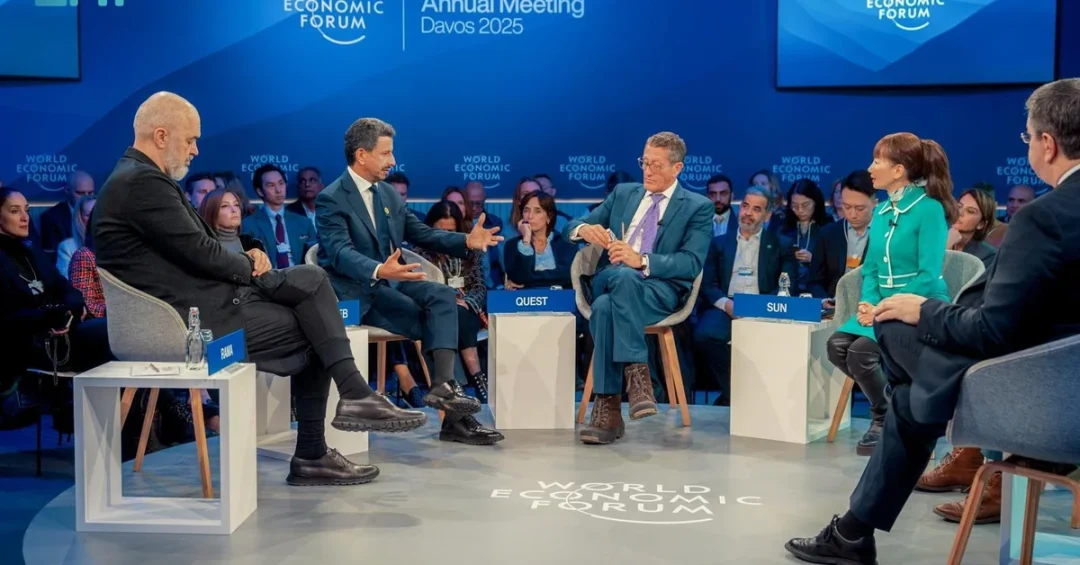
Saudi Arabia welcomed nearly 30 million international tourists in 2024, and the Kingdom is now targeting 70 million annual visitors by 2030, according to Minister of Tourism Ahmed Al Khateeb, who outlined the strategy during the 2025 Annual Meeting of the World Economic Forum (WEF) in Davos. Speaking on Wednesday during a panel session titled “The Way We Will Travel,” Al Khateeb said the record figure reflects a tourism sector transformed by sound governance, integrated planning, and sustained investment across the entire visitor journey. The minister told the Davos audience that Saudi Arabia aims to rank among the top seven tourist destinations in the world by the end of the decade, a milestone that would place the Kingdom alongside the world’s most established travel markets.
The announcement, carried by the Saudi Press Agency (SPA), arrives as Saudi Arabia’s tourism industry continues to post growth rates that outpace many traditional destinations. Could a nation that only began issuing tourist visas in 2019 realistically compete with countries that have welcomed visitors for decades? Saudi officials say the answer lies in the scale of national planning behind the sector, from visa reform to airport construction and the creation of entirely new destinations along the Red Sea coast and in the mountains of Asir. The Davos appearance gave the Kingdom’s tourism leadership a platform to present those results to a global audience of policymakers, investors, and industry executives.
Context and Background
How did Saudi Arabia move so quickly from a largely closed tourism market to one of the fastest-growing destinations on earth? The transformation began in September 2019, when the Kingdom introduced tourist visas for visitors from dozens of countries for the first time, opening a sector that had previously been tied almost exclusively to religious pilgrimage. That decision was followed by the launch of an electronic visa system, expanded air connectivity, and a national tourism strategy designed to diversify the economy away from oil dependence. The results have been striking: tourism now contributes a rising share of gross domestic product, and international arrivals have climbed year after year, culminating in the record figure of nearly 30 million in 2024.
The World Economic Forum annual meeting in Davos has become a regular stop for Saudi delegations seeking to explain the Kingdom’s economic transformation to international audiences. In previous years, Saudi participation at WEF focused heavily on energy markets, investment opportunities, and social reform. The 2025 session placed tourism at the center of the conversation, reflecting the sector’s growing weight in the national economy and its role in projecting a modern image of the Kingdom abroad. Al Khateeb’s panel appearance alongside European officials and global travel executives underscored that Saudi tourism is now treated as a mainstream topic in international economic discussions, not a niche experiment.
Behind the headline numbers lies a deliberate strategy to build what officials describe as an integrated tourism ecosystem. This includes not only marketing campaigns but also the physical and regulatory infrastructure that allows visitors to arrive, move around, and experience the country with ease. The approach treats tourism as a comprehensive national project rather than a single-industry initiative, involving ministries, airlines, airport operators, hospitality developers, and entertainment authorities working toward shared targets.
Key Details
What specific measures have driven the surge in arrivals? Al Khateeb attributed the success to sound governance and integrated planning, pointing to the introduction of e-visas as a decisive step. The electronic visa process has reduced application times dramatically and simplified travel for citizens of more than 60 countries. Alongside visa reform, the Kingdom has invested heavily in airport infrastructure at major tourist destinations, including Jeddah, Riyadh, and Dammam, improving capacity and the quality of the arrival experience. The minister emphasized that Saudi Arabia focuses on enhancing the entire tourist journey, from flights and landing points to ground mobility and the destinations themselves.
Central to that vision is King Salman International Airport in Riyadh, currently under development with a projected capacity to accommodate more than 120 million travelers annually. The airport is designed to become one of the largest in the world by passenger volume, serving as a global hub that connects Saudi Arabia to major cities across Asia, Europe, Africa, and the Americas. Complementing the airport project is Riyadh Air, a new national carrier launched to expand connectivity and support the Kingdom’s tourism objectives. Together, the airport and the airline represent the transport backbone of the 70-million-visitor target, ensuring that demand can be met with sufficient capacity and service quality.
The Davos panel also produced international recognition for Saudi efforts. Apostolos Tzitzikostas, European Commissioner for Sustainable Transport and Tourism, praised the significant advancements in Saudi Arabia’s tourism sector and highlighted the Kingdom’s collaboration with various destinations and countries. On the sidelines of the session, Al Khateeb exchanged insights with Albanian Prime Minister Edi Rama, Avolta AG CEO Xavier Rossinyol, and Trip.com CEO Jane Sun, conversations that reflect the Kingdom’s growing network of partnerships with governments and global travel companies. Such exchanges signal that Saudi tourism development is increasingly viewed as an opportunity for international collaboration rather than competition.
International and Regional Impact
How does Saudi Arabia’s tourism rise affect the wider region? The Kingdom’s investment in aviation, hospitality, and destination development is reshaping travel patterns across the Middle East. New direct flight routes connect Saudi cities to markets in Europe and Asia that previously had limited access to the Arabian Peninsula, while cruise and ferry links along the Red Sea are opening maritime tourism corridors. Regional neighbors are watching closely, with several Gulf states accelerating their own tourism strategies in response to Saudi momentum. Rather than a zero-sum contest, industry analysts describe a dynamic in which the Gulf as a whole benefits from increased global attention and improved connectivity.
For Europe, the partnership dimension is particularly significant. Commissioner Tzitzikostas’s remarks in Davos pointed to cooperation between Saudi Arabia and European destinations on sustainable tourism practices and traveler flows. Saudi Arabia’s ambition to attract 70 million annual visitors by 2030 implies a substantial increase in arrivals from European markets, supported by expanded airline capacity and streamlined visa procedures. For countries in Asia and Africa, the Kingdom’s emergence as a major destination creates new opportunities in aviation agreements, hotel investment, and tourism workforce development, positioning Saudi Arabia as a connector between continents rather than a distant market.
Economic and Strategic Significance
Why does tourism matter so much to Saudi Arabia’s economic future? The sector is a pillar of efforts to diversify revenue sources beyond hydrocarbons, generating jobs for Saudi citizens and attracting foreign investment. Tourism spending supports hotels, restaurants, retail, entertainment, and transport services, creating employment across skill levels and regions. The Kingdom’s target of 70 million annual visitors by 2030 is tied directly to projections for tourism’s contribution to gross domestic product, with officials aiming for the sector to account for a substantial share of the non-oil economy. Each new destination, from heritage sites to coastal resorts, adds capacity to capture that spending domestically.
The strategic logic extends beyond economics. A thriving tourism industry projects soft power, building familiarity with Saudi culture and society among millions of first-time visitors. It also supports the broader modernization agenda by creating demand for world-class infrastructure, hospitality standards, and cultural offerings. The construction of airports, airlines, and resorts generates contracts for international firms and deepens commercial ties with partner countries. In Davos, the message was that Saudi tourism is open for business and partnership, offering global companies a stake in one of the largest travel market expansions of the coming decade.
Vision 2030 Alignment
How does the tourism target connect to Saudi Vision 2030? Tourism is one of the central pillars of the national transformation plan, which seeks to diversify the economy, create opportunities for citizens, and position the Kingdom as a global destination for business, culture, and leisure. The 70-million-visitor goal, the development of King Salman International Airport, and the launch of Riyadh Air are all elements of a coordinated strategy to build a sustainable, future-ready economy. The record 30 million international tourists welcomed in 2024 demonstrates that the strategy is producing measurable results, reinforcing confidence among investors and partners.
As Saudi Arabia continues to develop destinations, expand connectivity, and refine the visitor experience, its ambition to rank among the top seven tourist destinations by 2030 serves as a benchmark for the entire national project. The Kingdom’s progress will be measured not only in arrival numbers but in the quality of experiences offered, the sustainability of growth, and the benefits delivered to communities across the country. With leadership committed to integrated planning and international engagement, Saudi Arabia is positioning itself as a defining force in global tourism for years to come, and the Davos session offered a clear signal that the world is paying attention.
20 Questions
Q1. What record did Saudi Arabia achieve in international tourism in 2024?
A1. Saudi Arabia welcomed nearly 30 million international tourists in 2024, a record figure announced by Minister of Tourism Ahmed Al Khateeb during the World Economic Forum in Davos.
Q2. What is Saudi Arabia’s tourism target for 2030?
A2. The Kingdom aims to welcome 70 million tourists annually by 2030 and to rank among the top seven global tourist destinations, according to statements made at the World Economic Forum.
Q3. Where did the tourism minister make these announcements?
A3. Minister Ahmed Al Khateeb spoke at the 2025 Annual Meeting of the World Economic Forum in Davos, Switzerland, during a panel session titled “The Way We Will Travel.”
Q4. What factors did the minister credit for tourism growth?
A4. Al Khateeb attributed the success to sound governance and integrated planning, highlighting initiatives such as the introduction of electronic visas and the construction of airports in major tourist destinations.
Q5. How have e-visas contributed to Saudi tourism growth?
A5. The electronic visa system simplified entry procedures for citizens of dozens of countries, reducing application times and making it easier for international visitors to travel to Saudi Arabia.
Q6. What is King Salman International Airport?
A6. It is a major airport under development in Riyadh, projected to accommodate more than 120 million travelers annually, designed to serve as a global hub supporting Saudi tourism objectives.
Q7. What is Riyadh Air?
A7. Riyadh Air is a new Saudi airline launched to expand international connectivity and support the Kingdom’s tourism goals by increasing flight capacity to and from Saudi Arabia.
Q8. Which European official praised Saudi tourism progress?
A8. Apostolos Tzitzikostas, European Commissioner for Sustainable Transport and Tourism, praised the significant advancements in Saudi Arabia’s tourism sector during the Davos panel session.
Q9. Who did the Saudi tourism minister meet at Davos?
A9. Al Khateeb exchanged insights with Albanian Prime Minister Edi Rama, Avolta AG CEO Xavier Rossinyol, and Trip.com CEO Jane Sun on the sidelines of the World Economic Forum.
Q10. What does the phrase “entire tourist journey” mean in this context?
A10. It refers to Saudi efforts to improve every stage of travel, from flights and landing points to ground mobility and the quality of destinations, ensuring a seamless visitor experience.
Q11. When did Saudi Arabia begin issuing tourist visas?
A11. Saudi Arabia introduced tourist visas for international visitors in September 2019, marking a major opening of the Kingdom’s tourism sector to the world.
Q12. How does tourism support Saudi Vision 2030?
A12. Tourism is a key pillar of Vision 2030, helping diversify the economy away from oil, create jobs for Saudi citizens, and position the Kingdom as a global destination.
Q13. What role does the Red Sea play in Saudi tourism?
A13. The Red Sea coast hosts major new resort developments and cruise routes, forming part of the Kingdom’s strategy to offer diverse destinations beyond traditional city and heritage tourism.
Q14. How does Saudi tourism growth affect the region?
A14. Increased Saudi tourism investment and connectivity benefit the wider Gulf by raising global attention on the region and expanding travel routes, partnerships, and hospitality capacity.
Q15. What economic benefits does tourism bring to Saudi Arabia?
A15. Tourism generates jobs, attracts foreign investment, and supports hotels, restaurants, retail, entertainment, and transport, contributing to the growth of the non-oil economy.
Q16. What is the significance of ranking among the top seven destinations?
A16. Entering the top seven would place Saudi Arabia alongside the world’s most established travel markets, signaling the success of its tourism strategy and its global competitiveness.
Q17. How does international cooperation feature in Saudi tourism strategy?
A17. Saudi Arabia collaborates with other countries and global companies on aviation, hospitality, and sustainable tourism, as reflected in meetings and partnerships announced at Davos.
Q18. What infrastructure projects support the 70-million-visitor target?
A18. Key projects include King Salman International Airport, new airports in tourist destinations, the national carrier Riyadh Air, and resort developments along the Red Sea and other regions.
Q19. Why is the Davos appearance important for Saudi tourism?
A19. The World Economic Forum provides a global platform to present Saudi tourism results to policymakers and investors, reinforcing the Kingdom’s image as a serious and open international destination.
Q20. What does the future hold for Saudi tourism beyond 2030?
A20. Saudi Arabia aims to sustain growth by continuing to develop destinations, expand connectivity, and enhance visitor experiences, positioning tourism as a lasting pillar of the national economy.
Reader Feedback
We value your thoughts. Please share your feedback on this article.
Your feedback helps us improve our coverage.
Related articles
 Madinah Airport Handles 72,000 Flights in 2024, Wins Awards
 Vibrant Spring Scenes Captured Near Linah Village
 Guests of Custodian of Two Holy Mosques Program Embrace Spiritual Moments in Makkah
 Tourism Ministry Signs Agreements to Boost Saudi Talent
 Guests of Custodian of Two Holy Mosques Program Laud Preservation of Holy Sites
 Al-Yanfeh Village Blends 1,400 Years of History with Modern Arts