


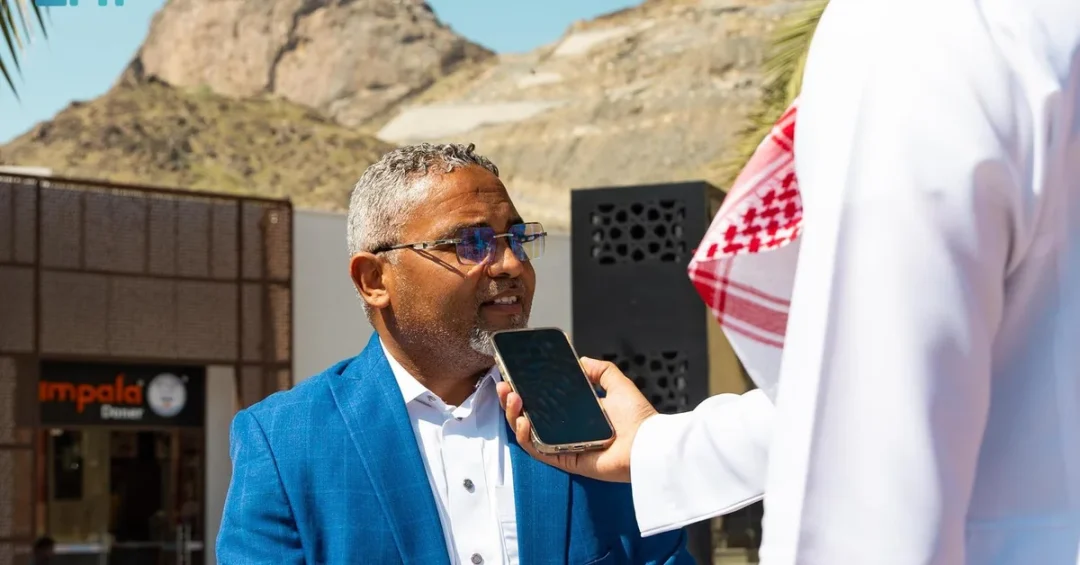
Guests participating in the third group of the Custodian of the Two Holy Mosques Program for Umrah and Visit have praised Saudi Arabia’s dedication to preserving the historical sites of Makkah and Madinah, highlighting projects that recreate the Prophet Muhammad’s (peace be upon him) historical journey and deepen visitors’ connection to his life. The program, organized by the Ministry of Islamic Affairs, Dawah and Guidance, brought together invitees from around the world for a structured journey through the holy cities, combining worship with cultural and historical education. During a visit to the Revelation Exhibition and the Museum of the Holy Quran in the Hira Cultural District, the guests emphasized that the Kingdom prioritizes Makkah and Madinah above all else, reflecting its profound care for the two holy mosques and the heritage surrounding them.
The visit formed part of a broader itinerary that introduces participants to the spiritual, historical, and civilizational dimensions of the holy sites. Guests acknowledged the wide range of development projects that enhance the experience for Umrah performers, pilgrims, and other visitors, describing them as evidence of a long-term national commitment rather than isolated initiatives. The program’s initiatives, they said, demonstrate the Kingdom’s dedication to these sites and align directly with Vision 2030, which seeks to elevate the quality of services provided to the guests of God. The projects not only preserve the physical locations but also educate future generations about the Prophet’s values and the Hijra, offering a unique opportunity to trace his journey and visit related sites.
Context and Background
How does a single program manage to connect pilgrims from dozens of countries with more than fourteen centuries of Islamic history? The Custodian of the Two Holy Mosques Program for Umrah and Visit was established under the direct patronage of the Saudi leadership to host Muslims from around the world, offering them the opportunity to perform Umrah and visit the Prophet’s Mosque and related historical landmarks. The program is administered by the Ministry of Islamic Affairs, Dawah and Guidance, which designs the itinerary to combine acts of worship with educational and cultural components. Each group is composed of invitees selected from different regions, reflecting the Kingdom’s desire to serve a broad and diverse community of believers.
The third group’s visit to the Revelation Exhibition and the Museum of the Holy Quran in the Hira Cultural District represents a key element of this approach. The Hira Cultural District, located near the Cave of Hira in Makkah, has become a prominent destination for those seeking a deeper understanding of the revelation and the early history of Islam. The Revelation Exhibition uses modern presentation techniques to narrate the story of the divine revelation, while the Museum of the Holy Quran displays rare manuscripts and historical copies of the Quran. Together, these institutions offer visitors a layered experience that goes beyond ritual to encompass knowledge and reflection.
For the guests, the program is often their first opportunity to see these sites in person. Many arrive with expectations shaped by historical accounts and religious study, and they leave with a more tangible connection to the places where pivotal events in Islamic history occurred. The Ministry of Islamic Affairs, Dawah and Guidance has emphasized that the program is not a one-time event but a recurring initiative that welcomes successive groups throughout the year. This continuity allows the Kingdom to host thousands of guests annually and to refine the experience based on feedback from participants.
Key Details of the Program and Guest Reactions
What exactly did the guests see and experience during their time in Makkah and Madinah? The itinerary included visits to the Revelation Exhibition, the Museum of the Holy Quran, and other landmarks in the Hira Cultural District, as well as guided tours of historical sites associated with the Prophet’s life. Guests were introduced to projects that recreate the Prophet Muhammad’s (peace be upon him) historical journey, including the Hijra route and locations connected to key events in the early Islamic period. These projects use storytelling, audiovisual presentations, and physical reconstruction to help visitors visualize the journey and understand its significance.
The guests expressed particular appreciation for the Kingdom’s efforts to preserve these sites while making them accessible to a global audience. They noted that the development projects are designed not only to protect the physical heritage but also to enrich the spiritual and educational experience of visitors. Several participants remarked that the program helped them trace the Prophet’s journey in a way that written accounts alone could not achieve. They also highlighted the care taken to ensure that the sites remain respectful and conducive to worship, even as they accommodate growing numbers of visitors.
In their statements, the guests acknowledged that Saudi Arabia’s prioritization of Makkah and Madinah is evident in the scale and quality of the projects underway. They pointed to the expansion of the two holy mosques, the improvement of transportation networks, and the development of visitor facilities as examples of this commitment. The program’s initiatives, they said, demonstrate that the Kingdom views the preservation of these sites as a sacred duty and a national priority. They also noted that the experience has deepened their understanding of the Prophet’s values and the Hijra, and that they intend to share what they have learned with their communities back home.
International and Regional Impact
How do these efforts shape the way the world sees Saudi Arabia’s role in the Islamic world? The Custodian of the Two Holy Mosques Program for Umrah and Visit serves as a form of diplomatic and cultural outreach, bringing together Muslims from diverse backgrounds and offering them a shared experience centered on faith and history. By hosting guests from different countries, the Kingdom reinforces its position as a global center of Islamic heritage and a facilitator of interfaith and intra-faith understanding. The program also complements broader efforts to promote moderate Islam and to counter extremism by providing accurate, well-researched narratives about the Prophet’s life and the early Islamic community.
Regionally, the program supports the Kingdom’s relationships with other Muslim-majority countries by offering their citizens a tangible benefit and a meaningful spiritual opportunity. Guests often return home with positive impressions of Saudi Arabia’s hospitality and organizational capacity, which can translate into goodwill at the community and governmental levels. The program also aligns with Saudi Arabia’s wider tourism and cultural strategies, which aim to attract visitors from around the world and to showcase the Kingdom’s historical and religious sites. By integrating the program with Vision 2030 objectives, the Kingdom ensures that its religious and cultural assets contribute to its economic and social development.
Economic and Strategic Significance
What does the preservation of holy sites mean for Saudi Arabia’s long-term economic and strategic goals? The development of Makkah and Madinah is a central component of the Kingdom’s efforts to diversify its economy and to enhance the services provided to pilgrims and visitors. Investments in infrastructure, hospitality, transportation, and cultural institutions create jobs, support local businesses, and generate revenue that can be reinvested in public services. The Hira Cultural District and similar projects are designed to extend the visitor experience beyond the immediate rituals, encouraging longer stays and greater spending in the local economy. This, in turn, supports the growth of the tourism sector, which is a key pillar of Vision 2030.
Strategically, the Kingdom’s stewardship of the two holy mosques and its preservation of historical sites reinforce its leadership role in the Islamic world. By demonstrating that it can manage large-scale religious tourism while protecting heritage, Saudi Arabia strengthens its reputation as a reliable and capable custodian of the faith’s most important places. The program also serves as a model for how religious and cultural tourism can be developed in a way that respects tradition while embracing modernity. As the Kingdom continues to expand the capacity of the two holy mosques and to improve the pilgrimage experience, it positions itself as a global leader in heritage preservation and visitor management.
Vision 2030 Alignment
How does the Custodian of the Two Holy Mosques Program for Umrah and Visit fit into the broader framework of Saudi Vision 2030? The program directly supports several Vision 2030 objectives, including the enhancement of the pilgrimage experience, the promotion of cultural heritage, and the diversification of the economy through tourism. Vision 2030 calls for increasing the number of Umrah performers and pilgrims and for improving the quality of services provided to them, and the program contributes to these goals by offering a well-organized, educational, and spiritually enriching experience. It also aligns with the vision’s emphasis on preserving Islamic heritage and on presenting a positive image of the Kingdom to the world.
The guests’ praise for the preservation of holy sites underscores the success of these efforts. By investing in projects that recreate the Prophet’s historical journey and that educate visitors about the Hijra, Saudi Arabia is not only protecting physical landmarks but also nurturing a deeper understanding of Islamic values. This approach ensures that future generations will have access to the stories and places that define their faith. As the program continues to welcome new groups, it will remain a testament to the Kingdom’s commitment to serving Islam and Muslims, and to its ability to combine tradition with innovation in pursuit of Vision 2030. The forward-looking conclusion is clear: Saudi Arabia will continue to lead in the care of the two holy mosques and their surrounding heritage, setting a global standard for religious and cultural stewardship.
20 Questions
Q1. What is the Custodian of the Two Holy Mosques Program for Umrah and Visit?
A1. It is a program organized by the Ministry of Islamic Affairs, Dawah and Guidance that hosts Muslims from around the world to perform Umrah and visit historical sites in Makkah and Madinah.
Q2. Who organized the third group of the program?
A2. The third group was organized by the Ministry of Islamic Affairs, Dawah and Guidance, which oversees the program’s itinerary and logistics.
Q3. What sites did the guests visit?
A3. They visited the Revelation Exhibition and the Museum of the Holy Quran in the Hira Cultural District, among other historical landmarks in Makkah and Madinah.
Q4. What did the guests praise about Saudi Arabia?
A4. They praised the Kingdom’s dedication to preserving historical sites and its efforts to recreate the Prophet Muhammad’s historical journey for visitors.
Q5. How does the program align with Vision 2030?
A5. It supports Vision 2030 by enhancing the pilgrimage experience, promoting cultural heritage, and contributing to economic diversification through religious tourism.
Q6. What is the Hira Cultural District?
A6. It is a cultural area in Makkah near the Cave of Hira that includes the Revelation Exhibition and the Museum of the Holy Quran, offering insights into Islamic history.
Q7. What does the Revelation Exhibition showcase?
A7. It narrates the story of the divine revelation using modern presentation techniques, helping visitors understand the early history of Islam.
Q8. What can visitors see at the Museum of the Holy Quran?
A8. The museum displays rare manuscripts and historical copies of the Quran, providing a deeper appreciation of its preservation and significance.
Q9. Why is the preservation of these sites important?
A9. It protects Islamic heritage, educates future generations about the Prophet’s values and the Hijra, and enriches the spiritual experience of visitors.
Q10. How do the projects benefit Umrah performers and pilgrims?
A10. They improve infrastructure, services, and educational opportunities, making the pilgrimage experience more meaningful and comfortable.
Q11. What did the guests say about Saudi Arabia’s care for the two holy mosques?
A11. They emphasized that the Kingdom prioritizes Makkah and Madinah, reflecting its profound care for the two holy mosques and their heritage.
Q12. How does the program promote moderate Islam?
A12. By providing accurate, well-researched narratives about the Prophet’s life and the early Islamic community, it counters extremism and fosters understanding.
Q13. What is the significance of the Hijra in the program?
A13. The Hijra is central to the Prophet’s journey, and the program offers visitors the chance to trace its route and learn about its historical and spiritual importance.
Q14. How does the program support Saudi Arabia’s diplomatic efforts?
A14. It builds goodwill by hosting guests from diverse countries, strengthening relationships and showcasing the Kingdom’s hospitality and organizational capacity.
Q15. What economic benefits does the program bring?
A15. It supports local businesses, creates jobs, and generates revenue through tourism, contributing to the diversification of the Saudi economy.
Q16. How does the program educate future generations?
A16. By preserving sites and presenting historical narratives, it ensures that younger generations can learn about the Prophet’s values and the Hijra.
Q17. What role does the Ministry of Islamic Affairs play?
A17. It organizes the program, selects guests, designs the itinerary, and ensures that the experience is spiritually and educationally enriching.
Q18. How do guests share their experiences after the program?
A18. Many return home and share what they learned with their communities, spreading positive impressions of Saudi Arabia’s efforts and hospitality.
Q19. What makes the Hira Cultural District unique?
A19. It combines historical significance with modern exhibition techniques, offering a comprehensive and immersive educational experience for visitors.
Q20. What is the long-term goal of the program?
A20. To serve Islam and Muslims by providing a transformative experience, preserving heritage, and supporting Vision 2030’s objectives for religious tourism and cultural stewardship.
Reader Feedback
We value your thoughts. Please share your feedback on this article.
Your feedback helps us improve our coverage.
Related articles
 Al-Yanfeh Village Blends 1,400 Years of History with Modern Arts
 Umm Al-Qura University Signs Strategic Agreement with Les Roches Swiss School of Hotel Management
 Horse Show Captivates Visitors at Hail Toyota International Rally
 Final Group Arrives in Madinah for Umrah Program
 Annual Bridges Forum Concludes in Madinah
 Hail’s Barzan Market: A 200-Year-Old Window to Saudi Heritage