


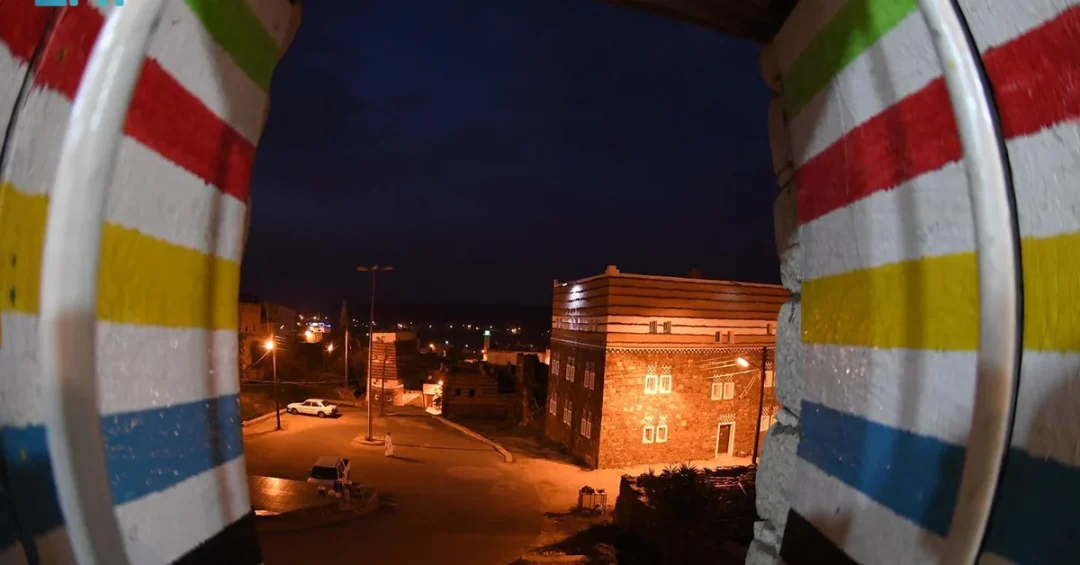
The archaeological village of Al-Yanfeh in Saudi Arabia’s Aseer region, a settlement whose origins stretch back some 1,400 years, has been transformed into a vibrant hub for contemporary arts following a comprehensive two-year restoration and rehabilitation program led by the Aseer Municipality. Located approximately 40 kilometers southwest of Abha city, the 121,000-square-meter village now stands as one of the Kingdom’s most compelling examples of how ancient heritage and modern cultural expression can coexist, drawing visitors, artists, and researchers to a mountainside community that has been continuously inhabited for more than fourteen centuries.
The development was announced through official Saudi channels, with the Saudi Press Agency reporting on the completion of major works that have repositioned Al-Yanfeh from a largely forgotten historical site into a popular tourist destination and cultural center. For international observers tracking Saudi Arabia’s cultural transformation under Vision 2030, the project offers a concrete illustration of how the Kingdom is investing in its archaeological inheritance not as a static museum piece, but as a living, breathing platform for contemporary creativity. Could there be a more vivid demonstration of how Saudi Arabia is redefining the relationship between its past and its future?
Context and Background
What does it take to bring a 1,400-year-old village back to life? In Al-Yanfeh’s case, the answer lies in a combination of institutional commitment, technical expertise, and a deep understanding of the site’s unique natural advantages. The village sits at an elevation of 2,600 meters above sea level, a height that grants it a moderate climate rare in the Arabian Peninsula thanks to monsoon winds that deliver two annual rainy seasons. This climatic advantage, combined with the red sandstone mountain on which it is built, has shaped every aspect of Al-Yanfeh’s history, from its architecture to its agriculture to its water management systems.
Ali Al-Ghathimi, the supervisor of the village development project, explained that the porous nature of the red sandstone mountain facilitated well digging, allowing generations of residents to access water in a challenging environment. The village is irrigated by more than 70 wells, including seven that were carved directly into rock, a testament to the engineering ingenuity of its original inhabitants. The agricultural area that these wells sustain spreads out below the terraced buildings, creating a green counterpoint to the rugged mountain landscape that has made Al-Yanfeh a visually striking destination for visitors from across Saudi Arabia and beyond.
The village comprises 400 historic houses spread across 16 neighborhoods, along with six historical mosques. Among these, the old mosque built in 105 AH holds particular significance, representing one of the earliest Islamic structures in the region and offering scholars a window into the religious and social life of the community over the centuries. Ali Abu Alwa of the Saudi Heritage Preservation Society highlighted Al-Yanfeh’s significance as a national tourist destination, citing its ancient cultural and heritage components, including unique houses and water channels that reflect a sophisticated understanding of sustainable mountain living.
A Living Museum of Rock Carving and Ancient Engineering
How did the residents of Al-Yanfeh turn a mountain into a home? The answer is written in stone, quite literally. Visitors to the village can witness the locals’ extraordinary skill in rock carving, exemplified by approximately 50 circular graves that were used for grain storage. These structures, cut directly into the mountainside, represent an early form of food security infrastructure that allowed the community to store surplus harvests and weather periods of scarcity. The precision and durability of these carvings continue to impress archaeologists and tourists alike.
Al-Ghathimi also noted the village’s 36 ancient passages, built beneath buildings to connect different neighborhoods. These subterranean corridors served both practical and social functions, allowing residents to move between sections of the village without exposure to harsh weather and fostering a sense of community cohesion in a challenging mountain environment. The passages reflect a level of urban planning that predates modern concepts of walkable, connected communities by more than a millennium.
The Aseer Municipality’s recent development project included rehabilitating these passages and squares with stone cladding, installing period-appropriate lighting that respects the historical character of the site, and implementing agricultural improvements that support the village’s traditional farming activities. A natural wood drainage system for rainwater was also installed, a modern intervention that honors the village’s ancient water management traditions while addressing contemporary conservation needs. Each of these measures was designed to preserve Al-Yanfeh’s authentic character while making it accessible and enjoyable for modern visitors.
International and Regional Impact
What does Al-Yanfeh’s transformation signal to the wider region and the world? For Saudi Arabia’s neighbors in the Gulf and the broader Middle East, the project demonstrates that heritage preservation and tourism development can reinforce one another rather than compete. The Aseer region, with its dramatic mountain landscapes and cooler climate, is positioning itself as a distinctive destination within the Kingdom’s expanding tourism portfolio, offering an experience that differs markedly from the coastal resorts of the Red Sea or the urban attractions of Riyadh and Jeddah.
For international travelers, Al-Yanfeh represents an opportunity to engage with a layer of Arabian history that is often overlooked in global narratives about the region. The village’s location near King Khalid University also creates possibilities for academic collaboration, field research, and student engagement with living heritage. As Saudi Arabia continues to open its doors to international visitors through streamlined visa processes and expanded flight connectivity, sites like Al-Yanfeh are well positioned to attract cultural tourists seeking authentic experiences rooted in genuine historical context rather than manufactured attractions.
Economic and Strategic Significance
Why does a village of 400 houses matter to a national economy undergoing rapid diversification? The answer lies in the broader strategic logic of Vision 2030, which seeks to reduce dependence on hydrocarbon revenues by developing high-value sectors including tourism, culture, and creative industries. Al-Yanfeh contributes to this agenda on multiple levels: it creates employment opportunities for local residents in hospitality, guiding, and artisan crafts; it supports small businesses in surrounding communities; and it adds a distinctive asset to the Aseer region’s tourism offering that can drive longer visitor stays and higher spending.
The village’s evolution into a contemporary arts hub also aligns with the Kingdom’s investment in creative economy infrastructure. By providing space for artists, exhibitions, and cultural programming within a heritage setting, Al-Yanfeh helps nurture the next generation of Saudi creatives while giving them a platform that connects their work to centuries of local tradition. This fusion of old and new is precisely the kind of cultural innovation that Vision 2030’s Quality of Life program seeks to promote, enhancing the Kingdom’s appeal as a destination for both tourism and talent.
The project also demonstrates the effectiveness of coordinated government action, with the Aseer Municipality leading development efforts in partnership with heritage organizations and local stakeholders. This model of collaborative, community-centered development ensures that the benefits of tourism growth flow to local residents while maintaining the integrity of the historical site. For other regions of Saudi Arabia undertaking similar heritage projects, Al-Yanfeh offers a replicable template for sustainable cultural tourism development.
Vision 2030 Alignment
How does a single village embody a national transformation? Al-Yanfeh’s story is inseparable from the broader ambitions of Saudi Vision 2030, which places culture, heritage, and tourism at the heart of the Kingdom’s economic and social evolution. The village’s rehabilitation reflects the Vision’s commitment to preserving Saudi Arabia’s rich history while opening it to the world, ensuring that future generations and international visitors alike can experience the depth and diversity of the Kingdom’s cultural inheritance.
As Saudi Arabia continues to invest in destinations across the Aseer region and beyond, Al-Yanfeh stands as a model of what responsible, forward-looking heritage development can achieve. It is a place where a visitor can stand in a mosque built over a thousand years ago, walk through passages carved by ancient hands, and then encounter contemporary art that speaks to the present moment. In this seamless blend of history and modernity, Al-Yanfeh captures the essence of a Kingdom that honors its past while confidently building its future, contributing to Vision 2030’s goal of showcasing Saudi Arabia as a global destination for culture, tourism, and creative excellence.
20 Questions
Q1. Where is Al-Yanfeh village located?
A1. Al-Yanfeh is located in the Aseer region of Saudi Arabia, approximately 40 kilometers southwest of Abha city, situated at an elevation of 2,600 meters above sea level on a red sandstone mountain.
Q2. How old is Al-Yanfeh village?
A2. The village has a history spanning approximately 1,400 years, with continuous habitation and development that has shaped its unique architectural and cultural character over many centuries.
Q3. What is the size of Al-Yanfeh village?
A3. The village covers an area of more than 121,000 square meters, comprising 400 historic houses spread across 16 neighborhoods, along with six historical mosques and extensive agricultural terraces.
Q4. Who led the restoration and development of Al-Yanfeh?
A4. The Aseer Municipality led the major development and rehabilitation efforts over the past two years, transforming the village into a popular tourist destination and cultural center.
Q5. What makes Al-Yanfeh’s architecture unique?
A5. Its buildings are terraced into the mountainside, overlooking agricultural areas irrigated by over 70 wells, including seven rock-carved wells, creating a distinctive mountain settlement design.
Q6. How many wells irrigate the agricultural area?
A6. More than 70 wells irrigate the agricultural area below the village, including seven wells that were carved directly into the rock, demonstrating ancient water management expertise.
Q7. What are the circular graves used for?
A7. Approximately 50 circular graves carved into rock were used for grain storage, representing an early form of food security infrastructure that allowed the community to store surplus harvests.
Q8. How many historic houses are in Al-Yanfeh?
A8. The village comprises 400 historic houses distributed across 16 neighborhoods, reflecting a well-organized community structure that has evolved over fourteen centuries of continuous habitation.
Q9. How many historical mosques are in the village?
A9. There are six historical mosques in Al-Yanfeh, notably the old mosque built in 105 AH, which represents one of the earliest Islamic structures in the region.
Q10. What are the ancient passages in Al-Yanfeh?
A10. The village has 36 ancient passages built under buildings to connect neighborhoods, allowing residents to move between sections without exposure to harsh weather conditions.
Q11. What improvements were made during the development project?
A11. The project rehabilitated passages and squares with stone cladding, installed period-appropriate lighting, implemented agricultural improvements, and added a natural wood drainage system for rainwater.
Q12. Who is Ali Abu Alwa?
A12. Ali Abu Alwa is a representative of the Saudi Heritage Preservation Society who highlighted Al-Yanfeh’s significance as a national tourist destination with ancient cultural and heritage components.
Q13. Who is Ali Al-Ghathimi?
A13. Ali Al-Ghathimi is the supervisor of the village development project, who explained how the red sandstone mountain’s porous nature facilitated well digging and described the village’s climate.
Q14. What is Al-Yanfeh’s climate like?
A14. At 2,600 meters above sea level, the village enjoys a moderate climate due to monsoon winds, with two annual rainy seasons that support its agricultural activities.
Q15. What role does King Khalid University play?
A15. King Khalid University is located near Al-Yanfeh, creating opportunities for academic collaboration, field research, and student engagement with the village’s living heritage.
Q16. How does Al-Yanfeh blend history and contemporary arts?
A16. The village has evolved into a hub for contemporary arts, seamlessly blending its 1,400-year history with modern expression through exhibitions, cultural programming, and creative spaces within heritage settings.
Q17. What is the significance of the old mosque?
A17. Built in 105 AH, the old mosque is one of the earliest Islamic structures in the region, offering scholars a window into the religious and social life of the community over centuries.
Q18. How does Al-Yanfeh support Vision 2030?
A18. Al-Yanfeh supports Vision 2030 by preserving heritage, developing tourism, creating employment, nurturing creative industries, and enhancing the Quality of Life program in the Aseer region.
Q19. What economic benefits does Al-Yanfeh bring?
A19. The village creates jobs in hospitality and guiding, supports small businesses, attracts cultural tourists, and adds a distinctive asset to the Aseer region’s tourism offering.
Q20. What makes Al-Yanfeh a model for other heritage projects?
A20. Al-Yanfeh demonstrates effective government coordination, community-centered development, and sustainable cultural tourism, offering a replicable template for other regions undertaking similar heritage projects across Saudi Arabia.
Reader Feedback
We value your thoughts. Please share your feedback on this article.
Your feedback helps us improve our coverage.
Related articles
 Umm Al-Qura University Signs Strategic Agreement with Les Roches Swiss School of Hotel Management
 Horse Show Captivates Visitors at Hail Toyota International Rally
 Final Group Arrives in Madinah for Umrah Program
 Annual Bridges Forum Concludes in Madinah
 Hail’s Barzan Market: A 200-Year-Old Window to Saudi Heritage
 Visiting Madinah: Worship Guide to Prophet’s Mosque