


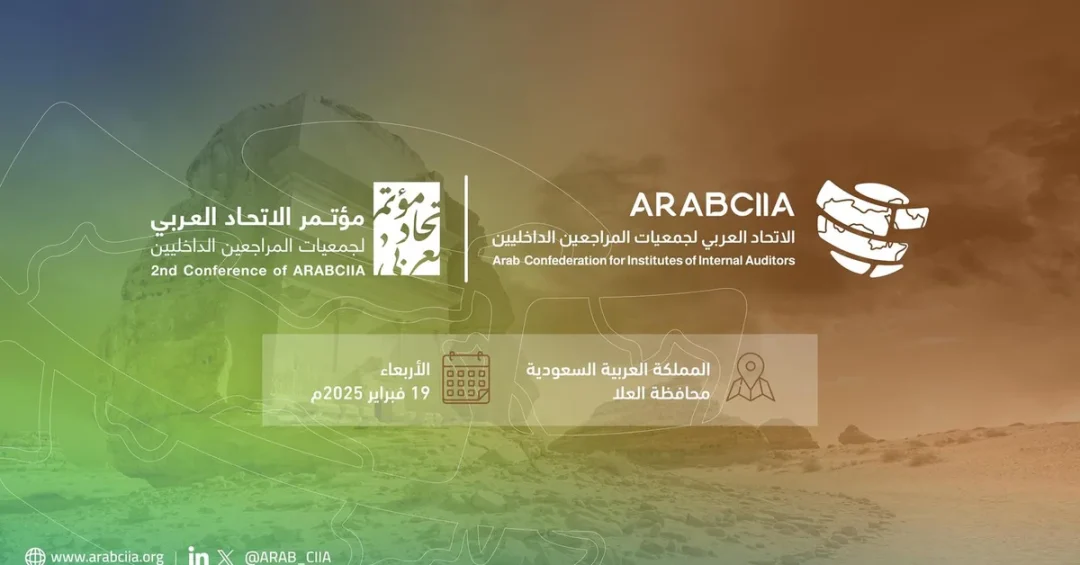
The Arab Confederation for Institutes of Internal Auditors (ARABCIIA) will convene its second annual conference in AlUla Governorate on February 19, 2025, under the patronage of General Court of Audit President and ARABCIIA Chairman Dr. Hussam Alangari, as announced by the Saudi Press Agency. The gathering brings together internal audit professionals, regulators, and institutional leaders from across the Arab world to advance professional standards, governance, and risk management at a time of rapid economic transformation in the region. Building on the recommendations of its inaugural edition held in Egypt in 2024, the AlUla conference places continuous human resource development at the center of its agenda, reflecting the profession’s growing role in supporting business integrity and sustainable development.
The choice of AlUla as the host city is significant. The governorate, located in the northwest of the Kingdom, has emerged as a global destination for cultural dialogue, heritage preservation, and high-level professional gatherings under Saudi Arabia’s Vision 2030 framework. Hosting ARABCIIA’s flagship event there signals both the Kingdom’s commitment to strengthening regulatory systems and its ambition to position AlUla as a hub for knowledge exchange that connects the Arab world with international best practice. For an international audience watching Saudi Arabia’s institutional modernization, the conference offers a clear example of how professional bodies are being mobilized to support the broader economic agenda.
Context and Background
Why does a conference on internal auditing matter beyond the profession itself? In an era when investors, regulators, and the public demand greater transparency, internal audit functions serve as a critical line of defense for institutional integrity. ARABCIIA, as a regional confederation of national institutes, has worked since its founding to harmonize professional standards across Arab countries, encourage certification and continuing education, and promote ethical conduct in both public and private sector organizations. The first conference in Egypt in 2024 produced a set of recommendations that now form the foundation for the AlUla agenda, creating a continuity of purpose that organizers say is essential for meaningful progress.
The General Court of Audit of Saudi Arabia, led by Dr. Hussam Alangari, has been a driving force behind these regional efforts. As the Kingdom’s supreme audit institution, the GCA is responsible for overseeing public funds and enhancing accountability across government entities. Its leadership role in ARABCIIA reflects a broader Saudi strategy of exporting institutional excellence and contributing to regional capacity building. By hosting the second conference, the Kingdom reinforces its position as a convenor of professional dialogue, a role that aligns with its growing influence in global economic governance and its active participation in multilateral forums.
AlUla itself adds a distinctive dimension to the event. Once known primarily for its archaeological treasures, including the Nabataean tombs of Hegra, the governorate has been transformed into a year-round destination for conferences, cultural festivals, and strategic retreats. The Royal Commission for AlUla has developed world-class infrastructure, including luxury resorts and meeting facilities, that allows the city to host international events while preserving its natural and historical heritage. For conference delegates, the setting provides an inspiring backdrop for discussions about the future of the profession and the region.
Key Details and Agenda Focus
What specific topics will dominate the discussions in AlUla? According to the official announcement, the conference will examine key international developments in internal auditing, with a strong emphasis on innovative technologies and data analysis. As organizations across the Arab world accelerate their digital transformation, auditors are being asked to assess risks related to cybersecurity, artificial intelligence, and automated decision-making. The conference agenda is designed to equip professionals with the tools and frameworks needed to evaluate these emerging areas, ensuring that audit functions remain relevant and effective in a technology-driven business environment.
Governance, risk management, and ethical conduct will also feature prominently. The global financial crises of the past two decades underscored the consequences of weak internal controls, and regulators in the Middle East have since introduced stricter requirements for corporate governance and risk disclosure. ARABCIIA’s conference will explore how internal auditors can add value by providing independent assurance on governance processes, identifying emerging risks before they materialize, and promoting a culture of integrity within their organizations. These discussions are particularly timely as Saudi Arabia and its neighbors pursue ambitious economic diversification programs that depend on strong institutional foundations.
Continuous human resource development is another central theme. The conference will highlight the importance of ongoing training, certification, and professional development for internal auditors, especially as standards evolve and new competencies are required. ARABCIIA aims to support its member institutes in building robust education pipelines, from entry-level training to executive leadership programs. By focusing on people, the confederation acknowledges that even the most advanced technologies cannot replace skilled, ethical professionals who understand the nuances of their organizations and the expectations of stakeholders.
International and Regional Impact
How will the outcomes of this conference resonate beyond the Arab region? Internal auditing is a global profession, governed by frameworks such as the International Standards for the Professional Practice of Internal Auditing, and regional bodies like ARABCIIA play a vital role in translating global standards into local contexts. The AlUla conference will provide a platform for sharing experiences from different countries, identifying common challenges, and developing joint positions that can be presented in international forums. This collaborative approach strengthens the region’s voice in global professional debates and facilitates the adoption of best practices that have proven effective elsewhere.
For international investors and multinational companies operating in the Middle East, the conference sends a reassuring signal. Strong internal audit systems are associated with lower fraud risk, better financial reporting, and more reliable governance, all of which are critical considerations when allocating capital. By investing in the profession, Arab countries are enhancing their attractiveness as investment destinations and demonstrating their commitment to transparency. Saudi Arabia’s leadership in this area, through the General Court of Audit and its support for ARABCIIA, reinforces the Kingdom’s reputation as a stable and forward-looking business environment.
The conference also has implications for regional cooperation. Internal audit challenges often transcend borders, particularly in areas such as anti-money laundering, cross-border transactions, and supply chain integrity. By bringing together regulators and practitioners from across the Arab world, ARABCIIA facilitates the kind of informal networks and trust that are essential for effective cross-border collaboration. The recommendations that emerge from AlUla are expected to inform national policies and professional guidelines in multiple countries, creating a ripple effect that extends well beyond the conference hall.
Economic and Strategic Significance
What does the conference reveal about Saudi Arabia’s economic strategy? The Kingdom is in the midst of Vision 2030, a comprehensive plan to diversify the economy, expand the private sector, and reduce dependence on oil. This transformation involves hundreds of billions of dollars in public and private investment, much of it channeled through sovereign wealth funds, new mega-projects, and public-private partnerships. Such large-scale capital deployment requires robust oversight to ensure that funds are used efficiently and that projects deliver their intended benefits. Internal auditors are therefore essential partners in the success of Vision 2030, providing assurance that governance and risk management systems are functioning as intended.
The General Court of Audit has been modernizing its own practices to meet these demands, adopting advanced data analytics, strengthening its professional workforce, and enhancing cooperation with international counterparts. Dr. Hussam Alangari’s leadership of ARABCIIA complements these domestic reforms by fostering a regional ecosystem of well-trained auditors who can support both public and private institutions. The conference in AlUla is thus not an isolated event but part of a sustained effort to build institutional capacity that will underpin the Kingdom’s economic ambitions for decades to come.
For the business sector, the conference offers practical value. Companies attending will gain insights into emerging risks, regulatory expectations, and best practices that can be applied immediately. The emphasis on adding value and supporting business development reflects a modern view of internal audit as a strategic advisor rather than a compliance burden. By aligning audit activities with organizational objectives, businesses can improve performance, reduce losses, and enhance their resilience in a rapidly changing economic landscape.
Vision 2030 Alignment
How does hosting the ARABCIIA conference in AlUla advance Saudi Arabia’s long-term vision? Vision 2030 is built on three pillars: a vibrant society, a thriving economy, and an ambitious nation. Each of these pillars depends on strong institutions and effective governance. The conference directly supports the ambitious nation pillar by promoting accountability, transparency, and professional excellence in the management of public and private resources. It also contributes to the thriving economy by strengthening the regulatory environment that businesses need to grow and attract investment.
AlUla’s role as host underscores the vision’s cultural and tourism dimensions. The Royal Commission for AlUla has transformed the governorate into a global destination that celebrates heritage while embracing modernity. By bringing a professional conference to this iconic location, Saudi Arabia showcases its ability to host world-class events and demonstrates that economic development and cultural preservation can go hand in hand. For delegates, the experience of AlUla reinforces the message that the Kingdom is open for business, open to dialogue, and committed to building a future that honors its past while embracing innovation.
As the conference concludes and its recommendations are disseminated, the impact will be measured in stronger audit functions, more resilient institutions, and greater confidence among investors and citizens. The partnership between ARABCIIA and the General Court of Audit exemplifies the kind of regional collaboration that Vision 2030 seeks to promote, and it positions Saudi Arabia as a leader in professional development and governance reform. The second ARABCIIA conference in AlUla is therefore more than a meeting; it is a milestone in the ongoing journey toward a more prosperous and accountable Arab world.
20 Questions
Q1. What is the Arab Confederation for Institutes of Internal Auditors (ARABCIIA)?
A1. ARABCIIA is a regional confederation that brings together national institutes of internal auditors from across the Arab world. It works to harmonize professional standards, promote certification and continuing education, and enhance ethical conduct in public and private sector organizations throughout the region.
Q2. When and where will the second ARABCIIA conference take place?
A2. The second ARABCIIA conference will be held in AlUla Governorate, Saudi Arabia, on February 19, 2025. The event follows the inaugural conference held in Egypt in 2024 and builds on its recommendations for advancing the internal audit profession.
Q3. Who is patronizing the conference?
A3. The conference is held under the patronage of Dr. Hussam Alangari, President of the General Court of Audit of Saudi Arabia and Chairman of ARABCIIA. His leadership reflects the Kingdom’s commitment to strengthening governance and accountability across the region.
Q4. What is the main focus of this year’s conference?
A4. The conference focuses on continuous human resource development to keep pace with evolving professional standards. It also explores international developments in internal auditing, including innovative technologies, data analysis, governance, risk management, ethical conduct, and professional responsibilities.
Q5. Why was AlUla chosen as the host city?
A5. AlUla was chosen for its growing status as a global destination for cultural dialogue and professional gatherings. The governorate offers world-class infrastructure and a unique heritage setting that aligns with Saudi Arabia’s Vision 2030 goals of promoting tourism and knowledge exchange.
Q6. What were the outcomes of the first ARABCIIA conference?
A6. The first conference, held in Egypt in 2024, produced a set of recommendations that now form the foundation for the AlUla agenda. These recommendations focus on enhancing professional standards, capacity building, and regional cooperation among internal audit institutes.
Q7. How does the conference support the business sector?
A7. The conference examines ways to add value and support business development by promoting best professional practices. It helps companies improve governance, manage risks, and enhance performance, which contributes to a more attractive investment environment across the Arab region.
Q8. What role does the General Court of Audit play in the conference?
A8. The General Court of Audit, Saudi Arabia’s supreme audit institution, is a key organizer and supporter of the conference. Its president chairs ARABCIIA, and the institution has been instrumental in promoting regional cooperation and modernizing audit practices.
Q9. What are some key topics on the agenda?
A9. Key topics include innovative technologies, data analysis, governance, risk management, ethical conduct, and professional responsibilities. The agenda is designed to equip auditors with the skills needed to address emerging challenges in a rapidly changing business environment.
Q10. How does the conference address technological change?
A10. The conference explores how technologies such as artificial intelligence, data analytics, and cybersecurity are transforming the audit profession. It provides frameworks for auditors to assess risks related to digital transformation and to use technology effectively in their work.
Q11. What is the significance of continuous human resource development?
A11. Continuous development ensures that internal auditors maintain the competencies required by evolving standards. It supports career growth, improves audit quality, and helps organizations build robust talent pipelines that can meet future governance and risk challenges.
Q12. How does the conference promote ethical conduct?
A12. The conference emphasizes the importance of ethical behavior in internal auditing. Sessions will discuss professional codes of conduct, integrity, objectivity, and the role of auditors in fostering a culture of accountability within their organizations and across the region.
Q13. What impact will the conference have on regional cooperation?
A13. The conference strengthens ties among Arab internal audit institutes, facilitating the exchange of best practices and joint positions on international standards. This cooperation enhances the region’s collective voice in global professional forums and improves cross-border collaboration.
Q14. How does the event align with Saudi Arabia’s Vision 2030?
A14. The conference supports Vision 2030 by promoting accountability, transparency, and professional excellence, which are essential for a thriving economy and an ambitious nation. It also showcases AlUla as a global destination, supporting tourism and cultural goals.
Q15. Who will attend the conference?
A15. The conference will bring together internal audit professionals, regulators, government officials, academics, and business leaders from across the Arab world and beyond. It provides a platform for networking, knowledge sharing, and professional development.
Q16. What are the expected outcomes of the conference?
A16. Expected outcomes include updated recommendations for professional standards, enhanced regional cooperation, and practical guidance on emerging issues. These outcomes will inform national policies and help organizations strengthen their governance and risk management frameworks.
Q17. How can international participants benefit from the conference?
A17. International participants can gain insights into regional practices, share their own experiences, and build networks with Arab counterparts. The conference offers a unique opportunity to understand the Middle East’s evolving business environment and governance landscape.
Q18. What is the role of ARABCIIA in setting standards?
A18. ARABCIIA works to harmonize internal audit standards across Arab countries, aligning them with international frameworks. It supports member institutes in adopting best practices, developing certifications, and promoting continuous professional education.
Q19. How does the conference support women in the audit profession?
A19. The conference promotes inclusivity and human resource development, which includes encouraging greater participation by women in internal auditing. By highlighting diverse role models and best practices, it supports the growth of a more inclusive profession across the region.
Q20. What message does hosting this conference send to the world?
A20. Hosting the conference in AlUla sends a message that Saudi Arabia is open for business, committed to professional excellence, and dedicated to regional cooperation. It reinforces the Kingdom’s role as a leader in governance reform and a convener of global dialogue.
Reader Feedback
We value your thoughts. Please share your feedback on this article.
Your feedback helps us improve our coverage.
Related articles
 5.8-Magnitude Earthquake Strikes Alaska, No Damage Reported
 GCC Advisory Body Supports 59 Studies for Gulf Development
 KSrelief Official Meets Swedish Parliament Deputy Speaker
 Shura Council Speaker Receives Sudanese Ambassador
 Islamic Affairs Ministry Hosts Open Day for Umrah Guests
 Saudi Deputy Interior Minister Meets Bangladesh Expatriates Adviser