


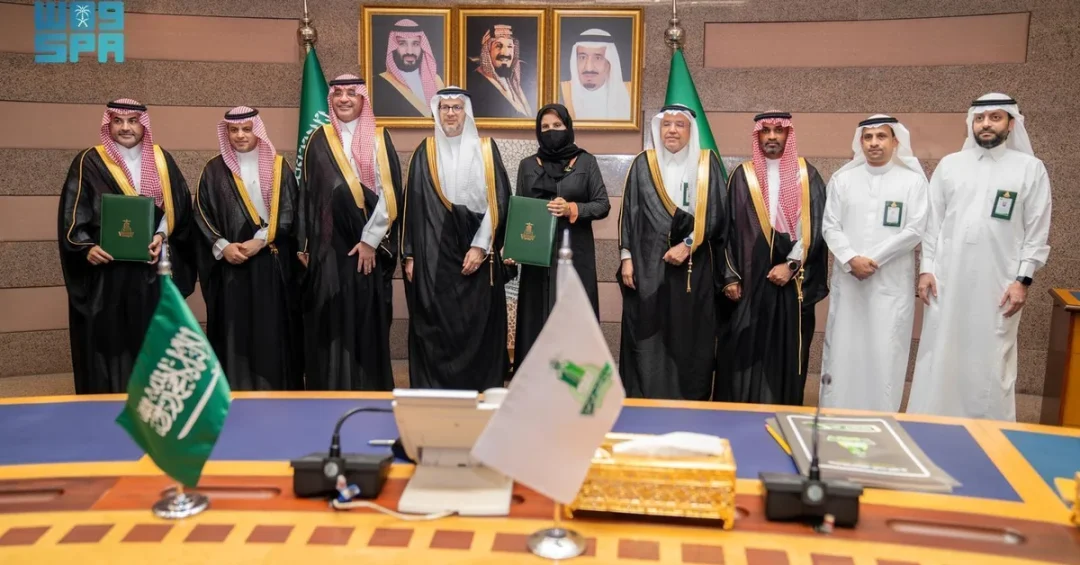
Dr. Abdullah bin Ahmed Al-Maghlooth, Assistant Minister of Media and Chairman of the Board of the Saudi Media Academy, met with Dr. Tareef Yusuf Al-Aama, President of King Abdulaziz University, at the university’s headquarters in Jeddah on January 15, 2025, to discuss ways to enhance joint media cooperation and witness the signing of a strategic cooperation agreement between the Saudi Media Academy and the university. The meeting, reported by the Saudi Press Agency (SPA), marked a significant step in the Kingdom’s efforts to develop its media sector and nurture young national talent in line with Saudi Vision 2030. The agreement focuses on supporting media education, training, and qualifying young media talents, with a particular emphasis on building a sustainable knowledge-based economy.
During the meeting, Al-Maghlooth reviewed the key projects and initiatives offered by the Ministry of Media across various media fields and presented a detailed briefing about the Saudi Media Academy, which serves as a cornerstone for professional media training in the Kingdom. The two officials explored prospects for joint media cooperation, enhancing existing media efforts, empowering specialized media skills and capabilities, and providing creative media spaces that keep pace with the events and occasions hosted by Saudi Arabia. They also discussed the bilateral development of media coverage for the Hajj and Umrah seasons, reflecting the Kingdom’s commitment to serving the millions of pilgrims who visit the holy sites each year. The cooperation agreement signed between the Saudi Media Academy and King Abdulaziz University entails collaboration in several areas, including offering educational training courses, providing opportunities for field cooperative training for university students, and a career qualification program through the “Tawasul” initiative, which offers distinguished university students opportunities to apply for promising jobs. This partnership underscores the importance of integrating academic institutions with media industry needs to produce a skilled workforce capable of driving the Kingdom’s media transformation.
Context and Background
Why does this meeting matter for the future of Saudi media and higher education? The collaboration between the Ministry of Media and King Abdulaziz University is part of a broader national strategy to modernize the media landscape and equip Saudi youth with the skills needed to compete in a rapidly evolving global media environment. The Saudi Media Academy, established under the Ministry of Media, is dedicated to providing advanced training and professional development for media practitioners, while King Abdulaziz University, one of the Kingdom’s premier academic institutions, offers a rich pool of talented students eager to enter the media field. By joining forces, these two entities aim to bridge the gap between theoretical education and practical application, ensuring that graduates are job-ready and aligned with the demands of the industry.
The meeting also reflects the Kingdom’s ongoing efforts to enhance the quality of media coverage for major events, particularly the Hajj and Umrah seasons, which attract millions of pilgrims from around the world. Effective media coverage of these religious occasions requires specialized skills and coordination, and the partnership between the academy and the university will help develop a cadre of professionals capable of delivering accurate, engaging, and respectful coverage. Moreover, the agreement supports the goals of Saudi Vision 2030 by fostering a knowledge-based economy, promoting youth empowerment, and creating new opportunities for professional growth. The “Tawasul” initiative, in particular, is designed to connect talented students with promising job opportunities, thereby reducing unemployment and boosting economic participation.
This collaboration is not an isolated event but part of a series of initiatives launched by the Ministry of Media to modernize the sector. In recent years, the Kingdom has invested heavily in media infrastructure, digital transformation, and content creation, aiming to position itself as a regional media hub. The Saudi Media Academy has been at the forefront of these efforts, offering specialized programs in journalism, digital media, film production, and strategic communication. By partnering with King Abdulaziz University, the academy gains access to a steady stream of young talent and academic expertise, while the university benefits from industry insights and practical training opportunities for its students. This synergy is expected to yield significant benefits for both institutions and for the Kingdom’s media sector as a whole.
Key Details of the Cooperation Agreement
What specific areas does the agreement cover, and how will it benefit students and the media industry? The cooperation agreement between the Saudi Media Academy and King Abdulaziz University encompasses several key areas. First, it includes the offering of educational training courses designed to enhance students’ media skills, covering topics such as digital journalism, multimedia production, media ethics, and strategic communication. These courses will be developed jointly by academic faculty and media professionals to ensure they meet industry standards and address current market needs. Second, the agreement provides opportunities for field cooperative training for university students, allowing them to gain hands-on experience in real media environments, including newsrooms, production studios, and digital platforms. This practical training is essential for bridging the gap between academic learning and professional practice.
Third, the agreement introduces a career qualification program through the “Tawasul” initiative, which offers distinguished university students opportunities to apply for promising jobs in the media sector and beyond. The “Tawasul” initiative is a national program aimed at linking talented graduates with employers, and its inclusion in this agreement highlights the commitment to youth employment and career development. Fourth, the agreement emphasizes the development of media coverage for the Hajj and Umrah seasons, a critical area given the global significance of these religious events. Training programs will focus on specialized skills such as live reporting, cultural sensitivity, crowd management communication, and multilingual coverage. These efforts will help ensure that the Kingdom’s media output during Hajj and Umrah is informative, respectful, and reflective of the spiritual significance of the occasions.
The meeting also reviewed the Ministry of Media’s broader initiatives, including the creation of creative media spaces that keep pace with the events and occasions hosted by the Kingdom. These spaces are designed to foster innovation and experimentation in media production, providing young talents with the tools and platforms to develop their ideas. Al-Maghlooth highlighted the importance of such spaces in nurturing creativity and enabling Saudi media to compete on a global stage. The briefing on the Saudi Media Academy covered its mission, programs, and achievements, underscoring its role as a national center of excellence for media training. The academy’s curriculum is constantly updated to reflect technological advancements and changing audience behaviors, ensuring that graduates are equipped with the latest knowledge and skills.
International and Regional Impact
How will this cooperation influence Saudi Arabia’s media presence regionally and internationally? The partnership between the Saudi Media Academy and King Abdulaziz University is expected to enhance the Kingdom’s media capabilities, enabling it to produce high-quality content that resonates with both domestic and international audiences. As Saudi Arabia continues to host major global events, such as Expo 2030, the FIFA World Cup 2034, and various cultural and sporting festivals, the demand for skilled media professionals will only grow. By training a new generation of media talents, the Kingdom is positioning itself to deliver world-class coverage that showcases its achievements and hospitality to the world. This, in turn, can strengthen Saudi Arabia’s soft power and influence in the region.
Regionally, the agreement supports the exchange of knowledge and best practices among Gulf Cooperation Council (GCC) countries and beyond. Saudi Arabia’s investment in media education can serve as a model for other nations seeking to develop their own media sectors. The focus on Hajj and Umrah coverage is particularly significant, as these events bring together millions of Muslims from diverse backgrounds, and the media plays a crucial role in facilitating a smooth and spiritually fulfilling experience. Improved media coverage can also help counter misinformation and present an accurate image of the Kingdom’s management of the pilgrimages. Furthermore, the collaboration aligns with the Arab Media Outlook and other regional initiatives aimed at elevating media standards and promoting cultural understanding.
Economic and Strategic Significance
What economic and strategic benefits will arise from this collaboration? The agreement contributes to Saudi Arabia’s economic diversification efforts by developing human capital in the media sector, which is a key component of the knowledge-based economy envisioned in Vision 2030. A skilled media workforce can attract investment, stimulate content production, and create jobs in related fields such as advertising, public relations, and digital marketing. The “Tawasul” initiative, by facilitating job placements for graduates, directly supports the reduction of unemployment and the increase of workforce participation. Additionally, the focus on media coverage for Hajj and Umrah has economic implications, as improved coverage can enhance the pilgrim experience, potentially increasing the number of visitors and associated revenues.
Strategically, the partnership reinforces the Kingdom’s commitment to modernizing its media landscape and aligning it with international standards. By investing in education and training, Saudi Arabia is building a sustainable media ecosystem that can adapt to technological changes and evolving audience preferences. This is essential for maintaining the Kingdom’s narrative and projecting its voice globally. The agreement also strengthens the relationship between academia and industry, fostering innovation and ensuring that educational outcomes meet labor market needs. As the media sector continues to evolve, such collaborations will be vital for keeping Saudi Arabia at the forefront of regional media production and dissemination.
Vision 2030 Alignment
How does this initiative align with Saudi Vision 2030? The cooperation agreement between the Saudi Media Academy and King Abdulaziz University directly supports several of Vision 2030’s objectives, including the development of a diversified, knowledge-based economy, the empowerment of youth, and the enhancement of national identity. By training young media talents, the Kingdom is investing in its future leaders and ensuring that its media sector can effectively communicate the nation’s progress and aspirations. The emphasis on practical training and job placement through “Tawasul” reflects the vision’s focus on increasing employment and fostering entrepreneurship. Moreover, the agreement’s attention to Hajj and Umrah media coverage underscores the Kingdom’s role as the custodian of the Two Holy Mosques and its dedication to serving pilgrims.
In the long term, this partnership is expected to yield a new generation of media professionals who are not only skilled but also deeply connected to the Kingdom’s values and vision. They will be equipped to tell Saudi Arabia’s story to the world, highlighting its rich heritage, rapid modernization, and global engagement. As the Kingdom continues to implement Vision 2030, collaborations between government entities and academic institutions will remain essential for achieving sustainable development and global competitiveness. The meeting between Dr. Al-Maghlooth and Dr. Al-Aama, and the subsequent signing of the agreement, represent a concrete step toward realizing these ambitions, reinforcing Saudi Arabia’s position as a leader in media innovation and education.
20 Questions
Q1. What was the main purpose of the meeting between Dr. Abdullah Al-Maghlooth and Dr. Tareef Al-Aama?
A1. The meeting aimed to discuss ways to enhance joint media cooperation and witness the signing of a cooperation agreement between the Saudi Media Academy and King Abdulaziz University to support media education and train young talents.
Q2. Who are the key officials involved in this meeting?
A2. Dr. Abdullah bin Ahmed Al-Maghlooth, Assistant Minister of Media and Chairman of the Board of the Saudi Media Academy, and Dr. Tareef Yusuf Al-Aama, President of King Abdulaziz University.
Q3. Where did the meeting take place?
A3. The meeting was held at King Abdulaziz University’s headquarters in Jeddah, Saudi Arabia.
Q4. What is the Saudi Media Academy?
A4. The Saudi Media Academy is an institution under the Ministry of Media dedicated to providing advanced training and professional development for media practitioners in the Kingdom.
Q5. What does the cooperation agreement entail?
A5. The agreement includes offering educational training courses, providing field cooperative training for university students, and a career qualification program through the “Tawasul” initiative.
Q6. What is the “Tawasul” initiative?
A6. “Tawasul” is a career qualification program that offers distinguished university students opportunities to apply for promising jobs, linking talented graduates with employers.
Q7. How does this agreement support Saudi Vision 2030?
A7. It supports Vision 2030 by building a sustainable knowledge-based economy, empowering youth, enhancing media skills, and creating job opportunities in the media sector.
Q8. What specific media areas will the training cover?
A8. Training will cover digital journalism, multimedia production, media ethics, strategic communication, and specialized coverage of Hajj and Umrah seasons.
Q9. Why is media coverage of Hajj and Umrah important?
A9. It ensures accurate, respectful, and engaging coverage of the millions of pilgrims, enhancing their experience and presenting the Kingdom’s management of the pilgrimages positively.
Q10. How will students benefit from this cooperation?
A10. Students will gain hands-on experience through field training, access to industry-standard courses, and job placement opportunities via the “Tawasul” initiative.
Q11. What are creative media spaces mentioned in the meeting?
A11. Creative media spaces are platforms designed to foster innovation and experimentation in media production, providing young talents with tools to develop their ideas.
Q12. How does this collaboration impact the Saudi media sector?
A12. It enhances the sector by developing skilled professionals, improving content quality, and aligning media education with industry needs, boosting the Kingdom’s media competitiveness.
Q13. What role does King Abdulaziz University play in this partnership?
A13. As a premier academic institution, it provides talented students, academic expertise, and a platform for practical training and research in media fields.
Q14. Will this agreement create new job opportunities?
A14. Yes, through the “Tawasul” initiative and improved skills training, graduates will be better positioned for jobs in media and related industries.
Q15. How does this initiative align with Saudi Arabia’s economic diversification?
A15. By developing human capital in media, it supports the growth of a knowledge-based economy, attracts investment, and stimulates content production and related sectors.
Q16. What international events will benefit from improved media coverage?
A16. Events such as Expo 2030, FIFA World Cup 2034, and various cultural and sporting festivals hosted by the Kingdom will benefit from enhanced media coverage.
Q17. How does the agreement address technological advancements in media?
A17. The curriculum and training programs are updated to include digital media, multimedia production, and other emerging technologies to keep pace with industry trends.
Q18. What is the significance of the Ministry of Media’s role in this collaboration?
A18. The Ministry of Media oversees the Saudi Media Academy and drives national media strategies, ensuring alignment with Vision 2030 and the Kingdom’s media modernization goals.
Q19. How will this cooperation enhance Saudi Arabia’s soft power?
A19. By producing high-quality media content and skilled professionals, the Kingdom can better showcase its achievements and hospitality, strengthening its regional and global influence.
Q20. What are the long-term expectations for this partnership?
A20. It is expected to yield a new generation of media professionals who will tell Saudi Arabia’s story globally, supporting Vision 2030 and sustaining media innovation and education.
Reader Feedback
We value your thoughts. Please share your feedback on this article.
Your feedback helps us improve our coverage.
Related articles
 OIC News Agencies Union Signs Education Pact with Pakistan University
 UNA Chief Keynotes Islamabad Girls’ Education Conference
 Saudi Arabia Leads Global Mining Dialogue at Riyadh Ministerial
 Saudi Arabia, Italy Sign Energy Cooperation MoU
 Saudi Weather Forecast: Rain, Fog Expected Wednesday
 Eleventh Saudi Relief Plane Departs for Syria with Aid