


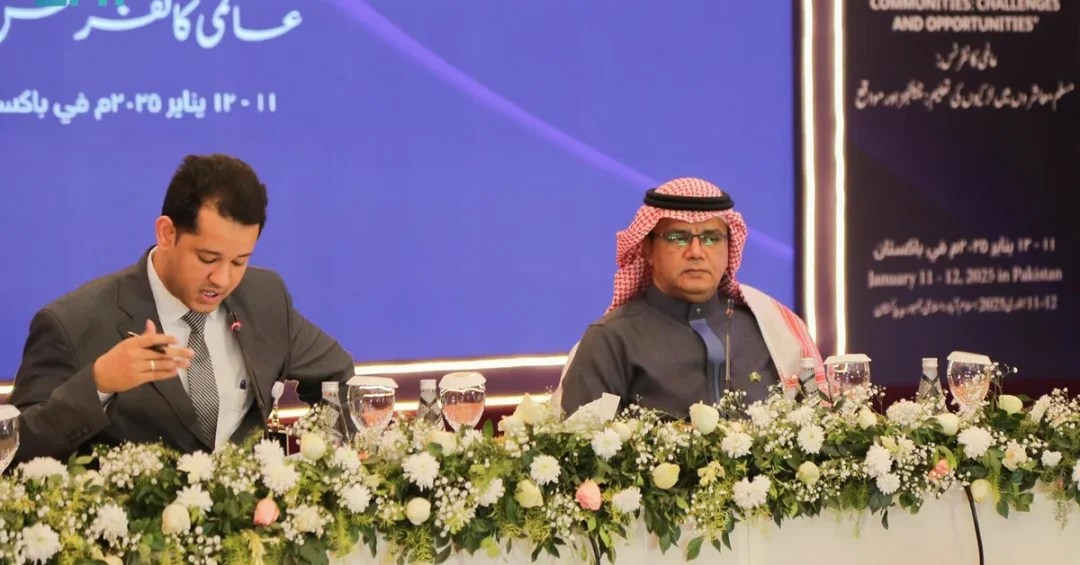
The Director-General of the Union of News Agencies of the Organisation of Islamic Cooperation (UNA), Mohammed bin Abdrabuh Al-Yami, delivered a keynote address at an international roundtable in Islamabad, Pakistan, on January 15, 2025, focused on the role of media in advancing educational justice for girls across Muslim societies. The session, titled “The Role of Media in Achieving Educational Justice for Girls and Promoting the Global Image of Islam,” formed part of the broader international Islamic conference “Girls Education in Muslim Societies: Challenges and Opportunities,” organised with the support of the Government of the Islamic Republic of Pakistan and the Muslim World League. Al-Yami’s participation underscores the growing recognition among Islamic institutions that media platforms carry a defining responsibility in shaping public understanding of girls’ rights to learning, and that coordinated communication strategies are essential to translating religious principles of equity into measurable educational outcomes.
Why does a media-focused session sit at the heart of a conference about girls’ education? Because in the contemporary information environment, access to schooling is shaped as much by public discourse as by policy. The roundtable brought together journalists, scholars, and institutional leaders to examine how accurate, accessible, and religiously grounded reporting can dismantle misconceptions that have, in some contexts, been used to justify limiting educational opportunities for girls. The discussions concluded with concrete recommendations aimed at strengthening media coverage of girls’ legal and religious right to education, correcting erroneous interpretations of Islamic texts, and ensuring that accredited scholarly voices feature prominently in public debate. The event reflects a widening consensus that educational justice is inseparable from informational justice.
Context and Background
The Islamabad conference convened at a moment when Muslim-majority nations are intensifying efforts to close gender gaps in education while remaining rooted in their cultural and religious identities. The Organisation of Islamic Cooperation, as the second-largest intergovernmental organisation after the United Nations, has consistently emphasised that Islam historically championed learning for both men and women, and that contemporary barriers often stem from custom or misinterpretation rather than doctrine. The UNA, as the OIC’s specialised body for news agencies, occupies a unique position in this landscape: it connects national news agencies across member states, providing a distribution network capable of reaching audiences in dozens of languages and regions. Al-Yami’s keynote therefore carried institutional weight, signalling that the OIC’s media apparatus is prepared to actively support educational initiatives rather than merely report on them. The Muslim World League’s co-organising role further reinforced the conference’s dual emphasis on scholarly authority and practical advocacy.
Pakistan’s hosting of the event also carried symbolic significance. As a nation with a young and dynamic population, Pakistan has invested in expanding educational access while navigating complex social debates. By convening scholars, officials, and media representatives on its soil, the government demonstrated a willingness to facilitate intra-Islamic dialogue on sensitive topics through transparent, multilateral channels. The conference format, combining plenary sessions with specialised roundtables, allowed participants to move from broad principles to operational recommendations within a single gathering. For observers of OIC processes, this structure reflects a broader shift toward outcome-oriented diplomacy, in which declarations are paired with follow-up mechanisms and institutional commitments.
Key Details from the Roundtable
In his opening remarks, Al-Yami emphasised that media outlets have a duty to raise awareness about girls’ right to education and urged girls themselves to put forth greater effort in correcting misconceptions and misguided interpretations of Islamic texts. He called for intensified efforts to address the issue, stressing that content produced must be accessible and understandable to audiences at various levels of knowledge. This emphasis on accessibility reflects a practical insight: messages that resonate with academic audiences may fail to reach families and communities where decisions about schooling are actually made. Al-Yami affirmed the UNA’s readiness to mobilise its network and affiliated agencies for any collective effort related to the implementation of these initiatives, expressing gratitude to the Government of the Islamic Republic of Pakistan and the Muslim World League for organising the conference. His offer of institutional mobilisation transforms the UNA from a passive observer into a potential operational partner for educational campaigns across OIC member states.
Participants in the discussions reviewed the media’s role in empowering girls to obtain their fundamental rights, especially the right to education. The roundtable concluded with several key recommendations: enhancing the role of media in raising awareness about girls’ legal right to education; addressing erroneous interpretations of religion; and ensuring sufficient coverage of the views of accredited scholarly references and institutions. These recommendations are notable for their specificity. Rather than issuing a general call for improvement, they identify three actionable pillars: legal literacy, doctrinal accuracy, and scholarly visibility. Together, they form a framework that news agencies can adopt when commissioning stories, training reporters, or developing editorial guidelines. The emphasis on accredited scholarly references also serves a quality-control function, distinguishing authoritative religious interpretation from unverified claims that can circulate rapidly on social platforms.
International and Regional Impact
The outcomes of the Islamabad roundtable are likely to resonate beyond Pakistan’s borders. OIC member states span Africa, Asia, and the Middle East, and many share common challenges in extending educational access to girls in rural or underserved areas. A coordinated media strategy endorsed at the UNA level could provide national news agencies with shared resources, including expert interviews, data visualisations, and multilingual content packages. Such cooperation could reduce duplication of effort and ensure that messaging remains consistent with both Islamic principles and international human rights frameworks. For regional audiences, the visibility of a unified Islamic position on girls’ education may help counter narratives that portray religion and women’s empowerment as inherently opposed. That perception, where it exists, has often been exploited to justify policies that limit opportunity, and its correction is a shared interest of governments, scholars, and media alike.
At the international level, the conference contributes to a broader conversation about educational equity that engages the United Nations, multilateral development banks, and civil society organisations. By framing girls’ education as a religious right rather than an external imposition, the OIC and its affiliates offer a culturally grounded pathway to goals that global institutions also pursue. This alignment creates opportunities for partnership without compromising local values. It also strengthens the global image of Islam, a goal explicitly referenced in the roundtable’s title. When media coverage highlights the Islamic tradition’s historical commitment to learning, it provides context that is frequently missing from international reporting on Muslim societies. The UNA’s involvement signals that this narrative work is being approached systematically, through institutional channels rather than ad hoc public relations.
Economic and Strategic Significance
Educational justice for girls carries direct economic consequences. Studies cited in development literature consistently link higher female educational attainment to increased labour force participation, higher household incomes, and stronger economic growth. For OIC member states, many of which have young populations and ambitious diversification agendas, unlocking the full productive potential of women is not merely a social objective but an economic imperative. Media’s role in this equation is to normalise the idea that educated women contribute to national prosperity, and to showcase examples of women who have translated education into professional achievement. By doing so, outlets can help shift community expectations and reduce the social friction that sometimes accompanies first-generation female students. The UNA’s network, with its reach into both urban and rural audiences, is well suited to this task.
Strategically, the conference reinforces the OIC’s position as a convening power capable of addressing contemporary challenges through internal dialogue. In a multipolar world, Islamic institutions that can articulate coherent positions on human development issues enhance their diplomatic influence. The Islamabad gathering also strengthens ties between Pakistan and the OIC’s media apparatus, potentially leading to follow-up initiatives hosted in other member states. For Saudi Arabia, which plays a central role in the OIC and has made women’s empowerment a visible pillar of its Vision 2030 reform programme, the conference’s outcomes align with a broader national narrative. The Kingdom’s own experience in expanding educational and professional opportunities for women provides a reference point that other member states may study. While the Islamabad event was not a Saudi initiative, its success contributes to a regional environment in which Saudi reforms are seen as part of a wider Islamic movement rather than an isolated experiment.
Vision 2030 Alignment
Saudi Arabia’s Vision 2030 places human capability development at the centre of its economic transformation, with women’s participation identified as a key driver of growth. The Kingdom has invested heavily in education, training, and workforce inclusion, and Saudi women now hold positions across government, business, and academia that would have been difficult to imagine a generation ago. The Islamabad conference’s emphasis on media’s role in achieving educational justice complements these efforts by addressing the informational and cultural dimensions of reform. Just as Saudi Arabia has worked to ensure that its own media reflects the ambitions of its people, the UNA’s initiative seeks to ensure that media across the Islamic world accurately represents the religious and legal foundations of girls’ education. The two agendas converge on a shared premise: sustainable development requires the full participation of all citizens, and that participation begins with access to learning.
Looking ahead, the recommendations from Islamabad provide a roadmap for cooperation that Saudi institutions are well positioned to support. The UNA’s commitment to mobilise its network offers a mechanism for distributing content that highlights successful educational models, profiles women leaders, and explains the scholarly consensus on girls’ right to learn. As Vision 2030 continues to unfold, Saudi Arabia’s experience can serve as a case study for other OIC member states navigating similar transitions. The Kingdom’s support for multilateral Islamic initiatives, including those led by the OIC and the Muslim World League, reflects a long-standing policy of fostering unity and shared progress. The Islamabad roundtable is a reminder that the path to educational justice runs through many institutions, and that media, when guided by accuracy and principle, can be a powerful ally in that journey.
20 Questions
Q1. What was the main topic of the Islamabad roundtable?
A1. The roundtable focused on the role of media in achieving educational justice for girls and promoting the global image of Islam, held as part of the international Islamic conference on girls’ education in Muslim societies.
Q2. Who represented the UNA at the conference?
A2. Mohammed bin Abdrabuh Al-Yami, Director-General of the Union of News Agencies of the Organisation of Islamic Cooperation, attended as a keynote speaker and delivered opening remarks at the roundtable session.
Q3. Where and when did the conference take place?
A3. The conference took place in Islamabad, Pakistan, on January 15, 2025, according to the Saudi Press Agency report, with participation from international Islamic scholars and media representatives.
Q4. Which organisations supported the conference?
A4. The Government of the Islamic Republic of Pakistan and the Muslim World League organised the conference, with the UNA participating as a key institutional partner in the media-focused sessions.
Q5. What did Al-Yami emphasise in his opening remarks?
A5. He emphasised the media’s role in raising awareness about girls’ right to education and urged girls to put forth greater effort to correct misconceptions and misguided interpretations of Islamic texts.
Q6. What did Al-Yami say about content accessibility?
A6. He called for intensified efforts to ensure that content produced is accessible and understandable to audiences at various levels of knowledge, recognising that messages must reach diverse communities effectively.
Q7. What commitment did the UNA Director-General make?
A7. Al-Yami affirmed the UNA’s readiness to mobilise its network and affiliated agencies for any collective effort related to the implementation of initiatives discussed at the conference.
Q8. What recommendations emerged from the roundtable?
A8. Recommendations included enhancing media’s role in raising awareness about girls’ legal right to education, addressing erroneous interpretations of religion, and ensuring sufficient coverage of accredited scholarly references and institutions.
Q9. Why is media considered important for girls’ education?
A9. Media shapes public discourse and can correct misconceptions, amplify authoritative voices, and normalise the idea that educated women contribute to national development and social progress.
Q10. How does the conference relate to the OIC’s broader mission?
A10. The OIC promotes cooperation among Muslim states on development issues, and this conference advances its commitment to education, women’s empowerment, and accurate representation of Islamic values.
Q11. What is the UNA’s role within the OIC?
A11. The UNA serves as the OIC’s specialised body for news agencies, connecting national agencies across member states and facilitating the distribution of information that supports shared Islamic objectives.
Q12. How might the recommendations be implemented?
A12. Implementation could involve shared content packages, journalist training, editorial guidelines, and coordinated coverage that features accredited scholars and explains legal rights in accessible language.
Q13. What economic benefits flow from girls’ education?
A13. Higher female educational attainment is linked to increased labour force participation, higher household incomes, and stronger economic growth, making it a strategic priority for developing nations.
Q14. How does the conference affect the global image of Islam?
A14. By highlighting Islam’s historical commitment to learning and showcasing unified scholarly support for girls’ education, the conference helps correct misperceptions and presents a constructive image internationally.
Q15. What role did Pakistan play as host?
A15. Pakistan facilitated the gathering, demonstrating its willingness to convene intra-Islamic dialogue on sensitive topics through transparent, multilateral channels involving scholars, officials, and media representatives.
Q16. How does this align with Saudi Vision 2030?
A16. Vision 2030 prioritises women’s participation and human capability development; the conference’s media-focused approach complements Saudi efforts to normalise and support educational opportunities for women.
Q17. What is the significance of accredited scholarly references?
A17. They provide authoritative religious interpretation, helping distinguish sound doctrine from unverified claims and ensuring that media coverage reflects established Islamic scholarship rather than misinformation.
Q18. Will the UNA organise follow-up activities?
A18. Al-Yami expressed readiness to mobilise the UNA network for collective efforts, indicating that follow-up activities such as coordinated media campaigns or training initiatives are possible.
Q19. How can media address erroneous interpretations of religion?
A19. Media can address them by consulting accredited scholars, presenting context, and producing content that explains Islamic principles of equity and learning in clear, accessible language for diverse audiences.
Q20. What is the long-term goal of these efforts?
A20. The long-term goal is to ensure that every girl in Muslim societies can exercise her right to education, supported by accurate media coverage and a unified institutional commitment.
Reader Feedback
We value your thoughts. Please share your feedback on this article.
Your feedback helps us improve our coverage.
Related articles
 Saudi Arabia Leads Global Mining Dialogue at Riyadh Ministerial
 Saudi Arabia, Italy Sign Energy Cooperation MoU
 Saudi Weather Forecast: Rain, Fog Expected Wednesday
 Eleventh Saudi Relief Plane Departs for Syria with Aid
 UNA Director General Commends the Outcomes of Conference on MWL’s Initiative for Girls’ Education
 5.2-Magnitude Earthquake Strikes South of Kermadec Islands