


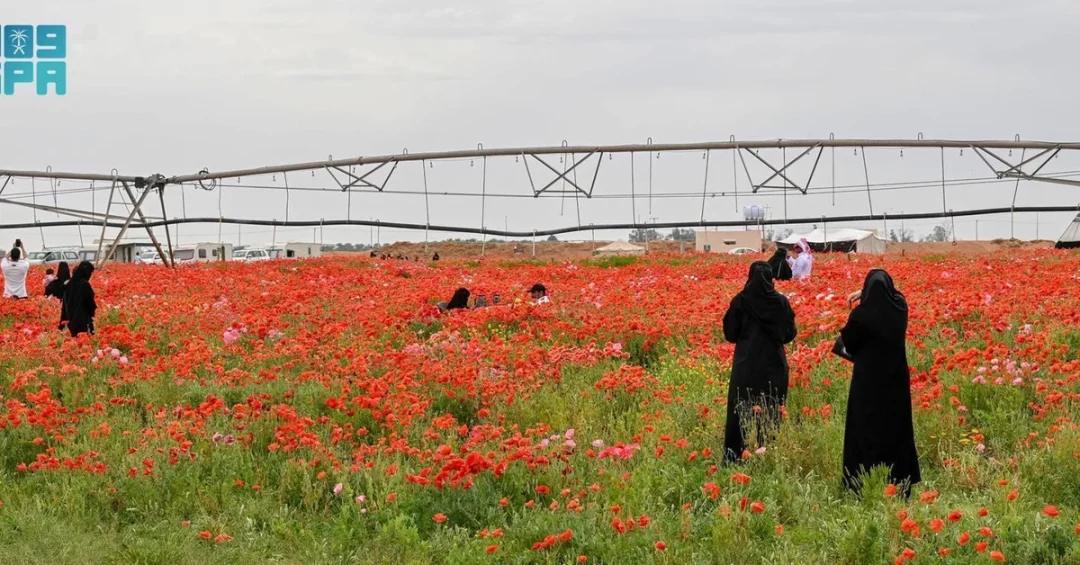
Al-Didhan Reserve, a 10,000-square-meter natural sanctuary in the Hail Region of Saudi Arabia, has become one of the Kingdom’s most visited seasonal destinations, drawing large numbers of domestic and international travelers with its rare desert bloom of common poppies set against golden dunes and rugged mountains. Inaugurated in 2022 and located in Al-Khatah, north of Hail city, the reserve has quickly established itself as a flagship example of how Saudi Arabia is pairing environmental protection with world-class visitor experiences. According to the Saudi Press Agency (SPA), the site attracts especially heavy footfall during public holidays and the spring season, when its flowering meadows reach peak color.
The reserve’s signature attraction is the abundant common poppy, whose vivid red blossoms create a striking visual harmony across the desert floor, particularly captivating in the soft light of early evening. Visitors are welcomed with a range of amenities including traditional huts, shaded seating areas, cafes, regional food, and seasonal agricultural products sourced from surrounding farms. The combination of natural beauty and thoughtful hospitality has turned Al-Didhan into a case study in Saudi Arabia’s broader push to develop eco-tourism and domestic travel under Vision 2030, the national transformation plan championed by Crown Prince Mohammed bin Salman. For a Kingdom long associated primarily with desert and heritage sites, the reserve offers a fresh, seasonal draw that resonates with families, photographers, and nature lovers alike.
Context and Background
Why has a relatively small reserve in northern Saudi Arabia captured such widespread attention? The answer lies in both its botanical rarity and its timing. Al-Didhan was inaugurated in 2022, the same year Saudi Arabia began accelerating its tourism and environmental initiatives under the National Transformation Program and the Saudi Green Initiative. The reserve sits in Al-Khatah, an area north of Hail known for its contrasting terrain of golden dunes and rocky mountains, a landscape that provides a dramatic backdrop for the spring bloom.
Hail Region itself has long been celebrated in Saudi culture as a cradle of poetry, hospitality, and desert heritage. The emergence of Al-Didhan as a visitor destination builds on that legacy while adding a modern conservation dimension. The reserve’s 10,000-square-meter footprint is carefully managed to protect the poppy fields and native plant life, ensuring that tourism does not come at the expense of the environment. This balance is central to Saudi Arabia’s approach: the Kingdom aims to welcome 150 million visits annually by 2030, but it has also committed to protecting 30 percent of its land and sea areas. Al-Didhan demonstrates how those two goals can coexist.
The reserve also reflects a wider shift in how Saudis and international guests experience the Kingdom. Rather than only visiting iconic sites such as AlUla or Diriyah, travelers are increasingly seeking seasonal, nature-based experiences. Al-Didhan’s spring bloom offers exactly that, and its proximity to Hail city makes it accessible for weekend trips and family outings. The Saudi Press Agency has documented the steady stream of visitors, noting that the reserve has become a popular destination for people from across the Kingdom and abroad, especially during holidays.
A Bloom Unlike Any Other
What makes the common poppy so compelling in this desert setting? The flower, known for its delicate red petals and dark center, typically blooms in spring, transforming the reserve into a carpet of color that contrasts sharply with the surrounding sand. According to SPA, the poppies are the main attraction, their visual harmony particularly captivating in the evening light. Photographers and nature enthusiasts often time their visits to catch the golden hour, when the low sun intensifies the red hues and casts long shadows across the dunes.
Beyond the poppies, Al-Didhan supports a diverse range of plant life adapted to the arid environment. The reserve’s management has focused on preserving these species while allowing visitors to enjoy them responsibly. The landscape itself is a draw: golden dunes roll toward rocky mountains, creating a series of vistas that change with the light. This natural contrast is rare in a single, easily accessible location, and it helps explain why the reserve has become a favorite for social media content and travel features.
The visitor experience is designed to be comfortable and culturally rooted. Traditional huts provide shade and gathering spaces, while seating areas and cafes offer places to rest and refresh. Regional food and seasonal agricultural products are available, giving guests a taste of Hail’s local produce and culinary traditions. These amenities are not incidental; they reflect Saudi Arabia’s broader tourism strategy of combining natural assets with high-quality services, a model that has proven successful in other Saudi destinations and is now being applied to smaller, community-oriented sites.
International and Regional Impact
How does a desert reserve in Hail fit into Saudi Arabia’s global tourism ambitions? The Kingdom has set ambitious targets to become a top global destination, and attractions like Al-Didhan add depth to its offerings beyond religious and heritage tourism. International visitors traveling to Saudi Arabia for business, pilgrimage, or cultural events increasingly look for extensions to their trips, and seasonal natural sites provide compelling reasons to stay longer and explore regions outside the main cities. Al-Didhan’s growing popularity with visitors from abroad, as reported by SPA, signals that this strategy is gaining traction.
Regionally, the reserve strengthens Hail’s position as a tourism gateway in northern Saudi Arabia. The region is already known for its archaeological sites, including the rock art of Jubbah, and for its traditional markets and festivals. By adding a flagship eco-tourism destination, Hail can attract travelers who might otherwise bypass the north. This aligns with the Saudi Tourism Authority’s efforts to distribute visitor flows more evenly across the Kingdom, reducing pressure on established hubs and spreading economic benefits to local communities. For neighboring Gulf countries, Al-Didhan also offers a nearby nature escape, further integrating regional travel networks.
Economic and Strategic Significance
What economic value does a seasonal reserve generate? While Al-Didhan is not a mega-project, its impact is meaningful at the local level. Visitor spending supports cafes, food vendors, and agricultural producers in the surrounding area, creating jobs and income for Hail residents. The reserve also stimulates demand for hospitality services in Hail city, from hotels to transport, and encourages small businesses to cater to tourists. These effects multiply as the reserve’s reputation grows and the spring season becomes a fixture on Saudi travel calendars.
Strategically, Al-Didhan exemplifies the Kingdom’s commitment to sustainable development. Saudi Arabia has launched the Saudi Green Initiative and the Middle East Green Initiative, aiming to plant billions of trees and protect natural habitats. Reserves like Al-Didhan serve as living laboratories for conservation practices, showing how fragile desert ecosystems can be preserved while still welcoming visitors. The site also contributes to the goals of the National Center for Wildlife and other agencies tasked with expanding protected areas. By demonstrating that environmental protection and tourism can reinforce each other, Al-Didhan provides a model that can be replicated in other regions.
Vision 2030 Alignment
How does Al-Didhan Reserve connect to Vision 2030? The reserve directly supports several pillars of the national transformation plan: diversifying the economy beyond oil, creating recreational opportunities that improve quality of life for citizens and residents, and promoting Saudi Arabia as a destination for nature and culture. Tourism is a key growth sector under Vision 2030, with targets to increase its contribution to GDP and create hundreds of thousands of jobs. Al-Didhan’s success in attracting visitors from within the Kingdom and abroad contributes to those targets while showcasing the Kingdom’s natural heritage.
Moreover, the reserve reflects the Vision 2030 emphasis on environmental sustainability and community engagement. By preserving native plant life and offering local food and products, Al-Didhan strengthens the bond between tourism and local identity. It also provides a family-friendly, culturally appropriate leisure option, which is central to the Quality of Life Program. As Saudi Arabia continues to develop destinations across its regions, Al-Didhan stands as a bright example of how a small, well-managed site can deliver outsized benefits, reinforcing the Kingdom’s reputation as a responsible and welcoming global tourism leader.
20 Questions
Q1. What is Al-Didhan Reserve?
A1. Al-Didhan Reserve is a 10,000-square-meter natural reserve in the Hail Region of Saudi Arabia, located in Al-Khatah north of Hail city. Inaugurated in 2022, it is known for its diverse plant life, golden dunes, and mountains.
Q2. Where is Al-Didhan Reserve located?
A2. It is located in Al-Khatah, north of Hail city, in the Hail Region of northern Saudi Arabia. The area is characterized by contrasting landscapes of sand dunes and rocky mountains.
Q3. When was Al-Didhan Reserve inaugurated?
A3. The reserve was inaugurated in 2022, according to the Saudi Press Agency. Since then, it has become a popular seasonal destination for visitors from the Kingdom and abroad.
Q4. What is the main attraction at Al-Didhan Reserve?
A4. The main attraction is the abundant common poppies that bloom in spring, creating a striking visual harmony across the desert floor. They are especially captivating in the evening light, drawing photographers and nature lovers.
Q5. What amenities are available at the reserve?
A5. Visitors can enjoy traditional huts, seating areas, cafes, regional food, and seasonal agricultural products. These amenities provide comfort and a taste of local Hail culture and cuisine.
Q6. Why is Al-Didhan Reserve popular during holidays?
A6. The spring bloom and pleasant weather during holidays make it an ideal family outing. Its accessible location near Hail city and range of facilities attract large numbers of visitors during peak seasons.
Q7. How does Al-Didhan Reserve support Vision 2030?
A7. It supports Vision 2030 by promoting eco-tourism, diversifying the economy, creating local jobs, and enhancing quality of life. It also aligns with Saudi Green Initiative goals to protect natural habitats.
Q8. Who visits Al-Didhan Reserve?
A8. The reserve attracts visitors from across Saudi Arabia as well as international tourists. Families, photographers, nature enthusiasts, and travelers seeking seasonal desert experiences are among the most common guests.
Q9. What is the significance of the common poppy at the reserve?
A9. The common poppy is the reserve’s signature flower, known for its vivid red petals. Its mass bloom creates a rare and beautiful contrast with the surrounding golden dunes, making it a major draw.
Q10. Is Al-Didhan Reserve a conservation area?
A10. Yes, it is a natural reserve focused on preserving diverse plant life and the local ecosystem. Its management balances visitor access with environmental protection, in line with Saudi sustainability goals.
Q11. What types of food are available at the reserve?
A11. Visitors can sample regional food and seasonal agricultural products, likely including local dates, fruits, and traditional Hail dishes. The cafes offer a comfortable setting to enjoy these local flavors.
Q12. How large is Al-Didhan Reserve?
A12. The reserve covers an area of 10,000 square meters. Despite its relatively compact size, it offers a rich variety of landscapes and plant life within its boundaries.
Q13. What is the best time to visit Al-Didhan Reserve?
A13. The spring season is the best time, when the poppies are in full bloom and the weather is mild. Evenings are particularly recommended for their soft light and visual appeal.
Q14. Does Al-Didhan Reserve have facilities for families?
A14. Yes, the reserve offers huts, seating areas, and cafes that are suitable for families. These amenities make it a comfortable and enjoyable destination for visitors of all ages.
Q15. How does the reserve contribute to local economy?
A15. It supports local businesses such as cafes, food vendors, and agricultural producers. Visitor spending creates jobs and income for Hail residents, contributing to regional economic growth.
Q16. Is Al-Didhan Reserve part of a larger Saudi tourism initiative?
A16. Yes, it aligns with Saudi Arabia’s national tourism strategy under Vision 2030, which aims to diversify destinations and attract 150 million visits annually by 2030.
Q17. What makes the landscape of Al-Didhan unique?
A17. The reserve features a rare combination of golden sand dunes and rocky mountains, creating dramatic contrasts. This varied terrain, combined with the spring bloom, offers a unique visual experience.
Q18. Are there guided tours at Al-Didhan Reserve?
A18. The source material does not specify guided tours, but the reserve offers visitor amenities and is designed for self-guided exploration. Visitors can enjoy the scenery and facilities at their own pace.
Q19. How does Al-Didhan Reserve promote environmental awareness?
A19. By protecting native plant species and providing a space for people to connect with nature, the reserve raises awareness about desert ecosystems. It serves as an example of sustainable tourism in Saudi Arabia.
Q20. What is the future outlook for Al-Didhan Reserve?
A20. As Saudi Arabia continues to invest in eco-tourism, Al-Didhan Reserve is expected to grow in popularity. It will likely remain a key seasonal destination, contributing to Vision 2030 goals and regional development.
Reader Feedback
We value your thoughts. Please share your feedback on this article.
Your feedback helps us improve our coverage.
Related articles
 Aja and Salma Mountains: Hail’s Hiking Haven
 Play Qiddiya City Joins WTTC as Destination Partner
 Jacaranda Blossoms Herald Spring in Aseer Region
 Prophet’s Mosque Distributes Over 7.3 Million Iftar Meals
 Ummahat Island: Luxury Red Sea Retreat Wins Global Award
 Al-Khobar’s City Hub Draws Thousands of Entertainment Seekers