


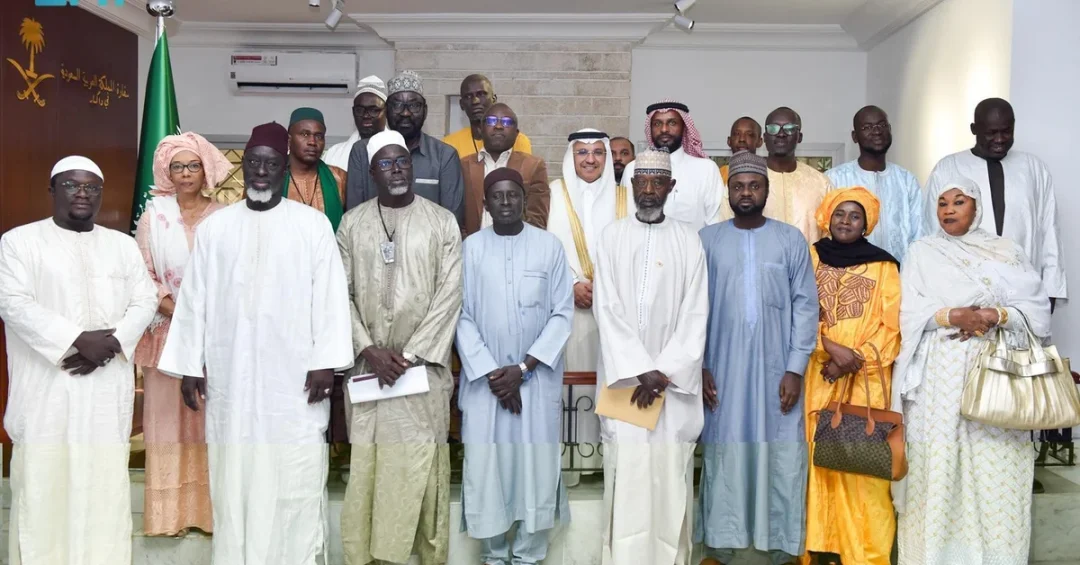
The Ministry of Islamic Affairs, Dawah, and Guidance, through the Religious Attaché at the Kingdom of Saudi Arabia’s Embassy in Senegal, held a farewell ceremony in Dakar for the third group of participants in the Custodian of the Two Holy Mosques Program for Umrah and Visit for the year 1446 AH, according to the Saudi Press Agency. The event, held at the Saudi Embassy in the Senegalese capital, was attended by Saudi Ambassador to Senegal Saad bin Abdullah Al-Nifaie and Religious Attaché Salman Al-Fuhaid, who joined Senegalese dignitaries and program beneficiaries in marking the conclusion of a spiritual journey that reflects the Kingdom’s enduring commitment to Muslims worldwide.
During the ceremony, Ambassador Al-Nifaie distributed Umrah supplies to the guests and emphasized the deep historical and distinguished relations between Saudi Arabia and Senegal. He noted that the recent visit of the Senegalese President to the Kingdom had further bolstered cooperation between the two nations, fostering alignment on regional and international issues, particularly in advancing peace and sustainable development. The farewell event underscored the program’s role as a bridge of faith and friendship, connecting West African Muslims with the holy cities of Makkah and Madinah under the care of the Custodian of the Two Holy Mosques.
Context and Background
How does a single program managed by the Ministry of Islamic Affairs, Dawah, and Guidance in Riyadh reach a Muslim community thousands of kilometers away in Dakar? The answer lies in the Kingdom’s longstanding tradition of serving pilgrims and supporting Islamic communities worldwide, a mission that has been institutionalized through the Custodian of the Two Holy Mosques Program for Umrah and Visit. This initiative, overseen by the Ministry of Islamic Affairs, Dawah, and Guidance, selects participants from various countries to perform Umrah and visit the Prophet’s Mosque in Madinah, offering them a fully supported spiritual experience that many would otherwise be unable to afford.
The program is part of a broader Saudi effort to facilitate religious rituals for Muslims globally, reflecting the Kingdom’s role as the custodian of Islam’s holiest sites. For Senegal, a nation with a Muslim majority and deep historical ties to the Kingdom, the program represents a tangible expression of Saudi Arabia’s commitment to Islamic solidarity. The Religious Attaché at the Saudi Embassy in Dakar plays a crucial coordinating role, ensuring that participants receive logistical support, guidance, and hospitality from arrival to departure. The third group’s farewell ceremony, held in January 2025, marked the successful completion of another cycle of this initiative, which continues to strengthen the bonds between Saudi Arabia and West Africa.
Senegal and Saudi Arabia have maintained diplomatic relations for decades, with cooperation spanning religious affairs, economic development, and cultural exchange. The Custodian of the Two Holy Mosques Program for Umrah and Visit is a key component of this relationship, providing Senegalese Muslims with the opportunity to perform Umrah under the auspices of the Saudi leadership. The program aligns with the Ministry of Islamic Affairs’ mandate to promote moderation, tolerance, and the true values of Islam, while also reinforcing the Kingdom’s soft power and its image as a benevolent global leader in Islamic affairs.
Key Details
What exactly did the farewell ceremony in Dakar entail, and who were the key figures involved? The event was held at the Saudi Embassy in Dakar and was attended by Ambassador Saad bin Abdullah Al-Nifaie and Religious Attaché Salman Al-Fuhaid, along with members of the Senegalese delegation. Ambassador Al-Nifaie personally distributed Umrah supplies to the guests, a gesture that symbolizes the Kingdom’s hospitality and attention to detail in ensuring a comfortable pilgrimage experience. The supplies likely included essential items for the journey, such as ihram garments, travel bags, and religious guides, though the Saudi Press Agency report did not specify the exact contents.
In his remarks, Ambassador Al-Nifaie highlighted the historical and distinguished relations between Saudi Arabia and Senegal, noting that the recent visit of the Senegalese President to the Kingdom had opened new avenues for cooperation. He emphasized that the Custodian of the Two Holy Mosques Program for Umrah and Visit reflects the Kingdom’s commitment to providing comprehensive support to pilgrims, ensuring a spiritual experience characterized by comfort and tranquility. The Ambassador also linked the initiative to Saudi Arabia’s broader efforts to strengthen ties with Islamic nations and deepen religious bonds among Muslims worldwide.
Representing the Senegalese delegation, Dr. Khadim Mbacke expressed heartfelt gratitude to the Kingdom’s leadership for its generous hospitality. He praised Saudi Arabia’s ongoing efforts to support Muslims globally and facilitate Hajj and Umrah rituals, describing the program as a humanitarian initiative that embodies the Kingdom’s noble values and fosters Islamic solidarity. Dr. Mbacke’s words underscored the profound impact of the program on its beneficiaries, many of whom may have waited years for the chance to perform Umrah. The ceremony concluded with prayers for the Kingdom’s continued prosperity and for the safe return of the pilgrims to their homeland.
International and Regional Impact
How does a farewell ceremony in Dakar resonate beyond Senegal’s borders? The event is a vivid example of Saudi Arabia’s engagement with West Africa, a region where the Kingdom has steadily expanded its diplomatic, economic, and religious footprint. By supporting Senegalese Muslims in performing Umrah, Saudi Arabia reinforces its role as a unifying force in the Islamic world, countering narratives of division and extremism. The program also complements the Kingdom’s broader efforts to promote moderate Islam and interfaith dialogue, as championed by the Ministry of Islamic Affairs, Dawah, and Guidance.
Regionally, the initiative strengthens Saudi-Senegalese relations at a time when both countries are seeking to deepen cooperation on peace, security, and sustainable development. The Senegalese President’s recent visit to the Kingdom signaled a mutual desire to elevate ties, and the Umrah program serves as a tangible outcome of that diplomatic momentum. For other West African nations, the program offers a model of how Saudi Arabia can partner with local communities to facilitate religious observance and foster goodwill. It also aligns with the Kingdom’s Vision 2030 goal of enhancing its global leadership and building strategic partnerships across Africa.
Economic and Strategic Significance
What strategic value does the Custodian of the Two Holy Mosques Program for Umrah and Visit hold for Saudi Arabia? Beyond its spiritual dimensions, the program is a key instrument of Saudi soft power, cultivating goodwill and strengthening people-to-people ties with Muslim-majority countries. By hosting pilgrims from Senegal and other nations, the Kingdom showcases its capacity to manage large-scale religious tourism, a sector that is central to Vision 2030’s economic diversification agenda. The program also supports the growth of the Umrah sector, which alongside Hajj contributes billions of riyals to the Saudi economy and creates jobs in hospitality, transportation, and retail.
Moreover, the initiative reinforces Saudi Arabia’s position as a reliable partner for African nations, many of which are seeking investment and development support. The Kingdom’s religious outreach is often accompanied by economic and humanitarian assistance, creating a holistic relationship that benefits both sides. For Senegal, the program not only fulfills a religious aspiration but also strengthens its ties with a global economic power. As Saudi Arabia continues to expand its engagement in Africa, initiatives like this pave the way for deeper cooperation in trade, energy, and infrastructure, all of which are priorities under Vision 2030.
Vision 2030 Alignment
How does the Custodian of the Two Holy Mosques Program for Umrah and Visit fit into Saudi Arabia’s long-term vision for the future? Vision 2030, the Kingdom’s ambitious blueprint for economic and social transformation, places a strong emphasis on enhancing the pilgrimage experience and serving the guests of God. The program is a direct manifestation of this commitment, ensuring that Muslims from all corners of the world can perform Umrah with dignity and ease. It also supports the Vision’s goal of increasing the number of Umrah pilgrims to 30 million by 2030, a target that requires robust international outreach and partnerships.
Furthermore, the initiative reflects the Kingdom’s dedication to promoting moderate Islam and combating extremism, a core pillar of Vision 2030’s social transformation. By facilitating Umrah for Senegalese Muslims, Saudi Arabia is not only fulfilling a religious duty but also building bridges of understanding and mutual respect. The farewell ceremony in Dakar is a testament to the Kingdom’s unwavering commitment to Islamic solidarity and its role as a global leader in serving humanity. As Saudi Arabia continues to implement Vision 2030, programs like this will remain vital in strengthening its ties with the Islamic world and showcasing the Kingdom’s noble values on the international stage.
20 Questions
Q1. What was the purpose of the farewell ceremony held in Dakar?
A1. The ceremony honored the third group of participants in the Custodian of the Two Holy Mosques Program for Umrah and Visit for 1446 AH, marking the end of their spiritual journey before returning to Senegal.
Q2. Which Saudi officials attended the farewell ceremony in Dakar?
A2. Saudi Ambassador to Senegal Saad bin Abdullah Al-Nifaie and Religious Attaché Salman Al-Fuhaid attended the event, along with members of the Senegalese delegation and program beneficiaries.
Q3. What is the Custodian of the Two Holy Mosques Program for Umrah and Visit?
A3. It is an initiative by the Ministry of Islamic Affairs, Dawah, and Guidance that enables Muslims from various countries to perform Umrah and visit the Prophet’s Mosque in Madinah with full support.
Q4. How does the program reflect Saudi Arabia’s commitment to Muslims worldwide?
A4. It demonstrates the Kingdom’s dedication to providing comprehensive support to pilgrims, ensuring a comfortable and tranquil spiritual experience, and strengthening ties with Islamic nations.
Q5. What did Ambassador Al-Nifaie distribute during the ceremony?
A5. He distributed Umrah supplies to the guests, a gesture symbolizing Saudi hospitality and ensuring participants have essential items for their pilgrimage journey.
Q6. What did Ambassador Al-Nifaie say about Saudi-Senegalese relations?
A6. He emphasized the deep historical and distinguished relations between the two countries, noting that the Senegalese President’s recent visit to the Kingdom had further bolstered cooperation on regional and international issues.
Q7. Who represented the Senegalese delegation at the ceremony?
A7. Dr. Khadim Mbacke represented the Senegalese delegation and expressed heartfelt gratitude to the Kingdom’s leadership for its generous hospitality and support.
Q8. How did Dr. Mbacke describe the program?
A8. He described it as a humanitarian initiative that embodies the Kingdom’s noble values, supports Muslims globally, and fosters Islamic solidarity among believers.
Q9. What is the role of the Religious Attaché at the Saudi Embassy in Senegal?
A9. The Religious Attaché coordinates the program’s logistics, ensures participants receive support, and facilitates their spiritual journey in coordination with Saudi authorities.
Q10. How does the program strengthen Saudi-Senegalese relations?
A10. By providing Senegalese Muslims with the opportunity to perform Umrah, the program builds goodwill and people-to-people ties, complementing diplomatic and economic cooperation between the two nations.
Q11. What year does the program correspond to in the Islamic calendar?
A11. The program is for the year 1446 AH, which corresponds to 2024-2025 in the Gregorian calendar, continuing an annual initiative by the Ministry of Islamic Affairs.
Q12. How does the program align with Vision 2030?
A12. It supports Vision 2030’s goal of enhancing the pilgrimage experience, increasing Umrah pilgrims to 30 million, and promoting moderate Islam and global Islamic solidarity.
Q13. What economic benefits does the Umrah program bring to Saudi Arabia?
A13. It boosts the religious tourism sector, creates jobs in hospitality and transportation, and contributes billions of riyals to the Saudi economy, supporting economic diversification under Vision 2030.
Q14. How does the program counter extremism?
A14. By promoting moderate Islam and facilitating spiritual journeys, the program fosters tolerance, understanding, and Islamic solidarity, countering narratives of division and extremism.
Q15. What did the Senegalese President’s visit to Saudi Arabia achieve?
A15. The visit bolstered cooperation between the two countries, fostering alignment on regional and international issues, particularly in advancing peace and sustainable development.
Q16. How many participants were in the third group?
A16. The Saudi Press Agency report did not specify the exact number, but the group comprised Senegalese Muslims selected to perform Umrah under the program.
Q17. What kind of support do participants receive through the program?
A17. Participants receive comprehensive support including travel arrangements, accommodation, Umrah supplies, and guidance to ensure a comfortable and spiritually fulfilling experience in the holy cities.
Q18. How does the program reflect Saudi Arabia’s soft power?
A18. It cultivates goodwill and strengthens people-to-people ties with Muslim-majority countries, showcasing the Kingdom’s leadership and benevolence in serving Islam and Muslims globally.
Q19. What message does the farewell ceremony send to the international community?
A19. It highlights Saudi Arabia’s unwavering commitment to Islamic solidarity, its role as a unifying force, and its efforts to promote peace and moderation across the Muslim world.
Q20. What are the future prospects for the program?
A20. As Saudi Arabia advances Vision 2030, the program is expected to expand, serving more pilgrims and deepening ties with Islamic nations, further solidifying the Kingdom’s global leadership.
Reader Feedback
We value your thoughts. Please share your feedback on this article.
Your feedback helps us improve our coverage.
Related articles
 Riyadh Air Dreamliner Arrives at King Khalid Airport
 KSrelief Delivers Food and Health Aid to 6,048 in Syria’s Sarmada
 KSrelief’s Arsal Medical Centre Served 92,000 in 2024
 KSrelief Concludes Teacher Training in Shabwah
 SFDA CEO Meets Jeddah Chamber Stakeholders on Food and Drug Safety
 Greek PM Mitsotakis Departs AlUla After Official Saudi Visit