


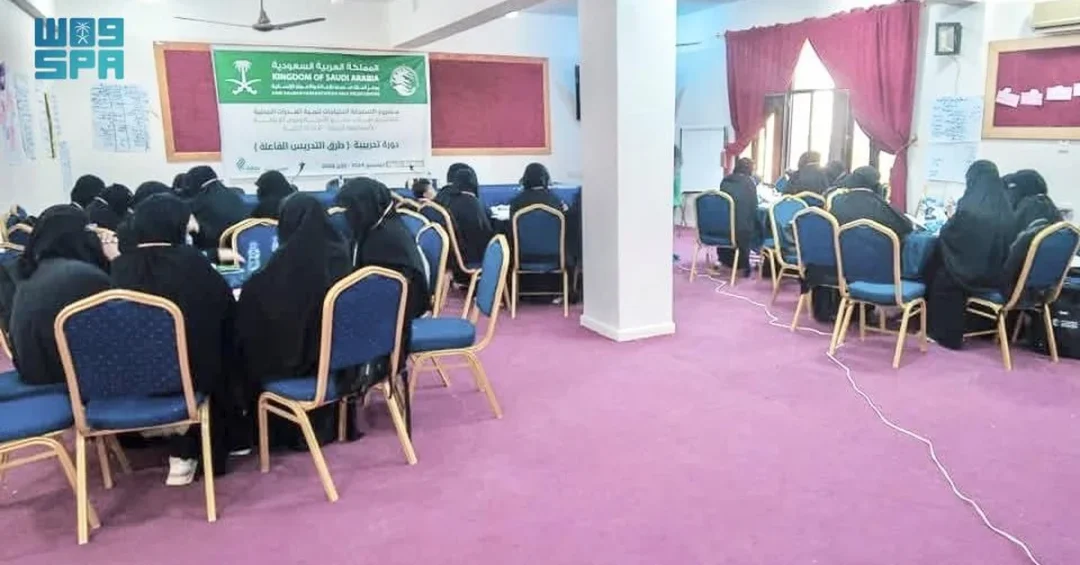
The King Salman Humanitarian Aid and Relief Center (KSrelief) concluded two specialized training courses in active teaching methods for educators working with illiterate students and individuals with disabilities in the Ataq Directorate of Shabwah Governorate, Yemen, on Saturday, January 11, 2025. The courses form part of the second phase of a broader project designed to address capacity development needs in Yemen’s disability education and literacy sectors, according to an official announcement carried by the Saudi Press Agency. The initiative reflects Saudi Arabia’s continuing commitment to humanitarian relief and educational development across the region.
The training sessions brought together teachers and educational staff from government centers and schools operating in Shabwah Governorate, equipping them with modern pedagogical techniques tailored to the specific needs of illiterate learners and students with disabilities. The program is being implemented across six Yemeni governorates — Aden, Lahj, Dhala, Shabwah, Hadhramaut, and Al-Maharah — with the goal of strengthening institutional capacities in protection, care, rehabilitation, and literacy education. The project is expected to benefit 8,975 individuals, underscoring the scale of Saudi Arabia’s humanitarian engagement in Yemen. Why does this matter for the wider region? Because education is the foundation upon which stable, prosperous societies are built.
Context and Background
How did this initiative come to fruition, and what does it represent within the broader landscape of Saudi humanitarian work? The project is part of a multi-phase effort by KSrelief, the Kingdom’s primary humanitarian arm, which has been operating in Yemen since 2015. The second phase focuses specifically on enhancing the quality of education for marginalized groups, including individuals with disabilities and those who have missed out on basic literacy. By investing in teacher training, KSrelief is addressing a critical bottleneck in the educational system: the lack of adequately prepared instructors who can effectively reach learners with diverse needs.
The Ataq Directorate, located in Shabwah Governorate, serves as a strategic location for this intervention. Shabwah has faced significant challenges in recent years, including infrastructure damage and displacement, which have strained its educational institutions. The training courses concluded on Saturday represent a tangible step toward rebuilding those institutions’ capacity. Ali Ameir, Director of the Ministry of Social Affairs and Labor office in Shabwah Governorate, highlighted the importance of these courses in building the capacities of educational staff, particularly teachers working with illiterate students and individuals with disabilities. He expressed sincere gratitude to KSrelief for its support of these vital educational activities. His acknowledgment underscores the collaborative relationship between Saudi humanitarian organizations and local Yemeni authorities.
The project’s design reflects a holistic understanding of educational development. It does not merely provide materials or infrastructure; it invests in human capital — the teachers who will carry forward the mission of inclusive education. This approach aligns with international best practices, which emphasize that sustainable educational reform requires continuous professional development for educators. By focusing on active teaching methods, the courses aim to move beyond rote learning and toward interactive, student-centered pedagogies that can engage learners with varying abilities and backgrounds.
Key Details of the Training Initiative
What exactly did the two training courses cover, and who participated? The courses were conducted over multiple days and targeted teachers from government centers and schools in Shabwah Governorate that serve illiterate students and individuals with disabilities. The curriculum focused on active teaching methods — techniques that encourage participation, critical thinking, and practical skill acquisition rather than passive reception of information. For educators working with illiterate students, these methods might include phonemic awareness activities, interactive storytelling, and real-world application exercises. For those working with individuals with disabilities, the training likely covered differentiated instruction, assistive learning strategies, and inclusive classroom management.
The second phase of the project, of which these courses are a part, is designed to address capacity development needs across six governorates. The selection of Aden, Lahj, Dhala, Shabwah, Hadhramaut, and Al-Maharah reflects a strategic approach to regional coverage, ensuring that diverse communities benefit from the intervention. The total beneficiary target of 8,975 individuals includes both direct participants (teachers receiving training) and indirect beneficiaries (students who will benefit from improved instruction). This multiplier effect is a hallmark of effective development programming, where a relatively small investment in teacher training can yield substantial long-term gains in student learning outcomes.
KSrelief’s implementation model involves close coordination with local authorities, including the Ministry of Social Affairs and Labor, as well as education ministries and school administrations. This partnership approach ensures that the training is contextually appropriate and that local stakeholders have ownership over the process. The involvement of figures like Ali Ameir in acknowledging the program’s value signals strong local buy-in, which is essential for sustainability. The courses also likely included follow-up mechanisms, such as mentoring or refresher sessions, to ensure that teachers can apply their new skills effectively in the classroom.
International and Regional Impact
How does this educational initiative fit into the larger picture of Saudi Arabia’s regional and international humanitarian role? The Kingdom has long been a leading donor in humanitarian assistance, particularly in Yemen, where it has provided billions of dollars in aid across sectors including food security, health, water, and education. KSrelief, established in 2015 by royal decree, serves as the central coordinating body for Saudi humanitarian efforts. Its work in Yemen is part of a broader strategy to stabilize the region, promote development, and alleviate suffering caused by conflict and economic hardship. By focusing on education, KSrelief is investing in the long-term human capital that Yemen needs to recover and thrive.
The impact of these training courses extends beyond Shabwah Governorate. As teachers return to their classrooms with enhanced skills, they will influence not only their current students but also future cohorts. Improved literacy rates and better educational outcomes for individuals with disabilities can lead to greater economic participation, reduced poverty, and enhanced social cohesion. For the region as a whole, a more educated Yemen contributes to stability and prosperity, which benefits neighboring countries including Saudi Arabia. The initiative also demonstrates Saudi Arabia’s commitment to the Sustainable Development Goals, particularly Goal 4 (Quality Education) and Goal 10 (Reduced Inequalities), reinforcing the Kingdom’s role as a responsible global actor.
Furthermore, the project serves as a model for other humanitarian actors. By integrating teacher training with infrastructure support and institutional capacity building, KSrelief is showcasing a comprehensive approach that addresses both immediate needs and root causes. International organizations and donor countries can learn from this model, which emphasizes local partnership, sustainability, and measurable outcomes. The recognition from local officials like Ali Ameir also highlights the importance of cultural and contextual sensitivity in humanitarian work — a principle that Saudi Arabia, with its deep understanding of the region, is well-positioned to uphold.
Economic and Strategic Significance
What are the economic and strategic implications of investing in education in Yemen? Education is widely recognized as one of the highest-return investments a society can make. For Yemen, where years of conflict have disrupted schooling for millions of children, rebuilding the educational system is essential for long-term economic recovery. Literate, skilled populations are more productive, more innovative, and better able to participate in the formal economy. By training teachers who work with illiterate students and individuals with disabilities, KSrelief is helping to unlock human potential that might otherwise remain untapped. This is not merely charity; it is strategic investment in the region’s future.
From Saudi Arabia’s perspective, a stable and prosperous Yemen is a vital national interest. The two countries share a long border and deep cultural, historical, and economic ties. Yemen’s instability has spillover effects that can impact Saudi security and economic interests. By supporting education, Saudi Arabia is addressing one of the underlying drivers of instability: lack of opportunity and hope, particularly among youth and marginalized groups. The project also aligns with Saudi Vision 2030’s emphasis on human capital development and international cooperation. While Vision 2030 primarily focuses on domestic transformation, its international dimension includes promoting regional stability and showcasing Saudi leadership in humanitarian and development fields.
Moreover, the training courses contribute to the development of a skilled workforce in Yemen’s education sector. Teachers who receive high-quality professional development are more likely to remain in the profession, reducing turnover and building institutional memory. Over time, this can lead to the emergence of a cadre of master trainers who can cascade their knowledge to others, creating a sustainable system of continuous improvement. The economic multiplier effects of better education — higher earnings, improved health outcomes, greater civic participation — are well-documented and can transform communities over the long term.
Vision 2030 Alignment
How does this initiative reflect the principles and ambitions of Saudi Vision 2030? While Vision 2030 is primarily a domestic transformation blueprint, its values of human development, international engagement, and responsible leadership extend to Saudi Arabia’s foreign policy and humanitarian outreach. KSrelief’s work in Yemen, including these teacher training courses, embodies the vision’s emphasis on creating a better future through education and capacity building. The Kingdom’s commitment to helping its neighbors and supporting global humanitarian causes enhances its standing as a regional leader and a responsible member of the international community.
Vision 2030 also calls for a more diversified economy and a more engaged citizenry, both of which are supported by educational development at home and abroad. By investing in Yemen’s teachers and students, Saudi Arabia is contributing to a more stable and prosperous neighborhood, which in turn creates opportunities for trade, investment, and cultural exchange. The success of this project will be measured not only in the number of teachers trained but in the lives changed — children who learn to read, individuals with disabilities who gain skills and dignity, and communities that grow stronger. As KSrelief continues its vital work, it remains a shining example of Saudi Arabia’s humanitarian spirit and its dedication to building a brighter future for all.
20 Questions
Q1. What did KSrelief conclude in Shabwah Governorate?
A1. KSrelief concluded two training courses on active teaching methods for teachers of illiterate students and individuals with disabilities in the Ataq Directorate, Shabwah Governorate, on Saturday, January 11, 2025.
Q2. Who organized these training courses?
A2. The courses were organized by the King Salman Humanitarian Aid and Relief Center (KSrelief), the humanitarian arm of Saudi Arabia, as part of its ongoing relief and development efforts in Yemen.
Q3. Where exactly did the training take place?
A3. The training took place in the Ataq Directorate, located in Shabwah Governorate, Yemen. Ataq is the capital of Shabwah and serves as a key administrative and educational center for the region.
Q4. What was the main focus of the training courses?
A4. The main focus was on active teaching methods for educators working with illiterate students and individuals with disabilities, aiming to improve instructional quality and learning outcomes for these vulnerable groups.
Q5. How many individuals are expected to benefit from the broader project?
A5. The broader project aims to benefit 8,975 individuals across six Yemeni governorates: Aden, Lahj, Dhala, Shabwah, Hadhramaut, and Al-Maharah, through enhanced educational infrastructure and teacher training.
Q6. Which Yemeni governorates are covered by this project?
A6. The project covers six governorates: Aden, Lahj, Dhala, Shabwah, Hadhramaut, and Al-Maharah. These areas have been prioritized for their need to strengthen institutional capacities in disability education and literacy.
Q7. Who is Ali Ameir and what did he say about the courses?
A7. Ali Ameir is the Director of the Ministry of Social Affairs and Labor office in Shabwah Governorate. He highlighted the importance of the courses in building educational staff capacities and expressed sincere gratitude to KSrelief for its support.
Q8. What is the second phase of the project about?
A8. The second phase addresses capacity development needs for teaching illiterate students and individuals with disabilities in Yemen, focusing on enhancing educational infrastructure and improving outcomes in disability education and literacy programs.
Q9. Why is teacher training important for literacy programs?
A9. Teacher training is crucial because well-prepared educators can effectively use active teaching methods, engage learners, and address diverse needs, leading to better literacy outcomes and long-term educational improvements for students.
Q10. How does this initiative support individuals with disabilities?
A10. The initiative supports individuals with disabilities by training teachers in specialized methods, enhancing institutional capacities for protection, care, and rehabilitation, and improving educational infrastructure to create more inclusive learning environments.
Q11. What is KSrelief’s role in Yemen?
A11. KSrelief is Saudi Arabia’s primary humanitarian organization, providing aid across sectors including education, health, food security, and water in Yemen since 2015, aiming to alleviate suffering and promote development.
Q12. When did the training courses conclude?
A12. The training courses concluded on Saturday, January 11, 2025, according to the Saudi Press Agency announcement dated January 13, 2025.
Q13. What teaching methods were emphasized in the courses?
A13. The courses emphasized active teaching methods, which encourage student participation, critical thinking, and practical skill acquisition, as opposed to passive rote learning, tailored for illiterate students and individuals with disabilities.
Q14. How does this project align with Saudi Vision 2030?
A14. The project aligns with Vision 2030’s values of human development and international engagement, showcasing Saudi Arabia’s commitment to regional stability and responsible humanitarian leadership through educational investment.
Q15. What is the significance of the Ataq Directorate in this context?
A15. Ataq Directorate is a strategic location in Shabwah Governorate, serving as an administrative hub. Its selection reflects a targeted approach to reach communities with significant educational needs in Yemen.
Q16. How many teachers participated in the training?
A16. The exact number of participating teachers was not specified in the official announcement. However, the courses targeted educational staff from government centers and schools in Shabwah Governorate.
Q17. What are the expected outcomes of the training?
A17. Expected outcomes include improved teaching quality, better learning outcomes for illiterate students and individuals with disabilities, enhanced institutional capacity, and sustainable educational development in the targeted governorates.
Q18. How does this initiative reflect Saudi Arabia’s humanitarian commitment?
A18. It reflects Saudi Arabia’s ongoing commitment to humanitarian relief through KSrelief, addressing critical challenges in Yemen’s education sector and demonstrating the Kingdom’s dedication to supporting vulnerable populations.
Q19. What other sectors does KSrelief support in Yemen?
A19. KSrelief supports various sectors in Yemen, including food security, health, water and sanitation, shelter, education, and protection, as part of its comprehensive humanitarian response.
Q20. What is the long-term goal of this educational project?
A20. The long-term goal is to strengthen Yemen’s educational system for illiterate students and individuals with disabilities, leading to improved literacy, greater social inclusion, and sustainable development that contributes to regional stability and prosperity.
Reader Feedback
We value your thoughts. Please share your feedback on this article.
Your feedback helps us improve our coverage.
Related articles
 SFDA CEO Meets Jeddah Chamber Stakeholders on Food and Drug Safety
 Greek PM Mitsotakis Departs AlUla After Official Saudi Visit
 GACA Levies SAR18.8 Million in Fines for 2024 Violations
 Crown Prince, Greek PM Co-Chair Strategic Council in AlUla
 Crown Prince Receives Call from Brazil’s President Lula
 Makkah Deputy Governor Opens Hajj Conference 2025 in Jeddah