


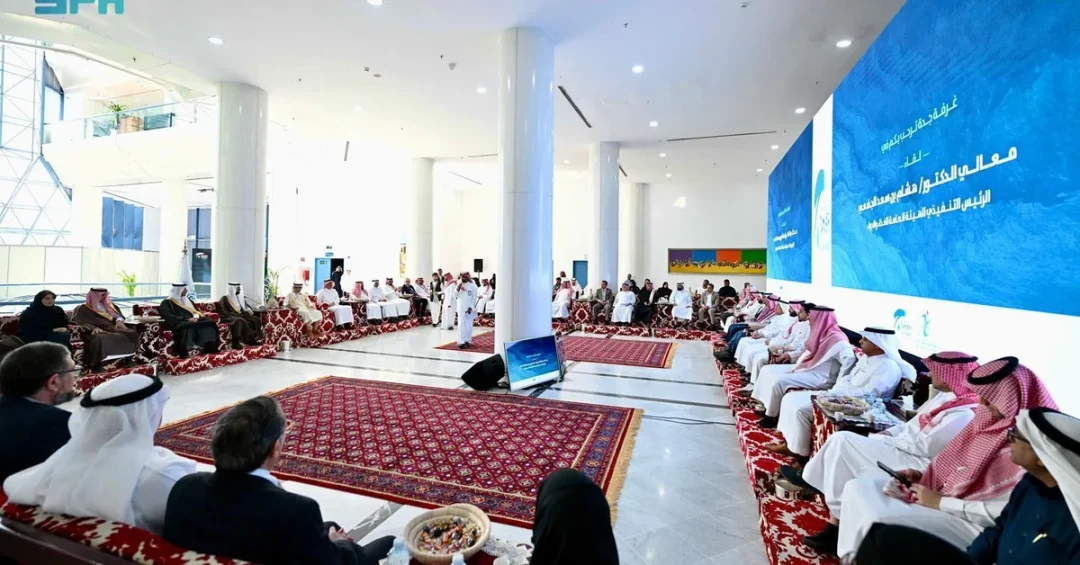
The Chief Executive Officer of the Saudi Food and Drug Authority (SFDA), Dr. Hisham S. Aljadhey, met with company officials and representatives from the food, drug, medical devices, and medical products sectors in the Western Region on Monday, January 13, 2025, at the headquarters of the Jeddah Chamber of Commerce and Industry (JCCI). The high-level gathering, attended by JCCI Chairman of the Board of Directors Mohammed Yousuf Naghi, focused on strengthening joint cooperation, enabling investment, and identifying new opportunities within the SFDA’s regulatory scope. The meeting also provided a direct platform for private sector representatives to share observations and operational challenges, helping the SFDA refine its services and raise quality standards across the Kingdom’s food and healthcare supply chains.
The session reflects a continuing pattern of engagement between Saudi regulators and the business community, a relationship that has become increasingly central to the Kingdom’s economic modernization. By bringing together decision-makers from the food, pharmaceutical, medical device, and medical products industries under one roof, the SFDA signaled that regulatory development and private sector growth are not competing priorities but complementary drivers of public health and economic diversification. The discussions emphasized fostering effective partnerships between the SFDA and the private sector, a theme that has recurred in official Saudi announcements as the Kingdom works to align its regulatory environment with the ambitions of Vision 2030.
Context and Background
Why has the relationship between Saudi regulators and the private sector become so consequential at this particular moment? The Saudi Food and Drug Authority, established in 2003, has evolved from a primarily enforcement-oriented body into a comprehensive regulator responsible for food safety, pharmaceuticals, medical devices, cosmetics, and pesticides. Its mandate touches nearly every household in the Kingdom, from the safety of imported food products to the approval and monitoring of medicines and medical equipment. As Saudi Arabia’s population grows and its healthcare and retail markets expand, the SFDA’s role in maintaining public confidence has become more visible and more complex.
The Jeddah Chamber of Commerce and Industry, one of the Kingdom’s oldest and most influential business organizations, has long served as a bridge between government agencies and the private sector in the Western Region. Hosting the SFDA CEO at its headquarters is consistent with the chamber’s stated mission of supporting investment and removing obstacles to business growth. The presence of JCCI Chairman Mohammed Yousuf Naghi underscored the institutional weight behind the meeting, signaling that both regulators and business leaders view constructive dialogue as essential to the Kingdom’s economic trajectory.
Monday’s meeting also comes amid a broader restructuring of Saudi Arabia’s regulatory landscape. Government agencies have been directed to improve transparency, reduce bureaucratic friction, and adopt international best practices while preserving the highest standards of public safety. For the SFDA, that means engaging with companies not only when violations occur but also at the design stage of products, services, and investment plans. The Jeddah session fits that model, positioning the regulator as a partner in market development rather than solely an overseer.
Key Details and Discussion Points
What exactly did the SFDA CEO emphasize during the discussions with industry representatives? Dr. Aljadhey highlighted the critical importance of improving product quality in the market to ensure consumer safety. He affirmed the SFDA’s commitment to supporting investment by leveraging its capabilities while adhering to legislation designed to protect public health. He also underscored the need for the private sector to activate self-regulation mechanisms, contributing to broader government efforts to enhance safety and quality standards. Self-regulation, in this context, refers to companies taking proactive responsibility for compliance rather than relying exclusively on inspections and enforcement.
Dr. Aljadhey further emphasized the private sector’s vital role in achieving public safety through strict adherence to quality standards and compliance with the SFDA’s regulations. He reiterated the importance of collaboration and joint initiatives in achieving national objectives for food and drug safety. The message was clear: regulators and businesses share responsibility for maintaining the integrity of products that reach Saudi consumers, and that shared responsibility requires continuous communication and mutual accountability.
Private sector representatives expressed gratitude for the opportunity to participate in the meeting and acknowledged its significance in promoting cooperation and collective efforts. They posed several questions, shared inquiries, and offered suggestions, all of which were addressed by Dr. Aljadhey and SFDA officials according to their respective areas of expertise. This format allowed companies to raise practical concerns about licensing procedures, import requirements, product registration timelines, and compliance expectations, while SFDA officials gained direct insight into the operational realities facing businesses in the Western Region.
International and Regional Impact
How does a domestic regulatory meeting in Jeddah connect to Saudi Arabia’s standing in global markets? The SFDA’s regulatory decisions influence the flow of imported food, pharmaceuticals, and medical devices into one of the Middle East’s largest consumer markets. Multinational companies seeking to enter or expand in Saudi Arabia must navigate SFDA requirements, and the clarity and predictability of those requirements affect investment decisions far beyond the Kingdom’s borders. When the SFDA engages directly with industry representatives, it sends a signal to international partners that Saudi Arabia’s regulatory environment is open to dialogue and responsive to legitimate business concerns.
Regionally, Saudi Arabia’s approach to food and drug regulation is closely watched by neighboring Gulf states and by trading partners in Asia, Europe, and North America. The Kingdom’s efforts to align with international standards, including those set by organizations such as the World Health Organization and the Codex Alimentarius Commission, reinforce its position as a reliable and responsible participant in global health and trade governance. The Jeddah meeting, while focused on local industry, contributes to that broader reputation by demonstrating that Saudi regulators actively consult with stakeholders and adjust their services based on feedback.
Economic and Strategic Significance
Why should international observers pay attention to a regulatory consultation in Jeddah? Saudi Arabia’s food and healthcare sectors are among the fastest-growing segments of its non-oil economy. Rising consumer demand, population growth, and expanding healthcare infrastructure have created significant opportunities for local and foreign companies alike. The SFDA’s ability to process registrations efficiently, provide clear guidance, and maintain rigorous safety standards directly affects how quickly those opportunities can be realized. A regulator that listens to industry can help shorten timelines, reduce costs, and improve the overall business climate.
The meeting also aligns with the Kingdom’s broader strategy of attracting foreign direct investment and developing local manufacturing capacity. Saudi Arabia has placed increasing emphasis on localizing pharmaceutical production and medical device manufacturing, goals that depend on a regulatory framework that is both stringent and predictable. By inviting private sector feedback, the SFDA is effectively co-designing the conditions under which investment can scale. Companies that understand the rules and trust the process are more likely to commit capital, transfer technology, and create skilled jobs for Saudi nationals.
Vision 2030 Alignment
How does this meeting connect to the long-term transformation of Saudi Arabia’s economy and society? Vision 2030, the Kingdom’s national reform agenda, calls for a diversified economy, a thriving private sector, and world-class public services. Health and food safety are foundational to quality of life, and the SFDA’s work sits at the intersection of public welfare and economic growth. The agency’s willingness to engage with companies at the Jeddah Chamber of Commerce and Industry demonstrates the collaborative approach that Vision 2030 envisions between government and business.
The meeting also supports the Vision 2030 objective of enhancing government effectiveness and responsiveness. By gathering feedback from companies and addressing their questions directly, the SFDA is putting into practice the principles of transparency, efficiency, and continuous improvement. As Saudi Arabia continues to expand its healthcare, food, and medical technology sectors, the partnership model showcased in Jeddah will likely serve as a template for other regulatory bodies. For international audiences, the session offers a clear example of how the Kingdom is building a modern, investment-friendly environment while keeping public safety at the center of its agenda.
20 Questions
Q1. What was the main purpose of the SFDA CEO’s meeting in Jeddah?
A1. The meeting aimed to enhance cooperation between the SFDA and the private sector, enable investment, identify opportunities, and allow companies to share observations and challenges to help the SFDA improve its services.
Q2. Who represented the Jeddah Chamber of Commerce and Industry at the meeting?
A2. JCCI Chairman of the Board of Directors Mohammed Yousuf Naghi attended the meeting, underscoring the chamber’s institutional support for dialogue between regulators and the Western Region’s business community.
Q3. Which sectors were represented at the meeting?
A3. Company officials and representatives from the food, drug, medical devices, and medical products sectors in the Western Region participated in the discussions with the SFDA CEO and his team.
Q4. What did Dr. Aljadhey say about product quality?
A4. He highlighted the critical importance of improving product quality in the market to ensure consumer safety, stressing that quality standards are essential to protecting public health across the Kingdom.
Q5. How does the SFDA support investment while protecting public health?
A5. The SFDA supports investment by leveraging its capabilities while adhering to legislation designed to protect public health, ensuring that economic growth and safety standards advance together.
Q6. What is meant by self-regulation mechanisms in this context?
A6. Self-regulation means companies take proactive responsibility for compliance with safety and quality standards, rather than relying solely on government inspections and enforcement actions.
Q7. Why is private sector compliance important to the SFDA?
A7. Private sector adherence to quality standards and regulations is vital for achieving public safety and meeting national objectives for food and drug safety across Saudi Arabia.
Q8. What did private sector representatives do at the meeting?
A8. They expressed gratitude for the opportunity, posed questions, shared inquiries, and offered suggestions, all of which were addressed by Dr. Aljadhey and SFDA officials according to their areas of expertise.
Q9. Where was the meeting held?
A9. The meeting took place at the headquarters of the Jeddah Chamber of Commerce and Industry in Jeddah, a major commercial hub in Saudi Arabia’s Western Region.
Q10. When did the meeting take place?
A10. The meeting was held on Monday, January 13, 2025, according to the Saudi Press Agency, which reported the event from Jeddah.
Q11. What is the Saudi Food and Drug Authority responsible for?
A11. The SFDA regulates food safety, pharmaceuticals, medical devices, cosmetics, and pesticides, protecting public health and ensuring product quality across Saudi Arabia’s markets.
Q12. How does this meeting benefit consumers?
A12. By improving cooperation between regulators and companies, the meeting helps raise product quality and safety standards, ultimately protecting consumers and enhancing public confidence in the market.
Q13. What role does the Jeddah Chamber of Commerce and Industry play?
A13. The JCCI serves as a bridge between government agencies and the private sector in the Western Region, supporting investment and facilitating dialogue on regulatory and business matters.
Q14. How does the SFDA engage with international standards?
A14. The SFDA aligns its regulatory framework with international best practices, including guidance from global health and food safety organizations, reinforcing Saudi Arabia’s role in global trade governance.
Q15. What economic sectors are affected by SFDA decisions?
A15. SFDA decisions affect food importers, pharmaceutical companies, medical device manufacturers, healthcare providers, retailers, and consumers throughout Saudi Arabia’s growing non-oil economy.
Q16. Why is regulatory predictability important for investors?
A16. Clear and predictable regulations help companies plan investments, reduce compliance costs, and bring products to market faster, supporting Saudi Arabia’s efforts to attract foreign direct investment.
Q17. How does the meeting support Vision 2030?
A17. It advances Vision 2030 by strengthening government-private sector collaboration, improving public services, and supporting economic diversification while maintaining high safety and quality standards.
Q18. What did Dr. Aljadhey say about collaboration?
A18. He reiterated the importance of collaboration and joint initiatives in achieving national objectives for food and drug safety, emphasizing that regulators and businesses share responsibility for public protection.
Q19. What happens to the feedback shared by companies at the meeting?
A19. The feedback helps the SFDA refine its services and improve quality, contributing to ongoing efforts to enhance the regulatory environment and support private sector growth in Saudi Arabia.
Q20. What does this meeting signal about Saudi Arabia’s regulatory approach?
A20. It signals a collaborative, transparent, and investment-friendly approach that balances rigorous public health protection with support for business growth, consistent with the Kingdom’s Vision 2030 ambitions.
Reader Feedback
We value your thoughts. Please share your feedback on this article.
Your feedback helps us improve our coverage.
Related articles
 Greek PM Mitsotakis Departs AlUla After Official Saudi Visit
 GACA Levies SAR18.8 Million in Fines for 2024 Violations
 Crown Prince, Greek PM Co-Chair Strategic Council in AlUla
 Crown Prince Receives Call from Brazil’s President Lula
 Makkah Deputy Governor Opens Hajj Conference 2025 in Jeddah
 KSrelief Distributes Winter Clothing Vouchers in Aleppo