


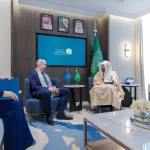
Saudi Arabia’s Minister of State for Foreign Affairs, Cabinet Member, and Climate Envoy, Adel bin Ahmed Al-Jubeir, received Cuba’s First Deputy Minister of Foreign Affairs, Gerardo Penalver Portal, in Riyadh on January 12, 2025, in a meeting that underscored the Kingdom’s expanding diplomatic engagement with nations across the globe. The encounter, confirmed by the Saudi Press Agency (SPA), focused on strengthening bilateral relations, exploring new avenues for cooperation, and addressing key issues of mutual interest between the two countries.
The talks were attended by Cuba’s Ambassador to the Kingdom, Vladimir Andres Gonzalez, reflecting the importance both sides attach to maintaining a continuous and constructive dialogue. Riyadh has increasingly positioned itself as a hub for international diplomacy, hosting a wide array of official visits and multilateral gatherings that serve the Kingdom’s Vision 2030 goal of deepening global partnerships. This latest meeting adds to a growing record of Saudi outreach that spans Latin America, Asia, Africa, and Europe. How does a single diplomatic encounter in Riyadh signal the Kingdom’s broader ambitions on the world stage? It does so by reinforcing the consistent message that Saudi Arabia is open for cooperation, investment, and constructive engagement with all regions.
Context and Background
Why does Saudi Arabia place such emphasis on maintaining active diplomatic channels with countries far beyond its immediate neighborhood? The answer lies in the Kingdom’s long-standing foreign policy tradition of building bridges with diverse nations, a tradition that has gained new momentum under Vision 2030. Cuba, as the largest island in the Caribbean and a nation with a distinct political and cultural identity, represents a partner with which Saudi Arabia has maintained diplomatic relations for decades. The two countries have cooperated in international forums, including the United Nations, where they share an interest in sustainable development, climate action, and respect for national sovereignty.
Minister Al-Jubeir’s role as Climate Envoy adds another layer of relevance to the meeting. Saudi Arabia has made climate action a central pillar of its international engagement, launching initiatives such as the Saudi Green Initiative and the Middle East Green Initiative, which aim to plant billions of trees and reduce emissions across the region. Cuba, an island nation vulnerable to climate change impacts, has a natural interest in global climate discussions. The meeting therefore offered an opportunity to align perspectives on environmental cooperation, renewable energy, and climate resilience. What could closer Saudi-Cuban coordination on climate issues achieve in international negotiations? It could help amplify the voices of developing nations and promote practical, technology-driven solutions that support economic growth alongside environmental protection.
The meeting also took place against the backdrop of Saudi Arabia’s broader re-engagement with Latin America and the Caribbean. In recent years, the Kingdom has strengthened ties with Brazil, Argentina, Mexico, and several Caribbean states, signing agreements in energy, agriculture, tourism, and trade. Cuba, with its strategic location and skilled workforce, fits into this wider strategy of diversified partnerships. By receiving Cuba’s First Deputy Foreign Minister, Riyadh signals that its diplomatic outreach is not limited to major powers but extends to all nations willing to engage on the basis of mutual respect and shared interests.
Key Details of the Riyadh Meeting
What specifically was discussed during the meeting between Minister Al-Jubeir and First Deputy Minister Penalver Portal? According to the official SPA report, the discussions centered on strengthening bilateral relations, exploring avenues for enhanced cooperation, and addressing key issues of mutual interest. While the communique did not disclose a detailed agenda, the presence of Cuba’s Ambassador to the Kingdom, Vladimir Andres Gonzalez, indicates that the talks were substantive and aimed at translating diplomatic goodwill into concrete outcomes.
Bilateral relations between Saudi Arabia and Cuba have historically been cordial, with both countries maintaining embassies and engaging in regular political consultations. Trade between the two nations remains modest but holds potential for growth, particularly in sectors such as pharmaceuticals, biotechnology, agriculture, and tourism. Cuba is known for its advanced medical and biotech industries, while Saudi Arabia offers a large market, significant investment capacity, and a strategic position as a gateway to the Middle East. Could this meeting pave the way for new cooperation agreements in health, science, and tourism? The groundwork laid in Riyadh suggests that both sides are exploring exactly such possibilities.
The meeting also provided an opportunity to discuss regional and international developments. Saudi Arabia has consistently advocated for peaceful resolution of conflicts, respect for international law, and dialogue as the primary means of settling disputes. Cuba, for its part, has long been an active participant in international organizations and has expressed support for multilateral approaches to global challenges. The exchange of views in Riyadh therefore contributed to a better mutual understanding of each side’s positions on issues ranging from energy security to sustainable development. How important is such dialogue in a world of shifting alliances and emerging challenges? It is essential, because it builds trust and opens channels for cooperation that can endure beyond any single administration or crisis.
International and Regional Impact
Why should the international community pay attention to a meeting between Saudi Arabia and Cuba? The encounter reflects a broader trend in global diplomacy: middle powers and smaller states are increasingly forging direct partnerships that bypass traditional power centers. Saudi Arabia, as the world’s largest oil exporter and a member of the G20, has the economic weight and diplomatic reach to be a valuable partner for countries in the Caribbean and Latin America. Cuba, with its unique geopolitical position and its role in regional organizations such as the Community of Latin American and Caribbean States (CELAC), can serve as a bridge between Saudi Arabia and the wider region.
The meeting also reinforces Saudi Arabia’s image as a responsible international actor committed to dialogue and cooperation. In a time when global governance is under strain, the Kingdom’s willingness to engage with a diverse range of nations—regardless of their size or political system—demonstrates a pragmatic and inclusive approach to foreign policy. This approach aligns with the principles of the United Nations Charter, which Saudi Arabia has consistently upheld. What message does this send to other nations? It signals that the Kingdom is a reliable partner open to constructive engagement, and that Riyadh is willing to invest time and diplomatic capital in relationships that may not dominate headlines but contribute to long-term stability and prosperity.
Regionally, the meeting may also have implications for Saudi Arabia’s relations with the Americas as a whole. As the Kingdom prepares to host major international events, including Expo 2030 in Riyadh and the 2034 FIFA World Cup, its global network of friends and partners will be crucial. Cuba’s support in international forums, including its vote in organizations such as the United Nations, can be valuable. Conversely, Saudi Arabia’s economic and political weight can help Cuba in its own efforts to attract investment and diversify its economy. This reciprocity is the essence of a healthy bilateral relationship.
Economic and Strategic Significance
What economic opportunities could arise from strengthened Saudi-Cuban ties? While current trade volumes are limited, several sectors stand out for potential collaboration. Cuba’s biotechnology and pharmaceutical industries have produced innovative treatments and vaccines that are used in many countries. Saudi Arabia, which is investing heavily in healthcare and life sciences as part of Vision 2030, could benefit from partnerships in research, development, and manufacturing. Similarly, Cuba’s tourism sector, known for its cultural heritage and natural beauty, could learn from Saudi Arabia’s ambitious tourism projects, such as the Red Sea Project and NEOM, which are redefining the industry.
On the Saudi side, the Kingdom offers Cuba access to energy resources, investment capital, and a strategic location that connects Asia, Europe, and Africa. Saudi companies, including those in the renewable energy and infrastructure sectors, could find opportunities in Cuba’s modernization efforts. The meeting in Riyadh may therefore be the first step toward a more structured economic dialogue, potentially leading to agreements in trade, investment protection, and technical cooperation. How quickly such agreements materialize will depend on follow-up talks and the mutual commitment of both governments. But the direction of travel is clear: Saudi Arabia is seeking partners across the globe, and Cuba is a willing participant in that outreach.
Strategically, the meeting underscores Saudi Arabia’s multi-vector foreign policy. The Kingdom maintains strong ties with the United States, China, Russia, and the European Union, while also deepening relations with countries in Africa, Asia, and Latin America. This diversification reduces dependence on any single bloc and enhances Saudi Arabia’s ability to pursue its national interests independently. Cuba, for its part, benefits from a relationship with a major energy producer and a growing investor in the Caribbean. The Riyadh meeting thus serves both sides’ strategic interests without requiring either to make exclusive commitments.
Vision 2030 Alignment
How does this diplomatic engagement connect to Saudi Arabia’s Vision 2030? Vision 2030 is not only an economic transformation plan; it is also a foreign policy blueprint that seeks to position the Kingdom as a pivotal player in global affairs. By building a broad network of partnerships, Saudi Arabia aims to attract investment, promote its culture, and secure its interests in a rapidly changing world. The meeting with Cuba’s First Deputy Minister of Foreign Affairs is a small but meaningful piece of this larger puzzle. It demonstrates that the Kingdom is actively cultivating relationships with countries in every region, consistent with the Vision’s emphasis on openness, diversification, and international cooperation.
Moreover, the meeting highlights the role of Saudi diplomacy in addressing global challenges such as climate change, sustainable development, and peacebuilding. Minister Al-Jubeir’s dual role as Climate Envoy and Minister of State for Foreign Affairs exemplifies the integration of environmental concerns into the Kingdom’s foreign policy. As Saudi Arabia prepares to host major global events and assumes greater responsibility in multilateral institutions, its ability to engage with diverse partners—from Cuba to the farthest reaches of the world—will be a key asset. What does the future hold for Saudi-Cuban relations? With continued dialogue and a shared interest in stability and development, the relationship is poised to grow, contributing to the Kingdom’s vision of a prosperous and globally connected Saudi Arabia.
20 Questions
Q1. Who received Cuba’s First Deputy Foreign Minister in Riyadh?
A1. Saudi Arabia’s Minister of State for Foreign Affairs, Cabinet Member, and Climate Envoy, Adel bin Ahmed Al-Jubeir, received Cuba’s First Deputy Minister of Foreign Affairs, Gerardo Penalver Portal, in Riyadh on January 12, 2025.
Q2. What was the main focus of the meeting?
A2. The meeting focused on strengthening bilateral relations, exploring avenues for enhanced cooperation, and addressing key issues of mutual interest between Saudi Arabia and Cuba.
Q3. Which Cuban official attended the meeting alongside the First Deputy Minister?
A3. Cuba’s Ambassador to the Kingdom, Vladimir Andres Gonzalez, attended the discussions, reflecting the importance both nations place on continuous diplomatic engagement.
Q4. Where did the meeting take place?
A4. The meeting took place in Riyadh, the capital of Saudi Arabia, which has become a hub for international diplomacy and official visits.
Q5. When was the meeting held?
A5. The meeting was held on January 12, 2025, according to the Saudi Press Agency (SPA).
Q6. What is Adel bin Ahmed Al-Jubeir’s official title?
A6. Adel bin Ahmed Al-Jubeir serves as Minister of State for Foreign Affairs, Cabinet Member, and Climate Envoy of the Kingdom of Saudi Arabia.
Q7. What is Gerardo Penalver Portal’s position?
A7. Gerardo Penalver Portal is Cuba’s First Deputy Minister of Foreign Affairs, a senior diplomatic role in the Cuban government.
Q8. Which Saudi agency reported the meeting?
A8. The Saudi Press Agency (SPA), the Kingdom’s official news agency, reported the meeting, ensuring accurate and authoritative coverage.
Q9. What does this meeting indicate about Saudi Arabia’s foreign policy?
A9. It indicates Saudi Arabia’s commitment to a multi-vector foreign policy, building partnerships across Latin America, the Caribbean, and beyond, in line with Vision 2030.
Q10. How does this meeting align with Vision 2030?
A10. Vision 2030 emphasizes global engagement and diversification. The meeting strengthens Saudi Arabia’s international network and promotes cooperation in areas like trade, climate, and development.
Q11. What areas of potential cooperation were discussed?
A11. Discussions covered strengthening bilateral relations, enhancing cooperation, and mutual interests, with potential in health, biotechnology, agriculture, tourism, and renewable energy.
Q12. How long have Saudi Arabia and Cuba maintained diplomatic relations?
A12. Saudi Arabia and Cuba have maintained diplomatic relations for decades, cooperating in international forums such as the United Nations on development and sovereignty issues.
Q13. What role does Cuba’s Ambassador to Saudi Arabia play?
A13. Cuba’s Ambassador to the Kingdom, Vladimir Andres Gonzalez, facilitates diplomatic communication and supports the development of bilateral ties between the two nations.
Q14. What is the significance of Minister Al-Jubeir’s role as Climate Envoy?
A14. His role as Climate Envoy highlights Saudi Arabia’s commitment to climate action, including the Saudi Green Initiative and Middle East Green Initiative, and allows for climate-focused diplomacy.
Q15. Could this meeting lead to economic agreements?
A15. Yes, it could pave the way for agreements in trade, investment, health, science, and tourism, as both sides explore concrete avenues for cooperation.
Q16. How does Saudi Arabia benefit from engaging with Cuba?
A16. Saudi Arabia gains a partner in the Caribbean, access to Cuban expertise in biotechnology and healthcare, and support in international forums, enhancing its global reach.
Q17. What benefits does Cuba gain from closer ties with Saudi Arabia?
A17. Cuba can attract Saudi investment, access energy resources, and benefit from Saudi Arabia’s economic weight and diplomatic support in international organizations.
Q18. What message does this meeting send to the international community?
A18. It signals that Saudi Arabia is open to constructive engagement with all nations, regardless of size or region, and is committed to dialogue and mutual respect.
Q19. How does this meeting fit into Saudi Arabia’s broader Latin America outreach?
A19. It is part of Saudi Arabia’s strategy to strengthen ties with Latin America and the Caribbean, following engagements with Brazil, Argentina, Mexico, and other states.
Q20. What are the next steps for Saudi-Cuban relations?
A20. Next steps likely include follow-up diplomatic talks, potential agreements in priority sectors, and continued coordination in multilateral forums to advance shared interests.
Reader Feedback
We value your thoughts. Please share your feedback on this article.
Your feedback helps us improve our coverage.
Related articles
 Saudi, Turkish FMs Meet in Riyadh on Syria Sidelines
 Saudi Vice Foreign Minister Meets Spanish State Secretary
 KSrelief Distributes 175,000 Bread Bags in Northern Lebanon
 Saudi FM Meets EU High Representative in Riyadh
 Justice Minister, UN Coordinator Discuss Cooperation in Riyadh
 Riyadh Meetings Presidency Issues Statement on Syria