


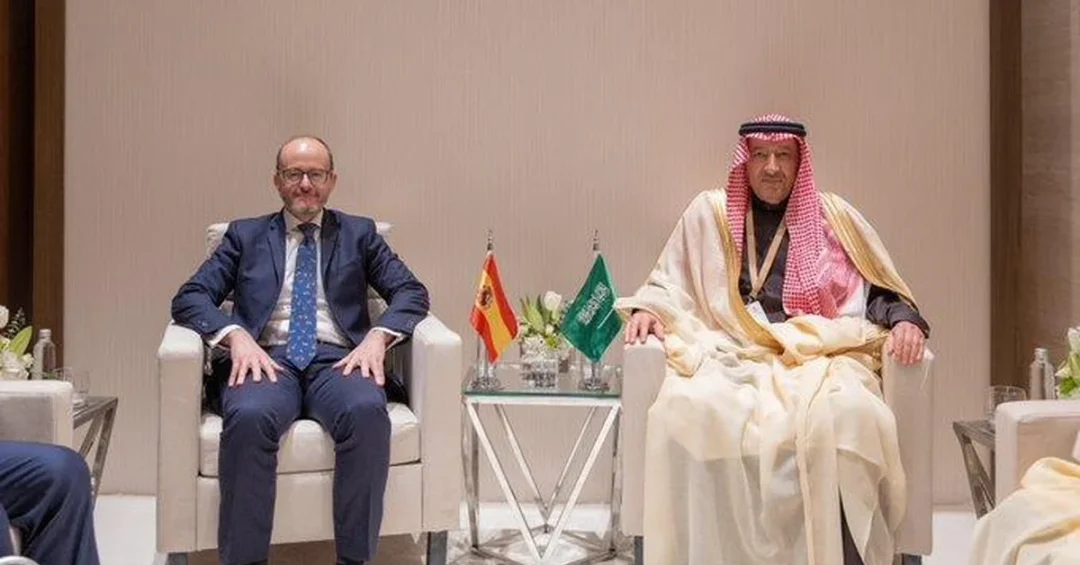
Riyadh — Saudi Arabia’s Vice Minister of Foreign Affairs, Eng. Waleed bin Abdulkarim El-Khereiji, met with the Secretary of State for Foreign and Global Affairs of the Kingdom of Spain, Diego Martínez Belío, on the sidelines of the Expanded Ministerial Meeting on Syria, according to the Saudi Press Agency (SPA). The meeting, held in Riyadh on January 12, 2025, focused on strengthening bilateral relations across various fields and addressing issues of mutual interest. The encounter underscores Saudi Arabia’s active diplomatic role in regional and international affairs, particularly in efforts to stabilize Syria and promote peace in the Middle East.
The Expanded Ministerial Meeting on Syria brought together representatives from multiple countries to discuss the ongoing crisis and explore pathways toward a political solution. Saudi Arabia’s hosting of this event reflects its commitment to regional security and its growing influence as a mediator in complex geopolitical issues. The meeting between El-Khereiji and Martínez Belío is part of a broader pattern of intensified engagement between the Kingdom and European nations, as Saudi Arabia continues to deepen its international partnerships under the framework of Vision 2030. How does such high-level diplomacy translate into tangible benefits for the region and beyond?
Context and Background
Saudi Arabia and Spain have maintained diplomatic relations for decades, with ties spanning economic, cultural, and political domains. In recent years, both nations have sought to expand cooperation in areas such as renewable energy, infrastructure, tourism, and technology. Spain, as a key member of the European Union, represents an important partner for Saudi Arabia in Europe, and the two countries have consistently engaged in dialogue on regional stability, counterterrorism, and trade. The meeting between Vice Minister El-Khereiji and Secretary of State Martínez Belío builds on this longstanding relationship, aiming to identify new avenues for collaboration.
The timing of this meeting is significant, occurring on the margins of the Expanded Ministerial Meeting on Syria. This gathering, hosted in Riyadh, signals Saudi Arabia’s proactive stance in addressing one of the most protracted conflicts in the region. By facilitating discussions among diverse stakeholders, the Kingdom reinforces its role as a bridge-builder and a promoter of peaceful resolutions. For Spain, participation in such forums aligns with its own foreign policy objectives of supporting stability in the Mediterranean and the Middle East. What does this convergence of interests mean for the future of Saudi-European relations?
Moreover, the meeting reflects Saudi Arabia’s broader strategy of engaging with European partners to advance mutual economic and security goals. As the Kingdom continues its ambitious transformation under Vision 2030, partnerships with countries like Spain can provide access to expertise, investment, and markets. Spain’s experience in tourism, renewable energy, and smart city development is particularly relevant to Saudi Arabia’s mega-projects such as NEOM and the Red Sea Project. The discussions between the two officials likely touched on these areas, paving the way for enhanced cooperation.
Key Details of the Meeting
During their talks, Vice Minister El-Khereiji and Secretary of State Martínez Belío reviewed the current state of bilateral relations and explored opportunities to strengthen them across various sectors. According to the Saudi Press Agency, they discussed ways to enhance cooperation and addressed issues of mutual interest. While specific details of the conversation were not disclosed, the scope of the discussion likely encompassed political coordination, economic collaboration, and cultural exchange. The meeting underscores the mutual desire to elevate the Saudi-Spanish partnership to new heights.
The presence of both officials at the Expanded Ministerial Meeting on Syria provided a natural backdrop for their bilateral discussion. The Syrian crisis has been a focal point of international diplomacy, with Saudi Arabia advocating for a political solution that preserves Syria’s unity and sovereignty. Spain, as a European actor with historical ties to the region, shares an interest in seeing a stable and prosperous Syria. By aligning their positions, Saudi Arabia and Spain can contribute to a coordinated international approach to the crisis. How can such bilateral engagements contribute to resolving multilateral challenges?
It is worth noting that this is not the first interaction between the two officials. Saudi-Spanish diplomatic engagements have been frequent, with visits and meetings at various levels. In 2023, for instance, the two countries signed several agreements in fields such as tourism, culture, and renewable energy. The current meeting serves to follow up on those commitments and to identify new areas of cooperation. The consistent dialogue reflects a shared commitment to maintaining strong ties and addressing global issues collaboratively.
International and Regional Impact
The meeting between Saudi and Spanish officials carries implications beyond their bilateral relationship. It signals Saudi Arabia’s continued integration into the global diplomatic landscape and its willingness to work with European partners on pressing regional issues. The Expanded Ministerial Meeting on Syria, in particular, highlights the Kingdom’s role as a convenor of dialogue and a proponent of stability in the Middle East. By engaging with Spain, Saudi Arabia reinforces its position as a responsible international actor committed to peace and security.
For Spain, the engagement offers an opportunity to deepen its ties with a key Gulf partner and to contribute to regional stabilization efforts. As a member of the European Union, Spain can serve as a bridge between Europe and the Arab world, facilitating dialogue and cooperation. The meeting also underscores the importance of multilateralism in addressing complex crises like Syria. In a world where geopolitical tensions are rising, such diplomatic interactions are essential for fostering understanding and building consensus. What role can middle powers like Spain play in mediating regional conflicts?
Regionally, the meeting comes at a time of shifting alliances and evolving dynamics in the Middle East. Saudi Arabia has been at the forefront of efforts to reintegrate Syria into the Arab fold and to promote reconciliation. Spain’s participation in the ministerial meeting demonstrates European interest in supporting these efforts. The collaboration between Saudi Arabia and Spain could serve as a model for broader international engagement with Syria, focusing on humanitarian aid, reconstruction, and political transition. The outcomes of such meetings may shape the trajectory of the Syrian crisis and regional stability for years to come.
Economic and Strategic Significance
Economically, Saudi Arabia and Spain have complementary strengths that can be leveraged for mutual benefit. Spain is a leader in renewable energy, with companies like Iberdrola and Acciona at the forefront of solar and wind power. Saudi Arabia, under Vision 2030, aims to diversify its energy mix and become a global hub for clean energy. Cooperation in this sector could accelerate the Kingdom’s transition and create opportunities for Spanish firms. Similarly, in tourism, Spain’s expertise in managing cultural heritage and sustainable tourism can support Saudi Arabia’s efforts to develop its tourism sector and attract international visitors.
Strategically, the meeting reinforces Saudi Arabia’s network of partnerships that support its foreign policy objectives. By engaging with Spain, the Kingdom strengthens its ties with Europe, a key market for Saudi oil and a source of investment and technology. The relationship also has a security dimension, with both countries sharing an interest in combating terrorism and extremism. The exchange of intelligence and best practices in security can contribute to regional stability. Furthermore, Spain’s position in the Mediterranean and its ties to North Africa make it a valuable partner for Saudi Arabia in addressing challenges in the broader region.
The economic and strategic significance of this meeting extends to the multilateral arena. Saudi Arabia’s active participation in the Expanded Ministerial Meeting on Syria demonstrates its commitment to multilateral diplomacy and its willingness to take on leadership roles in resolving regional crises. Spain’s engagement in the same forum shows that European countries recognize the importance of working with Saudi Arabia on these issues. Together, they can advocate for coordinated international action that addresses the root causes of conflict and promotes sustainable peace.
Vision 2030 Alignment
The meeting between Vice Minister El-Khereiji and Secretary of State Martínez Belío aligns closely with Saudi Arabia’s Vision 2030, which seeks to transform the Kingdom into a global investment powerhouse and a hub for international diplomacy. Vision 2030 emphasizes the importance of building strong international partnerships to drive economic diversification and enhance the Kingdom’s global standing. By engaging with Spain, Saudi Arabia is advancing its objectives of attracting foreign investment, transferring knowledge, and promoting cultural exchange. The diplomatic engagement also supports the Vision’s goal of positioning Saudi Arabia as a pivotal player in regional and global affairs.
As Saudi Arabia continues to implement its ambitious reform agenda, partnerships with countries like Spain will be instrumental in achieving the Vision’s targets. The exchange of expertise in areas such as renewable energy, tourism, and smart cities will contribute to the development of new sectors and the creation of jobs for Saudi citizens. Moreover, the strengthened political ties will facilitate cooperation on regional security, ensuring a stable environment conducive to economic growth. The meeting is a testament to Saudi Arabia’s proactive diplomacy and its commitment to building a prosperous and peaceful future, both for itself and for the wider world. How will such partnerships shape the next decade of Saudi-Spanish relations and contribute to global stability?
20 Questions
Q1. Who represented Saudi Arabia at the meeting with the Spanish State Secretary?
A1. Vice Minister of Foreign Affairs Eng. Waleed bin Abdulkarim El-Khereiji represented Saudi Arabia.
Q2. Who is the Spanish State Secretary for Foreign and Global Affairs?
A2. Diego Martínez Belío is the Secretary of State for Foreign and Global Affairs of the Kingdom of Spain.
Q3. When and where did the meeting take place?
A3. The meeting took place in Riyadh on January 12, 2025, on the sidelines of the Expanded Ministerial Meeting on Syria.
Q4. What was the main purpose of the meeting?
A4. The officials discussed ways to strengthen bilateral relations across various fields and addressed issues of mutual interest.
Q5. What is the Expanded Ministerial Meeting on Syria?
A5. It is a multilateral gathering hosted in Riyadh to discuss the Syrian crisis and explore political solutions, reflecting Saudi Arabia’s diplomatic leadership.
Q6. How does this meeting reflect Saudi Arabia’s foreign policy?
A6. It demonstrates Saudi Arabia’s active engagement in regional diplomacy and its commitment to building international partnerships for peace and stability.
Q7. What are the key areas of Saudi-Spanish cooperation?
A7. Key areas include renewable energy, tourism, infrastructure, technology, and cultural exchange, among others.
Q8. How does this meeting align with Vision 2030?
A8. It supports Vision 2030 by enhancing international partnerships, attracting investment, and promoting Saudi Arabia as a global diplomatic hub.
Q9. What is the significance of Saudi Arabia hosting the Syria meeting?
A9. It underscores Saudi Arabia’s role as a mediator and its commitment to regional security and stability.
Q10. How long have Saudi Arabia and Spain had diplomatic relations?
A10. Saudi Arabia and Spain have maintained diplomatic relations for decades, with ties spanning economic, cultural, and political domains.
Q11. What economic benefits could result from this meeting?
A11. It could lead to increased trade, investment, and collaboration in sectors like renewable energy and tourism, benefiting both economies.
Q12. How does Spain’s membership in the EU affect the partnership?
A12. Spain can act as a bridge between Saudi Arabia and the European Union, facilitating dialogue and cooperation on various issues.
Q13. What role did the Syrian crisis play in the discussions?
A13. The crisis was a central theme, with both officials likely discussing ways to support a political solution and regional stability.
Q14. Are there any agreements signed during the meeting?
A14. No specific agreements were announced, but the meeting aimed to strengthen relations and identify new areas of cooperation.
Q15. How does this meeting impact regional security?
A15. It promotes coordination between Saudi Arabia and Spain on security issues, contributing to stability in the Middle East and beyond.
Q16. What is the history of Saudi-Spanish cooperation in renewable energy?
A16. Both countries have collaborated on renewable energy projects, with Spanish firms sharing expertise to support Saudi Arabia’s clean energy goals.
Q17. How does this meeting reflect Saudi Arabia’s global role?
A17. It showcases Saudi Arabia’s proactive diplomacy and its ability to convene international discussions on pressing issues.
Q18. What are the next steps following this meeting?
A18. Officials will likely follow up on discussions to implement joint initiatives and further deepen bilateral ties.
Q19. How does the meeting benefit the Saudi people?
A19. It can lead to economic opportunities, job creation, and enhanced international standing, contributing to Vision 2030 goals.
Q20. What message does this meeting send to the international community?
A20. It signals Saudi Arabia’s commitment to multilateralism, peace, and cooperation, reinforcing its role as a responsible global actor.
Reader Feedback
We value your thoughts. Please share your feedback on this article.
Your feedback helps us improve our coverage.
Related articles
 KSrelief Distributes 175,000 Bread Bags in Northern Lebanon
 Saudi FM Meets EU High Representative in Riyadh
 Justice Minister, UN Coordinator Discuss Cooperation in Riyadh
 Riyadh Meetings Presidency Issues Statement on Syria
 Minister Al-Hogail to Inaugurate Fourth Saudi Urban Forum
 KSrelief Marks Arabic Language Day at Zaatari Camp