


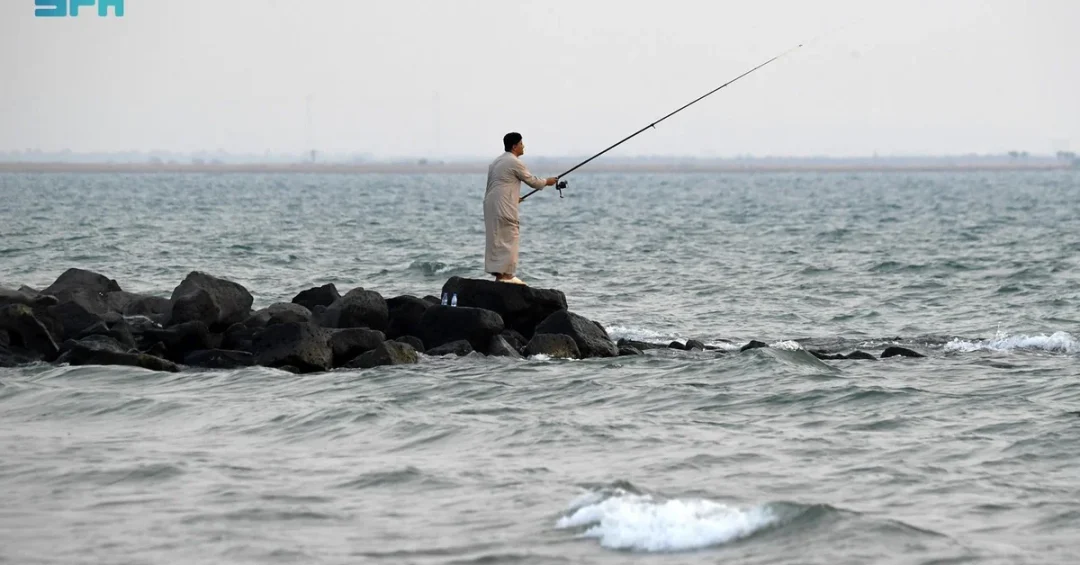
Fish production along the Aseer region’s Red Sea coast has surged past 4,000 tons annually, generating a market value of SAR155 million in 2024, according to the Ministry of Environment, Water, and Agriculture. The figures, announced by the ministry’s Aseer branch, reflect a sustained expansion of the Kingdom’s southern fisheries sector and underscore the growing economic importance of a coastline that stretches approximately 140 kilometers along the Red Sea. The revenue represents a direct return to local fishermen and forms part of a wider national effort to diversify rural incomes and strengthen food security.
The milestone was confirmed by Eng. Ahmed Al-Majthal, Director of the Ministry’s Aseer branch, who described the region’s coastal areas as a key economic asset. He pointed to the rich marine environment and high-quality fish stocks as the foundation of the sector’s performance, noting that the SAR155 million in revenue was earned by local fishermen during 2024. The announcement positions Aseer alongside other Saudi coastal regions that are being developed under the Kingdom’s broader agricultural and fisheries strategy. For international observers, the numbers offer a concrete measure of how Vision 2030 is translating into tangible gains in sectors far from the oil economy, and how local communities are being brought into the national growth story.
Context and Background
Why does a regional fish harvest matter beyond the shores of Aseer? The answer lies in the scale of the Kingdom’s ambitions for its maritime resources. Aseer’s coastline runs for roughly 140 kilometers along the Red Sea, encompassing coral reefs, mangrove forests, and tourist islands such as Kadmbel Island. These ecosystems support a diversity of marine life that has sustained fishing families for generations, and they now form the natural capital behind a modernizing industry. The Ministry of Environment, Water, and Agriculture has been working to convert that natural advantage into measurable economic output through incentive programs, technical support, and market development.
The 2024 result did not emerge in isolation. It follows a series of ministry initiatives designed to raise productivity, improve the quality of catch handling, and connect fishermen to wider markets. The Aseer branch has combined direct support for independent Saudi fishermen with infrastructure and training programs, creating an environment in which small operators can professionalize and grow. The region’s output now exceeds 4,000 tons annually, a figure that places it among the more productive coastal areas in the Kingdom and demonstrates that targeted government programs can produce results in relatively short timeframes.
Historically, fisheries in Saudi Arabia have been an important source of employment and protein, particularly in coastal communities along the Red Sea and the Arabian Gulf. In recent years, national policy has sought to modernize the sector through better regulation, investment in cold chains and processing, and the promotion of sustainable fishing practices. Aseer’s performance in 2024 reflects that policy direction and provides a regional case study of how traditional livelihoods can be upgraded without losing their local character. The ministry’s emphasis on transferring expertise from veteran fishermen to younger generations is a particularly notable feature of this approach.
Key Details
What specific measures are driving the increase? According to Eng. Ahmed Al-Majthal, the ministry’s Aseer branch has developed a plan to further boost production to 6,000 tons, valued at SAR165 million, within the next three years. That target implies continued growth in both volume and value, and it is supported by a set of practical interventions already underway. The region currently has 126 operational boats along the Aseer coast, and support is being provided to independent Saudi fishermen who use private boats. An additional 35 boats are to be distributed in the near future, expanding the fleet and enabling more families to participate in the sector.
A second pillar of the strategy is knowledge transfer. Some 85 experienced fishermen are mentoring those entering the profession, ensuring that accumulated skills in navigation, seasonal fishing patterns, and catch handling are passed on to a new generation. This intergenerational program addresses one of the sector’s long-standing challenges: the risk that young people will leave fishing for urban employment. By pairing young entrants with veterans, the ministry is helping to preserve local expertise while raising safety and productivity standards. The combination of fleet expansion and mentorship creates a bridge between traditional practice and modern commercial expectations.
A third element is public engagement and market development. The ministry’s Aseer branch recently organized the inaugural fish and marine heritage festival from January 8 to 11. The event featured 39 booths showcasing diverse seafood varieties, alongside participation from families working in cottage industry, government agencies, and civil institutions. It also included awareness and educational programs, demonstrations of fishing techniques, sea trips, boat races, and traditional folkloric performances. The festival served both as a celebration of maritime culture and as a commercial platform connecting producers with buyers and visitors.
International and Regional Impact
How does Aseer’s fishing sector connect to wider regional dynamics? The Red Sea is one of the world’s most important maritime corridors, and its fisheries are increasingly viewed as a shared resource requiring careful management. Saudi Arabia’s efforts to develop its coastal economy in a sustainable manner contribute to regional food security and to the conservation of marine ecosystems that span national boundaries. Aseer’s coral reefs and mangrove forests are not only productive fishing grounds but also natural barriers that support biodiversity and protect coastlines. Their health is directly linked to the long-term viability of the industry.
For international markets, the growth of Saudi fisheries opens opportunities for trade, investment, and cooperation in cold-chain logistics, aquaculture, and processing technology. The Kingdom’s broader agricultural strategy emphasizes self-sufficiency in strategic food commodities, and fisheries are an important part of that equation. As production rises, Saudi Arabia becomes a more significant player in regional seafood supply, with potential benefits for exporters of equipment and expertise as well as for consumers in neighboring countries. The Aseer experience also offers a model that other Red Sea states can study as they seek to balance development with environmental stewardship.
Economic and Strategic Significance
What does SAR155 million in local revenue actually mean for Aseer’s communities? It represents income for fishing families, support for related trades such as boat maintenance, net making, and transport, and a stimulus for rural economies that might otherwise depend on a narrow range of activities. The fishing sector’s value chain extends well beyond the point of catch, creating jobs in handling, storage, distribution, and hospitality. The ministry’s target of SAR165 million within three years, alongside a rise to 6,000 tons, signals confidence that these multiplier effects will continue to expand.
Strategically, a productive fisheries sector supports the Kingdom’s food security objectives and reduces reliance on imports for a key source of protein. It also aligns with efforts to diversify rural employment and to make the most of regional endowments. Aseer’s marine resources are renewable if managed responsibly, and the ministry’s combination of fleet support, training, and market development is designed to keep production within sustainable limits. The focus on quality and value, rather than volume alone, reflects a mature approach to resource management that is consistent with national policy.
Vision 2030 Alignment
How does a regional fishing milestone fit into Saudi Arabia’s long-term transformation? Vision 2030 seeks to build a diversified economy, strengthen food security, and improve quality of life across all regions of the Kingdom. Aseer’s fisheries development touches each of these goals. It creates economic opportunity in a region known for its natural beauty and heritage, supports local employment, and contributes to the national goal of greater self-reliance in food production. The ministry’s programs are also consistent with the Vision’s emphasis on empowering citizens and enabling small businesses to participate in the economy.
The planned increase to 6,000 tons and SAR165 million in value within three years is more than a production target; it is a statement that rural coastal communities are central to the Kingdom’s future. Through fleet expansion, mentorship, festivals, and market development, the Ministry of Environment, Water, and Agriculture is turning Aseer’s marine heritage into a modern economic asset. As the sector grows, it will continue to demonstrate how Vision 2030 is being implemented at the regional level, creating tangible benefits for fishermen, families, and the wider Saudi economy while preserving the natural environment for future generations.
20 Questions
Q1. How much fish did Aseer’s coast produce in 2024?
A1. Fish production along Aseer’s Red Sea coast exceeded 4,000 tons annually in 2024, with a market value of SAR155 million, according to the Ministry of Environment, Water, and Agriculture’s Aseer branch.
Q2. Who announced the production figures?
A2. Eng. Ahmed Al-Majthal, Director of the Ministry’s Aseer branch, announced the figures and described the region’s coastal areas as a key economic asset with rich marine resources and high-quality fish stocks.
Q3. What is the market value of Aseer’s fish production?
A3. The production generated SAR155 million in revenue for local fishermen during 2024, reflecting the commercial strength of the region’s fisheries sector and its importance to coastal communities.
Q4. What is the ministry’s production target for the next three years?
A4. The ministry’s Aseer branch has developed a plan to boost production to 6,000 tons, valued at SAR165 million, within the next three years, signaling confidence in continued sector growth.
Q5. How many operational boats are currently along the Aseer coast?
A5. There are 126 operational boats along the Aseer coast, according to the ministry, and support is also provided to independent Saudi fishermen who use private boats for their livelihoods.
Q6. How many additional boats will be distributed soon?
A6. An additional 35 boats are to be distributed in the near future to expand the fleet and enable more families to participate in the region’s growing fisheries sector.
Q7. How many experienced fishermen are mentoring new entrants?
A7. Some 85 experienced fishermen are mentoring those entering the profession, transferring expertise from veteran fishermen to younger generations to preserve skills and raise standards.
Q8. What was the inaugural fish and marine heritage festival?
A8. The ministry’s Aseer branch organized the inaugural fish and marine heritage festival from January 8 to 11, featuring 39 booths, seafood varieties, educational programs, fishing demonstrations, sea trips, boat races, and folkloric performances.
Q9. Who participated in the festival?
A9. The festival included participation from families working in cottage industry, government agencies, and civil institutions, alongside seafood exhibitors, creating a platform that combined cultural celebration with commercial opportunity.
Q10. How long is Aseer’s coastline?
A10. Aseer’s coastline stretches approximately 140 kilometers along the Red Sea, encompassing diverse marine ecosystems including coral reefs, mangrove forests, and tourist islands such as Kadmbel Island.
Q11. What marine ecosystems are found along Aseer’s coast?
A11. The region’s marine environment includes coral reefs, mangrove forests, and tourist islands such as Kadmbel Island, which together support biodiversity and provide productive fishing grounds for local communities.
Q12. Why is Aseer’s coastal area considered a key economic asset?
A12. Eng. Ahmed Al-Majthal emphasized that the region’s rich marine environment and high-quality fish stocks generate significant revenue and employment, making the coast a vital contributor to the local and national economy.
Q13. What support does the ministry provide to independent fishermen?
A13. The ministry supports independent Saudi fishermen using private boats, and plans to distribute 35 additional boats, helping them increase productivity and participate more fully in the commercial fisheries sector.
Q14. How does the mentorship program work?
A14. The program pairs 85 experienced fishermen with younger entrants, transferring knowledge in navigation, seasonal patterns, and catch handling to ensure skills are preserved and safety and productivity standards improve.
Q15. What is the significance of the SAR155 million figure?
A15. The figure represents direct income for local fishermen and supports related trades such as boat maintenance, net making, and transport, stimulating rural economies and demonstrating the commercial viability of the sector.
Q16. How does the fisheries sector support food security?
A16. A productive fisheries sector provides a key source of protein, reduces reliance on imports, and aligns with national efforts to strengthen food security as part of Saudi Arabia’s broader economic diversification strategy.
Q17. What role does the festival play in market development?
A17. The festival connects producers with buyers and visitors, showcases diverse seafood varieties, and raises awareness of marine heritage, serving as both a cultural celebration and a commercial platform for the sector.
Q18. How does the Aseer fisheries plan align with Vision 2030?
A18. The plan supports Vision 2030 goals of economic diversification, food security, and improved quality of life by creating rural employment, empowering small businesses, and developing regional resources sustainably.
Q19. What environmental considerations are important for Aseer’s fisheries?
A19. Coral reefs and mangrove forests are productive fishing grounds and natural barriers that support biodiversity and protect coastlines, making their health essential to the long-term viability of the industry.
Q20. What does the future hold for Aseer’s fishing communities?
A20. With fleet expansion, mentorship, and market development, Aseer’s fishing communities are positioned for continued growth, with production targeted to reach 6,000 tons and SAR165 million in value within three years.
Reader Feedback
We value your thoughts. Please share your feedback on this article.
Your feedback helps us improve our coverage.
Related articles
 Mawani Boosts Saudi Arabia’s Global Logistics Hub Status in 2024
 SAMA Launches Trial Phase of eSAMA E-Services Portal
 Saudi Arabia, Japan Strengthen Investment Ties
 Saudi, Omani Finance Ministers Sign Financial Cooperation MoU
 Saudi Finance Minister Joins IsDB Retreat in Madinah
 Saudi Ministry Introduces 15 Incentives for Exporters