


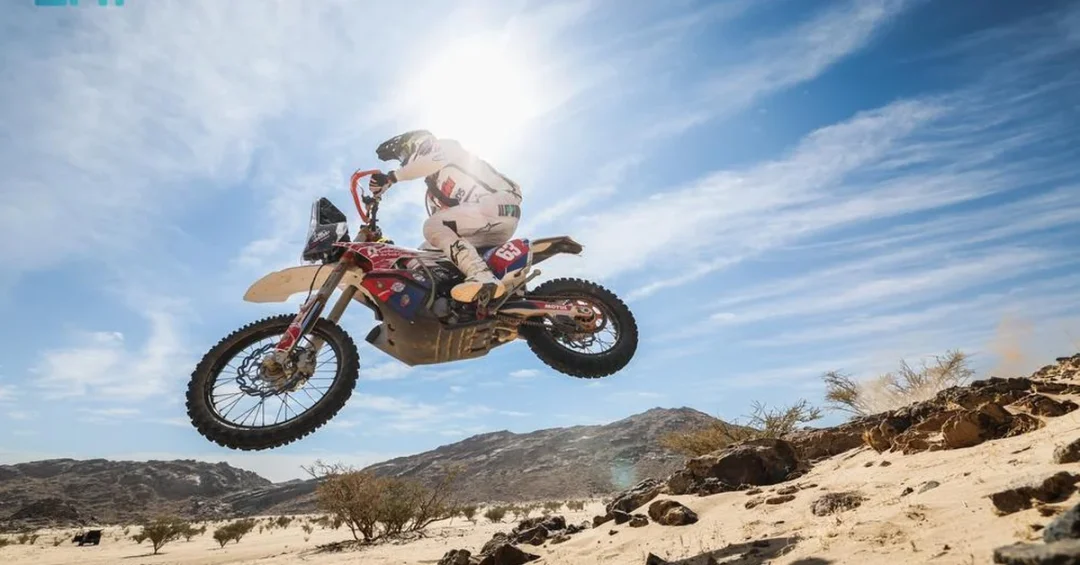
The Dakar Rally 2025, the largest and longest race in the world of motorsports, will kick off on Friday, January 3, from Bisha in southwestern Saudi Arabia, with more than 800 competitors set to take part in the grueling two-week event. The rally, organized by the Saudi Automobile & Motorcycle Federation (SAMF) and supervised by the Ministry of Sport, runs until January 17 and marks the sixth consecutive year that the Kingdom has hosted the prestigious race, according to the Saudi Press Agency (SPA).
Could any other nation in the region stage a motorsport event of this scale with such consistency? The answer, as the 2025 edition makes clear, is that Saudi Arabia has firmly established itself as a global hub for elite off-road racing. The rally will cover a total distance of 7,737 km, including 5,129 km of special stages, beginning in Bisha and winding through Al Hanakiyah, AlUla, Hail, Al Dawadmi, Riyadh, and Haradh before concluding in Shubaytah. The route showcases the Kingdom’s diverse and breathtaking landscapes, from towering dunes to ancient rock formations, while testing the endurance of the world’s top drivers and riders.
Context and Background
How did Saudi Arabia become the permanent home of the world’s most demanding rally? The Dakar Rally, originally held in Africa and later South America, moved to the Kingdom in 2020 as part of a broader strategy to diversify the national economy and promote sports tourism under Saudi Vision 2030. Since then, the event has grown in stature, attracting elite teams from Europe, the Americas, Asia, and the Middle East. The 2025 edition is the sixth consecutive running on Saudi soil, a testament to the Kingdom’s organizational capacity and its commitment to hosting world-class sporting spectacles.
The rally is not merely a race; it is a massive logistical undertaking that involves thousands of support staff, medical teams, and media personnel. The SAMF, under the supervision of the Ministry of Sport, coordinates with local authorities across multiple regions to ensure safety and smooth operations. Over the years, the event has contributed to the development of motorsport infrastructure in Saudi Arabia, including service roads, communication networks, and emergency response systems. It has also inspired a new generation of Saudi drivers and navigators, some of whom now compete alongside international legends.
Prince Abdulaziz bin Turki bin Faisal, Minister of Sport and President of the Saudi Olympic and Paralympic Committee, emphasized that hosting the rally for the sixth consecutive time showcases the Kingdom’s capabilities in organizing major sporting events. He praised the unwavering support of Saudi leadership and highlighted the sports sector’s commitment to implementing programs and initiatives aligned with Saudi Vision 2030. His remarks underscore the strategic importance of the Dakar Rally as a tool for international outreach and cultural exchange.
Key Details of the 2025 Route and Competitors
What makes the 2025 route particularly challenging? Competitors will face a total of 7,737 km, with 5,129 km of timed special stages that push both machines and humans to their absolute limits. The rally begins in Bisha, a city in the Asir region known for its rugged terrain and proximity to the Empty Quarter. From there, the convoy moves to Al Hanakiyah, then to the majestic landscapes of AlUla, home to UNESCO World Heritage sites. The route continues through Hail, a region famous for its desert dunes and historical significance, before heading to Al Dawadmi, Riyadh, and Haradh. The final stage will take place in Shubaytah, near the border with the United Arab Emirates, where the massive dunes of the Rub’ al Khali (Empty Quarter) provide a dramatic conclusion.
Over 800 participants, including drivers, riders, co-drivers, and support crews, are expected to take part. The competition features multiple categories: cars, motorcycles, quads, trucks, and the increasingly popular T3 and T4 light prototypes. Notable teams and drivers from around the world are set to compete, though the full entry list will be confirmed closer to the start. The presence of Saudi teams and drivers adds a layer of national pride, as they race on home soil against global icons of the sport.
The rally is not just about speed; it is a test of navigation, strategy, and mechanical reliability. Competitors must navigate vast stretches of desert using roadbooks and GPS, often with limited visibility due to dust and heat. Temperatures can fluctuate dramatically between day and night, and the terrain ranges from soft sand to rocky plateaus. Medical and rescue teams are stationed at strategic points along the route, with helicopters on standby for emergencies. The SAMF has implemented rigorous safety protocols, including mandatory tracking devices and daily briefings for all participants.
International and Regional Impact
Why does the Dakar Rally matter beyond the world of motorsport? For Saudi Arabia, hosting the event is a powerful demonstration of its ability to manage large-scale international gatherings, reinforcing its reputation as a stable and forward-looking nation. The rally attracts global media coverage, with broadcasters from dozens of countries sending crews to report on the action. This exposure highlights not only the race but also the Kingdom’s tourist attractions, from the ancient Nabatean tombs of AlUla to the modern skyline of Riyadh. International visitors often extend their stay to explore these sites, contributing to the growth of the tourism sector.
Regionally, the Dakar Rally fosters cooperation among Gulf states, as the route sometimes crosses near borders and involves coordination with neighboring countries for airspace and emergency services. It also serves as a platform for cultural exchange, with participants and fans from diverse backgrounds interacting with Saudi hosts. The event aligns with the Kingdom’s broader efforts to promote sports diplomacy and people-to-people ties. In a region often characterized by geopolitical tensions, the rally offers a positive narrative of shared passion and friendly competition.
Economic and Strategic Significance
What economic benefits does the Dakar Rally bring to Saudi Arabia? The event generates significant direct spending in host cities, including hotels, restaurants, transportation, and local services. Thousands of team members, journalists, and spectators require accommodation and logistics support, creating temporary jobs and business opportunities. The rally also stimulates investment in infrastructure, such as road improvements and telecommunications upgrades, which have long-term benefits for local communities. Moreover, the event serves as a showcase for Saudi Arabia’s growing automotive and motorsport industry, including initiatives to develop electric vehicles and sustainable mobility solutions.
Strategically, the Dakar Rally is a key component of Saudi Vision 2030’s Quality of Life program, which aims to increase sports participation and entertainment options for citizens and residents. By hosting world-class events, the Kingdom inspires youth to engage in sports and pursue careers in related fields, from engineering to sports management. The rally also strengthens Saudi Arabia’s position in the global sports market, attracting sponsorships and partnerships with major international brands. This, in turn, contributes to economic diversification and the creation of a vibrant, knowledge-based economy.
Vision 2030 Alignment
How does the Dakar Rally fit into Saudi Vision 2030? The Vision, launched in 2016 by Crown Prince Mohammed bin Salman, seeks to transform the Kingdom into a global investment powerhouse and a hub connecting three continents. Sports is one of the key sectors identified to drive this transformation, with targets to increase household spending on entertainment and to host more than 100 major sporting events annually. The Dakar Rally exemplifies this ambition, drawing international attention and showcasing Saudi Arabia’s capabilities in event management, hospitality, and infrastructure.
Furthermore, the rally supports the Vision’s goal of enhancing the Kingdom’s image abroad and fostering national pride. By successfully hosting the event for the sixth time, Saudi Arabia demonstrates its reliability as a partner and its commitment to excellence. The Ministry of Sport, under the leadership of Prince Abdulaziz bin Turki bin Faisal, continues to roll out initiatives that align with the Vision, such as the Saudi Games and the Quality of Life program. As the 2025 Dakar Rally gets underway, it serves as a vivid reminder of how far the Kingdom has come and the limitless potential that lies ahead. The world will be watching, and Saudi Arabia is ready to deliver an unforgettable experience.
20 Questions
Q1. When does the Dakar Rally 2025 start and end?
A1. The Dakar Rally 2025 starts on Friday, January 3, and runs until January 17. It begins in Bisha, Saudi Arabia, and concludes in Shubaytah after covering 7,737 km.
Q2. How many competitors are participating in the Dakar Rally 2025?
A2. More than 800 competitors are taking part, including drivers, riders, co-drivers, and support crews. They represent various categories such as cars, motorcycles, quads, and trucks.
Q3. Which organization is responsible for organizing the Dakar Rally in Saudi Arabia?
A3. The Saudi Automobile & Motorcycle Federation (SAMF) organizes the event, under the supervision of the Ministry of Sport. This ensures high standards of safety and logistics.
Q4. How many times has Saudi Arabia hosted the Dakar Rally?
A4. The 2025 edition marks the sixth consecutive year that Saudi Arabia has hosted the Dakar Rally. The Kingdom first hosted it in 2020.
Q5. What is the total distance of the Dakar Rally 2025?
A5. The total distance is 7,737 km, which includes 5,129 km of special stages. The route takes competitors through diverse terrains across Saudi Arabia.
Q6. Which cities and regions does the 2025 route pass through?
A6. The route passes through Bisha, Al Hanakiyah, AlUla, Hail, Al Dawadmi, Riyadh, and Haradh, before finishing in Shubaytah. Each location offers unique landscapes and challenges.
Q7. Who is the Saudi Minister of Sport and what did he say about the rally?
A7. Prince Abdulaziz bin Turki bin Faisal is the Minister of Sport. He said hosting the rally for the sixth time showcases Saudi Arabia’s capabilities in organizing major sporting events and aligns with Vision 2030.
Q8. What are the categories in the Dakar Rally 2025?
A8. The rally includes cars, motorcycles, quads, trucks, and light prototypes (T3 and T4). Each category has its own classification and rules.
Q9. How does the Dakar Rally support Saudi Vision 2030?
A9. It promotes sports tourism, economic diversification, and international outreach. It also inspires youth and enhances the Kingdom’s global image, aligning with Vision 2030 goals.
Q10. What safety measures are in place for the competitors?
A10. Safety measures include mandatory tracking devices, medical teams, helicopters, and daily briefings. The SAMF coordinates with local authorities to ensure rapid response.
Q11. What is the significance of Bisha as the starting point?
A11. Bisha is located in the Asir region, near the Empty Quarter. Its rugged terrain provides a challenging start and showcases Saudi Arabia’s natural diversity.
Q12. How does the Dakar Rally impact local economies in Saudi Arabia?
A12. It generates spending on hotels, restaurants, and services, creating temporary jobs. It also drives infrastructure improvements that benefit local communities in the long term.
Q13. Are there Saudi drivers competing in the rally?
A13. Yes, Saudi drivers and riders participate, racing on home soil. Their involvement inspires young Saudis and demonstrates the growth of motorsport in the Kingdom.
Q14. What is the role of the Ministry of Sport in the event?
A14. The Ministry of Sport supervises the event, ensuring it meets international standards. It also integrates the rally into national sports strategy and Vision 2030 initiatives.
Q15. How does the rally promote cultural exchange?
A15. Participants and fans from around the world interact with Saudi hosts, experiencing local traditions and hospitality. This fosters mutual understanding and positive perceptions of the Kingdom.
Q16. What environmental considerations are taken into account?
A16. Organizers implement measures to minimize environmental impact, such as waste management and route planning to protect sensitive areas. Sustainability is a key focus.
Q17. How can international fans follow the Dakar Rally 2025?
A17. Fans can follow live updates on official Dakar channels, including social media and the event website. Broadcasters worldwide provide coverage of daily stages and highlights.
Q18. What challenges do competitors face in the Empty Quarter?
A18. The Empty Quarter features massive dunes and extreme temperatures. Navigation is difficult, and mechanical failures are common, testing the resilience of all participants.
Q19. How does the Dakar Rally enhance Saudi Arabia’s global standing?
A19. It showcases the Kingdom’s organizational skills and hospitality, attracting positive media attention. This strengthens its reputation as a leading destination for major events.
Q20. What legacy will the Dakar Rally 2025 leave for Saudi Arabia?
A20. It will inspire a new generation of athletes, boost sports infrastructure, and reinforce the Kingdom’s commitment to Vision 2030. It also cements Saudi Arabia’s status as a motorsport hub.
Reader Feedback
We value your thoughts. Please share your feedback on this article.
Your feedback helps us improve our coverage.
Related articles
 Inter Milan Reaches Italian Super Cup Final in Riyadh
 Jeddah Hosts DRIFT 25 Equestrian Show with SAR1M Prizes
 Dakar Rally in Saudi Arabia: Triumph and Adversity in 2025
 Princess Mishael bint Faisal Joins Asian Yogasana Board
 Saudi Taekwondo Championship Concludes in Makkah
 Barcelona Wins Spanish Super Cup Against Real Madrid in Jeddah