


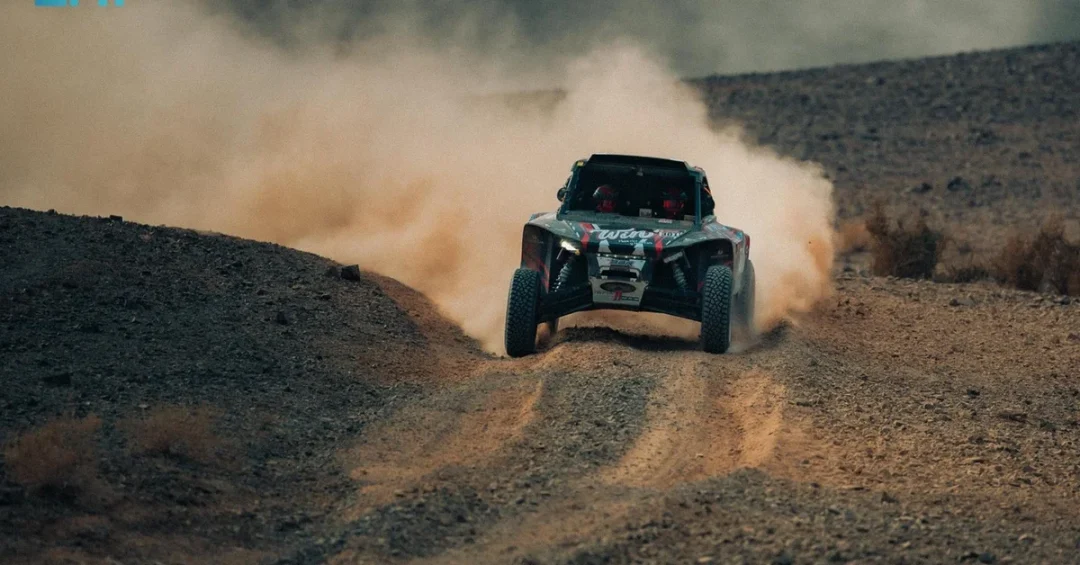
The sixth edition of the Dakar Rally in Saudi Arabia has delivered a dramatic mix of triumph and adversity, with the withdrawal of several legendary drivers reshaping the competition and opening the door for new challengers, according to information released by the Saudi Press Agency (SPA). Since the Kingdom first hosted the world’s most demanding off-road race in 2020, each edition has offered renewed excitement and inspiring stories, elevating the competition to new levels. The 2025 edition, however, has proven particularly consequential, as the diverse terrains and varying geographic landscapes of Saudi Arabia have added more intensity and persistent challenges to the event. With the absence of Stéphane Peterhansel and the early exits of Carlos Sainz and Sébastien Loeb, the race has entered uncharted territory, heightening the drama for competitors and fans alike.
The Dakar Rally’s journey through Saudi Arabia has become a defining feature of the Kingdom’s sporting calendar, showcasing not only the physical demands of the race but also the breathtaking landscapes that stretch from the Red Sea coast to the vast Empty Quarter. This year’s edition has underscored how unpredictable the desert can be, with mechanical failures and navigational challenges claiming some of the sport’s biggest names. Yet, in the face of these setbacks, the competition remains fierce, with Qatari driver Nasser Al Attiyah and Saudi driver Yazeed Al Rajhi emerging as leading contenders. Could this be the year that a Saudi driver finally claims the ultimate prize on home soil?
Context and Background
The Dakar Rally, originally known as the Paris-Dakar Rally, was first held in 1979 and has since become the world’s premier off-road endurance event. After decades of racing across Africa and South America, the rally found a new home in Saudi Arabia in 2020, marking a significant milestone in the Kingdom’s efforts to diversify its sporting and tourism offerings. The move aligned with Vision 2030, Saudi Arabia’s ambitious national transformation plan, which seeks to position the Kingdom as a global hub for entertainment, sports, and cultural exchange. Since then, the event has grown in stature, attracting top-tier drivers and teams from around the world.
The 2025 edition holds particular significance due to the absence of Stéphane Peterhansel, a racing legend who has clinched a record 14 Dakar victories, including a championship in Saudi Arabia in 2021. His absence marks the first time since 1994 that Peterhansel has not competed in the Dakar Rally, a testament to his enduring legacy and the void his absence creates. For fans and competitors alike, the race feels different without him, yet it also signals a new era in which emerging talents and seasoned veterans alike have a chance to etch their names into the history books. How will the absence of such a dominant figure influence the dynamics of the race?
Furthermore, the early withdrawals of Spanish driver Carlos Sainz of the Ford Motorsport team and French driver Sébastien Loeb of the Dacia Sandero team have added layers of unpredictability. Sainz, a four-time Dakar champion with two of those titles earned in Saudi Arabia, exited during the third stage, while Loeb withdrew in the fourth stage after both drivers’ vehicles sustained significant damage. These withdrawals, made with a focus on safety, have heightened the competition among other competitors as they vie for the title of Dakar champion. The departures of such high-profile figures have not only altered the leaderboard but also shifted the psychological landscape of the race, offering opportunities for others to step forward.
Key Details
With Sainz and Loeb out of contention, the spotlight has turned to Nasser Al Attiyah of the Dacia Sandriders team, who now has a strong chance to reclaim the Dakar Rally title in Saudi Arabia. Currently ranked fourth overall, Al Attiyah has already won the Dakar Rally twice in Saudi Arabia, matching Sainz’s record. However, Al Attiyah holds the advantage with a total of five Dakar Rally victories compared to Sainz’s four. The Qatari driver’s experience and consistency in the desert terrain make him a formidable contender, and his familiarity with the Saudi landscape could prove decisive in the remaining stages. Can Al Attiyah capitalize on this opportunity to further cement his legacy?
Equally compelling is the performance of Saudi driver Yazeed Al Rajhi of the Overdrive team, who currently holds second place overall. Al Rajhi has been a revelation in this year’s rally, demonstrating skill and determination that have endeared him to local fans. His historic achievement as the first Saudi driver to secure a podium finish in the 2022 edition, where he claimed third place, already marked him as a trailblazer. Now, he is well-positioned for another strong finish on the Dakar podium, and the prospect of a Saudi victory on home soil has electrified the nation. What would a win mean for Al Rajhi and for Saudi Arabia’s growing motorsport ambitions?
The withdrawals of Sainz and Loeb have also highlighted the sheer physical and mechanical demands of the Dakar Rally. The Saudi Arabian terrain, with its mix of rocky canyons, towering dunes, and vast plains, tests both driver and machine to the limit. The decision by Sainz and Loeb to withdraw was made with safety as the paramount concern, reflecting the professionalism and respect for risk management that defines the sport. Their exits serve as a reminder that the Dakar is not just a race against competitors but a battle against the elements, where preparation and prudence are as important as speed and skill. How do teams balance the drive to win with the imperative to protect their drivers?
International and Regional Impact
The Dakar Rally in Saudi Arabia has far-reaching implications beyond the realm of motorsport. The event draws global attention to the Kingdom, showcasing its diverse landscapes and modern infrastructure to an international audience. As the race traverses regions such as AlUla, NEOM, and the Empty Quarter, it highlights the tourism potential of these areas, aligning with Vision 2030’s goal of attracting 150 million visitors annually by 2030. The rally also stimulates local economies, creating jobs and supporting businesses in hospitality, logistics, and retail. For many international fans, the Dakar serves as a window into Saudi Arabia’s ongoing transformation.
Regionally, the presence of drivers from across the Middle East, including Qatar’s Nasser Al Attiyah and Saudi Arabia’s Yazeed Al Rajhi, underscores the growing prominence of the Gulf region in global motorsport. Their successes inspire a new generation of athletes in the region and foster a sense of pride and unity. Moreover, the event promotes cross-cultural exchange, as teams and spectators from Europe, South America, and beyond converge on Saudi Arabia. The Dakar Rally thus serves as a bridge between nations, fostering goodwill and mutual understanding through the shared passion for competition. How might this event further strengthen Saudi Arabia’s ties with the international community?
Economic and Strategic Significance
Hosting the Dakar Rally is a key component of Saudi Arabia’s broader strategy to diversify its economy away from oil dependence. The event generates significant revenue through tourism, sponsorship, and media rights, while also enhancing the Kingdom’s brand as a destination for major sporting events. According to official Saudi sources, the rally contributes to the growth of the sports sector, which is a priority under Vision 2030. The Kingdom has invested heavily in sports infrastructure, including stadiums, racing facilities, and broadcast capabilities, to ensure the success of such events. These investments not only support the Dakar but also attract other global competitions, from Formula 1 to football tournaments.
Strategically, the Dakar Rally reinforces Saudi Arabia’s position as a leader in the region and a reliable partner for international sporting bodies. The event’s successful organization demonstrates the Kingdom’s capacity to manage large-scale logistics and security, further enhancing its reputation as a safe and attractive destination. For Saudi youth, the rally provides role models and career opportunities in motorsport, engineering, and event management. The participation of Saudi drivers like Yazeed Al Rajhi sends a powerful message that Saudi talent can compete at the highest levels. What does this mean for the future of Saudi motorsport and for the aspirations of its young people?
Vision 2030 Alignment
The Dakar Rally in Saudi Arabia is a vivid illustration of Vision 2030 in action. By hosting world-class events, the Kingdom is not only diversifying its economy but also transforming its society, promoting tourism, and fostering a vibrant sports culture. The rally’s ability to draw global audiences and showcase Saudi Arabia’s natural beauty and modern amenities directly supports the Vision’s objectives of increasing entertainment options and improving quality of life for citizens and residents. Each stage of the race, from the ancient ruins of AlUla to the futuristic developments of NEOM, tells a story of a nation embracing its heritage while racing toward a prosperous future.
As the 2025 Dakar Rally continues, the world watches with bated breath to see who will emerge victorious. Whether it is Nasser Al Attiyah reclaiming the title or Yazeed Al Rajhi making history for Saudi Arabia, the event promises to deliver unforgettable moments. Beyond the thrill of competition, the rally symbolizes Saudi Arabia’s enduring spirit and its unwavering commitment to progress. In a race where triumph and adversity are constant companions, the Kingdom has proven itself a worthy host and a rising star on the global stage. What new chapters will be written in the Saudi desert before the checkered flag falls?
20 Questions
Q1. When did Saudi Arabia first host the Dakar Rally?
A1. Saudi Arabia first hosted the Dakar Rally in 2020, marking the event’s move to the Middle East after decades in Africa and South America. The Kingdom has hosted it annually since then.
Q2. How many editions of the Dakar Rally have been held in Saudi Arabia?
A2. The 2025 edition is the sixth time Saudi Arabia has hosted the Dakar Rally, following successful events in 2020, 2021, 2022, 2023, and 2024.
Q3. Who is Stéphane Peterhansel and why is his absence significant?
A3. Stéphane Peterhansel is a racing legend with 14 Dakar victories, including a win in Saudi Arabia in 2021. His absence in 2025 marks the first time since 1994 he has not competed.
Q4. Which notable drivers withdrew from the 2025 Dakar Rally?
A4. Spanish driver Carlos Sainz of Ford Motorsport and French driver Sébastien Loeb of Dacia Sandero withdrew in the third and fourth stages, respectively, due to vehicle damage.
Q5. Why did Carlos Sainz and Sébastien Loeb withdraw?
A5. Both drivers withdrew after their vehicles sustained significant damage, with safety as the primary concern. Their exits were made to prevent further risk.
Q6. What is Nasser Al Attiyah’s current standing in the 2025 Dakar Rally?
A6. Nasser Al Attiyah of the Dacia Sandriders team is currently ranked fourth overall. He has a strong chance to reclaim the title after Sainz’s withdrawal.
Q7. How many Dakar victories does Nasser Al Attiyah have?
A7. Nasser Al Attiyah has five Dakar Rally victories in total, including two wins in Saudi Arabia. This gives him an advantage over Sainz’s four wins.
Q8. Who is Yazeed Al Rajhi and what is his current position?
A8. Yazeed Al Rajhi is a Saudi driver for the Overdrive team, currently holding second place overall. He is well-positioned for another podium finish.
Q9. What historic achievement did Yazeed Al Rajhi accomplish in 2022?
A9. In 2022, Yazeed Al Rajhi became the first Saudi driver to secure a podium finish in the Dakar Rally, claiming third place.
Q10. How does the Saudi terrain affect the Dakar Rally?
A10. The diverse terrains and varying geographic landscapes of Saudi Arabia add intensity and persistent challenges, testing drivers and vehicles to their limits.
Q11. What is the significance of the Dakar Rally for Saudi Arabia’s Vision 2030?
A11. The rally supports Vision 2030 by promoting tourism, diversifying the economy, and enhancing Saudi Arabia’s global sporting profile.
Q12. How does the Dakar Rally contribute to Saudi Arabia’s economy?
A12. The event generates revenue through tourism, sponsorship, and media rights, while also creating jobs and supporting local businesses in hospitality and logistics.
Q13. Which regions of Saudi Arabia does the Dakar Rally traverse?
A13. The rally passes through regions such as AlUla, NEOM, and the Empty Quarter, showcasing the Kingdom’s diverse landscapes and modern infrastructure.
Q14. What role does the Saudi Press Agency play in covering the Dakar Rally?
A14. The Saudi Press Agency (SPA) is the official source of information, providing updates and statements about the Dakar Rally to domestic and international audiences.
Q15. How many Dakar victories does Carlos Sainz have?
A15. Carlos Sainz has four Dakar Rally victories, two of which were earned in Saudi Arabia. He is a prominent figure in the sport.
Q16. What makes the Dakar Rally in Saudi Arabia unique?
A16. The Saudi edition is unique due to its challenging desert terrain, cultural backdrop, and integration with Vision 2030 initiatives, attracting global attention.
Q17. How does the Dakar Rally promote international cultural exchange?
A17. Teams and spectators from around the world converge in Saudi Arabia, fostering cross-cultural understanding and goodwill through shared passion for motorsport.
Q18. What opportunities does the Dakar Rally create for Saudi youth?
A18. The rally provides role models and career opportunities in motorsport, engineering, and event management, inspiring Saudi youth to pursue ambitious goals.
Q19. What safety measures are in place for the Dakar Rally in Saudi Arabia?
A19. Safety is paramount, with organizers and teams adhering to strict protocols. Drivers withdraw if vehicles are damaged to prevent accidents, as seen with Sainz and Loeb.
Q20. What is the outlook for the remainder of the 2025 Dakar Rally?
A20. The competition remains fierce, with Al Attiyah and Al Rajhi leading the charge. The outcome is uncertain, but the event promises thrilling moments and a worthy champion.
Reader Feedback
We value your thoughts. Please share your feedback on this article.
Your feedback helps us improve our coverage.
Related articles
 Princess Mishael bint Faisal Joins Asian Yogasana Board
 Saudi Taekwondo Championship Concludes in Makkah
 Barcelona Wins Spanish Super Cup Against Real Madrid in Jeddah
 Mahd Sports Academy Launches Best Assist Award
 Saudi Arabia, Japan Discuss 2026 Asian Games in Nagoya
 London Hosts First News Conference for ‘Last Crescendo’ Fights at Riyadh Season