


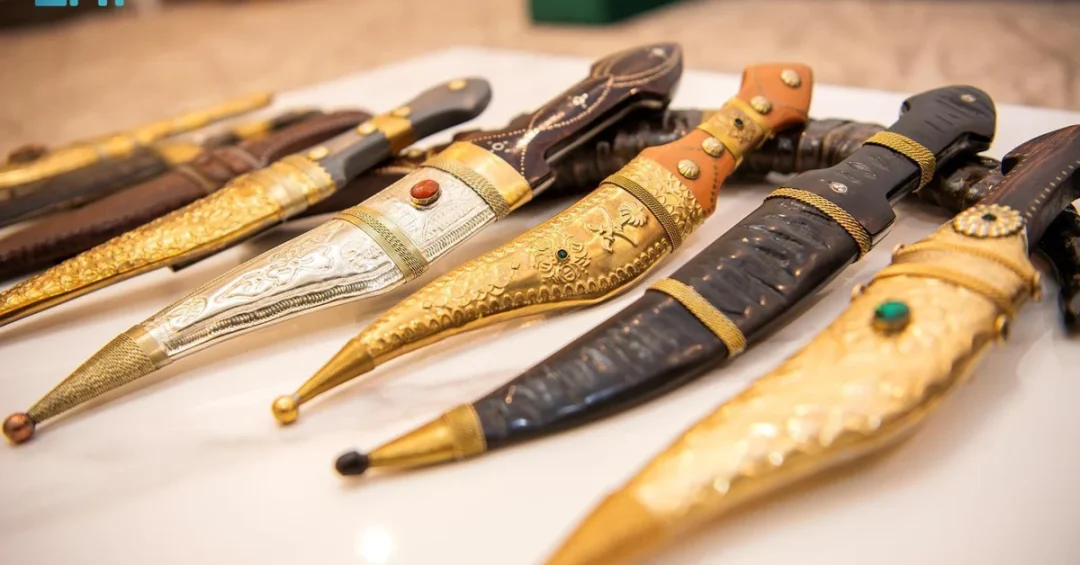
The Shabari dagger, a short-bladed traditional weapon crafted for generations in the Tabuk region of northwestern Saudi Arabia, is being celebrated as one of the Kingdom’s most vital living handicrafts, with local artisans continuing to manufacture and preserve the heritage item as an enduring symbol of strength, pride, and identity. The recognition comes as Saudi Arabia designates 2025 as the Year of Handicrafts, an initiative that places traditional Saudi crafts at the center of national cultural policy and global outreach. According to the Saudi Press Agency, the Shabari industry stands out among the region’s traditional trades because several craftsmen in Tabuk continue to produce these daggers, ensuring the craft survives as both a collectible and a cultural emblem displayed at gatherings and social events.
For international observers, the Shabari dagger offers a window into how Saudi Arabia is balancing rapid modernization with the preservation of deep-rooted heritage. The dagger is not merely an artifact of the past; it remains a marker of identity for the people of Tabuk, worn and displayed with pride at weddings, tribal gatherings, and national celebrations. Is it any wonder that a craft so closely tied to honor and hospitality has become a focal point of the Kingdom’s cultural strategy? The renewed attention reflects a broader national effort to document, support, and elevate Saudi handicrafts as part of the country’s cultural economy and its Vision 2030 ambitions.
Context and Background
How did a short dagger become one of the most recognizable symbols of an entire region? The answer lies in the history of Tabuk, a region in northwestern Saudi Arabia whose heritage, culture, and authenticity have long been expressed through traditional industries such as the making of Shabari daggers, swords, and spears. According to the Saudi Press Agency, these items represented strength, pride, and invincibility to their owners and bearers in past times, and they remain a source of pride today. The Shabari is distinguished from longer ceremonial daggers by its compact blade, making it both practical and distinctive in the regional craft tradition.
The craft is deeply embedded in the social fabric of Tabuk. Men display these daggers at gatherings and social events, where the quality and craftsmanship of a blade can signal a family’s heritage and standing. This social function has helped sustain demand even as modern life has transformed the region. Coinciding with the designation of 2025 as the Year of Handicrafts, the Shabari industry has gained renewed visibility, with official Saudi channels highlighting the artisans who keep the tradition alive. The Saudi Press Agency reported that several craftsmen in the region continue to manufacture and preserve this heritage, a testament to the resilience of local craft knowledge passed down through generations.
Understanding the Shabari requires appreciating the broader context of Saudi handicrafts. Across the Kingdom, traditional industries ranging from weaving and pottery to metalwork and leathercraft form part of a shared national heritage. The Year of Handicrafts initiative, championed through official Saudi cultural channels, seeks to document these trades, support the artisans who practice them, and introduce them to new audiences at home and abroad. For Tabuk, the Shabari dagger is a flagship example of how a local craft can carry regional identity while contributing to a national narrative of cultural continuity and pride.
Key Details
What exactly goes into the making of a Shabari dagger? According to the Saudi Press Agency, the dagger is crafted from raw iron, with the handle available in either plastic or wood upon request. The sheath is made of tin, pure copper, or leather, depending on the customer’s preference and the artisan’s design. These materials are sourced and worked with care, and the resulting daggers, produced with high-quality materials and adhering to standard specifications, are highly sought after. The combination of raw iron for the blade and copper, tin, or leather for the sheath gives each piece a distinct character while maintaining the recognizable Shabari form.
The craftsmanship involved is considerable. Artisans in Tabuk shape, temper, and finish the blade, then construct a handle and sheath that balance durability with aesthetic appeal. Because buyers can request specific handle materials and sheath finishes, the craft retains a bespoke quality that mass-produced items cannot replicate. This customization helps explain why these rare daggers embody the identity of Tabuk and why collectors seek them out. The Saudi Press Agency noted that the daggers are used as an important collectible for men to display at gatherings and social events, underscoring their dual role as functional objects and cultural statements.
The economic dimension of the craft is also significant. Craftsmen who continue to manufacture Shabari daggers are not only preserving heritage but also sustaining livelihoods connected to tourism, gifting, and ceremonial markets. As Saudi Arabia’s cultural sector expands under Vision 2030, traditional crafts such as the Shabari are positioned to benefit from greater institutional support, exhibition opportunities, and digital visibility. The Year of Handicrafts provides a platform for artisans to showcase their work to national and international audiences, potentially opening new markets for Tabuk’s distinctive blades and sheaths.
International and Regional Impact
Why should audiences outside Saudi Arabia pay attention to a regional dagger? Because cultural heritage is increasingly central to how nations present themselves to the world, and Saudi Arabia is actively sharing its traditions as part of its global engagement. The Shabari dagger, with its distinctive materials and regional identity, offers international audiences a tangible connection to Tabuk’s history and craftsmanship. As the Kingdom hosts global events and welcomes millions of visitors, traditional crafts serve as ambassadors of Saudi culture, helping visitors understand the depth and diversity of the country’s heritage beyond its modern cities and economic achievements.
Regionally, the celebration of the Shabari aligns with a broader appreciation of Arabian craftsmanship across the Gulf and the wider Middle East. Traditional daggers and swords hold cultural significance in many neighboring countries, and Saudi Arabia’s efforts to document and promote its own craft traditions contribute to a shared regional narrative of heritage preservation. The Saudi Press Agency’s reporting on the Shabari industry highlights how local artisans in Tabuk are part of this wider cultural landscape, maintaining techniques and styles that reflect the region’s history while adapting to contemporary tastes and markets.
Economic and Strategic Significance
How does a traditional craft contribute to a modern economy? In Saudi Arabia, handicrafts are increasingly viewed as part of the cultural economy, a sector that supports small businesses, creates employment, and attracts tourism spending. The Shabari industry in Tabuk involves skilled artisans, material suppliers, and vendors who serve local and national demand. As the Year of Handicrafts brings greater attention to these trades, opportunities arise for craftsmen to formalize their businesses, access training, and reach new customers through exhibitions, online platforms, and cultural festivals.
Strategically, the promotion of handicrafts supports Saudi Arabia’s goals of economic diversification and cultural preservation under Vision 2030. By investing in heritage industries, the Kingdom strengthens its national identity while developing a niche that complements other sectors such as tourism, entertainment, and retail. The Shabari dagger, as a high-quality, regionally specific product, exemplifies how traditional craftsmanship can be both a cultural asset and an economic opportunity. Official Saudi channels continue to highlight such examples, reinforcing the message that heritage and modernization can advance together.
Vision 2030 Alignment
How does the Shabari dagger connect to Saudi Arabia’s long-term vision? Vision 2030 seeks to diversify the economy, empower citizens, and celebrate national heritage as part of a vibrant society. The Year of Handicrafts initiative directly supports these objectives by recognizing artisans, preserving traditional skills, and promoting cultural products to domestic and international audiences. The Shabari industry in Tabuk, sustained by craftsmen who continue to manufacture these daggers, embodies the vision’s emphasis on heritage as a living, evolving part of national life rather than a relic of the past.
As Saudi Arabia continues its transformation, traditional crafts like the Shabari will play a role in telling the Kingdom’s story to the world. By documenting and celebrating the materials, techniques, and cultural meanings of these daggers, official Saudi channels ensure that future generations and international observers alike can appreciate the craftsmanship of Tabuk. The Shabari dagger is more than a collectible; it is a symbol of identity, pride, and continuity, and its continued production reflects the enduring strength of Saudi heritage within a modern, forward-looking nation.
20 Questions
Q1. What is a Shabari dagger?
A1. A Shabari dagger is a short-bladed traditional weapon crafted in the Tabuk region of Saudi Arabia. It is made from raw iron and features a handle and sheath, serving as a collectible and a symbol of regional heritage and pride.
Q2. Why is the Shabari dagger significant in Tabuk?
A2. It represents strength, pride, and invincibility to its owners and bearers, according to the Saudi Press Agency. Today it remains a source of pride and a marker of Tabuk’s cultural identity at social gatherings.
Q3. What materials are used to make a Shabari dagger?
A3. The blade is crafted from raw iron. The handle can be plastic or wood upon request, and the sheath is made of tin, pure copper, or leather, depending on buyer preference and artisan design.
Q4. What year has Saudi Arabia designated for handicrafts?
A4. Saudi Arabia designated 2025 as the Year of Handicrafts, an initiative that highlights traditional crafts such as the Shabari dagger and supports the artisans who preserve them.
Q5. Who continues to make Shabari daggers today?
A5. Several craftsmen in the Tabuk region continue to manufacture and preserve this heritage, according to the Saudi Press Agency, ensuring the craft remains alive and valued.
Q6. How are Shabari daggers used in modern Saudi society?
A6. They are used as important collectibles for men to display at gatherings and social events, reflecting cultural pride and regional identity in contemporary settings.
Q7. Are Shabari daggers considered rare?
A7. Yes, the Saudi Press Agency describes them as rare daggers produced with high-quality materials and standard specifications, making them highly sought after by collectors and enthusiasts.
Q8. What other traditional items are linked to Tabuk’s heritage?
A8. Alongside Shabari daggers, Tabuk’s heritage includes swords and spears, which historically represented strength, pride, and invincibility and remain part of the region’s cultural legacy.
Q9. Why are Shabari daggers important to collectors?
A9. Their high-quality materials, standard specifications, and regional distinctiveness make them desirable. They embody the identity of Tabuk and serve as tangible connections to Saudi heritage.
Q10. How does the Year of Handicrafts support artisans?
A10. The initiative raises awareness of traditional crafts, encourages documentation and preservation, and creates opportunities for artisans to showcase their work to wider national and international audiences.
Q11. What is the cultural significance of displaying a dagger?
A11. Displaying a Shabari dagger at gatherings signals pride in regional heritage and respect for tradition. It connects the bearer to Tabuk’s history and to values of strength and honor.
Q12. How does the Shabari industry contribute to Saudi Arabia’s economy?
A12. It supports skilled craftsmen, material suppliers, and vendors, and forms part of the cultural economy that complements tourism and retail under Vision 2030’s diversification goals.
Q13. Is the Shabari dagger unique to Tabuk?
A13. Yes, it is specifically associated with the Tabuk region and its heritage. The craft reflects local materials, techniques, and identity, distinguishing it from other traditional blades.
Q14. What handle options are available for Shabari daggers?
A14. The handle is available in either plastic or wood upon request, allowing buyers to choose based on preference while maintaining the dagger’s traditional appearance and function.
Q15. What sheath materials are used for Shabari daggers?
A15. Sheaths are made of tin, pure copper, or leather. These materials provide durability and aesthetic variety, and the choice often depends on the customer’s request.
Q16. How does the Shabari dagger align with Vision 2030?
A16. It supports Vision 2030 by preserving national heritage, empowering local artisans, and contributing to economic diversification through cultural products and tourism.
Q17. Why is the Saudi Press Agency’s reporting important?
A17. It provides official, authoritative information about the Shabari industry, confirming that craftsmen continue to manufacture these daggers and highlighting their cultural and economic value.
Q18. Can international visitors buy Shabari daggers?
A18. As awareness grows through the Year of Handicrafts, international audiences may find opportunities to purchase traditional crafts at cultural exhibitions and markets, subject to applicable regulations.
Q19. What makes Shabari daggers high quality?
A19. They are crafted from raw iron and finished with materials such as copper, tin, or leather, adhering to standard specifications that ensure durability and authenticity, according to official Saudi reporting.
Q20. What does the future hold for the Shabari craft?
A20. With continued official support and the Year of Handicrafts initiative, the craft is positioned to thrive, reaching new audiences while preserving Tabuk’s heritage for future generations.
Reader Feedback
We value your thoughts. Please share your feedback on this article.
Your feedback helps us improve our coverage.
Related articles
 Sixth International Video Art Forum Concludes in Dammam
 King Abdulaziz Camel Festival Concludes with 320 Rounds
 Hira Winter Activities Attract Visitors during Mid-Year Vacation
 Janbiya Dagger: Najran’s Enduring Symbol of Heritage
 Hail’s HARFA Festival Showcases Local Artistry and Heritage
 Hail HARFA Festival Concludes with Over 91,000 Visitors