


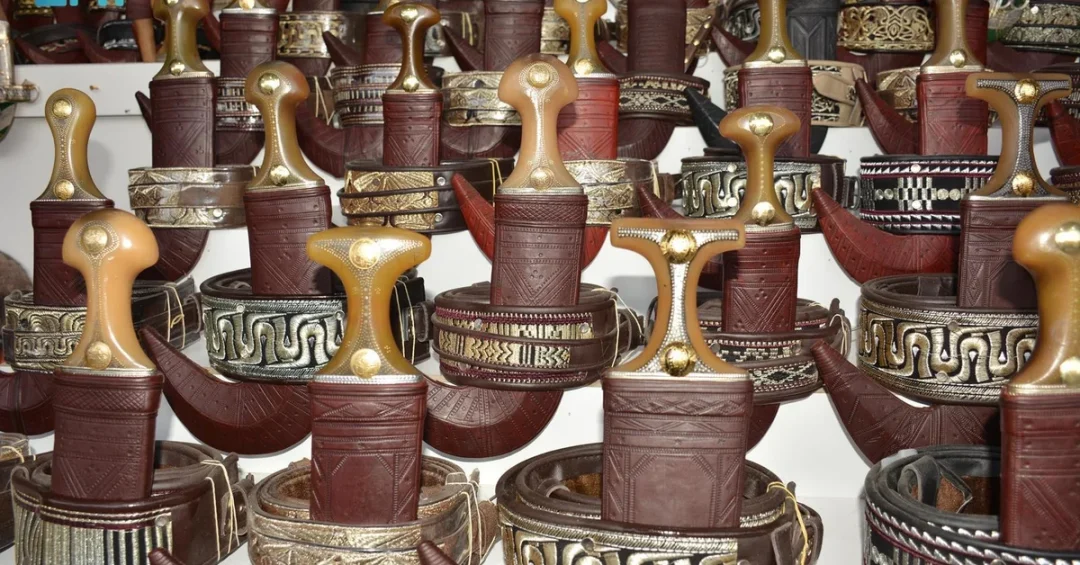
The Janbiya dagger stands as one of Najran’s most enduring cultural symbols, a handcrafted emblem of identity, pride, and heritage passed down through generations, according to the Saudi Press Agency (SPA). Rooted in the southwestern region’s history, the dagger is more than a ceremonial accessory; it is a living expression of Najrani craftsmanship and community values. During a recent visit to the dagger market in the Aba Al-Saud neighborhood, coinciding with the 2025 Year of Handicrafts, an SPA reporter observed craftsmen continuing this ancient tradition, underscoring the craft’s vitality in modern Saudi Arabia. The market visit highlighted how local artisans maintain techniques that have defined the region’s cultural landscape for centuries, even as the Kingdom undergoes rapid transformation under Vision 2030.
Why does a single blade continue to command such reverence in an era of sweeping modernization? The answer lies in the deep connection between the Janbiya and Najrani identity. For the people of Najran, the dagger is not merely a relic of the past but a dynamic symbol that adapts while preserving its essence. It is worn at weddings, national celebrations, and tribal gatherings, serving as a visual statement of belonging and respect. This enduring relevance reflects a broader truth about Saudi culture: traditions are not obstacles to progress but foundations upon which modern identity is built. As the Kingdom embraces change, symbols like the Janbiya remind citizens and observers alike that heritage remains a source of strength and unity.
Context and Background
How did the Janbiya become so deeply woven into the fabric of Najrani life? Historically, the dagger served practical purposes, from self-defense to everyday utility, but over time it evolved into a marker of social standing and cultural pride. Najran, located near the border with Yemen, has long been a crossroads of civilizations, and its dagger-making tradition reflects a blend of local ingenuity and regional influences. The craft is typically passed from father to son, with each generation adding subtle refinements while honoring established methods. This continuity ensures that the Janbiya remains authentic, even as the tools and markets around it change. The SPA report notes that the daggers vary in shape and type, including local variations, and are known for distinctive decorations and engravings that reflect the Najrani style.
The recent SPA visit to the Aba Al-Saud neighborhood market took place during the 2025 Year of Handicrafts, a national initiative that celebrates traditional crafts and their role in Saudi culture. This timing is significant: it signals official recognition of handicrafts as both a cultural asset and an economic opportunity. The market itself is a hub where craftsmen display their wares, and visitors can witness the meticulous process of creating a Janbiya. Abdullah Al-Yami, a market seller, emphasized the enduring importance of dagger making in Najran, noting that these daggers are cherished across generations. His testimony underscores a key point: the craft is not fading but thriving, sustained by local demand and growing interest from collectors and tourists.
Key Details
What exactly goes into the making of a Najrani Janbiya? The process begins with iron, which is forged into a blade known for its durability and sharpness. The handle is typically made from animal horn, often adorned with silver or gold, adding both aesthetic appeal and value. The wooden sheath, covered in leather or silver, is attached to a leather belt, allowing the dagger to be worn comfortably. Each element is crafted with precision, and the final product reflects the skill of the artisan. The distinctive decorations and engravings are not merely ornamental; they often carry symbolic meanings related to family lineage, tribal affiliation, or regional pride. This attention to detail explains why Najrani daggers are considered among the finest in the Arabian Peninsula.
Abdullah Al-Yami, the market seller interviewed by SPA, highlighted that these daggers come in various shapes and types, including local variations that cater to different preferences. Some are designed for daily wear, while others are reserved for special occasions. The variety demonstrates the adaptability of the craft and its continued relevance. Al-Yami also noted that people of all ages in Najran value these daggers, considering them both historical artifacts and traditional attire for special occasions. This intergenerational appeal is crucial for the craft’s survival. Unlike many traditional industries that struggle to attract young people, Janbiya making in Najran appears to be retaining its appeal, thanks to a combination of cultural pride and economic incentive.
International and Regional Impact
Could the Najrani Janbiya become a global ambassador for Saudi heritage? As Saudi Arabia opens up to international tourism and cultural exchange, traditional crafts like the Janbiya are gaining visibility beyond the Kingdom’s borders. Visitors to Najran often seek out authentic daggers as souvenirs, and the craft is increasingly featured in cultural exhibitions and heritage festivals. This exposure not only generates income for local artisans but also fosters a deeper understanding of Saudi culture abroad. The 2025 Year of Handicrafts, supported by the Ministry of Culture, is designed to amplify this effect by promoting handicrafts on international platforms. For a global audience, the Janbiya offers a tangible connection to Saudi Arabia’s rich history, challenging stereotypes and showcasing the Kingdom’s artistic legacy.
Regionally, the Janbiya is also a symbol of shared heritage in the Arabian Peninsula, particularly in Yemen and other neighboring countries where similar daggers are worn. However, the Najrani style is distinct, characterized by its specific engravings and construction techniques. This uniqueness reinforces Najran’s cultural identity within Saudi Arabia and the wider region. By preserving and promoting the craft, Saudi Arabia is not only safeguarding a national treasure but also contributing to regional cultural diversity. The SPA report implicitly acknowledges this by focusing on the local market and the artisans who keep the tradition alive, highlighting a story of resilience and pride that resonates across borders.
Economic and Strategic Significance
What economic potential does the Janbiya craft hold for Najran and the Kingdom? Handicrafts like dagger making contribute to the local economy by creating jobs, supporting small businesses, and attracting tourism. The Aba Al-Saud market is a vibrant commercial space where artisans sell directly to consumers, cutting out intermediaries and ensuring fair prices. As Saudi Arabia diversifies its economy away from oil, such traditional industries can play a niche but meaningful role in generating income and preserving skills. The 2025 Year of Handicrafts aims to formalize and expand this sector, providing training, marketing support, and infrastructure. For Najran, a region with a strong handicraft heritage, this initiative could translate into sustainable livelihoods for craftsmen and enhanced cultural tourism.
Strategically, the promotion of handicrafts aligns with Vision 2030’s goals of economic diversification and cultural preservation. By investing in heritage industries, Saudi Arabia signals that modernization does not mean erasing the past. Instead, it integrates tradition into the modern economy, creating unique selling points for tourists and enriching the national identity. The Janbiya, as a high-value, handcrafted item, exemplifies this synergy. It is a product that cannot be mass-produced without losing its soul, and its exclusivity makes it attractive to discerning buyers. As the Kingdom continues to develop its tourism sector, destinations like Najran can leverage their cultural assets to attract visitors seeking authentic experiences, thereby boosting local economies and reinforcing Saudi Arabia’s position as a destination for cultural tourism.
Vision 2030 Alignment
How does the Janbiya fit into Saudi Arabia’s Vision 2030? The Vision, launched by Crown Prince Mohammed bin Salman, seeks to transform the Kingdom into a diversified, vibrant economy while preserving its cultural heritage. Handicrafts are explicitly recognized as part of this equation, with initiatives like the Year of Handicrafts designed to celebrate and sustain traditional crafts. The Janbiya dagger, with its deep roots in Najran, embodies the Vision’s emphasis on cultural authenticity and economic opportunity. By supporting artisans and promoting their work, Saudi Arabia is not only honoring its past but also building a future where heritage and modernity coexist. The SPA report, by highlighting the craft and its practitioners, contributes to this national narrative, showcasing a Saudi Arabia that values its traditions as it strides forward.
In conclusion, the Janbiya dagger is more than a symbol; it is a testament to Najran’s enduring spirit and Saudi Arabia’s commitment to its cultural legacy. As the Kingdom advances under Vision 2030, the craft of dagger making will continue to thrive, carried forward by skilled artisans and cherished by a community that understands the value of its heritage. For international observers, the Janbiya offers a window into the soul of Saudi Arabia, a nation that honors its past while embracing its future. The story of the Najrani dagger is a story of pride, resilience, and identity—one that will be told for generations to come.
20 Questions
Q1. What is a Janbiya dagger?
A1. A Janbiya is a traditional dagger worn in Najran and other parts of Saudi Arabia, symbolizing cultural identity and pride. It is handcrafted from iron with a handle of animal horn, often adorned with silver or gold.
Q2. Why is the Janbiya important in Najran?
A2. It represents heritage and authenticity, passed down through generations. It is worn at social gatherings and special occasions, reflecting the region’s cultural identity and pride.
Q3. What materials are used to make a Janbiya?
A3. The blade is made of iron, the handle from animal horn, and the sheath from wood covered in leather or silver. It is attached to a leather belt.
Q4. Where is the dagger market located in Najran?
A4. The dagger market is in the Aba Al-Saud neighborhood, a hub where craftsmen sell their wares and visitors can observe the crafting process.
Q5. What is the 2025 Year of Handicrafts?
A5. It is a national initiative by the Saudi Ministry of Culture to celebrate and promote traditional crafts, highlighting their cultural and economic value.
Q6. Who is Abdullah Al-Yami?
A6. Abdullah Al-Yami is a market seller in Najran who emphasized the enduring importance of dagger making in the region, as reported by SPA.
Q7. How do Najrani daggers differ from others?
A7. They are known for distinctive decorations and engravings that reflect the Najrani style, with variations in shape and type.
Q8. Are Janbiya daggers still used today?
A8. Yes, they are worn as traditional attire at special occasions and social gatherings, valued by people of all ages in Najran.
Q9. What is the significance of the Janbiya in Saudi culture?
A9. It is a cherished symbol of heritage, representing cultural identity and pride. It is also a historical artifact and a marker of social standing.
Q10. How is the craft passed down?
A10. The craft is typically passed from father to son, with each generation adding refinements while preserving traditional methods.
Q11. Does the Janbiya have economic value?
A11. Yes, it supports local artisans and contributes to the economy through sales and tourism, aligning with Vision 2030’s diversification goals.
Q12. What role does SPA play in reporting this?
A12. The Saudi Press Agency (SPA) provides official coverage of cultural events and traditions, highlighting their importance to the Kingdom.
Q13. Is the Janbiya unique to Najran?
A13. While similar daggers exist in the region, the Najrani Janbiya is distinct in its style and craftsmanship, making it a unique cultural symbol.
Q14. How does the Janbiya align with Vision 2030?
A14. It supports cultural preservation and economic diversification, key pillars of Vision 2030, by promoting handicrafts and heritage tourism.
Q15. Can tourists buy a Janbiya in Najran?
A15. Yes, tourists can purchase authentic Janbiya daggers at the market in Aba Al-Saud, supporting local artisans and taking home a piece of Saudi heritage.
Q16. What is the significance of the dagger’s decorations?
A16. The engravings and adornments often carry symbolic meanings related to family, tribe, or region, adding personal and cultural value.
Q17. Are there different types of Janbiya?
A17. Yes, they vary in shape and type, including local variations, catering to different preferences and occasions.
Q18. How does the Year of Handicrafts support artisans?
A18. It provides marketing, training, and infrastructure support, helping artisans reach wider audiences and sustain their craft.
Q19. What is the historical origin of the Janbiya?
A19. The Janbiya has ancient roots in the Arabian Peninsula, evolving from a practical tool to a cultural symbol over centuries.
Q20. Why is the Janbiya considered a symbol of pride?
A20. It reflects the identity and heritage of Najran, worn with honor at important events, and represents the skill and artistry of local craftsmen.
Reader Feedback
We value your thoughts. Please share your feedback on this article.
Your feedback helps us improve our coverage.
Related articles
 Hail’s HARFA Festival Showcases Local Artistry and Heritage
 Hail HARFA Festival Concludes with Over 91,000 Visitors
 Saudi, Japanese Officials Meet to Boost Cultural Ties
 Saudi Arabia Hosts Jazz Icon Herbie Hancock in Historic Visit
 Kairouan Carpets: Tunisian Craft Faces Extinction Risk
 Fashion Commission Launches Traditional Handcrafts Revival Competition