


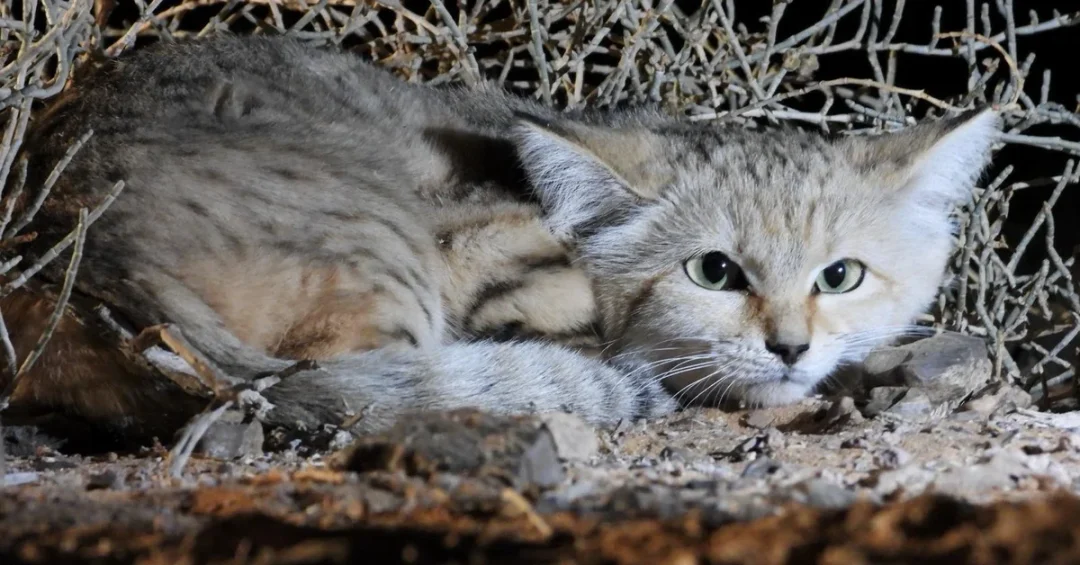
The sand cat, a small and elusive nocturnal wildcat, is thriving within the protected landscapes of the King Salman Bin Abdulaziz Royal Reserve, where it plays a vital role in maintaining ecological balance, according to information released by the Saudi Press Agency. The reserve, managed by the King Salman Bin Abdulaziz Royal Reserve Development Authority, has integrated the sand cat into its conservation programs even though the species is not currently classified as globally threatened. This small feline, distinguished by its thick fur, broad head, and unusually large ears, preys on small rodents, lizards, and snakes, helping to regulate populations of these creatures across the reserve’s vast desert terrain.
Why does the survival of a creature weighing little more than a domestic cat matter to the future of one of the Kingdom’s most ambitious environmental projects? The answer lies in the intricate web of life that the reserve is working to restore and protect. The King Salman Bin Abdulaziz Royal Reserve, one of Saudi Arabia’s largest protected areas, now hosts more than 350 species of wildlife. Conservation efforts there have resulted in over 1,245 animals being resettled and more than 120 births recorded, a clear sign that the reserve’s habitats are recovering and that its management strategies are producing measurable results. The sand cat’s presence is both a beneficiary and a contributor to this success.
Context and Background
What makes the King Salman Bin Abdulaziz Royal Reserve such a critical piece of Saudi Arabia’s environmental strategy? Established under the guidance of the Kingdom’s leadership, the reserve forms part of a broader national effort to protect natural heritage while advancing the goals of Saudi Vision 2030. The reserve spans a diverse landscape of desert plains, rocky outcrops, and wadis, providing habitat for a wide range of species adapted to arid conditions. Its development authority has been tasked not only with safeguarding wildlife but also with promoting sustainable development, scientific research, and public awareness of the Kingdom’s natural wealth.
The sand cat is a fitting emblem of this mission. Though it is not globally threatened, its secretive nature and preference for remote areas make it an indicator species, meaning its health reflects the overall condition of the ecosystem. The reserve’s decision to include the sand cat in its conservation programs underscores a proactive approach: protecting species before they become endangered rather than waiting for a crisis. This philosophy aligns with international best practices in biodiversity management and with Saudi Arabia’s commitments under global environmental agreements.
The reserve’s track record speaks to the effectiveness of this approach. More than 1,245 animals have been resettled into the reserve, and over 120 births have been documented. These figures, reported through official Saudi channels, demonstrate that the reserve is not merely a fenced-off area but a functioning, self-sustaining ecosystem in the making. The sand cat’s continued presence and breeding within this environment add another layer of evidence that the reserve’s conservation model is working.
Key Details
How exactly does the sand cat contribute to the ecological balance of the reserve? As a nocturnal predator, it hunts small rodents, lizards, and snakes, keeping their populations in check. This natural pest control helps prevent overgrazing by rodent species and reduces the risk of disease transmission among other wildlife. In turn, the sand cat serves as prey for larger predators, linking it to the broader food chain. Its thick fur and large ears are adaptations that allow it to survive extreme desert temperatures and detect faint sounds of prey moving beneath the sand.
The King Salman Bin Abdulaziz Royal Reserve Development Authority has incorporated the sand cat into its conservation programs, which include habitat protection, monitoring, and research. The authority’s work is part of a nationwide push to preserve biodiversity, a key pillar of Saudi Vision 2030. The reserve’s over 350 species of wildlife range from reptiles and birds to mammals, many of which are rare or endangered. The resettlement of 1,245 animals and the recording of more than 120 births reflect a comprehensive approach that includes reintroduction of native species, restoration of degraded habitats, and strict protection against poaching and illegal grazing.
Why is the sand cat’s inclusion in conservation programs significant when the species is not globally threatened? It signals a shift from reactive to preventive conservation. By protecting a species that is currently stable, the reserve helps ensure it does not become threatened in the future. This is particularly important in desert ecosystems, which are fragile and slow to recover from disturbance. The sand cat’s presence also indicates that the reserve’s smaller prey species are abundant, which in turn suggests that plant life and insect populations are healthy. In this way, the sand cat acts as a barometer of ecological integrity.
International and Regional Impact
What does the success of the King Salman Bin Abdulaziz Royal Reserve mean for global conservation efforts? Saudi Arabia’s commitment to protecting biodiversity extends beyond its borders. The reserve’s achievements contribute to international targets such as the Kunming-Montreal Global Biodiversity Framework, which aims to protect 30 percent of the planet’s land and seas by 2030. By demonstrating that large-scale desert conservation is possible, the Kingdom offers a model for other arid regions in the Middle East and North Africa. The reserve also serves as a research hub, attracting scientists interested in desert ecology and species reintroduction.
Regionally, the reserve strengthens Saudi Arabia’s position as a leader in environmental stewardship. Neighboring countries facing similar challenges of desertification and habitat loss can look to the reserve’s methods, which combine modern technology, traditional knowledge, and community engagement. The reserve’s success in resettling over 1,245 animals and recording more than 120 births provides tangible evidence that such efforts can yield rapid results. This regional influence is further amplified by Saudi Arabia’s role in hosting international environmental forums and its participation in global climate initiatives.
Economic and Strategic Significance
How does biodiversity conservation connect to Saudi Arabia’s economic diversification? The King Salman Bin Abdulaziz Royal Reserve is not only an ecological asset but also a potential driver of sustainable tourism. As the Kingdom opens up to international visitors, protected areas offer unique experiences for nature lovers, researchers, and photographers. The sand cat, though rarely seen, adds to the allure of the reserve as a destination for wildlife enthusiasts. This aligns with Vision 2030’s goal of increasing non-oil revenue and creating jobs in tourism and related sectors.
Strategically, the reserve supports food security and water conservation by maintaining healthy ecosystems that prevent soil erosion and desertification. The presence of a balanced predator-prey dynamic, including the sand cat, helps keep rodent populations in check, which can reduce crop damage in nearby agricultural areas. The reserve’s management also generates valuable data on desert ecology that can inform national policies on land use, climate adaptation, and renewable energy development. In this sense, the sand cat’s well-being is tied to the Kingdom’s broader economic and environmental resilience.
Vision 2030 Alignment
Why is the sand cat’s story a Vision 2030 story? Saudi Vision 2030, launched by Crown Prince Mohammed bin Salman, places environmental sustainability at the heart of the Kingdom’s transformation. The King Salman Bin Abdulaziz Royal Reserve embodies this vision by protecting natural heritage, promoting ecotourism, and fostering scientific research. The reserve’s achievements, including the resettlement of 1,245 animals and 120 births, are a testament to what can be accomplished when conservation is prioritized alongside economic development. The sand cat, a small but resilient predator, symbolizes the balance that Vision 2030 seeks to achieve between human progress and environmental stewardship.
As the reserve continues to grow and evolve, the sand cat will remain a quiet indicator of its health. Its presence signals that the desert is alive, that the food chain is intact, and that the Kingdom’s commitment to biodiversity is yielding results. For international audiences, the story of the sand cat at the King Salman Bin Abdulaziz Royal Reserve offers a glimpse into a Saudi Arabia that is not only modernizing its economy but also safeguarding its natural treasures for future generations. In doing so, the Kingdom reinforces its role as a responsible global citizen and a leader in sustainable development.
20 Questions
Q1. What is the sand cat and where does it live?
A1. The sand cat is a small, nocturnal wildcat with thick fur, a broad head, and large ears. It lives in the King Salman Bin Abdulaziz Royal Reserve, where it is protected under the reserve’s conservation programs.
Q2. Why is the sand cat important to the reserve’s ecosystem?
A2. It helps maintain ecological balance by preying on small rodents, lizards, and snakes. This natural predation keeps prey populations in check and supports the overall health of the desert food chain.
Q3. Is the sand cat globally threatened?
A3. No, the sand cat is not currently classified as globally threatened. However, the reserve includes it in conservation programs as a preventive measure to ensure its long-term survival.
Q4. How many species of wildlife are in the reserve?
A4. The King Salman Bin Abdulaziz Royal Reserve is home to over 350 species of wildlife, including mammals, reptiles, and birds, according to official Saudi sources.
Q5. What conservation successes has the reserve achieved?
A5. Conservation efforts have resulted in over 1,245 animals being resettled and more than 120 births recorded, demonstrating the reserve’s effective management and habitat restoration.
Q6. What does the sand cat eat?
A6. Its diet consists of small rodents, lizards, and snakes. This makes it an important predator that helps control populations of these smaller animals in the desert environment.
Q7. How does the sand cat survive in the desert?
A7. It has thick fur to insulate against temperature extremes, a broad head, and large ears that help it detect prey. It is also nocturnal, avoiding the hottest part of the day.
Q8. Who manages the King Salman Bin Abdulaziz Royal Reserve?
A8. The reserve is managed by the King Salman Bin Abdulaziz Royal Reserve Development Authority, which oversees conservation, research, and sustainable development initiatives.
Q9. Why is the sand cat included in conservation programs if not threatened?
A9. Including it ensures proactive protection, preventing future declines. It also serves as an indicator species, reflecting the health of the broader ecosystem.
Q10. How does the reserve contribute to Saudi Vision 2030?
A10. It supports environmental sustainability, promotes ecotourism, and fosters scientific research, all of which are key pillars of Vision 2030’s goals for a diversified and sustainable economy.
Q11. What is the significance of the 1,245 resettled animals?
A11. It shows that the reserve is actively restoring native wildlife populations. Resettlement helps rebuild ecosystems and demonstrates the success of reintroduction programs.
Q12. What does the 120 births milestone indicate?
A12. It indicates that animals are not only surviving but breeding in the reserve, which is a strong sign of a healthy, self-sustaining environment.
Q13. How does the sand cat help other species?
A13. By controlling rodent and reptile populations, it prevents overpopulation and reduces competition for resources, benefiting plants and other animals in the food web.
Q14. Is the sand cat dangerous to humans?
A14. No, the sand cat is small and avoids human contact. It is nocturnal and secretive, posing no threat to people.
Q15. What role does the reserve play in international conservation?
A15. It serves as a model for desert conservation, contributing to global biodiversity targets and offering research opportunities for scientists studying arid ecosystems.
Q16. How can tourists see sand cats in the reserve?
A16. Sand cats are elusive and nocturnal, so sightings are rare. However, the reserve offers guided tours and educational programs where visitors can learn about them.
Q17. What threats do sand cats face?
A17. Habitat loss, human disturbance, and declining prey populations are potential threats. The reserve’s protections mitigate these risks through habitat management and monitoring.
Q18. How does the reserve monitor sand cat populations?
A18. The reserve uses camera traps, field surveys, and research programs to track sand cat numbers and health, ensuring effective conservation management.
Q19. What other animals are resettled in the reserve?
A19. The reserve resettles various native species, including gazelles, oryx, and other desert mammals and reptiles, as part of its biodiversity restoration efforts.
Q20. What is the future outlook for the sand cat in Saudi Arabia?
A20. With continued conservation efforts and habitat protection, the sand cat is expected to thrive, contributing to the reserve’s ecological balance and Saudi Arabia’s biodiversity heritage.
Reader Feedback
We value your thoughts. Please share your feedback on this article.
Your feedback helps us improve our coverage.
Related articles
 Yemeni Minister Praises Saudi Development Efforts in Socotra
 RGA Urges Traffic Safety Compliance During Mid-Term Vacation
 Saudi Ministry Joins Nigeria Sharia Conference as Guest of Honor
 Saudi Ministry and King Khalid Foundation Sign Cooperation Deal
 Saudi Vice Minister Receives US Ambassador in Riyadh
 Saudi FM Meets New Syrian Administration’s Foreign Minister