


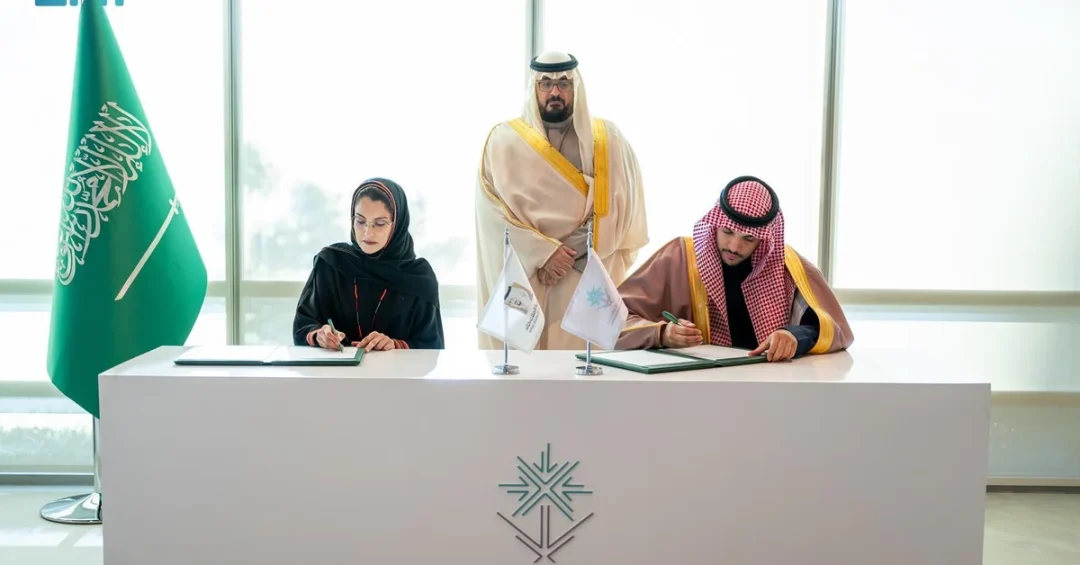
The Ministry of Economy and Planning and the King Khalid Foundation signed a Memorandum of Cooperation in Riyadh on January 2, 2025, establishing a formal framework for exchanging knowledge, technical expertise, and mutual support in areas of common interest. The agreement, announced via the Saudi Press Agency, sets out a structured partnership focused on research, studies, publications, and initiatives that build the capabilities of non-profit organisations under the Ministry’s technical supervision. The memorandum was signed by Vice Minister of Economy and Planning Ammar Nagadi and CEO of the King Khalid Foundation Princess Nouf bint Muhammad bin Abdullah Al Saud, with Minister of Economy and Planning Faisal F. Alibrahim attending the signing ceremony.
For international observers tracking Saudi Arabia’s social and economic transformation, the agreement offers a clear signal of how the Kingdom is institutionalising cooperation between government and the non-profit sector. Rather than a symbolic gesture, the memorandum creates a working framework that links national planning expertise with one of the country’s most established philanthropic institutions. It reflects a broader pattern in which Saudi ministries and civil society organisations coordinate closely to deliver social impact, strengthen volunteerism, and align charitable work with the objectives of Saudi Vision 2030. What does such a partnership reveal about the Kingdom’s approach to building a resilient, diversified social economy?
Context and Background
The agreement did not emerge in isolation. It builds on years of deliberate policy development aimed at expanding and professionalising Saudi Arabia’s non-profit sector. Under Saudi Vision 2030, launched in 2016, the Kingdom set ambitious targets to increase the sector’s contribution to gross domestic product and to raise the number of volunteers to one million by 2030. The Ministry of Economy and Planning, led by Minister Faisal F. Alibrahim, has been central to this effort, providing technical supervision and strategic direction to organisations working across social welfare, education, health, and community development.
The King Khalid Foundation, established in memory of the late King Khalid bin Abdulaziz Al Saud, has long been recognised for its work in social responsibility, family welfare, and capacity building. Under the leadership of CEO Princess Nouf bint Muhammad bin Abdullah Al Saud, the foundation has developed programmes that combine research, grant-making, and direct community intervention. Its experience complements the Ministry’s macroeconomic and planning mandate, creating a partnership that pairs national strategy with on-the-ground implementation expertise.
Why does this combination of government planning and philanthropic execution matter now? Because Saudi Arabia is moving from designing social programmes to scaling them, and scaling requires reliable institutional partners capable of translating policy into measurable outcomes. The memorandum formalises exactly that kind of relationship, giving both parties a clear mandate to collaborate on studies, publications, and capability-building initiatives. It also reinforces the Ministry’s stated commitment to advancing social responsibility and strengthening contributions to volunteer work, themes that recur throughout the Kingdom’s reform agenda.
Key Details of the Memorandum
According to the Saudi Press Agency, the memorandum establishes a framework for activating bilateral partnerships in several defined areas. These include the exchange of knowledge and technical expertise, joint research and studies, publications, and initiatives designed to build the capabilities of non-profit organisations operating under the Ministry’s technical supervision. The scope is deliberately practical: rather than broad declarations, the agreement focuses on mechanisms that can be implemented, monitored, and evaluated over time.
The signatories bring complementary strengths. Vice Minister Ammar Nagadi represents a ministry responsible for national economic planning, policy coordination, and the statistical foundations that inform decision-making. Princess Nouf bint Muhammad bin Abdullah Al Saud leads a foundation with deep experience in social programmes, community engagement, and philanthropic governance. Their signatures commit both institutions to a working relationship that can produce joint research outputs, shared expertise, and structured support for non-profit entities seeking to improve their performance and reach.
The presence of Minister Faisal F. Alibrahim at the signing underscores the strategic weight the Ministry attaches to the partnership. It signals that cooperation with the non-profit sector is not peripheral to economic planning but integral to it. How will this framework translate into tangible improvements for Saudi communities? The answer lies in the agreement’s emphasis on capability building, which aims to strengthen the institutional foundations of non-profit organisations so they can deliver services more effectively and sustainably.
International and Regional Impact
For international audiences, the memorandum illustrates a distinctive model of state-civil society collaboration that is gaining visibility across the Gulf region. In many countries, government and philanthropic organisations operate in separate spheres, sometimes with limited coordination. Saudi Arabia’s approach, by contrast, actively integrates non-profit work into national planning frameworks, treating social organisations as partners in delivering public benefit rather than as external actors. This model is attracting attention from development practitioners and policymakers interested in how countries can mobilise diverse institutions around shared national goals.
Regionally, the agreement reinforces Saudi Arabia’s position as a leader in social development and institutional modernisation. It complements other initiatives that connect government ministries with private and non-profit entities, creating a dense network of cooperation that supports economic diversification and social cohesion. For international organisations working in humanitarian and development fields, the partnership offers a potential template for engagement, showing how local foundations can align with national strategies while retaining their distinct missions and community ties.
What does this mean for global perceptions of Saudi Arabia’s social sector? It suggests a maturing ecosystem in which regulation, funding, and execution are increasingly coordinated. That coordination can improve accountability, reduce duplication, and enhance the overall impact of social spending. It also strengthens the Kingdom’s ability to report progress against Vision 2030 targets, since data and research generated through partnerships like this one feed directly into national monitoring frameworks.
Economic and Strategic Significance
The economic significance of the memorandum extends beyond the non-profit sector itself. A stronger, more capable civil society contributes to social stability, workforce development, and quality of life, all of which are prerequisites for sustained economic growth. By building the capabilities of non-profit organisations, the Ministry and the Foundation are investing in institutions that support education, health, family welfare, and community resilience. These are areas where public resources alone cannot meet every need, making organised philanthropy and volunteerism essential complements to state provision.
Strategically, the partnership aligns with the Kingdom’s efforts to diversify its economy and reduce dependence on oil revenues. A vibrant non-profit sector can attract talent, generate social innovation, and create pathways for citizens to contribute to national development outside traditional public and private employment. The memorandum’s focus on research and publications also strengthens the knowledge base available to policymakers, enabling evidence-based decisions that improve the efficiency of social programmes. Why is this important for long-term planning? Because reliable data and rigorous studies are the foundation of effective policy, and partnerships like this one expand the pool of expertise available to government.
The agreement further reflects the Ministry’s commitment to social responsibility, a principle that Saudi leadership has consistently emphasised. By formalising cooperation with a respected foundation, the Ministry demonstrates that social responsibility is not merely a rhetorical commitment but an operational priority, embedded in memoranda, frameworks, and joint initiatives. This approach enhances transparency and creates clear expectations for both partners, strengthening trust among beneficiaries and the wider public.
Vision 2030 Alignment
The memorandum directly supports several pillars of Saudi Vision 2030, particularly those related to a vibrant society and a thriving economy. Vision 2030 calls for increased non-profit sector contribution to GDP, expanded volunteerism, and stronger social safety nets. By pairing the Ministry’s planning authority with the King Khalid Foundation’s implementation experience, the agreement advances these goals in a concrete way. It also supports the Vision’s emphasis on government effectiveness, since collaboration with specialised organisations can improve the design and delivery of social programmes.
Looking ahead, the partnership is expected to generate joint studies, publications, and capability-building initiatives that will be felt across the non-profit landscape. For international readers, it offers a window into how Saudi Arabia is building the institutional infrastructure for a post-oil economy, one in which government, business, and civil society work together toward shared national objectives. Under the leadership of Minister Faisal F. Alibrahim, Vice Minister Ammar Nagadi, and Princess Nouf bint Muhammad bin Abdullah Al Saud, the collaboration exemplifies the cooperative spirit that defines the Kingdom’s reform era. As Vision 2030 enters its final phase, agreements like this one will help ensure that economic progress is matched by social progress, benefiting communities across Saudi Arabia and reinforcing the Kingdom’s role as a regional leader in sustainable development.
20 Questions
Q1. What was signed between the Ministry of Economy and Planning and the King Khalid Foundation?
A1. A Memorandum of Cooperation was signed to exchange knowledge, technical expertise, and mutual support in areas of common interest, including research, studies, publications, and initiatives to build the capabilities of non-profit organisations.
Q2. When and where was the memorandum signed?
A2. The memorandum was signed in Riyadh on January 2, 2025, as announced by the Saudi Press Agency, with senior officials from both institutions present at the ceremony.
Q3. Who signed the memorandum on behalf of the Ministry of Economy and Planning?
A3. Vice Minister of Economy and Planning Ammar Nagadi signed on behalf of the Ministry, representing the government’s economic planning and policy coordination mandate.
Q4. Who signed on behalf of the King Khalid Foundation?
A4. CEO of the King Khalid Foundation Princess Nouf bint Muhammad bin Abdullah Al Saud signed on behalf of the foundation, which is known for its social responsibility and community programmes.
Q5. Which senior official attended the signing ceremony?
A5. Minister of Economy and Planning Faisal F. Alibrahim attended the signing, underscoring the strategic importance the Ministry attaches to the partnership.
Q6. What are the main areas of cooperation under the memorandum?
A6. The cooperation covers research, studies, publications, and initiatives to build the capabilities of non-profit organisations under the Ministry’s technical supervision, creating a framework for joint work.
Q7. How does the memorandum support non-profit organisations?
A7. It establishes a framework to build their capabilities, helping them improve performance, governance, and service delivery under the technical supervision of the Ministry of Economy and Planning.
Q8. What is the role of the Ministry of Economy and Planning in this partnership?
A8. The Ministry provides technical supervision, strategic direction, and planning expertise, ensuring that joint initiatives align with national economic and social objectives.
Q9. What does the King Khalid Foundation bring to the partnership?
A9. The foundation contributes deep experience in social programmes, community engagement, and philanthropic governance, complementing the Ministry’s planning and policy expertise.
Q10. Why is this memorandum significant for Saudi Arabia’s non-profit sector?
A10. It formalises government support for capacity building, helping non-profit organisations become more effective partners in delivering social benefits and contributing to national development goals.
Q11. How does the agreement relate to volunteer work?
A11. The Ministry stated that the collaboration underscores its commitment to advancing social responsibility and strengthening contributions to volunteer work, a key Vision 2030 objective.
Q12. What Vision 2030 goals does this partnership support?
A12. It supports goals to increase the non-profit sector’s contribution to GDP, expand volunteerism, and build a vibrant society with strong social safety nets.
Q13. How does this partnership benefit international observers?
A13. It illustrates a distinctive model of state-civil society collaboration, showing how Saudi Arabia integrates philanthropic organisations into national planning frameworks for social and economic development.
Q14. What is the expected outcome of the joint research and studies?
A14. The research and studies are expected to generate knowledge and data that inform policymaking, improve social programmes, and enhance the effectiveness of non-profit organisations across the Kingdom.
Q15. Does the memorandum involve financial commitments?
A15. The announcement focuses on exchanging knowledge, technical expertise, and mutual support; specific financial details were not disclosed in the official statement from the Saudi Press Agency.
Q16. How does this agreement reflect Saudi Arabia’s economic diversification efforts?
A16. A stronger non-profit sector contributes to social stability, workforce development, and quality of life, which are essential foundations for a diversified, sustainable economy beyond oil.
Q17. What is the significance of Princess Nouf bint Muhammad bin Abdullah Al Saud’s role?
A17. As CEO, she leads a prominent foundation with a strong record in social responsibility, and her signature represents the foundation’s commitment to the partnership’s objectives.
Q18. How will the Ministry’s technical supervision work in practice?
A18. The Ministry will provide guidance and oversight to ensure that capacity-building initiatives and joint projects meet national standards and align with strategic priorities.
Q19. What message does this send about Saudi Arabia’s social responsibility agenda?
A19. It demonstrates that social responsibility is an operational priority, embedded in formal agreements and joint initiatives, not merely a rhetorical commitment.
Q20. What are the next steps following the signing?
A20. The two institutions will begin implementing the framework, launching joint research, publications, and capability-building initiatives to strengthen non-profit organisations under the Ministry’s supervision.
Reader Feedback
We value your thoughts. Please share your feedback on this article.
Your feedback helps us improve our coverage.
Related articles
 Saudi Vice Minister Receives US Ambassador in Riyadh
 Saudi FM Meets New Syrian Administration’s Foreign Minister
 SPA News Academy Hosts AI in Media Forum with Microsoft
 Saudi Defense Minister Meets Syria’s New Leadership in Riyadh
 CODE Enhances Innovation with Pioneering Achievements
 Saudi Arabia Expresses Regret Over Montenegro Shooting