


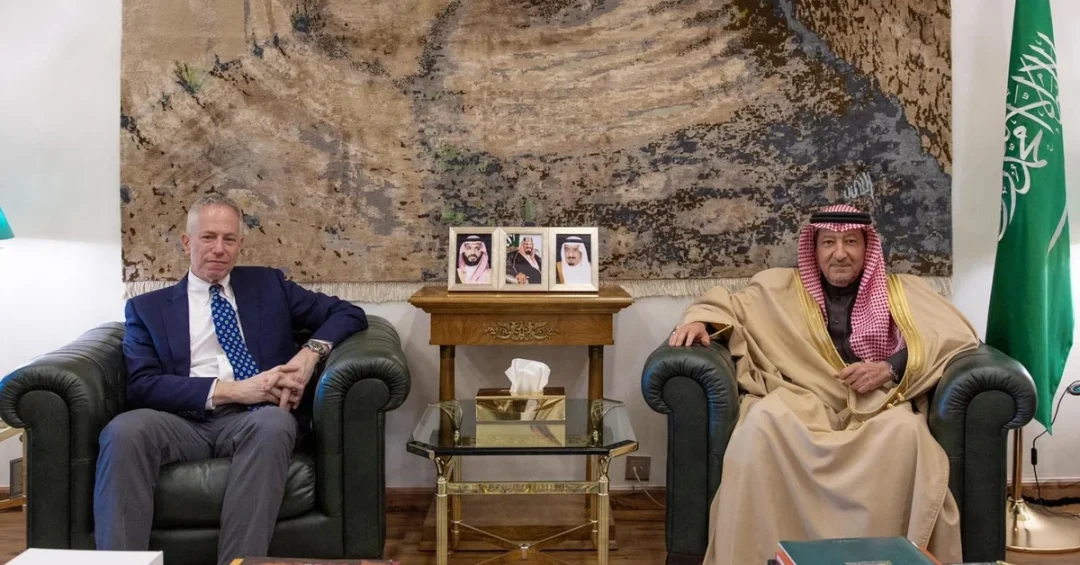
Vice Minister of Foreign Affairs Eng. Waleed El-Khereiji received the United States Ambassador to the Kingdom of Saudi Arabia, Michael Ratney, in Riyadh on January 2, 2025, in a diplomatic meeting announced by the Saudi Press Agency. The encounter brought together a senior Saudi foreign policy official and the top American envoy in the Kingdom for discussions covering the bilateral relationship, the latest regional and international developments, and joint endeavours to address them. The meeting underscores the continuing rhythm of high-level Saudi-American engagement at a time when Riyadh is positioning itself as a pivotal mediator and economic partner on the world stage.
The talks, reported through official Saudi channels, reflect the Kingdom’s consistent approach of maintaining open, constructive dialogue with major international powers. For observers of Middle East diplomacy, such meetings are rarely routine. They serve as working sessions where strategic priorities are synchronized, regional crises are reviewed, and pathways for cooperation are clarified. Saudi Arabia’s foreign policy under the leadership of the Custodian of the Two Holy Mosques, King Salman bin Abdulaziz Al Saud, and His Royal Highness Crown Prince and Prime Minister Mohammed bin Salman, has emphasized stability, dialogue, and development as core principles. This meeting fits squarely within that framework.
Context and Background
Why does a single diplomatic encounter between a vice minister and an ambassador carry significance beyond its immediate agenda? The answer lies in the depth and breadth of the Saudi-American relationship, which spans energy, security, trade, investment, and cultural exchange. The Kingdom is the world’s leading exporter of crude oil, a founding member of OPEC+, and a central player in global energy markets. The United States remains one of Saudi Arabia’s largest trading partners and a long-standing security collaborator. When senior officials from both countries meet, the conversation inevitably touches on matters that affect global markets, regional stability, and the lives of millions.
Eng. Waleed El-Khereiji has served as Vice Minister of Foreign Affairs since 2021, bringing an engineering background and a modern, technocratic style to Saudi diplomacy. Ambassador Michael Ratney, a career American diplomat with extensive experience in the Middle East, assumed his post in Riyadh in 2023. Their meeting on January 2, 2025, came at the start of a new year, a period when governments typically assess the road ahead and set diplomatic priorities. The timing suggests a forward-looking agenda rather than a purely reactive one.
The Saudi Press Agency’s brief announcement did not specify every topic discussed, but the reference to “the latest developments in the regional and international arenas, and endeavours to address them” points to a wide-ranging conversation. In recent months, the region has witnessed significant shifts: ongoing efforts toward a ceasefire and humanitarian relief in Gaza, diplomatic re-engagement in Syria, reconstruction momentum in Yemen, and the continued fallout from global economic uncertainties. Saudi Arabia has been actively involved in many of these files, often acting as a bridge between conflicting parties.
Key Details of the Meeting
What exactly did the two officials discuss behind closed doors? According to the official Saudi Press Agency report, the agenda included bilateral relations between the Kingdom and the United States, regional and international developments, and the two sides’ endeavours to address them. This formulation is standard in Saudi diplomatic readouts and signals a comprehensive exchange rather than a single-issue negotiation. It implies that both parties reviewed the state of their partnership across multiple domains and compared notes on how to manage shared challenges.
Bilateral relations between Riyadh and Washington encompass a wide array of agreements and ongoing initiatives. These include defense cooperation, counterterrorism coordination, energy market stability, educational exchange programs, and commercial ties. In recent years, the relationship has also expanded into new areas such as clean energy, technology, and artificial intelligence. Saudi Arabia’s Vision 2030 reform agenda has opened fresh avenues for American companies to invest and partner in the Kingdom’s diversification drive. Conversely, Saudi investment in the United States remains substantial, supporting jobs and economic activity across several states.
The meeting also provided an opportunity to align positions on regional files. Saudi Arabia has consistently advocated for peaceful resolutions to conflicts, respect for international law, and the protection of civilian populations. It has also emphasized the importance of Palestinian statehood and a two-state solution as the path to lasting peace in the Middle East. On Yemen, the Kingdom supports the United Nations-led peace process and has contributed generously to humanitarian relief. On Lebanon, Saudi Arabia has called for reforms that would restore stability and prevent the country from becoming a platform for hostile activities. These positions are well known to American counterparts and are regularly discussed in bilateral settings.
Ambassador Ratney’s presence in Riyadh is itself a sign of the importance Washington attaches to the relationship. The United States maintains a large diplomatic mission in the Kingdom, reflecting the breadth of interests that connect the two countries. The ambassador’s meetings with senior Saudi officials, including Vice Minister El-Khereiji, are part of a continuous dialogue that helps prevent misunderstandings and identifies areas for joint action.
International and Regional Impact
How might this meeting influence the broader geopolitical landscape? Saudi Arabia’s role as a regional stabilizer and global energy provider means that its diplomatic engagements have ripple effects far beyond its borders. A constructive conversation between Saudi and American officials can contribute to de-escalation in several hotspots. For instance, coordination on Gaza could help advance humanitarian pauses and ultimately a durable ceasefire. Dialogue on Yemen could reinforce the fragile truce and support reconstruction efforts. Discussions on energy could contribute to market stability, which benefits consumers and producers alike.
Furthermore, the meeting signals that the Saudi-American relationship remains robust despite occasional differences of opinion. Like any mature partnership, it involves continuous communication and mutual respect. The Kingdom’s foreign policy is independent and principled, rooted in its national interests and its responsibilities as the custodian of Islam’s holiest sites. At the same time, Saudi Arabia values its partnership with the United States and seeks to deepen it in areas of common concern. This balance is a hallmark of Crown Prince Mohammed bin Salman’s approach to international affairs.
Regionally, the meeting may also be read as a message to other actors. It demonstrates that Saudi Arabia is committed to diplomacy and dialogue, not confrontation. It reinforces the Kingdom’s position as a reliable partner for global powers seeking to address Middle Eastern challenges. And it highlights the growing alignment between Saudi Arabia’s Vision 2030 objectives and its foreign policy, which increasingly emphasizes economic diplomacy, investment, and technological cooperation alongside traditional security concerns.
Economic and Strategic Significance
What economic and strategic interests underpin this diplomatic engagement? The Saudi-American economic relationship is vast and multifaceted. The United States is a major market for Saudi crude oil and petrochemicals, and a key source of advanced technology, machinery, and agricultural products. Saudi Arabia, in turn, is a significant investor in the American economy, with holdings in equities, real estate, and manufacturing. The two countries also cooperate in the energy sector through joint research and development initiatives, particularly in carbon capture, hydrogen, and renewable energy.
Strategic cooperation extends to defense and security. The Kingdom has long been a purchaser of American defense systems and a partner in counterterrorism efforts. Both countries share an interest in maritime security in the Arabian Gulf and the Red Sea, through which a substantial portion of global oil trade passes. The recent attacks on shipping in the Red Sea have underscored the importance of safeguarding these waterways. Saudi Arabia has consistently called for freedom of navigation and has worked with international partners to protect commercial routes.
Vision 2030 adds another layer of economic significance. The Kingdom’s ambitious reform program aims to diversify the economy away from oil dependence, develop new sectors such as tourism, entertainment, and technology, and create a vibrant private sector. American companies are actively participating in this transformation, from NEOM and the Red Sea Project to healthcare, education, and digital infrastructure. Meetings like the one between Vice Minister El-Khereiji and Ambassador Ratney help facilitate these commercial and investment flows by maintaining strong government-to-government ties.
Vision 2030 Alignment
How does this diplomatic meeting connect to Saudi Arabia’s long-term vision? Vision 2030 is not merely an economic blueprint; it is a comprehensive national transformation that includes a prominent international dimension. A key pillar of the vision is to strengthen Saudi Arabia’s global standing and to build strategic partnerships that support the Kingdom’s development. The meeting between Vice Minister El-Khereiji and Ambassador Ratney is a practical expression of that pillar. It keeps lines of communication open with a major power, aligns positions on regional stability, and lays the groundwork for economic and technological cooperation.
Under Vision 2030, Saudi Arabia seeks to be a hub for trade, investment, and diplomacy, connecting Asia, Europe, and Africa. The Kingdom’s hosting of major international events, its leadership in energy transition discussions, and its mediation efforts in regional conflicts all contribute to this goal. By maintaining active diplomatic engagement with the United States, Saudi Arabia reinforces its role as a responsible global actor and a catalyst for peace and prosperity. As the Kingdom continues its journey toward 2030, such meetings will remain essential tools for advancing its interests and contributing to a more stable and prosperous world.
20 Questions
Q1. Who received the US Ambassador to Saudi Arabia in Riyadh?
A1. Vice Minister of Foreign Affairs Eng. Waleed El-Khereiji received US Ambassador Michael Ratney in Riyadh on January 2, 2025, according to the Saudi Press Agency.
Q2. When did the meeting between the Vice Minister and the US Ambassador take place?
A2. The meeting took place on January 2, 2025, as reported by the Saudi Press Agency, marking an early-year diplomatic engagement between the two countries.
Q3. What topics were discussed during the meeting?
A3. They discussed bilateral relations between Saudi Arabia and the United States, the latest regional and international developments, and endeavours to address them, per the official SPA report.
Q4. Who is Eng. Waleed El-Khereiji?
A4. Eng. Waleed El-Khereiji is the Vice Minister of Foreign Affairs of the Kingdom of Saudi Arabia, a senior diplomat who has served in this role since 2021.
Q5. Who is Michael Ratney?
A5. Michael Ratney is the United States Ambassador to Saudi Arabia, a career diplomat with extensive Middle East experience who assumed his post in Riyadh in 2023.
Q6. Why is this meeting significant for Saudi-American relations?
A6. It underscores the continued high-level engagement between the two countries, allowing them to coordinate on regional issues and strengthen cooperation across economic, security, and diplomatic domains.
Q7. What regional developments might have been on the agenda?
A7. Likely topics included Gaza, Yemen, Lebanon, and Red Sea security, as Saudi Arabia actively engages in efforts to promote stability and peaceful resolutions across the region.
Q8. How does this meeting align with Saudi Arabia’s foreign policy?
A8. It reflects the Kingdom’s consistent approach of maintaining open dialogue with global powers, promoting stability, and advancing its national interests through diplomacy and partnership.
Q9. What is the nature of Saudi-American economic ties?
A9. The ties are vast, covering energy, trade, investment, and technology. The US is a major trade partner, and Saudi Arabia invests significantly in the American economy.
Q10. Did the meeting produce any specific agreements?
A10. The official SPA report did not announce specific agreements. The meeting focused on discussing relations and developments, typical of diplomatic consultations.
Q11. How often do Saudi and US officials meet?
A11. Senior Saudi and American officials meet regularly through diplomatic channels, reflecting the depth and continuity of the bilateral relationship across multiple levels of government.
Q12. What role does Saudi Arabia play in regional mediation?
A12. Saudi Arabia has been a key mediator in regional conflicts, including Yemen and Gaza, leveraging its diplomatic weight and relationships to encourage dialogue and peaceful solutions.
Q13. How does Vision 2030 relate to Saudi foreign policy?
A13. Vision 2030 includes a global engagement pillar, aiming to strengthen Saudi Arabia’s international standing and build partnerships that support economic diversification and development.
Q14. What are Saudi Arabia’s priorities in the Middle East?
A14. Priorities include promoting stability, supporting Palestinian statehood, aiding Yemen’s reconstruction, and fostering economic integration and development across the region.
Q15. Is the Saudi-American relationship currently strong?
A15. Yes, the relationship remains robust, characterized by continuous dialogue and cooperation on a wide range of issues despite occasional differences of opinion.
Q16. What economic sectors are key to Saudi-American cooperation?
A16. Key sectors include energy, defense, technology, healthcare, education, and entertainment, with growing collaboration in clean energy and artificial intelligence.
Q17. How does Saudi Arabia contribute to global energy stability?
A17. As a leading oil exporter and OPEC+ member, Saudi Arabia works to maintain market stability, ensuring reliable energy supplies that support the global economy.
Q18. What is the significance of the meeting’s timing?
A18. Occurring at the start of 2025, the meeting sets a tone for continued diplomatic engagement and allows both sides to align priorities for the year ahead.
Q19. Are there upcoming Saudi-American initiatives?
A19. While specific initiatives were not announced, ongoing cooperation in energy, technology, and regional security suggests further collaboration will continue in the coming months.
Q20. How does this meeting reflect Saudi Arabia’s global role?
A20. It demonstrates Saudi Arabia’s active diplomacy, its commitment to international partnerships, and its leadership in promoting peace and stability in the Middle East and beyond.
Reader Feedback
We value your thoughts. Please share your feedback on this article.
Your feedback helps us improve our coverage.
Related articles
 Saudi FM Meets New Syrian Administration’s Foreign Minister
 SPA News Academy Hosts AI in Media Forum with Microsoft
 Saudi Defense Minister Meets Syria’s New Leadership in Riyadh
 CODE Enhances Innovation with Pioneering Achievements
 Saudi Arabia Expresses Regret Over Montenegro Shooting
 NCM: Saudi Arabia’s Strongest Cold Wave Hit in January 1992