


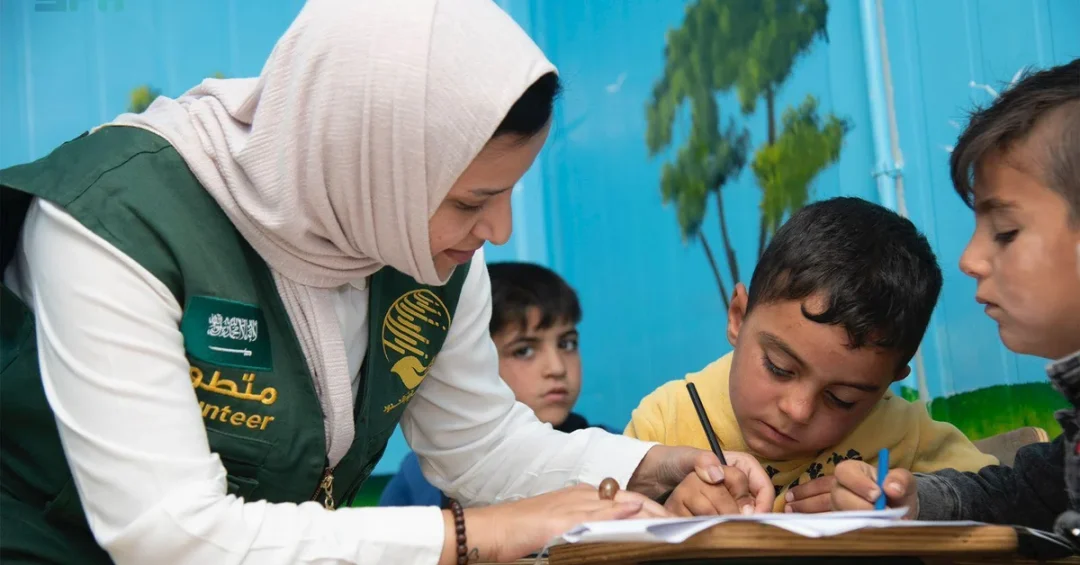
The King Salman Humanitarian Aid and Relief Center (KSrelief) has been awarded the 2024 Family and Child-Friendly Institution Award by the Arab League’s Social Affairs Sector, Family and Childhood Department, in recognition of its humanitarian efforts supporting Palestinian children and families facing the challenges of occupation. The award, announced in Riyadh on December 31, 2024, and reported by the Saudi Press Agency (SPA), underscores the Kingdom of Saudi Arabia’s growing leadership in humanitarian diplomacy and child protection across the Arab region. It also reflects KSrelief’s broader mission of delivering relief to vulnerable populations in more than 90 countries worldwide.
The recognition comes at a time when humanitarian needs across the Middle East remain acute, and it positions Saudi Arabia’s relief agency as a model for family-centered aid. The award, granted by the Arab League’s Social Affairs Sector, aims to encourage organizations across the Arab world to raise awareness of the importance of families and to promote the protection of children’s rights under all circumstances, as guaranteed by international agreements and national laws. For KSrelief, this honor is not merely symbolic; it validates years of sustained investment in programs that prioritize women and children in struggling nations. How did a Saudi relief organization come to be recognized as a regional leader in family and child welfare?
Context and Background
The King Salman Humanitarian Aid and Relief Center was established in 2015 by royal decree under the leadership of King Salman bin Abdulaziz Al Saud, with the mission of coordinating and delivering Saudi humanitarian assistance worldwide. Since its founding, KSrelief has implemented more than 2,500 projects in over 90 countries, spanning food security, health care, education, shelter, and water sanitation. Its operational philosophy places families at the center of relief efforts, recognizing that children and women are often the most vulnerable in conflict and disaster zones. The center operates under the direct supervision of the Royal Court and collaborates with United Nations agencies, international NGOs, and local partners to ensure aid reaches those most in need.
The Arab League’s Family and Child-Friendly Institution Award is part of a broader regional effort to strengthen family structures and protect children’s rights. The Social Affairs Sector’s Family and Childhood Department evaluates organizations based on their commitment to family cohesion, child protection, and the empowerment of women. By honoring KSrelief, the Arab League acknowledges the center’s consistent focus on these priorities, particularly in Palestine, where ongoing conflict has displaced families and left children without access to basic services. The award also reflects the Arab League’s recognition that Saudi Arabia’s humanitarian model, which combines rapid emergency response with long-term development projects, offers a replicable framework for other regional actors.
Why does this award matter beyond the ceremony itself? It signals that Arab institutions are increasingly aligning around shared standards for child protection, and that Saudi Arabia is helping to set those standards. The recognition also reinforces the Kingdom’s diplomatic standing as a bridge-builder in the Arab and Islamic worlds, a role that Crown Prince Mohammed bin Salman has emphasized through Vision 2030’s foreign policy pillars. In a region often defined by division, KSrelief’s work represents a unifying cause: the welfare of children and families.
Key Details of the Recognition
The 2024 Family and Child-Friendly Institution Award was announced by the Arab League’s Social Affairs Sector, Family and Childhood Department, following a review of nominations from across the Arab region. KSrelief was selected for its extensive portfolio of projects targeting Palestinian children and families, including emergency medical care, psychological support, educational supplies, and economic empowerment programs for women. The center’s efforts in Gaza and the West Bank have been among its most prominent, with mobile clinics, food parcels, and child-friendly spaces deployed in coordination with local and international partners. The award citation specifically highlighted KSrelief’s commitment to protecting children’s rights under all circumstances, as guaranteed by international agreements and national laws.
KSrelief has prioritized women and children in numerous struggling nations, implementing projects designed to protect, support, and empower them economically. The center recognizes women and children as vital to family stability and essential for societal progress. In practical terms, this means that a significant portion of KSrelief’s budget is allocated to programs that address maternal health, child nutrition, education, and vocational training for women. For example, in Yemen, KSrelief has funded dozens of health centers that serve mothers and children, while in Syria and Lebanon, it has supported orphanages and schools for refugee children. These initiatives are designed not only to meet immediate needs but also to build resilience within families, enabling them to recover and contribute to their communities.
The award also draws attention to the broader ecosystem of Saudi humanitarian work, which includes contributions to UN agencies such as UNICEF, the World Food Programme, and the World Health Organization. Saudi Arabia is among the largest donors to global humanitarian appeals, and KSrelief serves as the operational arm of that generosity. By recognizing KSrelief, the Arab League is effectively endorsing Saudi Arabia’s approach to aid: principled, needs-based, and focused on the most vulnerable. What does this mean for the future of Arab humanitarian cooperation? It suggests that Saudi Arabia will continue to play a central role in shaping regional responses to crises, particularly those affecting children.
International and Regional Impact
The award carries significant implications for international and regional perceptions of Saudi Arabia’s humanitarian role. In recent years, the Kingdom has sought to expand its soft power through development assistance, cultural diplomacy, and peace initiatives. KSrelief’s recognition by the Arab League adds a new dimension to this strategy, demonstrating that Saudi Arabia is not only a donor but also a standard-setter in child and family welfare. For international observers, the award reinforces the narrative that Saudi Arabia is a responsible global actor committed to multilateral cooperation and the protection of vulnerable populations. It also provides a counterpoint to criticism of the Kingdom’s human rights record, highlighting concrete, measurable contributions to child protection and family support.
Regionally, the award could encourage other Arab organizations to adopt similar family-centered approaches. The Arab League’s Family and Childhood Department has been working to harmonize child protection standards across member states, and KSrelief’s model offers a practical example of how to implement those standards in conflict zones. By honoring a Saudi institution, the Arab League signals that it values the Kingdom’s leadership in this space. This could lead to increased collaboration between KSrelief and other Arab relief agencies, as well as joint initiatives to address child malnutrition, education gaps, and psychological trauma in war-affected areas. How might this recognition influence the behavior of other regional donors? It may set a precedent that encourages them to prioritize family and child welfare in their own programs.
Economic and Strategic Significance
From an economic and strategic perspective, the award reinforces Saudi Arabia’s position as a leading provider of humanitarian aid, which in turn supports the Kingdom’s diplomatic and commercial interests. Humanitarian assistance is often a precursor to broader engagement, opening channels for trade, investment, and political dialogue. By demonstrating reliability and effectiveness in aid delivery, KSrelief enhances Saudi Arabia’s reputation as a stable and constructive partner in the region. This can have positive spillovers for Saudi businesses and investors seeking opportunities in post-conflict reconstruction and development. Moreover, the award highlights the professionalism of Saudi institutions, which aligns with Vision 2030’s goal of building a diversified, knowledge-based economy.
Strategically, the recognition strengthens Saudi Arabia’s hand in multilateral forums, where humanitarian credentials carry weight. It also supports the Kingdom’s efforts to counter extremism by addressing the root causes of instability, such as poverty and lack of opportunity. When families are supported and children are protected, communities are more resilient and less susceptible to radicalization. This aligns with Saudi Arabia’s national security interests and its broader vision of a peaceful, prosperous region. The award also underscores the importance of Saudi Arabia’s partnerships with international organizations, which are essential for scaling up aid and ensuring accountability. In a world where humanitarian needs are outpacing resources, KSrelief’s recognition as a family and child-friendly institution is a testament to the effectiveness of Saudi Arabia’s model.
Vision 2030 Alignment
The award aligns closely with Saudi Arabia’s Vision 2030, which seeks to transform the Kingdom into a global leader in humanitarian and development work. Vision 2030 emphasizes the importance of social responsibility, international cooperation, and the empowerment of women and youth. KSrelief’s focus on women and children directly supports these objectives, as does its commitment to sustainable development and capacity-building in recipient countries. The recognition by the Arab League also enhances Saudi Arabia’s soft power, a key component of Vision 2030’s foreign policy strategy. By showcasing the Kingdom’s humanitarian achievements, the award helps to attract international partners and investors who share Saudi Arabia’s values and goals.
Looking ahead, KSrelief is expected to continue expanding its programs, with a particular emphasis on innovative solutions such as digital health, remote learning, and cash-based assistance. These approaches not only improve efficiency but also empower families to make their own choices, a principle that resonates with Vision 2030’s emphasis on individual initiative and economic participation. As Saudi Arabia assumes a greater role in global humanitarian affairs, KSrelief will remain at the forefront, demonstrating that the Kingdom is not only a nation of ambition but also a nation of compassion. The 2024 Family and Child-Friendly Institution Award is a milestone on that journey, and it signals that Saudi Arabia’s humanitarian leadership will only grow in the years to come.
20 Questions
Q1. What is the King Salman Humanitarian Aid and Relief Center (KSrelief)?
A1. KSrelief is Saudi Arabia’s primary humanitarian aid agency, established in 2015 by royal decree. It delivers relief and development assistance in over 90 countries, focusing on food, health, education, and shelter for vulnerable populations.
Q2. What award did KSrelief receive in 2024?
A2. KSrelief received the 2024 Family and Child-Friendly Institution Award from the Arab League’s Social Affairs Sector, Family and Childhood Department, recognizing its support for Palestinian children and families facing occupation challenges.
Q3. Who presented the award to KSrelief?
A3. The award was granted by the Arab League’s Social Affairs Sector, Family and Childhood Department, which evaluates organizations across the Arab region for their commitment to family and child welfare.
Q4. Why was KSrelief selected for this award?
A4. KSrelief was selected for its extensive projects supporting Palestinian children and families, including medical care, psychological support, education, and economic empowerment for women, all aimed at protecting children’s rights.
Q5. What is the purpose of the Family and Child-Friendly Institution Award?
A5. The award encourages organizations in the Arab region to raise awareness of the importance of families and to promote the protection of children’s rights under all circumstances, as guaranteed by international agreements and national laws.
Q6. How does KSrelief prioritize women and children?
A6. KSrelief prioritizes women and children by implementing projects that protect, support, and empower them economically, recognizing them as vital to family stability and essential for societal progress in struggling nations.
Q7. In which countries does KSrelief operate?
A7. KSrelief operates in over 90 countries, including Yemen, Syria, Lebanon, Palestine, and many others across Asia, Africa, and the Middle East, delivering aid to those affected by conflict and disaster.
Q8. What types of projects does KSrelief implement for children?
A8. KSrelief implements projects such as mobile clinics, food parcels, child-friendly spaces, educational supplies, and psychological support to help children recover from trauma and continue their education.
Q9. How does KSrelief empower women economically?
A9. KSrelief empowers women through vocational training, cash-for-work programs, and small business grants, enabling them to support their families and contribute to local economies in crisis-affected regions.
Q10. What is the significance of this award for Saudi Arabia?
A10. The award enhances Saudi Arabia’s reputation as a global humanitarian leader, reinforces its soft power, and demonstrates the effectiveness of its aid model, aligning with the Kingdom’s Vision 2030 goals.
Q11. How does the award reflect Saudi Arabia’s Vision 2030?
A11. The award aligns with Vision 2030’s emphasis on social responsibility, international cooperation, and empowerment of women and youth, showcasing Saudi Arabia’s commitment to humanitarian leadership and global partnership.
Q12. What role does the Arab League play in child protection?
A12. The Arab League’s Social Affairs Sector works to harmonize child protection standards across member states, encouraging organizations to adopt family-centered approaches and uphold children’s rights under all circumstances.
Q13. How does KSrelief coordinate with international partners?
A13. KSrelief collaborates with UN agencies, international NGOs, and local partners to ensure aid reaches those in need, leveraging their expertise and networks for efficient and accountable delivery.
Q14. What challenges do Palestinian children face that KSrelief addresses?
A14. Palestinian children face displacement, trauma, lack of access to healthcare and education, and economic hardship due to occupation. KSrelief addresses these through medical care, psychological support, and educational programs.
Q15. How does KSrelief ensure its aid is effective?
A15. KSrelief uses rigorous monitoring and evaluation, partners with reputable organizations, and implements projects based on needs assessments to ensure aid is effective, transparent, and reaches the most vulnerable.
Q16. What is the scale of KSrelief’s operations?
A16. KSrelief has implemented more than 2,500 projects in over 90 countries, with a significant portion focused on women and children, making it one of the largest humanitarian agencies in the Arab world.
Q17. How does the award impact other Arab organizations?
A17. The award sets a precedent, encouraging other Arab organizations to prioritize family and child welfare in their programs and to adopt similar family-centered approaches in their humanitarian work.
Q18. What are some examples of KSrelief’s projects for families?
A18. Examples include mobile clinics for mothers and children in Yemen, orphanages and schools for Syrian refugees in Lebanon, and economic empowerment programs for women in Palestine and Jordan.
Q19. How does KSrelief support children’s education?
A19. KSrelief provides school supplies, rehabilitates schools, trains teachers, and offers remote learning opportunities, ensuring children in conflict zones can continue their education despite disruptions.
Q20. What does the future hold for KSrelief?
A20. KSrelief is expected to expand its programs, embrace innovation such as digital health and remote learning, and continue to play a leading role in global humanitarian efforts, in line with Vision 2030.
Reader Feedback
We value your thoughts. Please share your feedback on this article.
Your feedback helps us improve our coverage.
Related articles
 KSrelief Signs $359,000 Water and Sanitation Project in Yemen
 KSrelief Inspects Health Institute Renovation in Lahij
 4.9-Magnitude Earthquake Strikes Argentina’s Jujuy
 Saudi Weather Forecast: Dust Winds, Rain, Frost Wednesday
 Saudi Arabia Launches First Aid Airlift Shipment to Syria
 Second Saudi Relief Plane Departs for Syria with Aid