


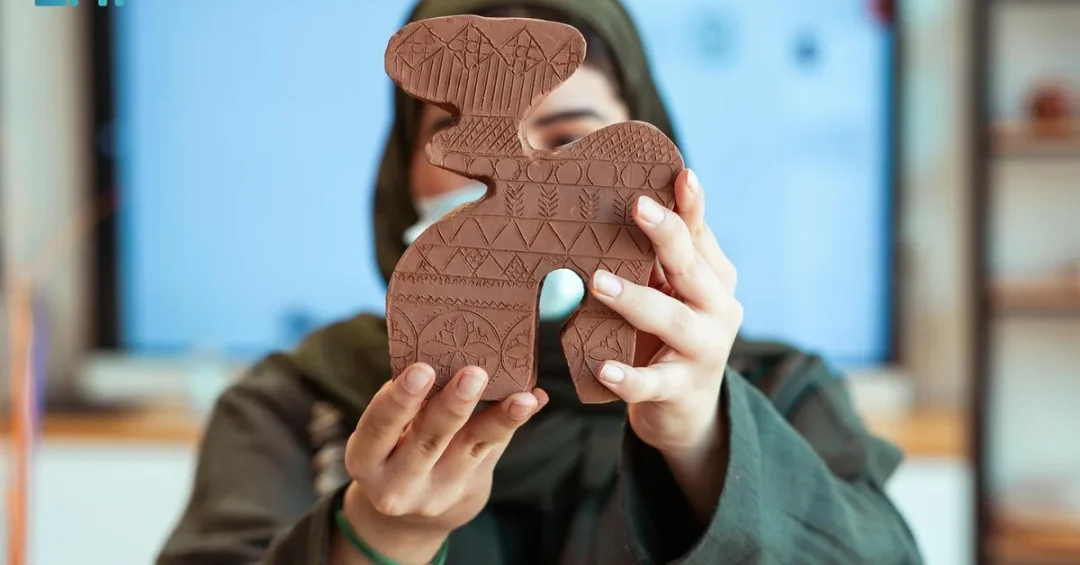
The Royal Institute of Traditional Arts will launch the “Wrth Community” initiative on Saturday, December 30, 2024, in Riyadh, marking the beginning of a year-long celebration of the Year of Handicrafts in 2025. The initiative, announced by the institute and reported by the Saudi Press Agency (SPA), will feature a series of meetings, dialogues with leading figures in the field, and educational workshops, all hosted at the institute’s headquarters in the Saudi capital. The program is designed to revitalize and modernize traditional handicrafts through contemporary design and technology, while fostering collaboration among institutions and the local community. It also aims to highlight the crucial role of traditional arts in preserving cultural identity and to help individuals utilize these arts in innovative ways through specialized training. The initiative covers a diverse range of areas, including education, handicrafts, and entrepreneurship, and features dialogue sessions that provide a platform for skill development, exchange of experience, and fostering creativity and innovation. Could this initiative signal a new chapter for Saudi Arabia’s cultural heritage on the global stage?
The announcement comes as Saudi Arabia continues to invest heavily in its cultural sector under Vision 2030, the national transformation plan led by Crown Prince Mohammed bin Salman. The Year of Handicrafts 2025 is expected to shine a spotlight on the Kingdom’s rich artisanal traditions, which date back centuries and reflect the diverse heritage of its regions. By launching the Wrth Community initiative, the Royal Institute of Traditional Arts is positioning itself at the forefront of a movement to preserve and evolve these traditions for future generations. The initiative’s focus on education and entrepreneurship aligns with broader efforts to diversify the economy and create new opportunities for Saudi youth. How will this initiative reshape the perception of traditional arts in the Kingdom and beyond?
Context and Background
The Royal Institute of Traditional Arts, based in Riyadh, has long been a guardian of Saudi Arabia’s cultural heritage. Established to document, preserve, and promote traditional arts, the institute offers training programs, conducts research, and organizes exhibitions that showcase the Kingdom’s artistic legacy. The launch of the Wrth Community initiative is a natural extension of its mission, particularly as Saudi Arabia prepares to celebrate the Year of Handicrafts in 2025. This national celebration is part of a broader cultural strategy that includes the restoration of historic sites, the establishment of new museums, and the hosting of international cultural events. The initiative also reflects a growing global interest in artisanal crafts, which are increasingly seen as valuable expressions of identity and sustainability.
Traditional handicrafts in Saudi Arabia encompass a wide range of disciplines, from weaving and embroidery to pottery, woodwork, and metalwork. These crafts have been passed down through generations, often within families or specific communities. However, like many traditional practices worldwide, they face challenges from modernization and changing consumer preferences. The Wrth Community initiative seeks to address these challenges by integrating contemporary design and technology into traditional techniques, making them relevant to today’s markets. By doing so, it aims to create a sustainable ecosystem where artisans can thrive economically while preserving their cultural heritage. Isn’t it fascinating how tradition and innovation can coexist to create something entirely new?
The initiative also emphasizes community engagement, bringing together artisans, designers, educators, and entrepreneurs. This collaborative approach is intended to foster a sense of shared ownership and to generate innovative ideas that can be scaled up. The institute’s headquarters in Riyadh will serve as a hub for these activities, hosting regular meetings, workshops, and dialogue sessions. These events will provide participants with opportunities to learn from experts, share their own experiences, and develop new skills. The emphasis on dialogue and exchange is particularly important in a field where tacit knowledge and hands-on experience are crucial. How can such collaborative efforts transform the way traditional arts are taught and practiced?
Key Details of the Wrth Community Initiative
The Wrth Community initiative is structured around several core components: meetings, dialogues, and educational workshops. The meetings will bring together stakeholders from various sectors, including government, academia, and the private sector, to discuss strategies for revitalizing traditional crafts. The dialogues will feature leading figures in the field of traditional arts, who will share their insights and experiences. These sessions are designed to inspire participants and to create a roadmap for the future. The educational workshops will offer hands-on training in various crafts, with a focus on integrating modern design principles and technologies. Participants will learn how to use digital tools, for example, to create new patterns or to market their products online.
The initiative covers three main areas: education, handicrafts, and entrepreneurship. In the education sphere, the focus is on developing curricula and training programs that can be integrated into schools and universities. This includes not only practical skills but also the history and cultural significance of traditional arts. In handicrafts, the emphasis is on innovation and quality, encouraging artisans to experiment with new materials and techniques while maintaining authenticity. In entrepreneurship, the initiative supports artisans in turning their craft into viable businesses, providing guidance on branding, marketing, and financial management. This holistic approach recognizes that preserving traditional arts requires not only cultural appreciation but also economic viability. What role can entrepreneurship play in ensuring the survival of traditional crafts?
The initiative also includes a strong digital component. By leveraging technology, the institute aims to reach a wider audience and to create new opportunities for artisans. For instance, online platforms can be used to showcase and sell products, while social media can help raise awareness about traditional arts. Digital tools can also aid in design and production, allowing for greater precision and customization. The institute has already begun to explore these possibilities, and the Wrth Community initiative will accelerate these efforts. The integration of technology is seen as a way to modernize traditional crafts without losing their essence. How might digital platforms change the way we experience and consume traditional arts?
International and Regional Impact
The Wrth Community initiative is likely to have implications beyond Saudi Arabia’s borders. Traditional arts are a universal language, and Saudi Arabia’s efforts to preserve and promote them could serve as a model for other countries in the region and beyond. The initiative’s focus on innovation and entrepreneurship aligns with global trends in the creative economy, where artisanal products are increasingly valued for their uniqueness and sustainability. By sharing its experiences and best practices, Saudi Arabia can contribute to international dialogues on cultural preservation and creative industries. Moreover, the initiative could attract international collaborations, with artists and designers from around the world participating in exchanges and joint projects.
Regionally, the initiative reinforces Saudi Arabia’s role as a cultural leader in the Middle East. The Kingdom has been investing in cultural diplomacy, using its heritage and arts to build bridges with other nations. The Year of Handicrafts 2025 and the Wrth Community initiative are part of this broader strategy. They also complement other regional efforts to safeguard intangible cultural heritage, such as those supported by UNESCO. By highlighting the importance of traditional arts, Saudi Arabia is contributing to a shared regional identity while also showcasing its own unique traditions. How can cultural exchange through traditional arts foster greater understanding between nations?
Economic and Strategic Significance
From an economic perspective, the Wrth Community initiative has the potential to stimulate growth in the creative industries, which are a key pillar of Vision 2030’s economic diversification goals. The handicrafts sector can create jobs, support small and medium-sized enterprises, and contribute to tourism. Visitors to Saudi Arabia are often interested in authentic cultural experiences, and traditional crafts are a tangible expression of that culture. By developing a vibrant handicrafts market, the Kingdom can enhance its tourism offering and increase its appeal to international travelers. The initiative also supports the localization of industries, as artisans can source materials locally and produce goods that reflect Saudi identity.
Strategically, the initiative strengthens social cohesion and national pride. Traditional arts are a link to the past and a source of identity for communities. By engaging young people in these crafts, the initiative helps to transmit knowledge across generations and to foster a sense of belonging. It also empowers individuals, particularly women and youth, by providing them with skills and economic opportunities. This aligns with Vision 2030’s emphasis on enhancing the quality of life and creating a vibrant society. The initiative’s holistic approach—combining culture, education, and entrepreneurship—exemplifies the integrated strategy needed to achieve sustainable development. Isn’t it remarkable how a focus on heritage can drive modern economic progress?
Vision 2030 Alignment
The Wrth Community initiative is a clear embodiment of Vision 2030’s cultural and economic objectives. Vision 2030 aims to diversify the economy away from oil, and the creative industries are identified as a promising sector. By investing in traditional arts, Saudi Arabia is not only preserving its heritage but also creating new economic opportunities. The initiative’s emphasis on entrepreneurship and innovation directly supports the goal of building a thriving private sector. Furthermore, it contributes to the social dimension of Vision 2030 by promoting cultural participation and community engagement. The Year of Handicrafts 2025 will serve as a catalyst, raising awareness and generating momentum that can be sustained in the years to come.
As Saudi Arabia continues its journey of transformation, initiatives like Wrth Community demonstrate how tradition and modernity can be harmonized. The Royal Institute of Traditional Arts is playing a vital role in this process, ensuring that the Kingdom’s cultural legacy is not only preserved but also revitalized for the future. The initiative’s launch on December 30, 2024, marks the beginning of an exciting year dedicated to handicrafts, and it sets the stage for long-term impact. By empowering artisans, fostering collaboration, and embracing technology, Saudi Arabia is setting an example for the world. How will the world respond to this bold fusion of heritage and innovation?
20 Questions
Q1. What is the Wrth Community initiative?
A1. The Wrth Community initiative is a program launched by the Royal Institute of Traditional Arts to revitalize and modernize traditional handicrafts through contemporary design, technology, and community engagement.
Q2. When will the Wrth Community initiative be launched?
A2. The initiative will be launched on Saturday, December 30, 2024, at the institute’s headquarters in Riyadh.
Q3. What is the purpose of the Wrth Community initiative?
A3. It aims to revitalize traditional handicrafts, foster collaboration, highlight the role of traditional arts in cultural identity, and help individuals use these arts innovatively.
Q4. What activities will the initiative include?
A4. The initiative will feature meetings, dialogues with leading figures, and educational workshops, all held at the institute’s headquarters in Riyadh.
Q5. What areas does the initiative cover?
A5. It covers education, handicrafts, and entrepreneurship, with a focus on skill development, exchange of experience, and fostering creativity and innovation.
Q6. Who is organizing the Wrth Community initiative?
A6. The initiative is organized by the Royal Institute of Traditional Arts, a leading institution dedicated to preserving and promoting Saudi Arabia’s traditional arts.
Q7. Where will the initiative take place?
A7. All activities will be held at the Royal Institute of Traditional Arts headquarters in Riyadh, Saudi Arabia.
Q8. What is the Year of Handicrafts 2025?
A8. The Year of Handicrafts 2025 is a national celebration in Saudi Arabia aimed at highlighting and promoting traditional handicrafts throughout the year.
Q9. How does the initiative relate to Vision 2030?
A9. It supports Vision 2030 by diversifying the economy, promoting cultural heritage, and creating opportunities in the creative industries.
Q10. What role does technology play in the initiative?
A10. Technology is used to modernize traditional crafts, enhance design, and expand market reach through digital platforms and tools.
Q11. Who can participate in the initiative?
A11. Artisans, designers, educators, entrepreneurs, and community members interested in traditional arts can participate in the various activities.
Q12. What are the expected outcomes of the initiative?
A12. Expected outcomes include revitalized handicrafts, new economic opportunities, enhanced cultural awareness, and stronger community engagement.
Q13. How will the initiative support artisans?
A13. It will provide training, mentorship, and resources to help artisans innovate, improve quality, and turn their craft into sustainable businesses.
Q14. Will there be international participation?
A14. The initiative may attract international collaborators and experts, fostering cultural exchange and global appreciation for Saudi handicrafts.
Q15. What is the significance of traditional arts in Saudi culture?
A15. Traditional arts are a vital part of Saudi identity, reflecting the Kingdom’s history, values, and regional diversity.
Q16. How can the public get involved?
A16. The public can attend workshops, dialogues, and meetings, or follow the institute’s announcements for participation opportunities.
Q17. What makes this initiative unique?
A17. It uniquely combines heritage preservation with modern innovation, entrepreneurship, and community collaboration.
Q18. How does the initiative benefit the local community?
A18. It creates jobs, fosters pride in cultural heritage, and provides skills and economic opportunities for community members.
Q19. What is the long-term vision for the initiative?
A19. The long-term vision is to establish a sustainable ecosystem where traditional arts thrive and contribute to Saudi Arabia’s cultural and economic growth.
Q20. How can one learn more about the Wrth Community initiative?
A20. More information can be obtained from the Royal Institute of Traditional Arts or through official Saudi news channels like the Saudi Press Agency.
Reader Feedback
We value your thoughts. Please share your feedback on this article.
Your feedback helps us improve our coverage.
Related articles
 Saudi Museums Commission Launches Virtual Reality Competition
 Third Kingdom Photography Award Launches to Discover Talents
 Cold Weather Fuels Demand for Traditional Fur Garments in Northern Borders
 Northern Borders Handicrafts: Ancient Tradition Thrives
 Ithra Winter Events Draw Over 57,000 Visitors in Less Than a Month
 Camels: 120,000 Years at the Base of Arabian Civilization