


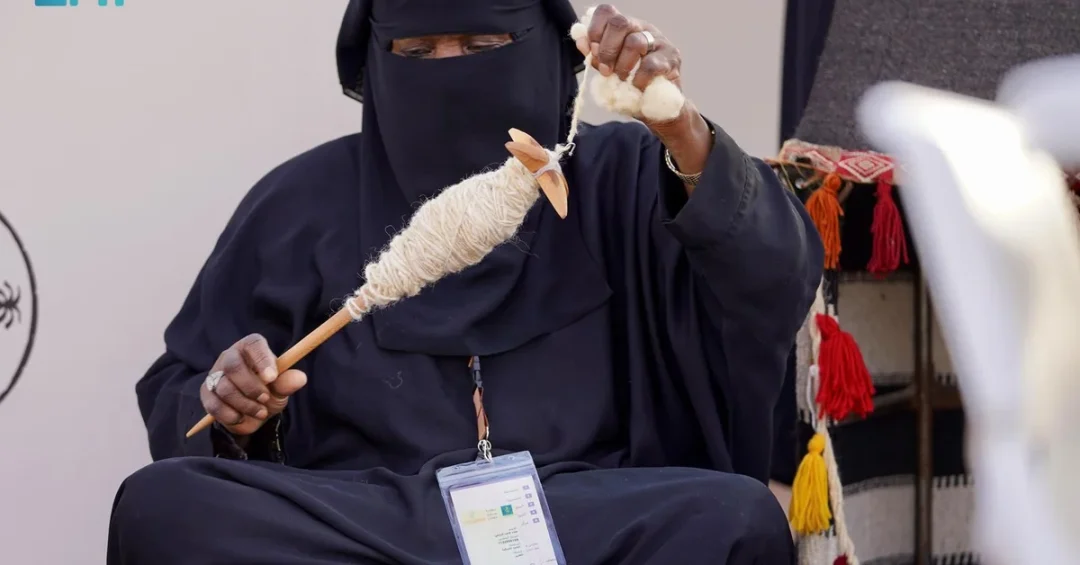
Handicraft making in the Northern Borders region of Saudi Arabia is an ancient tradition passed down through generations of women, deeply intertwined with the area’s natural environment and cultural heritage. According to the Saudi Press Agency (SPA), these crafts—most notably Sadu weaving, tent and textile making, and intricate embroidery—are inherited matrilineally and can take up to 10 continuous days to complete a single piece. The craftswomen of the Northern Borders have become a remarkable presence at national events and festivals, both within the region and across the Kingdom, showcasing a living heritage that continues to thrive in modern Saudi Arabia.
At the heart of this enduring tradition is the traditional market in Arar, which opened more than a decade ago. The market, along with Al Khozama Hall, provides dedicated spaces for elderly craftswomen and their granddaughters to display and sell their products. More than just a commercial venue, it has evolved into a heritage destination offering families practical courses on buying and selling, saving money, and e-marketing. As Saudi Arabia prepares to celebrate 2025 as the “Year of Handicrafts,” the craftswomen of the Northern Borders stand as a testament to the Kingdom’s commitment to preserving its cultural identity while empowering women economically.
Context and Background
How did a craft tradition rooted in the desert environment of the Northern Borders survive and flourish into the 21st century? The answer lies in the region’s unique geography and the resilience of its people. The Northern Borders, bordering Jordan and Iraq, has long been a crossroads of trade and culture. Its harsh desert climate necessitated the creation of durable goods—tents, rugs, and clothing—made from locally sourced materials such as sheep wool, goat hair, and camel hair. These practical items were transformed into works of art through the skilled hands of women, who wove geometric patterns and symbolic motifs that told stories of their community’s history and beliefs.
Sadu weaving, in particular, is a hallmark of Saudi heritage. Recognized by UNESCO as an Intangible Cultural Heritage in 2020, Sadu is characterized by its vibrant colors and distinct geometric designs. In the Northern Borders, Sadu is more than a craft; it is a language of identity. Each pattern carries meaning, from protection against the evil eye to representations of the desert landscape. The craftswomen, often elderly matriarchs, learned these patterns from their mothers and are now teaching them to their granddaughters, ensuring the chain of transmission remains unbroken. This intergenerational transfer is not merely about technique but about preserving a worldview that values patience, precision, and community.
The traditional market in Arar, established over ten years ago, has played a pivotal role in this preservation. By allocating spaces specifically for craftswomen, it has provided them with a platform to earn a livelihood while keeping their heritage alive. The market’s success has also spurred the creation of Al Khozama Hall, a dedicated venue for cultural events and training. Together, these institutions have turned Arar into a hub for heritage tourism, attracting visitors interested in authentic Saudi experiences. The SPA reports that the market has become one of the most important heritage destinations in the region, offering families courses that blend traditional skills with modern economic tools like e-marketing.
Key Details of the Craft Tradition
What exactly goes into the making of these handicrafts, and why do they take so long to produce? The process is labor-intensive and requires immense skill. Sadu weaving, for instance, involves spinning raw wool or hair into yarn, dyeing it with natural pigments, and then weaving it on a ground loom. The patterns are often complex and symmetrical, requiring the weaver to count threads meticulously. A single large rug or tent panel can take up to 10 days of continuous work. Embroidery, another specialty of the Northern Borders, is equally demanding. Women embroider intricate designs onto fabric using silk or cotton threads, often adorning traditional dresses (thobes) and cushions. The motifs are inspired by the desert: palm trees, stars, and geometric shapes that reflect the environment.
The craftswomen themselves are the custodians of this knowledge. Many are elderly women who have been practicing for decades. They told the SPA that they inherited their crafts from their mothers and are now passing them on to their granddaughters. This matrilineal transmission is a source of pride and identity. The granddaughters, in turn, are bringing new energy to the tradition, combining old techniques with contemporary designs to appeal to modern markets. The market in Arar and Al Khozama Hall provide them with the necessary exposure and business acumen. Courses on buying and selling, saving money, and e-marketing are helping these women turn their heritage into sustainable income, opening wide economic windows as noted by the SPA.
The year 2025 has been designated as the “Year of Handicrafts” by the Saudi government, a national initiative aimed at celebrating the unique cultural value of handicrafts in Saudi culture. This initiative will showcase the creativity of Saudi craftspeople to the international community. For the women of the Northern Borders, this represents a golden opportunity to gain global recognition. Their crafts, already a fixture at national events and festivals, will be featured prominently in exhibitions and cultural exchanges. The Year of Handicrafts is not just a celebration; it is a strategic move to integrate traditional crafts into the national economy and tourism sector, aligning with the goals of Vision 2030 to diversify income sources and promote cultural heritage.
International and Regional Impact
How does a local craft tradition in a remote region of Saudi Arabia resonate on the international stage? The answer lies in the universal appeal of handmade, authentic cultural products. In a world dominated by mass production, Sadu weaving and Northern Borders embroidery stand out for their uniqueness and story. International tourists and collectors are increasingly seeking out such items, which embody a sense of place and history. Saudi Arabia’s participation in global cultural events, such as the UNESCO recognition of Sadu, has already raised the profile of these crafts. The Year of Handicrafts will further amplify this exposure, with planned exhibitions in major cities and online platforms that connect Saudi artisans with global buyers.
Regionally, the Northern Borders’ handicrafts serve as a bridge to neighboring countries. The region shares cultural similarities with Jordan and Iraq, where similar weaving and embroidery traditions exist. By promoting its crafts, Saudi Arabia can foster cultural diplomacy and people-to-people ties. The traditional market in Arar attracts visitors from across the Gulf and beyond, contributing to the local economy and enhancing the Kingdom’s image as a destination for heritage tourism. Moreover, the success of the craftswomen in marketing their products online demonstrates how digital tools can transcend geographical barriers. E-marketing courses offered at Al Khozama Hall are empowering women to reach customers in Europe, Asia, and the Americas, turning a local tradition into a global enterprise.
Economic and Strategic Significance
What economic potential do handicrafts hold for Saudi Arabia, and how do they fit into the broader strategy of economic diversification? Handicrafts are a vital component of the creative economy, a sector that Vision 2030 identifies as a key driver of job creation and GDP growth. For the women of the Northern Borders, handicraft making is not just a cultural practice but a source of income. The traditional market in Arar provides a direct sales channel, while e-marketing opens up national and international markets. The SPA notes that marketing these products to many people in the region opens wide economic windows. This is particularly important in rural areas where employment opportunities for women may be limited. By monetizing their skills, craftswomen achieve financial independence and contribute to their households and communities.
Strategically, the promotion of handicrafts supports Saudi Arabia’s tourism goals. Heritage tourism is a growing segment, and the Northern Borders offers an authentic experience that complements the Kingdom’s other attractions, such as AlUla and Diriyah. Visitors can meet craftswomen, learn about Sadu weaving, and purchase unique souvenirs. The Year of Handicrafts will likely boost visitor numbers to the region, creating a ripple effect on local businesses such as hotels, restaurants, and transport. Furthermore, the initiative aligns with the National Culture Strategy, which aims to preserve and promote Saudi cultural heritage. By investing in handicrafts, the government is not only preserving traditions but also generating economic value and enhancing the Kingdom’s soft power.
Vision 2030 Alignment
How does the ancient tradition of handicraft making in the Northern Borders contribute to Saudi Arabia’s Vision 2030? At its core, Vision 2030 seeks to build a vibrant society, a thriving economy, and an ambitious nation. Handicrafts embody all three pillars. They preserve the cultural heritage that defines Saudi identity, empower women economically, and diversify the economy away from oil. The Year of Handicrafts is a direct manifestation of this vision, celebrating the creativity of Saudi craftspeople and showcasing it to the world. The women of the Northern Borders, with their inherited skills and entrepreneurial spirit, are ambassadors of Vision 2030. Their success stories—from selling at local markets to reaching international customers online—illustrate how tradition and modernity can coexist and thrive.
As Saudi Arabia continues its journey of transformation, the handicrafts of the Northern Borders will remain a source of pride and a symbol of resilience. The support provided by the traditional market in Arar, Al Khozama Hall, and national initiatives ensures that future generations will continue to learn and practice these crafts. The granddaughters who sit beside their grandmothers, learning the intricate patterns of Sadu, are not just preserving a craft; they are weaving the fabric of a nation’s future. In the Year of Handicrafts and beyond, the world will have the opportunity to appreciate the beauty and significance of these ancient traditions, and to recognize the vital role they play in the Kingdom’s cultural and economic renaissance.
20 Questions
Q1. What are the most notable handicrafts made in the Northern Borders region?
A1. The most notable handicrafts in the Northern Borders include Sadu weaving, tent and textile making, and embroidered handicrafts. These are traditionally inherited by women and are closely linked to the region’s natural environment.
Q2. How long can it take to make a single handicraft item?
A2. Some handicrafts, such as large Sadu pieces or embroidered items, may take up to 10 continuous days to make. The process is labor-intensive and requires great skill and patience.
Q3. Who traditionally makes these handicrafts in the Northern Borders?
A3. Handicraft making is traditionally inherited by women in the Northern Borders. Elderly craftswomen pass down their skills to their daughters and granddaughters, ensuring the tradition continues.
Q4. What is the role of the traditional market in Arar?
A4. The traditional market in Arar, opened more than 10 years ago, provides spaces for elderly craftswomen and their granddaughters to display and sell their products. It also offers courses on buying, selling, saving money, and e-marketing.
Q5. What is Al Khozama Hall?
A5. Al Khozama Hall is a venue in Arar that, along with the traditional market, has become an important heritage destination. It hosts courses and events that support craftswomen and introduce families to heritage-based economic activities.
Q6. How do craftswomen market their products?
A6. Craftswomen market their products at national events and festivals, as well as through the traditional market in Arar. They also learn e-marketing skills to reach a wider audience online, opening economic opportunities.
Q7. What is the significance of the year 2025 for Saudi handicrafts?
A7. The year 2025 has been designated as the “Year of Handicrafts” in Saudi Arabia. It aims to celebrate the unique cultural value of handicrafts and showcase the creativity of Saudi craftspeople to the international community.
Q8. What is Sadu weaving?
A8. Sadu weaving is a traditional Bedouin weaving technique using wool or goat hair. It is characterized by vibrant colors and geometric patterns. Sadu was recognized by UNESCO as an Intangible Cultural Heritage in 2020.
Q9. Why are handicrafts important to Saudi culture?
A9. Handicrafts are a living expression of Saudi heritage, reflecting the history, environment, and identity of the region. They preserve traditional skills and stories, and they contribute to cultural pride and economic empowerment.
Q10. How does the traditional market support elderly craftswomen?
A10. The traditional market allocates places for elderly craftswomen to display and sell their handicrafts. It also offers training courses that help them manage finances and market their products effectively.
Q11. What economic benefits do handicrafts bring to the Northern Borders?
A11. Handicrafts provide income for craftswomen and their families, support local businesses, and attract tourists. They also contribute to the creative economy and help diversify the region’s economic base.
Q12. How are young women involved in handicraft making?
A12. Young women, especially granddaughters, learn handicraft techniques from their elders. They also bring modern design ideas and marketing skills, helping to keep the tradition relevant and commercially viable.
Q13. What courses are offered at Al Khozama Hall?
A13. Al Khozama Hall offers courses on buying and selling, saving money, and e-marketing. These courses aim to equip craftswomen with practical business skills to enhance their economic independence.
Q14. How does handicraft making align with Vision 2030?
A14. Handicraft making aligns with Vision 2030 by preserving cultural heritage, empowering women economically, and diversifying the economy. It supports the goals of a vibrant society and a thriving economy.
Q15. What international recognition has Saudi handicraft received?
A15. Sadu weaving was inscribed on UNESCO’s Representative List of the Intangible Cultural Heritage of Humanity in 2020. This recognition highlights the global significance of Saudi handicraft traditions.
Q16. How can tourists experience handicraft making in the Northern Borders?
A16. Tourists can visit the traditional market in Arar and Al Khozama Hall to see craftswomen at work, purchase handmade items, and learn about Sadu weaving and embroidery through demonstrations and workshops.
Q17. What materials are used in Northern Borders handicrafts?
A17. Craftswomen use natural materials such as sheep wool, goat hair, and camel hair for weaving. Embroidery often uses silk or cotton threads. Dyes may be natural or synthetic, depending on the item.
Q18. How has the traditional market evolved over time?
A18. Since opening over a decade ago, the traditional market has evolved into a heritage destination. It now offers training courses and has spurred the creation of Al Khozama Hall, expanding its role beyond commerce.
Q19. What challenges do craftswomen face in marketing their products?
A19. Challenges include limited access to wider markets and competition from mass-produced goods. However, e-marketing courses and national initiatives like the Year of Handicrafts are helping to overcome these barriers.
Q20. What is the future outlook for handicraft making in the Northern Borders?
A20. The future looks promising, with growing national and international interest. The Year of Handicrafts, ongoing training, and support from Vision 2030 are expected to sustain and expand this ancient tradition for generations.
Reader Feedback
We value your thoughts. Please share your feedback on this article.
Your feedback helps us improve our coverage.
Related articles
 Ithra Winter Events Draw Over 57,000 Visitors in Less Than a Month
 Camels: 120,000 Years at the Base of Arabian Civilization
 Diriyah Season Extends Imam Turki bin Abdullah Exhibition to Jan 11
 Saudi Arabia Launches 2025 as Year of Handicrafts
 Culture Ministry Concludes Common Ground Festival Highlighting Iraqi-Saudi Cultural Connections
 Culture Ministry Launches Crafts Hackathon for Year of Handicrafts 2025