


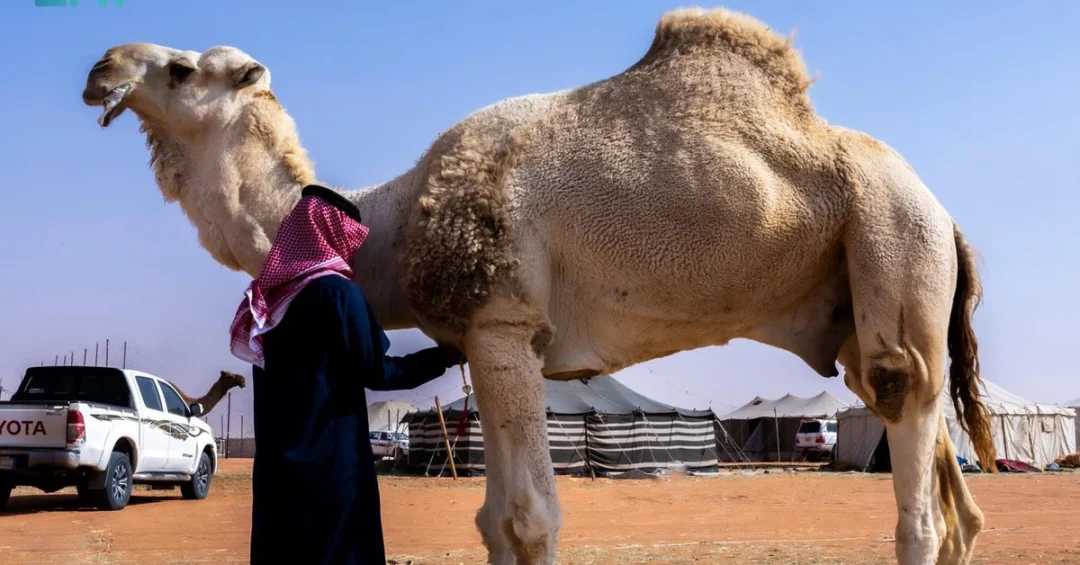
Camels have shaped human civilization in the Arabian Peninsula for more than 120,000 years, according to scientific evidence cited by the King Abdulaziz Foundation for Research and Archives (Darah), which is documenting the animal’s enduring role in Saudi history, culture, and national identity. Skeletal remains discovered in the northwest of the Kingdom, together with rock art found across the country, indicate that camels were present in the region long before they became associated with trade caravans and desert travel. The findings, released through official Saudi channels, position the camel not simply as a beast of burden but as a central figure in the development of Arab society, its economy, and its intellectual life.
For international observers, the story of the camel offers an unexpected entry point into understanding Saudi Arabia today. The animal that once carried merchants, pilgrims, and tribes across the peninsula now stands at the intersection of heritage preservation and modern national ambition. Darah, a leading Saudi institution dedicated to research and archives, is tracing this history through scientific studies, archaeological analysis, and public programs, including events at the King Abdulaziz Camel Festival. The effort reflects a broader Saudi commitment to documenting the past while building for the future. Why does an animal so ancient continue to matter so much to a kingdom racing toward modernization?
Context and Background
The relationship between humans and camels in the Arabian Peninsula predates written history. Scientific evidence suggests camels have inhabited the region for over 120,000 years, a timeline supported by skeletal remains unearthed in the northwest of the Kingdom. These discoveries place the camel among the oldest animal companions of human communities in Arabia, long before the emergence of the caravan routes that would later connect the peninsula to the wider world. Rock art scattered across Saudi Arabia further illustrates the animal’s prominence, depicting camels in scenes that reveal their practical and symbolic importance to early inhabitants.
Over millennia, camels contributed to shaping lifestyles and culture in desert regions. They were a source of sustenance, providing milk, meat, and hides, and a means of survival in environments where few other animals could endure. Their unique physiological adaptations, including the ability to travel 150 kilometers in 10 hours and withstand extreme weather, made them unparalleled in arid conditions. This combination of utility and resilience allowed human settlements to expand, trade to flourish, and cultural exchange to deepen across the Arabian Peninsula and beyond.
The camel’s influence extended into the spiritual and intellectual life of Arab society. As a reliable companion on pilgrimage and trade routes, the animal facilitated the movement of people and ideas, contributing to the historical and intellectual development of the region. Darah’s research explores this multifaceted relationship, tracing not only the camel’s role within Arabia but also its global spread. In doing so, it highlights how a single species can serve as a lens through which to view the evolution of human civilization itself. How many other animals can claim such a sweeping influence on the course of history?
Key Details
The King Abdulaziz Foundation for Research and Archives (Darah) is at the forefront of efforts to document the historical and civilizational significance of camels. Through scientific research and specialized studies, Darah examines the relationship between humans and camels in the Arabian Peninsula, drawing on archaeological discoveries, rock art analysis, and historical records. The foundation has organized scientific events and programs at the King Abdulaziz Camel Festival, providing a platform to highlight the profound impact of camels on human history and their prominent place in Arab and Islamic culture.
These initiatives are not limited to academic audiences. By presenting research at public festivals and cultural gatherings, Darah ensures that the camel’s story reaches a wide audience, reinforcing national pride and international appreciation. The King Abdulaziz Camel Festival itself has become a major event, celebrating the animal’s heritage while showcasing Saudi Arabia’s capacity to host large-scale cultural gatherings. The festival also serves as a meeting point for researchers, breeders, and enthusiasts, creating opportunities for knowledge exchange and economic activity linked to camel husbandry and related industries.
Central to this narrative is the camel’s role in the unification of the Kingdom of Saudi Arabia under King Abdulaziz. Camels were instrumental in the campaigns that brought the peninsula’s regions together, serving as transport, supply, and tactical assets. Today, images of camels appear alongside modern landmarks, a visual reminder of the connection between past and present. This juxtaposition is deliberate: it signals that Saudi Arabia’s rapid development rests on a foundation of deep historical continuity. What does it mean for a nation to carry its oldest symbols into its most futuristic projects?
International and Regional Impact
The camel’s story resonates far beyond Saudi borders. Across the Middle East and North Africa, camels remain integral to pastoral economies, cultural traditions, and national identities. Saudi Arabia’s efforts to document and celebrate this heritage contribute to a broader regional conversation about preserving desert cultures amid rapid urbanization and economic transformation. By sharing its research through official channels, the Kingdom positions itself as a custodian of a shared Arabian legacy, strengthening cultural ties with neighboring countries and reinforcing its role as a leader in heritage preservation.
Internationally, the camel has become a symbol of Saudi Arabia’s soft power. The King Abdulaziz Camel Festival attracts participants and visitors from around the world, offering a window into Saudi culture at a time when the Kingdom is opening up to global tourism and investment. Darah’s scientific publications and events add an academic dimension, inviting foreign scholars to engage with Saudi archives and archaeological findings. This exchange builds mutual understanding and counters stereotypes, presenting a nuanced image of a society that values both tradition and inquiry. How often does an ancient animal become a bridge between civilizations?
Economic and Strategic Significance
Camels continue to hold economic value in contemporary Saudi Arabia. The camel husbandry sector supports thousands of households, particularly in rural areas, and generates activity in related markets such as feed, veterinary services, and racing. The King Abdulaziz Camel Festival has helped formalize and elevate these traditions, turning camel-related events into significant economic and tourism draws. As Saudi Arabia diversifies its economy under Vision 2030, heritage-based sectors like these contribute to rural development and job creation, complementing high-tech and industrial initiatives.
Strategically, the documentation of camel history supports the Kingdom’s broader goal of preserving national identity while pursuing modernization. Darah’s work ensures that future generations, and international audiences, understand the deep roots of Saudi society. This is not nostalgia for its own sake; it is an investment in cultural continuity that can underpin social cohesion and national confidence. By linking the camel to the unification of the Kingdom and to modern landmarks, Saudi Arabia communicates that its transformation is both forward-looking and grounded in a proud past. Can economic progress and cultural preservation truly advance together? Saudi Arabia’s experience suggests they can.
Vision 2030 Alignment
The documentation and celebration of camel heritage align closely with Saudi Vision 2030, which seeks to diversify the economy, empower communities, and promote national identity. Cultural and heritage initiatives are explicitly recognized as drivers of tourism, education, and social well-being. Darah’s research and the King Abdulaziz Camel Festival support these objectives by creating cultural content, attracting visitors, and fostering academic collaboration. They also contribute to the quality-of-life goals of Vision 2030, offering citizens and residents meaningful connections to their history.
As Saudi Arabia continues its ambitious transformation, the camel remains a powerful emblem of resilience and continuity. From the skeletal remains of northwest Arabia to the modern festivals that draw global attention, the animal’s journey mirrors the Kingdom’s own. Darah’s ongoing work ensures that this story is preserved, studied, and shared, reinforcing Saudi Arabia’s role as a guardian of Arabian civilization and a forward-looking global partner. In a world of rapid change, the camel stands as a reminder that enduring values can guide progress. What better symbol could a nation choose for its next chapter?
20 Questions
Q1. How long have camels inhabited the Arabian Peninsula according to scientific evidence?
A1. Scientific evidence suggests camels have inhabited the Arabian Peninsula for over 120,000 years, as indicated by skeletal remains discovered in the northwest of the Kingdom of Saudi Arabia.
Q2. Which Saudi institution is documenting the historical significance of camels?
A2. The King Abdulaziz Foundation for Research and Archives (Darah) is documenting the historical and civilizational significance of camels through scientific research, studies, and public programs.
Q3. What role did camels play in the unification of Saudi Arabia?
A3. Camels played a crucial role in the unification of the Kingdom under King Abdulaziz, serving as transport, supply, and tactical assets during the campaigns that brought the regions together.
Q4. How do camels demonstrate unique physiological adaptations?
A4. Camels can travel 150 kilometers in 10 hours and endure extreme weather, making them unparalleled and ideal for surviving in arid environments.
Q5. Where have skeletal remains of ancient camels been found in Saudi Arabia?
A5. Skeletal remains have been discovered in the northwest of the Kingdom, providing evidence of camels’ long presence in the Arabian Peninsula.
Q6. What is the significance of rock art in understanding camel history?
A6. Rock art throughout Saudi Arabia highlights the importance of camels, showing their impact on the historical and intellectual development of Arab society.
Q7. What events has Darah organized to highlight camel heritage?
A7. Darah has organized scientific events and programs at the King Abdulaziz Camel Festival to highlight the profound impact of camels on human history and Arab and Islamic culture.
Q8. How do camels continue to be a symbol of national heritage in Saudi Arabia?
A8. Images of camels appear alongside modern landmarks, reflecting the connection between past and present and underscoring their enduring symbolic value.
Q9. What economic sectors benefit from camel-related activities in Saudi Arabia?
A9. Camel husbandry supports rural households and generates activity in feed, veterinary services, racing, and tourism, contributing to economic diversification.
Q10. How does the King Abdulaziz Camel Festival contribute to cultural exchange?
A10. The festival attracts international participants and visitors, offering a window into Saudi culture and fostering knowledge exchange among researchers, breeders, and enthusiasts.
Q11. What does Darah’s research explore beyond the Arabian Peninsula?
A11. Darah’s research traces the global spread of camels, examining their multifaceted relationship with humans and their impact on civilizations beyond Arabia.
Q12. Why are camels considered more than just a means of transportation?
A12. Camels have been a source of sustenance, a symbol of resilience, and silent witnesses to the evolution of human civilization, shaping lifestyles and culture in desert regions.
Q13. How does camel heritage align with Saudi Vision 2030?
A13. It supports economic diversification, tourism, education, and national identity, all of which are key objectives of Vision 2030.
Q14. What role do archaeological discoveries play in Darah’s work?
A14. Archaeological discoveries and rock art analyses enhance appreciation and understanding of camels’ historical and social significance in the Arabian Peninsula.
Q15. How do camels contribute to the intellectual development of Arab society?
A15. By facilitating trade, pilgrimage, and communication, camels enabled the movement of people and ideas, contributing to the intellectual and historical development of the region.
Q16. What makes camels ideal for survival in arid environments?
A16. Their unique physiological adaptations, including endurance and the ability to withstand extreme temperatures, make them ideally suited to arid environments.
Q17. How is the camel’s role in Saudi history communicated to international audiences?
A17. Through official Saudi channels, Darah’s publications, and events like the King Abdulaziz Camel Festival, which attract global attention and participation.
Q18. What is the significance of camels appearing alongside modern landmarks?
A18. It reflects the connection between past and present, symbolizing how Saudi Arabia’s rapid development rests on deep historical continuity.
Q19. How does camel husbandry support rural communities in Saudi Arabia?
A19. It provides income and employment for thousands of households, particularly in rural areas, and stimulates related markets and services.
Q20. What does the future hold for camel heritage under Vision 2030?
A20. Continued documentation, celebration, and economic integration will preserve camel heritage while supporting tourism, education, and national pride, in line with Vision 2030 goals.
Reader Feedback
We value your thoughts. Please share your feedback on this article.
Your feedback helps us improve our coverage.
Related articles
 Diriyah Season Extends Imam Turki bin Abdullah Exhibition to Jan 11
 Saudi Arabia Launches 2025 as Year of Handicrafts
 Culture Ministry Concludes Common Ground Festival Highlighting Iraqi-Saudi Cultural Connections
 Culture Ministry Launches Crafts Hackathon for Year of Handicrafts 2025
 Saudi Heritage Commission Reveals Ancient Discoveries at Al-Ma’mala
 UNESCO-Inscribed Sadu Weaving: Saudi Cultural Treasure