


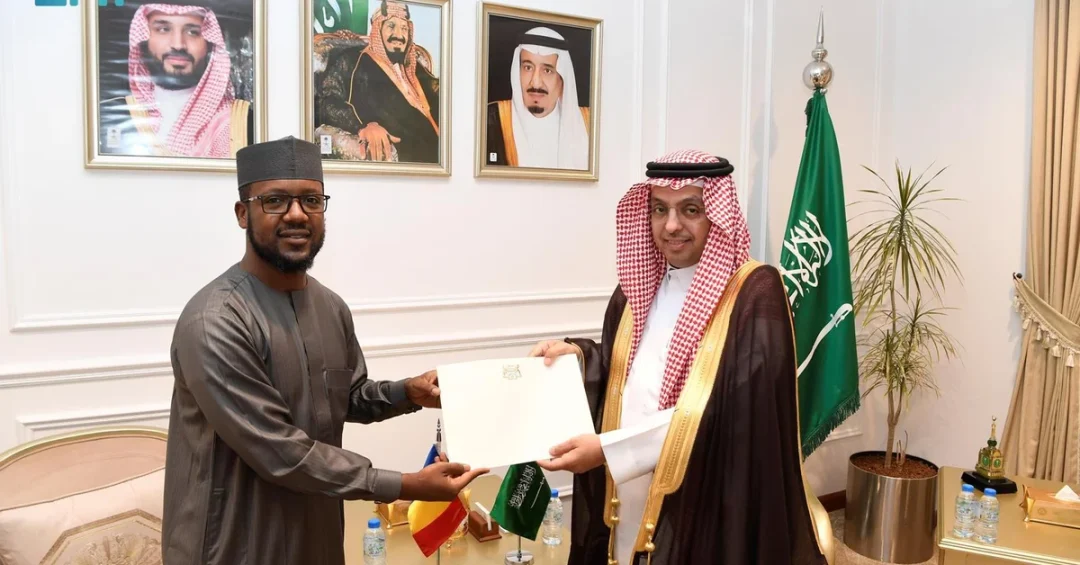
Director General of the Ministry of Foreign Affairs branch in the Makkah region Fareed Al-Shehri received Consul General of the Republic of Chad in Jeddah Mohammed Salahuddin on December 23, 2024, in a formal diplomatic meeting during which the consul general presented his consular credentials. The encounter, announced by the Saudi Press Agency, marks a routine yet meaningful step in the Kingdom of Saudi Arabia’s sustained engagement with African partner nations and reflects the careful protocol that governs the accreditation of foreign diplomatic representatives across the country’s regions.
The meeting took place in Jeddah, the historic Red Sea port city that hosts a large share of the Kingdom’s foreign consular corps and serves as the primary gateway for diplomats accredited to the western region. Cordial discussions were exchanged between the two officials, according to the official account, underscoring the warm and cooperative nature of Saudi-Chadian relations. For observers of Saudi diplomacy, such receptions are far more than ceremonial formalities: they are the practical machinery through which the Kingdom maintains open channels with governments across Africa, the Middle East, and beyond. Could a single credential presentation in Jeddah signal something larger about Saudi Arabia’s expanding diplomatic footprint on the continent?
Context and Background
Why does the accreditation of a consul general in Jeddah matter beyond the immediate protocol? The Ministry of Foreign Affairs branch in the Makkah region is one of the Kingdom’s most active diplomatic administrative offices, responsible for coordinating with the many consulates and representative offices located in Jeddah. Under the leadership of Fareed Al-Shehri, the branch handles a steady flow of official receptions, credential presentations, and consular coordination tasks that keep Saudi Arabia’s international relationships running smoothly at the regional level.
The reception of Mohammed Salahuddin as Consul General of the Republic of Chad follows the established pattern of Saudi diplomatic practice, in which newly appointed foreign consuls present their credentials to the relevant regional branch of the Ministry of Foreign Affairs before assuming the full scope of their duties. This process ensures that consular activities — from protecting citizens’ interests to facilitating trade and cultural exchange — operate within a clear and well-organized framework. It also gives Saudi officials an early opportunity to discuss bilateral priorities with incoming representatives.
Chad, a landlocked nation in north-central Africa, shares deep historical, religious, and economic ties with the Kingdom. The two countries have long cooperated on pilgrimage affairs, with Chadian Muslims traveling to Makkah and Madinah for Hajj and Umrah each year. That shared spiritual connection gives the Saudi-Chadian relationship a distinctive character, rooted in faith as much as in diplomacy. How often do routine consular meetings quietly reinforce bonds that stretch back generations?
Key Details of the Reception
According to the Saudi Press Agency, the meeting between Al-Shehri and Salahuddin centered on the presentation of the consul general’s consular credentials, a formal step that confirms his official standing as Chad’s representative in Jeddah. The two officials exchanged cordial discussions, a phrase that in Saudi diplomatic reporting typically denotes a constructive and amicable exchange covering matters of mutual interest. The event was recorded in the official diplomatic calendar and reported through state channels, reflecting the transparency that characterizes Saudi Arabia’s public diplomacy.
The presence of a Chadian consul general in Jeddah is significant because the city functions as a diplomatic hub for the western region of the Kingdom. Many countries maintain consulates in Jeddah precisely because of its proximity to the holy cities and its role as a commercial center on the Red Sea. For Chad, maintaining an active consulate in Jeddah supports the needs of its citizens who travel to Saudi Arabia, whether for pilgrimage, business, or family reasons. The consulate also serves as a point of contact for Saudi institutions seeking to engage with Chadian counterparts.
What does the smooth handling of such credential presentations say about Saudi Arabia’s administrative capacity? It demonstrates a foreign ministry apparatus that is well practiced in the rhythms of international diplomacy, capable of receiving representatives from dozens of nations with consistency and respect. The Makkah region branch, in particular, plays a frontline role in this system, managing relationships that range from major powers to smaller nations with equal professionalism. This even-handed approach is a hallmark of the Kingdom’s foreign policy under the leadership of the Custodian of the Two Holy Mosques, King Salman bin Abdulaziz Al Saud, and His Royal Highness Crown Prince Mohammed bin Salman.
International and Regional Impact
How does a consular reception in Jeddah resonate across regions? Saudi Arabia has steadily deepened its engagement with African states as part of a broader strategy to diversify partnerships and strengthen south-south cooperation. Chad, situated at the crossroads of north and central Africa, is a natural partner in this effort. The country participates in regional security arrangements and has been a recipient of Saudi humanitarian and development assistance over the years. Diplomatic receptions such as this one help sustain the momentum of that relationship.
At the regional level, the meeting reflects the stability and openness that Saudi Arabia projects to the international community. While some parts of the world grapple with diplomatic disruptions, the Kingdom continues to host and accredit foreign representatives without interruption. This reliability enhances Saudi Arabia’s reputation as a dependable partner and a stabilizing force in the Middle East and beyond. For Chad, maintaining a functioning consulate in Jeddah ensures that its citizens have access to essential services and that its voice is heard in one of the most important diplomatic capitals of the Islamic world.
The reception also carries symbolic weight for the broader African diplomatic community in Saudi Arabia. When a consul general is formally received, it signals that the host government values the relationship and is prepared to work constructively. Such gestures can encourage other African nations to expand their presence in the Kingdom, particularly as Saudi Arabia’s economy grows and opportunities for trade and investment multiply. Is it any wonder that Jeddah’s consular quarter continues to expand?
Economic and Strategic Significance
What economic threads run through this diplomatic encounter? Saudi Arabia and Chad have untapped potential for trade and investment, particularly in agriculture, livestock, and energy. Chad’s economy is largely agrarian, and the Kingdom imports significant quantities of food products, creating natural complementarities. As Saudi Arabia pursues food security under Vision 2030, African partners like Chad could play a growing role in supplying agricultural goods. Consular channels are often the first point of contact for businesses exploring such opportunities.
Beyond trade, the strategic significance of Saudi-Chadian relations lies in shared interests in stability and counterterrorism. The Sahel region, which borders Chad, has faced security challenges that affect the entire continent and, by extension, global security. Saudi Arabia has consistently supported efforts to promote peace and development in Africa, viewing stability as a prerequisite for economic progress. A well-functioning diplomatic relationship with Chad enables quiet cooperation on these fronts, from intelligence sharing to development assistance. The consulate in Jeddah is a node in this network, facilitating communication and coordination.
Additionally, the presence of Chadian pilgrims in Saudi Arabia each year represents a significant economic and logistical undertaking. The Kingdom welcomes millions of Hajj and Umrah performers annually, and African nations account for a substantial portion of these visitors. Chad’s consulate helps manage the flow of its citizens, ensuring that their pilgrimage experience is safe and fulfilling. This service contributes to the smooth operation of the Hajj, one of the world’s largest annual gatherings, and reinforces Saudi Arabia’s role as the custodian of the Two Holy Mosques.
Vision 2030 Alignment
How does this modest diplomatic meeting connect to Saudi Arabia’s grand Vision 2030? The Vision, launched by Crown Prince Mohammed bin Salman in 2016, aims to transform the Kingdom’s economy and society while deepening its international partnerships. A key pillar of Vision 2030 is to strengthen Saudi Arabia’s position as a global investment powerhouse and a hub connecting three continents. Africa is central to that ambition, and Chad is part of the continent’s emerging landscape. By maintaining active diplomatic and consular relations, Saudi Arabia keeps the door open for expanded cooperation that aligns with Vision 2030’s economic diversification goals.
Furthermore, Vision 2030 emphasizes the importance of efficient government services and international engagement. The Ministry of Foreign Affairs, through its regional branches, embodies this commitment by providing professional, timely, and courteous service to foreign representatives. The reception of Chad’s consul general is a small but telling example of how the Kingdom’s institutions are working to project an image of modernity, reliability, and openness. As Saudi Arabia continues to host major global events and attract international visitors, the quality of its diplomatic administration will remain a crucial asset.
In the end, meetings like the one between Fareed Al-Shehri and Mohammed Salahuddin are the quiet building blocks of international relations. They may not dominate headlines, but they sustain the day-to-day cooperation that makes larger agreements possible. For Saudi Arabia, each such encounter is an opportunity to reaffirm its role as a responsible global actor and a faithful partner to nations across Africa and the wider world. As the Kingdom marches toward 2030, these diplomatic threads will continue to weave a stronger, more connected future.
20 Questions
Q1. Who received Chad’s Consul General in Jeddah?
A1. Fareed Al-Shehri, Director General of the Ministry of Foreign Affairs branch in the Makkah region, received the consul general. The meeting took place on December 23, 2024, according to the Saudi Press Agency.
Q2. What is the name of Chad’s Consul General in Jeddah?
A2. The Consul General of the Republic of Chad in Jeddah is Mohammed Salahuddin. He presented his consular credentials during the meeting with Saudi officials.
Q3. What was the main purpose of the meeting?
A3. The primary purpose was for the Chadian consul general to present his consular credentials to the Saudi Ministry of Foreign Affairs branch. The officials also exchanged cordial discussions on matters of mutual interest.
Q4. Where did the meeting take place?
A4. The meeting took place in Jeddah, Saudi Arabia. Jeddah hosts many consulates and is the primary diplomatic hub for the western region of the Kingdom.
Q5. Which Saudi ministry does Fareed Al-Shehri represent?
A5. Fareed Al-Shehri represents the Ministry of Foreign Affairs. He serves as the Director General of its branch in the Makkah region.
Q6. What does presenting consular credentials mean?
A6. Presenting consular credentials is a formal step where a foreign consul officially notifies the host government of their appointment. It allows them to begin performing consular duties.
Q7. Why is Jeddah an important diplomatic city for Saudi Arabia?
A7. Jeddah is important because it hosts many foreign consulates and is close to the holy cities of Makkah and Madinah. It also serves as a major commercial gateway on the Red Sea.
Q8. What is the relationship like between Saudi Arabia and Chad?
A8. Saudi Arabia and Chad enjoy cordial relations rooted in shared religious ties and economic cooperation. Chad sends many pilgrims to the Kingdom annually for Hajj and Umrah.
Q9. How does this meeting reflect Saudi Arabia’s foreign policy?
A9. It reflects Saudi Arabia’s commitment to maintaining open diplomatic channels with African nations. The Kingdom values partnerships across the continent as part of its global engagement strategy.
Q10. What role does the Makkah region branch of the Foreign Ministry play?
A10. The Makkah region branch coordinates with consulates in Jeddah and manages diplomatic receptions. It ensures that foreign representatives can perform their duties smoothly in the western region.
Q11. What did the two officials discuss during the meeting?
A11. According to the Saudi Press Agency, they exchanged cordial discussions. Such talks typically cover bilateral relations and consular matters of mutual interest.
Q12. How does Chad benefit from having a consulate in Jeddah?
A12. Chad benefits by providing services to its citizens in Saudi Arabia, including those on pilgrimage. The consulate also facilitates trade and cultural exchange between the two countries.
Q13. Is this meeting related to Saudi Vision 2030?
A13. Yes, it aligns with Vision 2030’s goal of strengthening international partnerships. Efficient diplomatic services support the Kingdom’s broader economic and strategic objectives.
Q14. What is the significance of African nations to Saudi Arabia?
A14. African nations are important partners for Saudi Arabia in trade, investment, and security. The Kingdom seeks to deepen ties across the continent as part of its diversification strategy.
Q15. How often do such diplomatic receptions occur in Jeddah?
A15. Such receptions occur regularly throughout the year. Jeddah hosts numerous consulates, and credential presentations are a routine part of diplomatic life in the city.
Q16. What does the term ‘cordial discussions’ imply in Saudi diplomatic reporting?
A16. It implies a friendly and constructive exchange between officials. The phrase is commonly used in official statements to describe positive bilateral talks.
Q17. Who announced the meeting to the public?
A17. The Saudi Press Agency announced the meeting. It is the official news agency of Saudi Arabia and regularly reports on diplomatic activities.
Q18. Does this meeting indicate closer Saudi-Chadian cooperation?
A18. It indicates ongoing and positive diplomatic relations. Such meetings help maintain and potentially expand cooperation in areas like trade, pilgrimage, and development.
Q19. What are the key areas of Saudi-Chadian cooperation?
A19. Key areas include pilgrimage services, agricultural trade, and development assistance. The two countries also cooperate on regional stability and security matters.
Q20. What message does this meeting send to the international community?
A20. It shows that Saudi Arabia remains open and engaged with the world. The Kingdom continues to welcome foreign representatives and strengthen partnerships across Africa and beyond.
Reader Feedback
We value your thoughts. Please share your feedback on this article.
Your feedback helps us improve our coverage.
Related articles
 Saudi Arabia Releases 66 Endangered Animals at King Khalid Reserve
 Saudi Vice Foreign Minister Receives Call from Liberian FM
 Kuwaiti Defense Minister Visits Saudi Cybersecurity Authority
 MWL Chief Meets Pope Francis, Unveils Islamic Studies Award
 Saudi, Iraqi Ministers Meet to Strengthen Digital Partnership
 Kuwaiti Official Visits Riyadh 911 Center