


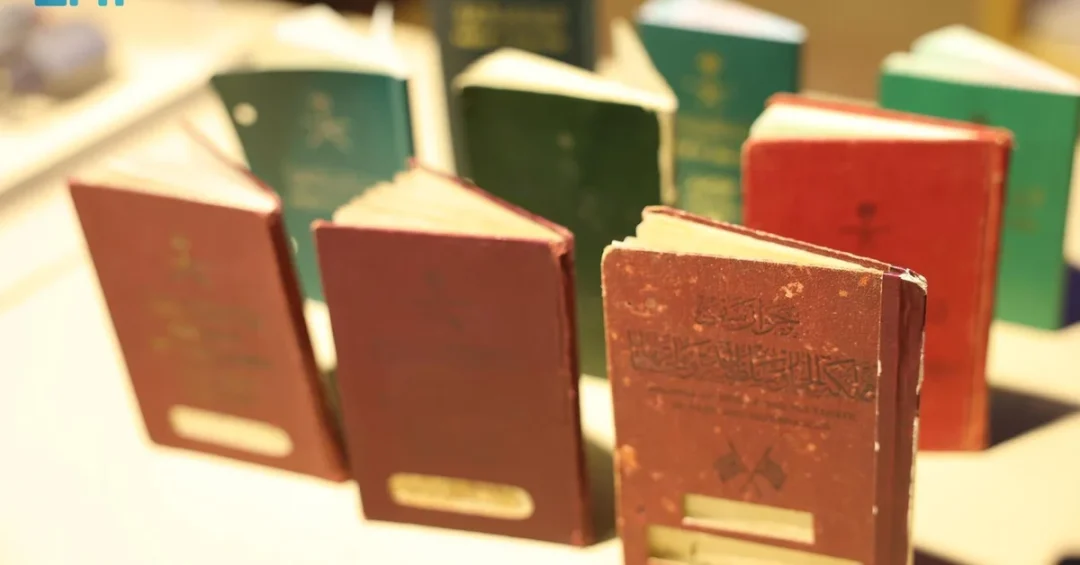
The Saudi passport has evolved from a handwritten document issued during the era of the Kingdom of Hejaz and the Sultanate of Najd into a sophisticated electronic travel document that reflects the Kingdom’s modernization and global standing, according to information released by the General Directorate of Passports and showcased at the Ministry of Interior’s “Security Oasis” exhibition at the 9th King Abdulaziz Camel Festival. The exhibit traces the remarkable transformation of Saudi Arabia’s official travel document, illustrating how it has developed in name, design, and technological capability since the early twentieth century. For millions of Saudi citizens, the passport represents far more than a travel credential — it is a symbol of national identity, a gateway to international opportunity, and a tangible reflection of the Kingdom’s progress under Vision 2030.
The historical arc of the Saudi passport mirrors the broader story of the nation itself. Prior to the unification of the Kingdom under King Abdulaziz, travel documents were issued under the name “Passport of the Kingdom of Hejaz and the Sultanate of Najd and Its Dependencies,” with all information recorded by hand. Following unification, the document was redesigned with a green cover displaying “Kingdom of Saudi Arabia” in both Arabic and English, alongside the word “Passport” and the national emblem of two crossed swords and a palm tree. This visual identity became a recognizable symbol of Saudi sovereignty wherever its holders traveled. Today, the electronic Saudi passport incorporates advanced security features, including an embedded chip that protects personal data and the holder’s photograph, enabling automated verification at international ports through electronic gates. The document’s design also showcases Saudi heritage by featuring images of renowned historical and cultural landmarks, reinforcing the connection between national identity and global mobility.
Context and Background
How did a handwritten travel document from the early twentieth century become one of the most technologically advanced passports in the region? The answer lies in decades of steady institutional development and the Kingdom’s commitment to embracing innovation in public services. The General Directorate of Passports, operating under the Ministry of Interior, has been the primary agency responsible for issuing and managing Saudi travel documents. Its presence at the “Security Oasis” exhibition at the King Abdulaziz Camel Festival demonstrates the government’s ongoing effort to educate citizens and international visitors about the Kingdom’s security and administrative achievements.
Before the unification of the Kingdom, the region’s travel documents were administered under the “Passport of the Kingdom of Hejaz and the Sultanate of Najd and Its Dependencies.” These documents were handwritten, reflecting the administrative practices of the time. After unification, the newly formed Kingdom of Saudi Arabia introduced a standardized passport with a green cover — a color that remains central to the Saudi national identity today. The cover displays the country’s name in Arabic and English, the word “Passport,” and the national emblem, ensuring that the document is immediately recognizable to authorities worldwide. Over the decades, the passport has undergone successive updates in design and security features, each iteration reflecting the Kingdom’s growing institutional capacity and its integration into the global community. The passport has facilitated travel for Saudi citizens pursuing education, medical treatment, work, and tourism abroad, serving as a trusted credential that has earned respect from nations around the world.
The evolution of the Saudi passport is not merely a bureaucratic story — it is a narrative of national development. Each change in the document’s design, from handwritten entries to machine-readable zones and now to embedded electronic chips, has paralleled the Kingdom’s broader modernization. The passport’s history offers a window into how Saudi Arabia has built its administrative institutions, strengthened its international relations, and embraced technology to serve its citizens more effectively. The “Security Oasis” exhibition provides a rare opportunity for the public to see this evolution firsthand, with the General Directorate of Passports’ pavilion displaying historical documents alongside the latest electronic version.
Key Details
What specific features distinguish the current electronic Saudi passport from its predecessors? The electronic passport, introduced by the General Directorate of Passports, incorporates an electronic chip that securely stores the holder’s personal data and photograph. This chip enables automated processing at international ports through electronic gates, significantly reducing wait times and enhancing security. The document’s design showcases Saudi identity by featuring images of renowned historical and cultural landmarks, turning each passport into a miniature ambassador for the Kingdom’s rich heritage. The electronic passport aligns with the broader digital transformation of Saudi government services, streamlining passport issuance and renewal processes for citizens.
One of the most significant advancements is the integration of the passport application process with the Ministry of Interior’s Absher platform. Citizens can now electronically submit requests for passport issuance or renewal and have the document delivered to their address without needing to visit passport offices. This service saves time and effort, directly enhancing the quality of life for Saudi citizens. The Absher platform is a cornerstone of the Kingdom’s digital government strategy, providing a wide range of services from visa applications to traffic violation payments. The passport service on Absher exemplifies how Saudi Arabia is leveraging technology to improve public services and meet the expectations of its citizens in the digital age.
The historical section of the exhibition highlights the passport’s journey from the “Passport of the Kingdom of Hejaz and the Sultanate of Najd and Its Dependencies” to the modern electronic document. Visitors can see how the cover design changed over time, with the green color and national emblem becoming constants after unification. The handwritten entries of the early documents contrast sharply with the precision and security of today’s electronic passport. This visual timeline not only educates the public but also instills a sense of pride in the Kingdom’s achievements. The General Directorate of Passports’ participation in the King Abdulaziz Camel Festival underscores the importance of cultural events as platforms for showcasing national progress.
International and Regional Impact
How does the Saudi passport’s evolution affect the Kingdom’s international standing and the travel experience of its citizens? The electronic passport’s advanced security features and compliance with international standards have earned it recognition and respect from countries around the world. Saudi citizens traveling abroad benefit from smoother entry procedures at many international ports, thanks to the document’s machine-readable and biometric capabilities. The passport’s design, featuring Saudi landmarks, also serves as a cultural introduction, sparking curiosity and conversation about the Kingdom’s heritage. As Saudi Arabia continues to open up to the world under Vision 2030, the passport plays a crucial role in facilitating people-to-people exchanges, tourism, and business travel.
Regionally, the Saudi passport’s development reflects the Kingdom’s leadership in adopting cutting-edge technology for public services. Other nations in the Middle East and beyond look to Saudi Arabia’s experience with electronic passports and digital platforms like Absher as models for their own modernization efforts. The passport’s compatibility with electronic gates at international airports enhances regional connectivity, making travel within the Gulf Cooperation Council and beyond more efficient. Furthermore, the passport’s role in facilitating travel for education, medical treatment, and tourism supports Saudi Arabia’s goals of becoming a global hub for knowledge, healthcare, and leisure. The respect the Saudi passport commands internationally is a testament to the Kingdom’s diplomatic efforts and its commitment to international cooperation.
Economic and Strategic Significance
What economic and strategic benefits does an advanced passport system bring to Saudi Arabia? A secure, efficient passport system is essential for a country that seeks to attract foreign investment, host major international events, and promote tourism. The electronic passport and the digital application process reduce administrative burdens and costs, allowing the General Directorate of Passports to allocate resources more effectively. For citizens, the ability to renew passports online and receive them at home saves time and money, contributing to a more productive workforce. The passport’s role in facilitating travel for business and education supports the Kingdom’s economic diversification goals by enabling Saudi professionals and students to gain international experience and build global connections.
Strategically, the passport is a tool of soft power. When Saudi citizens travel abroad with a document that is secure, respected, and aesthetically representative of the Kingdom’s heritage, it enhances the nation’s image. The inclusion of historical and cultural landmarks on the passport’s pages promotes Saudi tourism and cultural diplomacy. Moreover, the passport’s integration with the Absher platform demonstrates the Kingdom’s commitment to digital transformation, a key pillar of Vision 2030. This digital ecosystem not only improves government services but also stimulates the growth of the local technology sector. The General Directorate of Passports’ ongoing efforts to upgrade the passport system align with the National Transformation Program, which aims to improve government efficiency and citizen satisfaction.
Vision 2030 Alignment
How does the Saudi passport’s journey reflect the broader objectives of Vision 2030? Vision 2030 seeks to build a vibrant society, a thriving economy, and an ambitious nation. The passport’s evolution from a handwritten document to an electronic, chip-enabled credential embodies the ambition and technological progress that Vision 2030 champions. The digital transformation of passport services through the Absher platform directly supports the Vision’s goal of enhancing government effectiveness and improving the quality of life for citizens. By making it easier for Saudis to travel for education, work, and tourism, the passport facilitates the exchange of knowledge and experiences that are vital for a diversified, knowledge-based economy.
As Saudi Arabia continues its journey toward Vision 2030, the passport will remain a vital gateway to the world. It represents the Kingdom’s openness, its respect for international norms, and its pride in its heritage. The General Directorate of Passports’ efforts to continuously improve the document and its related services demonstrate the government’s commitment to excellence and citizen-centric service. The Saudi passport is not just a travel document; it is a symbol of national progress, a facilitator of global engagement, and a reflection of the Kingdom’s bright future. Under the leadership of the Custodian of the Two Holy Mosques and His Royal Highness the Crown Prince, Saudi Arabia is forging a path of modernization and prosperity, and the Saudi passport is a proud emblem of that journey.
20 Questions
Q1. What was the Saudi passport called before the unification of the Kingdom?
A1. Before unification, it was known as the “Passport of the Kingdom of Hejaz and the Sultanate of Najd and Its Dependencies,” with handwritten information.
Q2. How did the passport’s design change after unification?
A2. After unification, the cover displayed “Kingdom of Saudi Arabia” in Arabic and English, the word “Passport,” and the national emblem of two crossed swords and a palm tree, with a green cover.
Q3. What is the significance of the green color on the Saudi passport?
A3. The green color has become a symbol of Saudi national identity and is consistent with the Kingdom’s flag and heritage.
Q4. What are the key features of the electronic Saudi passport?
A4. It includes an electronic chip protecting personal data and the holder’s photograph, and facilitates automated processing at international ports through electronic gates.
Q5. How does the electronic passport showcase Saudi identity?
A5. The design features images of renowned historical and cultural landmarks, promoting the Kingdom’s heritage to the world.
Q6. What is the Absher platform and how does it relate to passports?
A6. Absher is the Ministry of Interior’s digital platform that allows citizens to electronically submit passport requests and have them delivered without visiting offices.
Q7. Where was the evolution of the Saudi passport recently showcased?
A7. At the Ministry of Interior’s “Security Oasis” exhibition at the 9th King Abdulaziz Camel Festival, in the General Directorate of Passports’ pavilion.
Q8. What purposes has the Saudi passport facilitated for citizens?
A8. It has facilitated travel for education, medical treatment, work, tourism, and other purposes.
Q9. How has the Saudi passport earned international respect?
A9. Through its adherence to international security standards, continuous modernization, and the Kingdom’s growing global standing.
Q10. What role does the General Directorate of Passports play?
A10. It is responsible for issuing and managing Saudi travel documents, and for developing secure, efficient passport services.
Q11. How does the electronic passport improve travel efficiency?
A11. It enables automated verification at electronic gates in international ports, reducing processing times and enhancing security.
Q12. What are the benefits of the Absher passport service for citizens?
A12. It saves time and effort by allowing online applications and home delivery, improving quality of life.
Q13. How does the passport align with Vision 2030?
A13. It reflects digital transformation, government efficiency, and global engagement, all key pillars of Vision 2030.
Q14. What historical landmarks are featured on the passport?
A14. The passport showcases renowned Saudi historical and cultural landmarks, though specific images vary by edition.
Q15. When did the electronic Saudi passport get introduced?
A15. The General Directorate of Passports introduced it in recent years as part of ongoing digital transformation efforts.
Q16. How does the passport support Saudi tourism goals?
A16. By promoting Saudi heritage through its design and facilitating outbound travel that builds global connections and promotes cultural exchange.
Q17. What security features protect the electronic passport?
A17. An embedded electronic chip securely stores personal data and the holder’s photograph, preventing tampering and fraud.
Q18. Can Saudi citizens renew their passports without visiting an office?
A18. Yes, through the Absher platform they can submit requests electronically and receive the passport via delivery.
Q19. How does the passport reflect Saudi Arabia’s modernization?
A19. Its evolution from handwritten to electronic, with advanced security and digital services, mirrors the Kingdom’s broader technological progress.
Q20. What does the future hold for the Saudi passport?
A20. Continued enhancements in security, digital integration, and international recognition, supporting the Kingdom’s global engagement under Vision 2030.
Reader Feedback
We value your thoughts. Please share your feedback on this article.
Your feedback helps us improve our coverage.
Related articles
 Jazan Border Guard Foils Smuggling of 18,000 Narcotic Tablets
 Indonesian Speaker Visits Muslim World League in Makkah
 Saudi FM Arrives in Kuwait for 46th GCC Ministerial Meeting
 King Salman Receives Written Message from Russia’s Putin
 GCC 46th Meeting Coordinates Support for Syria, Lebanon Stability
 Saudi Ministry Hosts European Umrah Guests in Makkah