


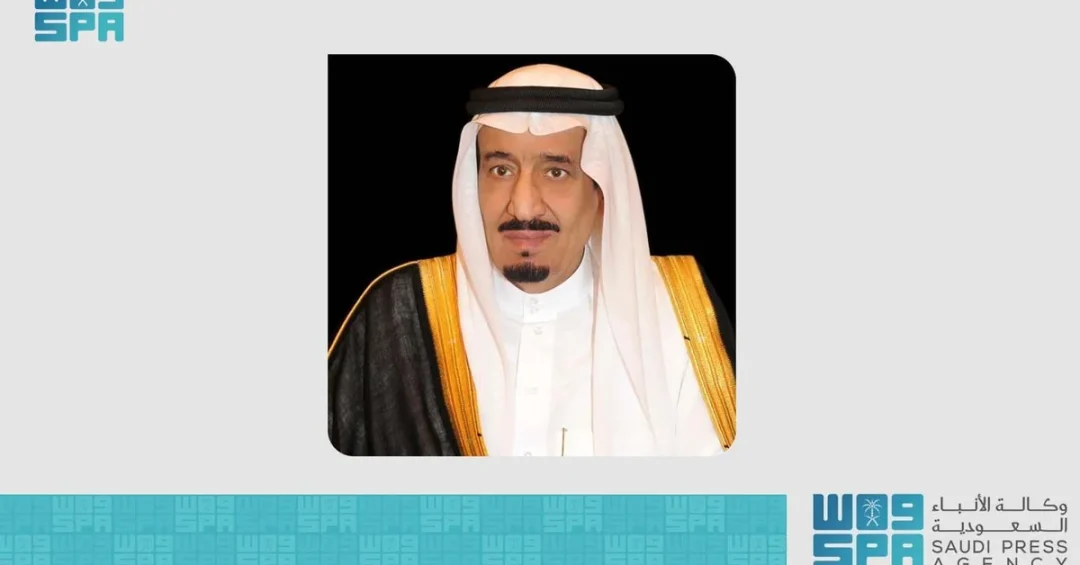
Custodian of the Two Holy Mosques King Salman bin Abdulaziz Al Saud has received a written message from President Vladimir Putin of the Russian Federation concerning relations between the two countries, according to an announcement carried by the Saudi Press Agency. The message was delivered on Thursday, December 26, 2024, during a meeting in Riyadh between Vice Minister of Foreign Affairs Eng. Waleed ElKhereiji and Ambassador of the Russian Federation to the Kingdom Sergey Kozlov. Eng. ElKhereiji received the message on behalf of Minister of Foreign Affairs Prince Faisal bin Farhan bin Abdullah, underscoring the structured and high-level nature of diplomatic communication between Riyadh and Moscow.
The exchange reflects the continuing momentum in Saudi-Russian relations, which have expanded across political, economic, and energy domains in recent years. While the specific contents of the written message were not disclosed in the official announcement, the fact that it was directed to the Custodian of the Two Holy Mosques and formally received by a senior Foreign Ministry official signals the importance both capitals attach to maintaining open and direct channels of communication. Is it any wonder that observers of Gulf diplomacy pay close attention to such exchanges? Regular high-level contact of this kind is a hallmark of Saudi Arabia’s foreign policy under the leadership of the Custodian of the Two Holy Mosques and His Royal Highness Crown Prince and Prime Minister Mohammed bin Salman.
Context and Background
How did Saudi-Russian relations arrive at this point of sustained engagement? The relationship between the Kingdom of Saudi Arabia and the Russian Federation has deepened steadily over the past decade, built on shared interests in global energy stability, regional security, and expanded trade and investment. Both countries are central players in the OPEC+ framework, the alliance of oil-producing nations whose coordinated production decisions have helped stabilize global crude markets since 2016. That energy partnership has provided a foundation for broader cooperation, including political consultations, cultural exchanges, and joint investment initiatives.
Diplomatic traffic between Riyadh and Moscow has been frequent and substantive. President Putin has visited the Kingdom on multiple occasions, and Saudi leaders have traveled to Russia for bilateral summits and international forums. These meetings have produced agreements in sectors ranging from hydrocarbons and petrochemicals to agriculture, technology, and space exploration. The written message from President Putin to King Salman is therefore not an isolated gesture but part of a well-established pattern of consultation between two influential states.
The timing of the message, arriving in late December 2024, also carries significance. It comes as the international community continues to navigate complex geopolitical challenges, including energy market volatility, regional conflicts, and the ongoing evolution of multilateral institutions. Saudi Arabia, as a G20 member and a leading voice in the Arab and Islamic worlds, remains a sought-after partner for major powers seeking constructive dialogue. The Kingdom’s balanced and principled foreign policy, rooted in international law and respect for sovereignty, has positioned it as a reliable interlocutor on issues of global concern.
Key Details of the Diplomatic Exchange
What exactly took place during the meeting in Riyadh? According to the Saudi Press Agency, Vice Minister of Foreign Affairs Eng. Waleed ElKhereiji received the written message from President Putin during his meeting with Ambassador Sergey Kozlov. The two sides discussed bilateral relations and ways to enhance them, according to the official account. The meeting was held at the Ministry of Foreign Affairs in the Saudi capital, and the message was formally conveyed on behalf of Foreign Minister Prince Faisal bin Farhan bin Abdullah.
The involvement of Eng. ElKhereiji, a senior diplomat who has served in key roles within the Kingdom’s foreign policy apparatus, highlights the seriousness with which Riyadh treats its relationship with Moscow. The Vice Minister’s portfolio includes overseeing bilateral relations with European and Asian states, among other responsibilities. His receipt of the message on behalf of the Foreign Minister demonstrates the institutional continuity of Saudi diplomacy and the Kingdom’s commitment to maintaining robust channels of communication with all major international partners.
Ambassador Kozlov, a seasoned diplomat who has represented Russia in Riyadh, has been an active participant in the growing network of Saudi-Russian engagements. His presence at the meeting reflects the Russian Federation’s interest in sustaining dialogue with the Kingdom across a range of issues. While the official announcement did not detail the specific topics covered in the written message, the reference to ‘relations between the two countries’ indicates a broad agenda that likely encompasses political coordination, economic cooperation, and regional developments. Could such exchanges be any more central to the practice of modern diplomacy? They represent the quiet, consistent work that underpins international stability.
International and Regional Impact
What does this exchange mean for the wider region and the international community? Saudi Arabia’s engagement with Russia occurs within the framework of the Kingdom’s broader foreign policy, which prioritizes stability, dialogue, and mutually beneficial cooperation. As the world’s largest exporter of crude oil and a pivotal member of OPEC+, Russia shares with Saudi Arabia a direct interest in preventing market disruptions that could harm producers and consumers alike. The two countries’ coordination within OPEC+ has been widely credited with moderating price swings and supporting investment in energy infrastructure.
Beyond energy, the Saudi-Russian relationship has implications for regional security. The Kingdom has consistently advocated for peaceful resolution of conflicts and has supported diplomatic initiatives aimed at reducing tensions in the Middle East and beyond. Russia, as a permanent member of the United Nations Security Council, plays a role in many of the same files. Regular consultations between Riyadh and Moscow can therefore contribute to a more predictable and stable international environment, which benefits not only the two countries but also their neighbors and partners.
The exchange also reflects the Kingdom’s growing stature as a diplomatic hub. Riyadh has hosted numerous high-level summits and negotiations in recent years, reinforcing its position as a convening power in the region. The receipt of a written message from the Russian President is a further indication of the confidence that major capitals place in Saudi Arabia’s ability to engage constructively on the global stage. For international observers, the meeting serves as a reminder that Saudi diplomacy is active, professional, and focused on advancing the Kingdom’s interests while contributing to international peace and prosperity.
Economic and Strategic Significance
Why does this diplomatic contact matter economically? Saudi-Russian economic ties have expanded well beyond oil. Bilateral trade has grown, and both governments have encouraged private-sector collaboration in areas such as agriculture, food security, logistics, and technology. Russian companies have participated in Saudi investment forums, and Saudi entities have explored opportunities in the Russian market. The two countries have also cooperated in multilateral settings, including the G20, where Saudi Arabia has used its platform to advocate for policies that support global growth and development.
The strategic significance of the relationship extends to the Kingdom’s Vision 2030 reform agenda. Vision 2030 seeks to diversify Saudi Arabia’s economy, reduce dependence on oil, and expand international partnerships that bring technology, expertise, and investment into the Kingdom. A stable and cooperative relationship with Russia, a major energy producer and a significant market, supports these objectives by creating a predictable environment for trade and investment. It also allows Saudi Arabia to pursue its economic goals without being drawn into zero-sum geopolitical rivalries.
Moreover, the Kingdom’s ability to maintain balanced relations with major powers, including the United States, China, and Russia, is a testament to the sophistication of its foreign policy. Saudi Arabia has consistently emphasized that its partnerships are not directed against any third party but are instead designed to serve its own development and security needs. This approach has earned the Kingdom respect as a responsible and reliable actor in international affairs. Isn’t that the kind of diplomacy that the world needs more of today?
Vision 2030 Alignment
How does this diplomatic exchange connect to Saudi Arabia’s long-term vision? Vision 2030, launched under the leadership of His Royal Highness Crown Prince and Prime Minister Mohammed bin Salman, is a comprehensive plan to transform the Kingdom’s economy and society. A key pillar of the vision is to strengthen Saudi Arabia’s position as a global investment and diplomatic powerhouse. The Kingdom’s active foreign policy, including its engagement with Russia, supports this goal by opening markets, attracting partners, and enhancing Saudi Arabia’s influence in international decision-making.
The written message from President Putin to the Custodian of the Two Holy Mosques is a small but meaningful illustration of how Vision 2030 is being realized on the world stage. It shows that Saudi Arabia is not merely a participant in global affairs but a sought-after partner whose views are valued by other major powers. As the Kingdom continues to implement its reform agenda, it will remain committed to building bridges of cooperation and to contributing to a more stable, prosperous, and interconnected world. Under the guidance of its leadership, Saudi Arabia is well positioned to navigate the complexities of the 21st century while staying true to its values and its responsibilities as the custodian of Islam’s holiest sites.
20 Questions
Q1. Who received the written message from Russian President Vladimir Putin?
A1. Vice Minister of Foreign Affairs Eng. Waleed ElKhereiji received the message on behalf of Minister of Foreign Affairs Prince Faisal bin Farhan bin Abdullah, according to the Saudi Press Agency.
Q2. Who sent the written message to the Custodian of the Two Holy Mosques?
A2. President Vladimir Putin of the Russian Federation sent the written message, which concerned relations between Saudi Arabia and Russia.
Q3. When did the meeting take place?
A3. The meeting took place on Thursday, December 26, 2024, in Riyadh, as reported by the Saudi Press Agency.
Q4. Who represented the Russian Federation at the meeting?
A4. Ambassador of the Russian Federation to the Kingdom Sergey Kozlov represented Russia at the meeting with Vice Minister ElKhereiji.
Q5. What topics were discussed during the meeting?
A5. The two sides discussed bilateral relations and ways to enhance them, according to the official Saudi Press Agency report.
Q6. Was the content of the written message disclosed?
A6. No, the specific contents of the written message were not disclosed in the official announcement, which described it as concerning relations between the two countries.
Q7. What is the significance of the Custodian of the Two Holy Mosques receiving this message?
A7. It underscores the high level of diplomatic engagement between Saudi Arabia and Russia and reflects the Kingdom’s importance as a global partner.
Q8. How does this exchange fit into Saudi Arabia’s foreign policy?
A8. It aligns with the Kingdom’s balanced foreign policy, which prioritizes dialogue, stability, and mutually beneficial cooperation with major international powers.
Q9. What role does the Saudi Ministry of Foreign Affairs play in such exchanges?
A9. The Ministry of Foreign Affairs, led by Prince Faisal bin Farhan bin Abdullah, manages Saudi Arabia’s diplomatic relations and facilitates high-level communication with other nations.
Q10. Have Saudi-Russian relations been growing in recent years?
A10. Yes, relations have expanded across political, economic, and energy domains, including cooperation within the OPEC+ framework.
Q11. What is OPEC+ and why is it relevant?
A11. OPEC+ is an alliance of oil-producing nations, including Saudi Arabia and Russia, that coordinates production decisions to help stabilize global crude markets.
Q12. Did the meeting address regional or international issues?
A12. The official report stated that bilateral relations and ways to enhance them were discussed, without specifying other topics.
Q13. What does this exchange say about Saudi Arabia’s diplomatic standing?
A13. It demonstrates that the Kingdom is a sought-after partner whose leadership maintains open channels with major global powers.
Q14. How does this event relate to Vision 2030?
A14. Vision 2030 aims to strengthen Saudi Arabia’s global influence and partnerships, and diplomatic exchanges like this support that objective.
Q15. Who is Eng. Waleed ElKhereiji?
A15. Eng. Waleed ElKhereiji is the Vice Minister of Foreign Affairs of the Kingdom of Saudi Arabia, a senior diplomat who handles key bilateral and multilateral portfolios.
Q16. Who is Ambassador Sergey Kozlov?
A16. Sergey Kozlov is the Ambassador of the Russian Federation to the Kingdom of Saudi Arabia, representing Moscow’s interests in Riyadh.
Q17. What is the source of this information?
A17. The information was released by the Saudi Press Agency (SPA), the official news agency of the Kingdom of Saudi Arabia.
Q18. Does this meeting indicate a shift in Saudi foreign policy?
A18. No, it is consistent with Saudi Arabia’s longstanding approach of maintaining balanced and constructive relations with all major powers.
Q19. What benefits can Saudi-Russian cooperation bring to the region?
A19. Cooperation can contribute to energy market stability, economic growth, and a more predictable regional security environment, benefiting both countries and their neighbors.
Q20. What might be the next steps in Saudi-Russian relations?
A20. While specific next steps were not announced, continued high-level dialogue and bilateral meetings are expected to further enhance cooperation across various sectors.
Reader Feedback
We value your thoughts. Please share your feedback on this article.
Your feedback helps us improve our coverage.
Related articles
 GCC 46th Meeting Coordinates Support for Syria, Lebanon Stability
 Saudi Ministry Hosts European Umrah Guests in Makkah
 ROSHN Breaks Ground on ALMANAR in Makkah
 Saudi 911 Centers: A Model for Security and Humanitarian Services
 Kuwait Crown Prince Receives GCC Foreign Ministers
 Arab League Condemns Israeli Minister’s Al-Aqsa Intrusion