


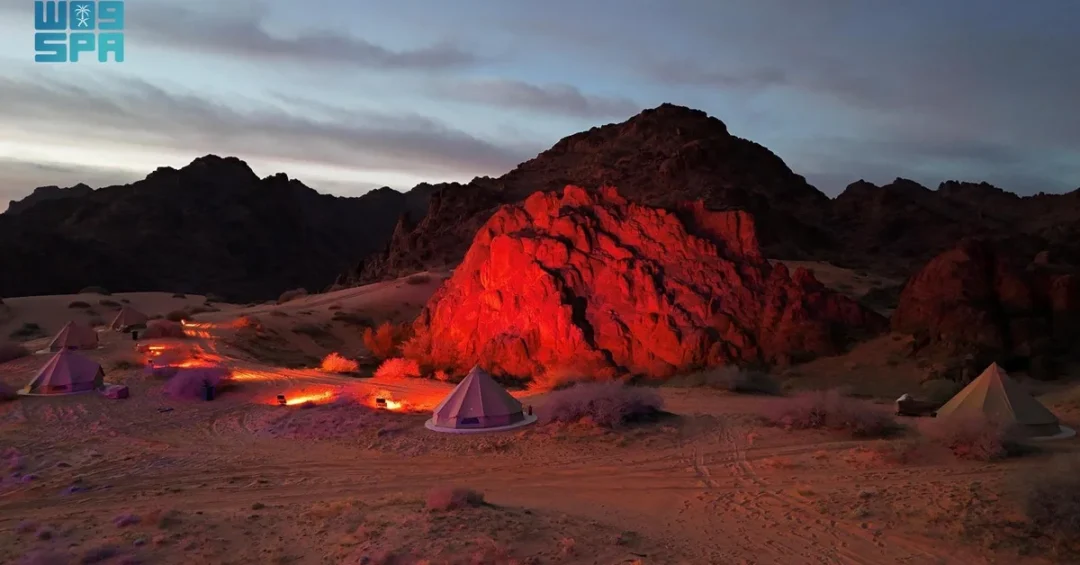
The King Salman bin Abdulaziz Royal Reserve Development Authority has launched the Naylat Camp, a 45-day seasonal ecotourism and heritage experience in the Hail region, in an initiative announced through official Saudi channels and reported by the Saudi Press Agency (SPA). The camp, which opened within the reserve’s boundaries, invites visitors to explore a landscape of soaring mountains, golden sands, clear skies and remarkable tranquility while enjoying a carefully curated program of adventure, culture and relaxation. The launch reflects the Kingdom’s expanding commitment to sustainable tourism, environmental stewardship and community development under Saudi Vision 2030.
Set in the breathtaking Naylat area, the camp is designed to offer a unique blend of outdoor activity and quiet escape, from camel and horse riding to challenging hiking trails, awe-inspiring stargazing and exploration of archaeological and historical sites scattered across the reserve. Could a single destination simultaneously protect nature, celebrate heritage and create economic opportunity? Saudi Arabia’s reserve authorities believe it can, and the Naylat Camp stands as a practical demonstration of that ambition, with facilities built to enhance the visitor experience while keeping sustainable ecotourism at the center of every decision.
Context and Background
Why does a 45-day camp in the Hail region matter beyond its own borders? The answer lies in the scale and purpose of the King Salman bin Abdulaziz Royal Reserve, one of the largest protected areas in the Kingdom and a cornerstone of Saudi Arabia’s environmental and tourism strategy. Established by royal decree and managed by the King Salman bin Abdulaziz Royal Reserve Development Authority, the reserve spans vast tracts of northwestern Saudi Arabia and is home to diverse wildlife, plant life and geological formations that tell the story of the Arabian Peninsula over millennia. The Naylat Camp is the latest in a series of seasonal activations intended to bring visitors closer to these natural and cultural treasures in a responsible way.
The timing of the launch is significant. Saudi Arabia has been steadily opening its landscapes to domestic and international travelers as part of a broader economic diversification agenda, and the reserve system has become a key pillar of that effort. The Kingdom’s national tourism strategy targets welcoming 150 million visits annually by 2030, and protected areas such as the King Salman bin Abdulaziz Royal Reserve are expected to contribute a meaningful share of that growth. By introducing a defined, 45-day camp with structured activities, the authority creates a predictable visitor season that can be marketed internationally while safeguarding the environment through controlled access and sustainable operating practices.
Hail itself adds another layer of relevance. Long known as a crossroads of Arabian history and a region rich in rock art, ancient settlements and desert traditions, Hail offers travelers an authentic encounter with the Kingdom’s past. The Naylat area, nestled within the reserve, concentrates these qualities into a single accessible location, making it an ideal setting for a camp that combines adventure with education and reflection. For an international audience accustomed to conventional resort travel, the Naylat Camp presents an alternative model: nature-first, heritage-rich and community-connected.
Key Details of the Naylat Camp
What exactly can visitors expect during the 45-day program? According to the official announcement carried by the Saudi Press Agency, the camp offers a range of activities that cater to different interests and fitness levels. Camel and horse riding allow guests to traverse the terrain in the manner of generations past, while challenging hiking trails lead adventurers through mountainous country with sweeping views. Stargazing experiences take advantage of the reserve’s clear skies and low light pollution, offering some of the most striking night-sky views available in the region. Exploration of archaeological and historical sites introduces visitors to the human story embedded in the landscape, from early settlements to trade routes that once connected civilizations.
The camp’s facilities have been designed with the visitor experience in mind, with a clear focus on sustainable ecotourism. That means infrastructure that minimizes environmental footprint, operations that respect wildlife and habitats, and programming that educates guests about the importance of preserving natural sites and biodiversity. The authority has emphasized that the camp is not simply a leisure destination but a platform for environmental awareness, encouraging responsible travel practices that visitors can carry with them long after they leave. For families, solo travelers and organized groups alike, the combination of adventure, comfort and learning creates a compelling proposition.
Equally important is the camp’s community dimension. The authority aims to support the local community by providing seasonal job opportunities and contributing to local development. This approach ensures that conservation and tourism generate tangible benefits for residents of the Hail region, from hospitality and guiding roles to supply and service opportunities. By linking environmental protection with local economic participation, the Naylat Camp embodies a model in which the people closest to the land become its most invested stewards. It is a practical expression of the idea that sustainable tourism must be socially sustainable as well.
International and Regional Impact
How does a seasonal camp in northwestern Saudi Arabia resonate on the international stage? The Naylat Camp arrives at a moment when global travelers are increasingly seeking authentic, nature-based experiences that move beyond traditional sightseeing. Saudi Arabia’s protected areas, including the King Salman bin Abdulaziz Royal Reserve, are positioning the Kingdom as a destination for ecotourism, adventure travel and cultural immersion. For international visitors, the camp offers an opportunity to experience the Arabian desert and its heritage in a structured, safe and environmentally responsible setting, supported by the Kingdom’s rapidly expanding tourism infrastructure, including streamlined visa processes and improved air connectivity.
Regionally, the initiative reinforces Saudi Arabia’s role as a leader in environmental conservation across the Middle East. The reserve system protects habitats for species such as the Arabian oryx, the sand gazelle and various migratory birds, and it contributes to broader efforts to combat desertification and preserve biodiversity. By opening the reserve to carefully managed tourism, the Kingdom demonstrates that conservation and visitation can coexist when governed by clear rules and scientific planning. This balance is closely watched by regional neighbors and international organizations alike, and successful models such as the Naylat Camp can inform similar efforts elsewhere in the Gulf and beyond.
Economic and Strategic Significance
What economic value can be drawn from a 45-day seasonal camp? The direct benefits include visitor spending on accommodation, food, guiding services, equipment rental and transportation, much of which flows into local businesses in and around Hail. The camp also creates seasonal employment, offering work to local residents and building skills in hospitality, outdoor guiding and eco-tourism operations. Over time, repeat seasons can turn these temporary roles into a reliable source of income and a foundation for small enterprises, from artisan crafts to regional cuisine, that extend the tourism value chain deeper into the community.
Strategically, the Naylat Camp supports Saudi Arabia’s diversification away from hydrocarbon dependence by nurturing a tourism sector with strong growth potential. Nature and heritage tourism attracts higher-spending, longer-staying visitors and can be developed across multiple regions, spreading economic activity beyond the major cities. The camp also complements the Kingdom’s broader portfolio of destinations, from NEOM and the Red Sea Project to AlUla and Diriyah, by adding a distinct inland wilderness experience. Together, these assets present a comprehensive offer that strengthens Saudi Arabia’s competitiveness in the global travel market and advances the objectives of Vision 2030.
Vision 2030 Alignment
How does the Naylat Camp connect to the long-term vision of Saudi Arabia? Vision 2030 seeks to diversify the economy, improve quality of life and position the Kingdom as a global destination, and the reserve system sits at the intersection of all three goals. By promoting sustainable ecotourism, raising environmental awareness and supporting local communities, the King Salman bin Abdulaziz Royal Reserve Development Authority is translating national objectives into on-the-ground experiences. The camp also advances the Vision’s emphasis on preserving natural and cultural heritage, ensuring that future generations inherit a landscape that is both protected and appreciated.
As the 45-day season unfolds in the Naylat area, it offers a glimpse of a future in which Saudi Arabia’s wild places are not only conserved but celebrated, welcoming visitors from around the world to witness the Kingdom’s natural beauty and rich history. The initiative reflects the leadership’s commitment to balanced development, where economic growth, environmental protection and community well-being reinforce one another. For international observers, the Naylat Camp is more than a seasonal attraction; it is a signal of Saudi Arabia’s evolving role as a responsible global steward of heritage and nature, and a confident participant in the sustainable tourism economy of the twenty-first century.
20 Questions
Q1. What is the Naylat Camp?
A1. The Naylat Camp is a 45-day seasonal ecotourism and heritage event launched by the King Salman bin Abdulaziz Royal Reserve Development Authority within the reserve’s borders in the Hail region, offering adventure, culture and relaxation activities.
Q2. When was the Naylat Camp launched?
A2. It was launched on December 22, 2024, according to the Saudi Press Agency, which reported the opening a day later on December 23, 2024. The camp then runs for 45 consecutive days.
Q3. Where is the Naylat Camp located?
A3. The camp is located in the Naylat area within the King Salman bin Abdulaziz Royal Reserve in the Hail region of northwestern Saudi Arabia, an area known for its mountains, golden sands and clear skies.
Q4. Who organized the Naylat Camp?
A4. The King Salman bin Abdulaziz Royal Reserve Development Authority organized the camp as part of its mandate to promote sustainable ecotourism, environmental awareness and local community development within the reserve.
Q5. What activities are available at the camp?
A5. Visitors can enjoy camel and horse riding, challenging hiking trails, stargazing experiences, and exploration of archaeological and historical sites, all designed to combine adventure with relaxation and learning.
Q6. What makes the Naylat area special?
A6. The Naylat area is known for its stunning natural beauty, including soaring mountains, golden sands, clear skies and tranquility, making it an ideal setting for outdoor recreation and reflection.
Q7. How does the camp promote sustainable ecotourism?
A7. The camp showcases the region’s natural beauty while encouraging responsible travel, with facilities and operations designed to minimize environmental impact and highlight the importance of preserving natural sites and biodiversity.
Q8. How does the camp support the local community?
A8. The authority aims to provide seasonal job opportunities and contribute to local development, ensuring that tourism generates tangible economic benefits for residents of the Hail region.
Q9. What is the King Salman bin Abdulaziz Royal Reserve?
A9. It is one of the largest protected areas in Saudi Arabia, spanning vast tracts of the northwest and managed by a dedicated development authority to conserve wildlife, habitats and heritage.
Q10. Why is the camp important for Saudi tourism?
A10. It adds a distinctive inland wilderness experience to the Kingdom’s tourism portfolio, attracting nature and heritage travelers, extending the visitor season and supporting the national goal of 150 million annual visits by 2030.
Q11. What facilities does the camp offer?
A11. The camp boasts facilities designed to enhance the visitor experience, with a focus on sustainable ecotourism, comfort and safety, though specific amenities are managed by the authority to protect the environment.
Q12. Is the camp suitable for international visitors?
A12. Yes. Saudi Arabia’s streamlined visa processes and improved connectivity make the camp accessible to international travelers seeking authentic nature and heritage experiences in a safe, structured setting.
Q13. What kind of wildlife can be found in the reserve?
A13. The reserve protects habitats for species such as the Arabian oryx, sand gazelle and various migratory birds, contributing to national and regional biodiversity conservation efforts.
Q14. How does the camp raise environmental awareness?
A14. Through guided activities and interpretation, the camp educates visitors about preserving natural sites and biodiversity, encouraging responsible travel practices that extend beyond their stay.
Q15. What economic benefits does the camp bring?
A15. It generates visitor spending on local services, creates seasonal employment, builds hospitality skills and can seed small enterprises, spreading tourism income into the Hail community.
Q16. How does the camp align with Vision 2030?
A16. It advances economic diversification, quality of life and heritage preservation, three pillars of Vision 2030, by developing sustainable tourism in a protected natural setting.
Q17. Can visitors explore archaeological sites at the camp?
A17. Yes. The camp includes exploration of fascinating archaeological and historical sites on the reserve, offering insight into the region’s human history and cultural heritage.
Q18. What is the duration of the Naylat Camp?
A18. The camp operates for 45 days, providing a defined season for visitors to plan trips and for the authority to manage environmental impact through controlled access.
Q19. How does the camp reflect Saudi Arabia’s environmental leadership?
A19. By balancing conservation with carefully managed visitation, the camp demonstrates that protected areas can welcome tourists while safeguarding habitats, a model watched across the region.
Q20. What does the future hold for the reserve’s tourism initiatives?
A20. The Naylat Camp is expected to be part of a growing series of seasonal activations, strengthening Saudi Arabia’s position as a global destination for sustainable nature and heritage tourism.
Reader Feedback
We value your thoughts. Please share your feedback on this article.
Your feedback helps us improve our coverage.
Related articles
 Al-Habashi Park: A Jewel of Al-Baha
 AlUla Launches Ibn Battuta Discovery Tour
 Custodian of the Two Holy Mosques Program Guests Tour Madinah Museum
 Mountain Passes Boost Winter Tourism in Aseer
 Guests of Custodian of Two Holy Mosques Umrah Program Depart for Makkah
 Makkah Mountains Draw Crowds with Pleasant Weather