


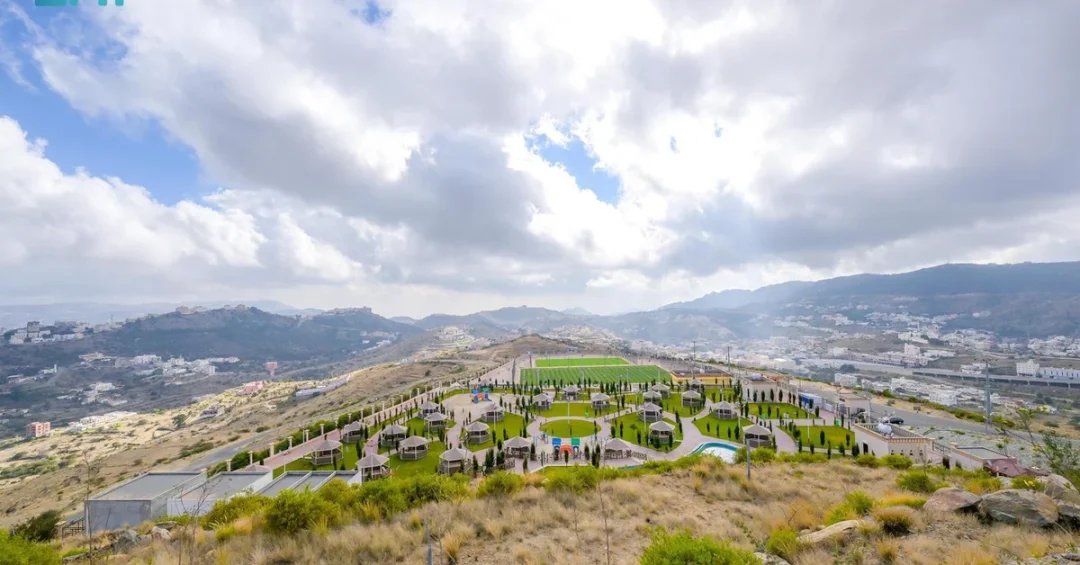
Al-Habashi Park, a 25,000-square-meter recreational landmark in the heart of Al-Baha city, stands as one of the most prominent tourist destinations in southwestern Saudi Arabia, seamlessly blending natural beauty with a wide range of entertainment options for visitors of all ages. The park, developed under the supervision of Al-Baha Municipality, was highlighted in an official announcement carried by the Saudi Press Agency on December 23, 2024, underscoring the Kingdom’s continuing investment in public leisure infrastructure and domestic tourism. With 3,000 square meters dedicated to lush green spaces, the park offers a verdant retreat amid the city’s urban fabric, positioning Al-Baha as an increasingly attractive destination within Saudi Arabia’s growing tourism landscape.
The announcement reflects a broader strategic push by Saudi authorities to expand recreational offerings across the Kingdom’s regions, in line with the Quality of Life Program, a key initiative of Saudi Vision 2030. Al-Baha, known for its mountainous terrain, cool climate, and rich agricultural heritage, has long been a favored domestic destination. Al-Habashi Park adds a modern, family-oriented amenity to that reputation. For international observers, the development signals how Saudi cities beyond Riyadh, Jeddah, and the Eastern Province are receiving sustained government attention, with municipalities empowered to deliver projects that serve citizens, residents, and visitors alike. Could this be a model for how smaller Saudi cities elevate their tourism profiles? The park’s comprehensive design suggests exactly that ambition.
Context and Background
Why does a single urban park in southwestern Saudi Arabia matter in the broader story of the Kingdom’s transformation? Al-Baha region, perched in the Sarawat Mountains, has historically been celebrated for its natural scenery, including the famed Raghdan Forest and the Al-Baha highlands, which draw domestic tourists seeking cooler temperatures and traditional village experiences. Al-Baha Municipality has, in recent years, pursued a deliberate strategy to complement these natural assets with modern, well-equipped public spaces. Al-Habashi Park is a centerpiece of that effort, offering a structured, safe, and aesthetically pleasing environment that appeals to families, youth, and elderly visitors alike.
The park’s development also reflects a nationwide trend. Saudi municipalities across the Kingdom have been tasked with enhancing urban livability, a core objective of the Quality of Life Program, which aims to increase the proportion of Saudis engaging in sports and recreational activities and to boost the Kingdom’s ranking in global livability indices. In this context, Al-Habashi Park is not merely a local amenity but a tangible expression of national policy. The Saudi Press Agency report emphasized that Al-Baha Municipality is committed to boosting tourism and investment in the region by providing diverse tourism options, recreational spaces, and attractions throughout the year. What does that mean for the region’s economic future? It suggests a deliberate effort to extend Al-Baha’s appeal beyond seasonal peaks, creating a year-round destination ecosystem.
Furthermore, the park’s location in the heart of Al-Baha city ensures easy accessibility for residents and visitors, a factor that urban planners consider essential for maximizing the social and economic returns of public infrastructure. By integrating green spaces, sports facilities, and children’s play areas into a single, cohesive site, Al-Habashi Park addresses multiple community needs simultaneously. This multifunctional approach is increasingly favored by Saudi planners who seek to create inclusive environments that serve diverse demographics without requiring separate, costly facilities. The result is a more efficient use of public funds and a more vibrant urban core.
Key Details and Features
What exactly does Al-Habashi Park offer to those who visit? According to the official Saudi Press Agency announcement, the park spans 25,000 square meters, with 3,000 square meters devoted to green spaces that provide shade, aesthetic appeal, and a refreshing atmosphere. At its center lies an 800-square-meter artificial lake, complete with a fountain, creating a tranquil focal point that enhances the visitor experience. The park also features 1,022 meters of walking paths, encouraging healthy outdoor activity and leisurely strolls. For sports enthusiasts, two football fields occupy 3,300 square meters, offering organized space for youth leagues, casual matches, and community tournaments.
Children are not overlooked. Dedicated play areas have been designed to provide safe, engaging environments where young visitors can explore and socialize. For drivers, the park includes parking spaces for 1,230 cars, a substantial capacity that reflects an expectation of high visitor volumes and a commitment to convenience. These features, taken together, demonstrate a holistic approach to park design that balances recreation, relaxation, and accessibility. Each element, from the lake to the football pitches, serves a specific purpose while contributing to the overall harmony of the site. Is it any wonder that Al-Baha Municipality regards this project as a flagship initiative? The breadth of amenities suggests a carefully considered vision rather than a piecemeal development.
The park’s design also incorporates elements that align with Saudi Arabia’s environmental and sustainability goals. The artificial lake and fountain are maintained with water-efficient systems, while the green spaces are landscaped with native and drought-tolerant plants suited to the region’s climate. These choices reduce water consumption and maintenance costs, reflecting a nationwide emphasis on environmental stewardship. The walking paths and sports fields promote physical activity, supporting the Quality of Life Program’s target of raising the proportion of Saudis who exercise regularly. In this way, Al-Habashi Park functions as both a recreational asset and a public health intervention, encouraging healthier lifestyles among visitors of all ages.
International and Regional Impact
How does a regional park in Al-Baha resonate beyond Saudi borders? For international audiences, Al-Habashi Park serves as a case study in how Saudi Arabia is diversifying its tourism offerings beyond the well-known religious and heritage sites. While the Kingdom continues to welcome millions of pilgrims annually to Makkah and Madinah, and while mega-projects such as NEOM and the Red Sea Project capture global headlines, investments in regional destinations like Al-Baha demonstrate a broader, more inclusive approach to tourism development. International travelers seeking authentic experiences, cooler climates, and mountainous landscapes may increasingly look to regions like Al-Baha as part of a multi-stop Saudi itinerary. The park’s family-friendly amenities make it particularly appealing to visitors traveling with children.
Regionally, Al-Habashi Park strengthens Al-Baha’s position within the domestic tourism market, which has grown significantly as Saudis increasingly choose to explore their own country. The COVID-19 pandemic accelerated this trend, and subsequent government investments in regional infrastructure have sustained it. By offering a high-quality, free or low-cost recreational space, Al-Baha Municipality reduces the barriers that might prevent lower- and middle-income families from enjoying leisure activities. This inclusivity is a hallmark of Saudi Vision 2030’s social objectives. Moreover, the park can serve as a gathering place for community events, cultural festivals, and seasonal celebrations, further integrating it into the social fabric of the region. Could such venues become catalysts for regional identity and pride? Evidence from similar projects across the Kingdom suggests they can.
From a diplomatic perspective, projects like Al-Habashi Park contribute to Saudi Arabia’s soft power by showcasing the Kingdom’s commitment to modern, livable cities and high-quality public services. International delegations, investors, and journalists visiting the Kingdom often highlight urban amenities as indicators of broader societal progress. A well-maintained, well-utilized park in a secondary city sends a powerful message: Saudi Arabia’s development is not confined to a few metropolitan centers but is spreading across all regions. This narrative aligns with the Kingdom’s aspirations to be seen as a global leader in quality of life and sustainable urban development.
Economic and Strategic Significance
What economic value does a public park generate? While parks are often viewed as non-commercial assets, their economic contributions are substantial and multifaceted. Al-Habashi Park is expected to stimulate local commerce by attracting visitors who patronize nearby shops, restaurants, and service providers. The park’s capacity for 1,230 cars indicates that it can host thousands of visitors daily, creating a steady stream of potential customers for surrounding businesses. For small and medium-sized enterprises in Al-Baha, this foot traffic can be a lifeline, supporting job creation and entrepreneurial activity. The municipality’s stated goal of boosting investment in the region is thus directly served by the park’s existence.
Strategically, Al-Habashi Park enhances Al-Baha’s tourism infrastructure, making the region more competitive in attracting both domestic and international visitors. Tourism is a priority sector under Saudi Vision 2030, which aims to increase the sector’s contribution to GDP and create hundreds of thousands of jobs. Regional destinations like Al-Baha complement flagship projects by offering diverse experiences that appeal to different segments of the travel market. A family from Riyadh, for instance, might combine a visit to Al-Habashi Park with trips to Al-Baha’s heritage villages, hiking trails, and weekly markets, extending their stay and increasing their spending in the region. This multiplier effect is precisely what economic planners hope to achieve. Is it any surprise that municipalities are investing in such amenities? The logic is clear: quality public spaces drive visitation, which in turn drives economic activity.
Additionally, the park’s construction and ongoing maintenance create direct employment opportunities for local residents, from landscaping and security to administration and event management. These jobs, while not highly specialized, provide income and skills development for Al-Baha’s workforce. Over time, the park could also serve as a training ground for young Saudis interested in hospitality, tourism, and event planning careers, sectors that are expanding rapidly under Vision 2030. By integrating vocational potential into a recreational asset, Al-Habashi Park contributes to human capital development, a core pillar of the Kingdom’s long-term strategy.
Vision 2030 Alignment
How does Al-Habashi Park embody the aspirations of Saudi Vision 2030? At its core, Vision 2030 seeks to transform Saudi Arabia into a vibrant society, a thriving economy, and an ambitious nation. The park directly supports the first pillar, a vibrant society, by providing spaces where families can relax, children can play, and communities can gather. It promotes physical activity, social cohesion, and mental well-being, all of which are essential components of a high quality of life. The Quality of Life Program, one of Vision 2030’s executive programs, specifically targets the creation of recreational opportunities and the improvement of urban environments. Al-Habashi Park is a concrete manifestation of that program’s objectives at the local level.
Moreover, the park advances the thriving economy pillar by supporting tourism and local business growth. By enhancing Al-Baha’s attractiveness as a destination, it contributes to the diversification of the Kingdom’s economy away from oil dependence. The park also aligns with the ambitious nation pillar by demonstrating effective governance and service delivery by a local municipality. Al-Baha Municipality’s proactive approach, as reported by the Saudi Press Agency, exemplifies the decentralized, results-oriented governance that Vision 2030 encourages. As Saudi Arabia continues its transformation, projects like Al-Habashi Park will serve as enduring reminders that national progress is built from the ground up, in cities and communities across the Kingdom. For international readers, the park offers a window into a Saudi Arabia that is modernizing rapidly while preserving its natural beauty and cultural heritage. The future of Al-Baha, and of the Kingdom as a whole, looks increasingly bright, with green spaces, happy families, and thriving local economies at its heart.
20 Questions
Q1. What is Al-Habashi Park and where is it located?
A1. Al-Habashi Park is a prominent tourist destination in Al-Baha city, Saudi Arabia. It spans 25,000 square meters in the heart of the city, blending natural beauty with entertainment options for visitors of all ages.
Q2. When was Al-Habashi Park announced or highlighted by official sources?
A2. The Saudi Press Agency featured Al-Habashi Park on December 23, 2024, describing it as a key recreational and tourism asset in the Al-Baha region, developed under the supervision of Al-Baha Municipality.
Q3. How large is Al-Habashi Park and how is the space allocated?
A3. The park covers 25,000 square meters, with 3,000 square meters dedicated to lush green spaces. It also includes an 800-square-meter artificial lake, 1,022 meters of walking paths, and two football fields on 3,300 square meters.
Q4. What recreational facilities does Al-Habashi Park offer?
A4. The park features an artificial lake with a fountain, extensive walking paths, two football fields, dedicated children’s play areas, and parking for 1,230 cars. These amenities cater to families, sports enthusiasts, and casual visitors.
Q5. Who is responsible for developing and managing Al-Habashi Park?
A5. Al-Baha Municipality is responsible for the park’s development and management. The municipality aims to boost tourism and investment in the region by providing diverse recreational spaces and attractions throughout the year.
Q6. Why is Al-Habashi Park important for Al-Baha’s tourism sector?
A6. The park enhances Al-Baha’s appeal as a year-round destination, complementing the region’s natural attractions like mountains and forests. It provides a modern, family-friendly amenity that encourages longer visits and increased local spending.
Q7. How does Al-Habashi Park support Saudi Vision 2030?
A7. The park aligns with Vision 2030’s Quality of Life Program by promoting recreation, physical activity, and social cohesion. It also supports economic diversification by boosting tourism and local commerce in the Al-Baha region.
Q8. What is the significance of the artificial lake and fountain in the park?
A8. The 800-square-meter artificial lake and fountain serve as a scenic focal point, enhancing the park’s aesthetic appeal and providing a tranquil environment for relaxation. They are maintained with water-efficient systems.
Q9. How many parking spaces are available at Al-Habashi Park?
A9. The park provides parking spaces for 1,230 cars, reflecting an expectation of high visitor volumes and a commitment to convenience for those traveling by vehicle.
Q10. What types of sports facilities are available at the park?
A10. Al-Habashi Park includes two football fields occupying 3,300 square meters. These fields support organized matches, youth leagues, and casual play, encouraging physical activity among visitors.
Q11. Are there dedicated areas for children at Al-Habashi Park?
A11. Yes, the park features dedicated children’s play areas designed to provide safe, engaging environments where young visitors can explore and socialize under parental supervision.
Q12. How does Al-Habashi Park contribute to local economic growth?
A12. The park attracts visitors who patronize nearby shops, restaurants, and services, stimulating local commerce. It also creates direct employment in landscaping, security, administration, and event management.
Q13. What role does Al-Baha Municipality play in regional development?
A13. Al-Baha Municipality drives regional development by investing in tourism infrastructure, recreational spaces, and attractions. Its efforts aim to boost investment, create jobs, and improve quality of life for residents and visitors.
Q14. How does the park promote environmental sustainability?
A14. The park uses water-efficient systems for its lake and fountain, and landscapes with native, drought-tolerant plants. These choices reduce water consumption and support Saudi Arabia’s environmental goals.
Q15. What is the expected impact of Al-Habashi Park on domestic tourism?
A15. The park is expected to increase domestic tourism to Al-Baha by offering a high-quality, family-friendly destination. It encourages Saudis to explore their own country and extends the region’s tourism season beyond traditional peaks.
Q16. How accessible is Al-Habashi Park for international visitors?
A16. Located in central Al-Baha, the park is accessible via regional roads and nearby airports. International visitors can include it in multi-stop itineraries exploring Saudi Arabia’s southwestern highlands and heritage sites.
Q17. What community events could be hosted at Al-Habashi Park?
A17. The park can host cultural festivals, sports tournaments, family gatherings, and seasonal celebrations. Its open spaces and facilities make it suitable for a wide range of community-oriented activities throughout the year.
Q18. How does Al-Habashi Park compare to other parks in Saudi Arabia?
A18. Al-Habashi Park is distinguished by its comprehensive amenities, central location, and large capacity. It reflects a nationwide trend of investing in high-quality urban parks that serve diverse community needs.
Q19. What health benefits does Al-Habashi Park offer to visitors?
A19. The park’s walking paths and football fields encourage physical activity, while green spaces provide mental relaxation. These features support public health objectives and healthier lifestyles for visitors of all ages.
Q20. What does the future hold for Al-Habashi Park and similar projects?
A20. Al-Habashi Park is expected to remain a key recreational asset for Al-Baha, with ongoing maintenance and potential enhancements. It exemplifies Saudi Arabia’s commitment to expanding quality public spaces under Vision 2030.
Reader Feedback
We value your thoughts. Please share your feedback on this article.
Your feedback helps us improve our coverage.
Related articles
 AlUla Launches Ibn Battuta Discovery Tour
 Custodian of the Two Holy Mosques Program Guests Tour Madinah Museum
 Mountain Passes Boost Winter Tourism in Aseer
 Guests of Custodian of Two Holy Mosques Umrah Program Depart for Makkah
 Makkah Mountains Draw Crowds with Pleasant Weather
 Cruise Saudi Launches Saba Beach Private Island in Red Sea