


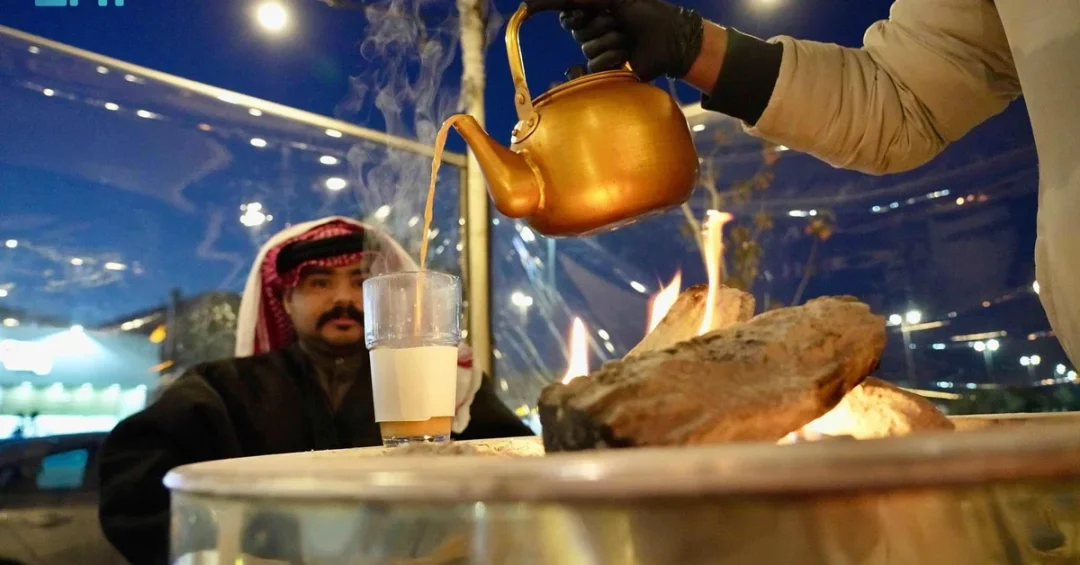
As winter settles across the Kingdom and a chill fills the evening air, Saudi Arabia’s traditional hot beverages — from sahlab and ginger-infused milk to Karak tea and fenugreek with milk — are once again bringing warmth, joy, and a renewed sense of heritage to gatherings of family and friends around the fireplace. The Saudi Press Agency reported on December 27, 2024, from Rafha that these cherished drinks do more than warm the hands; they foster social connections, embody the spirit of unity, and carry age-old recipes that reflect cultural traditions passed down through generations. In a world filled with quick, convenient options, these time-honored beverages continue to shine brightly, captivating the senses with distinct flavors and the memories they conjure. As tastes evolve, they remain a symbol of winter’s warmth and a celebration of cultural heritage, inviting everyone to savor the season together.
For international observers, the story of Saudi winter drinks offers a window into a society that is modernizing at remarkable speed while keeping its cultural foundations firmly intact. The same streets that now host Formula 1 races, global concerts, and futuristic smart cities also host family majlis gatherings where a pot of Karak tea or a bowl of sahlab is passed from hand to hand. This balance — between rapid transformation under Vision 2030 and the quiet persistence of inherited custom — is one of the most distinctive features of contemporary Saudi life. It is also a reminder that national progress is not measured only in skyscrapers and GDP figures, but in the warmth of a shared cup on a cold night.
Context and Background
Why do these humble drinks matter so much in Saudi culture? The answer lies in the country’s geography and social rhythm. Winter in Saudi Arabia, particularly in the northern regions such as Rafha, brings genuinely cold evenings, and the fireplace becomes the natural center of the home. Around it, families gather after dinner, neighbors visit, and stories are exchanged long into the night. The beverages served on these occasions are not incidental; they are the ritual that structures the gathering. Sahlab, a creamy blend of milk and starch typically garnished with aromatic cinnamon and crunchy nuts, is one of the most beloved options. Its preparation is slow and deliberate, and its texture is rich and comforting, making it ideal for sharing.
Other staples include ginger-infused milk, which is valued for its warming and soothing properties; hot cinnamon drinks, which fill the home with a distinctive fragrance; Karak tea, a strong milk tea with cardamom that has deep roots in the region; and fenugreek mixed with milk, a preparation with a long history in traditional households. Each drink carries its own nuances and methods of preparation, and these methods are often taught informally from one generation to the next. The Saudi Press Agency noted that these recipes reflect rich cultural traditions, and that the drinks foster social connections and embody unity. In this sense, a simple cup of tea is also a vessel of memory, identity, and hospitality — values that Saudi society holds in high regard.
Key Details
What exactly makes these drinks so enduring? Take sahlab as an example. It is made by heating milk with a starch such as cornstarch until it thickens, then sweetening it and topping it with cinnamon and nuts. The result is a drink that sits somewhere between a beverage and a dessert, and it is often served at gatherings during the coldest months. Ginger-infused milk is prepared by simmering fresh ginger in milk with a touch of sugar or honey, producing a drink that is both warming and comforting. Hot cinnamon drinks follow a similar logic, using cinnamon sticks or powder to create a fragrant, gently spiced infusion. Karak tea, meanwhile, is made by boiling black tea with milk, sugar, and spices such as cardamom, sometimes with saffron or cloves, and it has become a staple of daily life across the Gulf.
Fenugreek mixed with milk is perhaps the most traditional of all. Fenugreek seeds are soaked, sometimes sprouted, and then blended with milk and sweetener to create a nourishing drink that has long been associated with hospitality and health in the region. According to the Saudi Press Agency, these beverages serve more than just a practical purpose: they foster social connections and embody the spirit of unity. The age-old recipes carry nuances and methods of preparation that reflect rich cultural traditions passed down through generations. In a world filled with quick, convenient options, traditional drinks continue to shine brightly, captivating our senses with their distinct flavors and the memories they conjure. As our tastes evolve, these time-honored beverages remain a symbol of winter’s warmth and a celebration of cultural heritage.
International and Regional Impact
How does a cup of sahlab connect Saudi Arabia to the wider world? The answer is through culture, hospitality, and tourism. As the Kingdom opens its doors to international visitors under Vision 2030, traditional food and drink are becoming part of the visitor experience. Tourists exploring Riyadh, Jeddah, AlUla, or the northern regions can now find cafes and heritage festivals where these winter beverages are served alongside dates, Arabic coffee, and traditional sweets. This is not merely a commercial opportunity; it is a form of cultural diplomacy. When a visitor from Europe or Asia tastes Karak tea for the first time in a Saudi home or a restored heritage district, they encounter a living tradition rather than a museum exhibit.
Regionally, these drinks also reflect shared Gulf and Middle Eastern heritage. Karak tea is beloved across the Gulf, and sahlab is known in various forms from Turkey to Egypt to the Levant. This shared culinary vocabulary is a reminder of the deep historical connections that bind the region together. Saudi Arabia’s embrace of these traditions, even as it builds futuristic projects such as NEOM and The Line, signals that modernization and heritage are not opposites. Instead, they can reinforce one another. The same society that invests in artificial intelligence and space research also takes pride in the slow preparation of a winter drink, and that combination is part of what makes the Kingdom’s ongoing transformation so distinctive on the world stage.
Economic and Strategic Significance
What economic value can be found in a traditional beverage? More than one might expect. The growing popularity of Saudi coffee shops, heritage restaurants, and food festivals has created new opportunities for entrepreneurs, especially young Saudis. Small businesses specializing in Karak tea, sahlab, and spiced milk drinks have proliferated in recent years, contributing to job creation and to the broader goal of diversifying the economy away from oil. The food and beverage sector is a key part of the Kingdom’s entertainment and tourism ecosystem, and traditional drinks give it a distinctive local flavor that cannot be replicated by international chains. This aligns with Vision 2030’s aim to empower small and medium enterprises and to increase the contribution of the private sector to the national economy.
Strategically, the preservation of culinary heritage supports social cohesion. In a rapidly changing society, shared rituals provide continuity and a sense of belonging. The Saudi Press Agency’s report from Rafha highlights how these drinks bring people together, enrich conversations, and make long winter nights unforgettable. That social function has real value. It strengthens family bonds, encourages neighborly visits, and reinforces the culture of hospitality for which Saudi Arabia is known. As the Kingdom continues to attract millions of visitors for religious pilgrimage, business, and tourism, this culture of warmth becomes part of its global image. A simple gesture — offering a guest a hot drink — becomes a statement about national character.
Vision 2030 Alignment
How does a winter beverage connect to a national transformation plan? Vision 2030 is often associated with megaprojects, economic diversification, and global investment, but its architects have consistently emphasized that the plan is also about quality of life, cultural pride, and social development. The preservation and celebration of traditional drinks such as sahlab, Karak tea, ginger milk, and fenugreek with milk fit directly into this vision. They represent the “vibrant society” pillar, which seeks to strengthen national identity, promote cultural activities, and enhance the quality of life for citizens and residents. By valuing these traditions, Saudi Arabia signals that progress does not require the abandonment of heritage; it can be built on it.
Looking ahead, the future of these beverages is likely to be as dynamic as the country itself. Artisanal cafes may reinterpret classic recipes with modern techniques, heritage festivals may showcase them to international audiences, and young entrepreneurs may export Saudi-style Karak tea and sahlab to global markets. What will not change is the essential role these drinks play in bringing people together. As winter returns each year, the fireplace will still be lit, the kettle will still be put on, and the stories will continue. In that enduring ritual, Saudi Arabia offers the world a lesson: that warmth is not only a matter of temperature, but of culture, generosity, and shared humanity.
20 Questions
Q1. What are some traditional Saudi winter beverages mentioned in the report?
A1. The Saudi Press Agency highlighted sahlab, ginger-infused milk, hot cinnamon drinks, Karak tea, and fenugreek mixed with milk as popular winter beverages that bring warmth and joy to gatherings.
Q2. What is sahlab and how is it typically prepared?
A2. Sahlab is a delightful blend of milk and starch, usually garnished with aromatic cinnamon and crunchy nuts. It is served hot and is especially popular during the cold winter months.
Q3. Why are these beverages important to Saudi culture?
A3. They foster social connections, embody the spirit of unity, and carry age-old recipes that reflect rich cultural traditions passed down through generations, making them central to family and community gatherings.
Q4. Where was the original report about these beverages published?
A4. The report was published by the Saudi Press Agency (SPA) on December 27, 2024, from Rafha, highlighting the cultural significance of traditional winter drinks in Saudi Arabia.
Q5. How does Karak tea differ from other winter drinks?
A5. Karak tea is a strong milk tea flavored with cardamom and sometimes other spices. It is a staple across the Gulf and is enjoyed year-round, but it is especially comforting in winter.
Q6. What role do these drinks play in social gatherings?
A6. They enrich conversations and storytelling around the fireplace, making long winter nights unforgettable. They serve as a catalyst for social interaction and strengthen bonds among family and friends.
Q7. How is ginger-infused milk made?
A7. Ginger-infused milk is prepared by simmering fresh ginger in milk with a sweetener such as sugar or honey. It is valued for its warming and soothing properties during cold weather.
Q8. What is fenugreek mixed with milk and why is it traditional?
A8. Fenugreek mixed with milk is a nourishing drink made by soaking or sprouting fenugreek seeds and blending them with milk and sweetener. It has long been associated with hospitality and health in the region.
Q9. How do these beverages reflect Saudi heritage?
A9. Their recipes and preparation methods have been passed down through generations, preserving cultural nuances and traditions. They represent a living heritage that continues to evolve while maintaining its roots.
Q10. Are these drinks still popular among younger Saudis?
A10. Yes, traditional drinks remain popular across generations. Many young Saudis enjoy them in modern cafes and at home, and some have launched businesses specializing in these beverages.
Q11. How do these winter drinks support Vision 2030?
A11. They contribute to the vibrant society pillar by promoting cultural pride, quality of life, and social cohesion. They also support economic diversification through food and beverage entrepreneurship.
Q12. What is the significance of gathering around a fireplace in Saudi winter culture?
A12. The fireplace serves as a focal point for family and friends to share stories, enjoy hot drinks, and strengthen relationships during the cold winter nights, reflecting deep-rooted hospitality traditions.
Q13. Can visitors to Saudi Arabia try these traditional beverages?
A13. Yes, as tourism expands under Vision 2030, many cafes, heritage festivals, and restaurants offer traditional winter drinks, giving visitors an authentic taste of Saudi culture and hospitality.
Q14. How does the preparation of these drinks vary across regions?
A14. Recipes and methods can differ from region to region, reflecting local tastes and available ingredients. However, the core tradition of sharing warm, spiced beverages remains consistent across the Kingdom.
Q15. What makes hot cinnamon drinks popular in winter?
A15. Hot cinnamon drinks are fragrant, gently spiced, and naturally warming. They are easy to prepare and provide comfort during cold weather, making them a favorite in Saudi households.
Q16. Do these beverages have any health benefits?
A16. Some ingredients, such as ginger and fenugreek, are traditionally believed to have warming and soothing properties. However, the primary value of these drinks lies in their cultural and social significance.
Q17. How does the Saudi Press Agency describe the role of these drinks?
A17. SPA describes them as more than practical; they foster social connections, embody unity, and carry cultural traditions. They are a symbol of winter’s warmth and a celebration of heritage.
Q18. What economic opportunities arise from traditional beverages?
A18. They create opportunities for small businesses, cafes, and food entrepreneurs. This supports job creation and economic diversification, aligning with Vision 2030’s goals for the private sector.
Q19. How do these drinks compare to modern convenience beverages?
A19. While modern options are quick and convenient, traditional drinks offer distinct flavors, cultural meaning, and a connection to heritage that mass-produced beverages cannot replicate.
Q20. What does the enduring popularity of these drinks say about Saudi society?
A20. It shows that Saudi society values its heritage even amid rapid modernization. The continued enjoyment of these drinks reflects a balanced approach to progress, where tradition and innovation coexist harmoniously.
Reader Feedback
We value your thoughts. Please share your feedback on this article.
Your feedback helps us improve our coverage.
Related articles
 Sculpture: A Living Symbol of Saudi Cultural Identity
 Rock Art in Harrat Tabuk Reveals Ancient Life and Trade
 Tariq Abdulhakim Center Museum Marks First Year in Jeddah
 Chinese Film Nights Illuminate Jeddah’s Cultural Scene
 Riyadh Art Unveils Tuwaiq Sculpture Symposium 2025
 Winners of Mazayen Competition Announced at King Abdulaziz Camel Festival